Barcroft Apparatus
Historical document, translated for reference. It reflects medical knowledge of the 1920s–30s and is not medical advice.
Summary
The Barcroft apparatus is a differential manometer used for determining the gas content (oxygen and carbon dioxide) in blood. It utilizes specific chemical reactions to release these gases from hemolyzed blood, allowing for precise measurement of oxygen capacity, saturation, and carbon dioxide levels.
Encyclopedia article (1928–1936)
BARCROFT APPARATUS (Barcroft), for determining the content of gases (CO2 and O2) in blood, is a differential manometer to both ends of which are attached, by means of ground-glass joints, two vessels of exactly equal volume (see Figure 1—large model, for 1 cubic centimeter of blood, and Figure 2—small model, for 0.1 cubic centimeter). The principle of gas determination: from hemolyzed blood, potassium ferricyanide releases all the bound hemoglobin O2, and after the removal of O2, CO2 can be released by the addition of tartaric acid. Determination of O2: into both vessels, an exactly equal amount of ammonia solution is measured (2 cubic centimeters in the large model, 0.2 in the small one), and under this solution, an exactly measured amount of blood is released
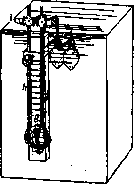
(1 or 0.1 cubic centimeters). After securing the vessels to the manometer and placing beforehand into the special reservoirs of these vessels—into one, 0.2 (in the small model, 0.05) cubic centimeters of a saturated solution of potassium ferricyanide, and into the
other—the same amount of water, the vessels are placed in a water bath with the stopcocks open (to equalize the pressure). Then, by turning the stopcocks, the
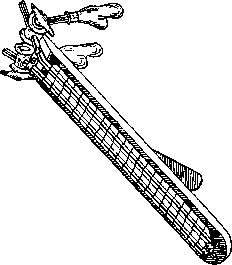
Figure 2. Barcroft apparatus (small model)
vessels are separated from the atmospheric air, connected to the manometer, and by the corresponding rotation of the vessels, the blood and the salt solution (or water) are mixed. In the vessel where the potassium ferricyanide was, O2 is released and the pressure increases. By the increase in pressure, using a special constant found beforehand for each vessel, the amount of released gas is found, which is then brought to normal conditions (0° and 760 mm) in the usual way. Determination of CO2: into one of the vessels, under the ammonia solution, blood is placed, and into the other—the exact same amount of water. By adding a solution of potassium ferricyanide (all quantities as in the determination of O2), O2 is driven out; 0.2 (or 0.05) cubic centimeters of 20% tartaric acid is placed in the reservoir, and the procedure continues as in the determination of O2. The water and solutions (ammonia) must be free of CO2. The method yields excellent results but requires great care (the instruments sometimes "act up"). By means of the Barcroft apparatus, one can determine: the oxygen capacity of the blood, the difference in O2 content in venous and arterial blood, the percentage of O2 saturation, the CO2 content, and the reserve alkalinity of the blood. The cost of the small model (which is more convenient) is 27 marks, and the large model is 39 marks (1927). In the USSR, they are manufactured (on order) in the workshop of the State Institute of Physics and Biophysics of the People's Commissariat of Health. Lit.: Pinkussen L., Micromethods, Berlin, 1925.
Related articles
Mentioned in
Cite this page
“Barcroft Apparatus.” Soviet Medical Encyclopedia. English translation of Bolshaya Meditsinskaya Entsiklopediya, 1st ed. (Moscow, 1928–1936), ed. N. A. Semashko. https://sovietmedicalencyclopedia.pages.dev/article/barcroft-apparatus/