Actinometry
Historical document, translated for reference. It reflects medical knowledge of the 1920s–30s and is not medical advice.
Summary
Actinometry is the branch of geophysics that studies the intensity of solar radiation under various conditions. This article describes various actinometric instruments used to measure direct and diffuse solar radiation, as well as terrestrial radiation, including the Angström compensation pyrheliometer and other specialized devices.
Encyclopedia article (1928–1936)
ACTINOMETRY (from Greek aktis-ray and metron-measure), a branch of geophysics that studies the intensity of solar radiation under various conditions. Actinometry covers the following tasks: 1) accounting for the heat of rays falling on a plane perpendicular to them; 2) accounting for the heat of rays falling on horizontal and vertical planes; 3) separately measuring the energy of direct solar rays and rays of scattered light coming from the sky; 4) measuring the energy of solar rays at various heights above the earth's surface; 5) calculating the so-called solar constant. In the USSR, all these tasks are performed by the Slutskaya, formerly Pavlovskaya, Observatory (near Leningrad). For research of the first group, the Savinov actinograph is used there, whose receiver is always kept perpendicular to the incident rays by means of a so-called heliostat rotated by a clock mechanism. From the curve plotted on the drum of the self-recorder, one can judge the intensity of solar radiation at each moment of time. Knowing the angle at which the rays fell on the horizontal and vertical planes at that moment, one can also solve the second of the listed tasks. The receiver of the Savinov instrument is arranged so that only direct solar rays act on it. For measuring the energy of scattered light (task 3), another instrument is used. Its receiver consists of wide, long, but thin, blackened metal plates to which the even junctions of a thermoelectric battery are applied; the odd junctions lie under cover of white, non-heating plates. The recording is done in the same way as in the actinograph described above. The receiver is protected from direct solar rays by a round screen continuously rotated on the heliostat. Based on observations at various stations, it can be assumed that approximately 1.68×1024 small calories fall annually on the entire surface of the globe. The intensity of solar radiation at each place varies during the day, reaching a maximum at noon. It also changes throughout the year, since the rays strike the earth more obliquely in winter than in summer, and consequently must pass through a thicker layer of air. The transparency of the air itself fluctuates within very wide limits: it is greater the less water vapor and dust is contained in the air. This is why it is especially great in polar countries. In Slutsk, 82,500 small calories per year fall on 1 sq. cm of surface perpendicular to the sun's rays, and 39,700 small calories on 1 sq. cm of horizontal surface. Knowing the transparency of the air, one calculates how much heat would have fallen on a unit of surface (perpendicular) if part of it were not absorbed by the atmosphere. This "solar constant" is approximately 2 calories per 1 sq. cm per minute.
V. Shuleykin. Actinometer, the general name for all instruments that measure radiation. At present, besides the Savinov actinograph described above, there exists a whole series of complex instruments for actinometric measurements. The following names are also used, depending on the purpose of the instrument: 1) actinometer (pyrheliometer), an instrument for measuring the intensity of solar radiation; 2) pyranometer-for measuring scattered (diffuse) radiation; 3) pyrgeometer-for measuring terrestrial radiation. Actinometers are divided into absolute and relative; the former give radiation directly in calories, while the latter give it in relative units (to convert from relative to absolute values, a "conversion factor" is used, by which the relative value must be multiplied to obtain the absolute one). In geophysics, radiation is measured in small calories per minute per 1 sq. cm of surface. At present, there are two standard actinometric units: one in America, given by the normal Smithsonian Institution actinometer (Washington), and the other for Europe, given by the compensation pyrheliometer (see) of Ångström (K. Ångström, Sweden). The European unit is 2.25% smaller than the American one. - The most widespread actinometer for measuring solar radiation in absolute units (calories) is the Ångström compensation pyrheliometer. The principle of its operation is as follows (see Figure 1). Two thin manganin plates 1нВс on the front side are blackened with platinum black and
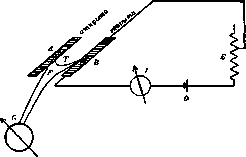
Figure 1. Diagram of the Ångström pyrheliometer.
covered with a thin layer of soot; on the opposite side, the junctions of a thermoelement T are attached, the ends of which are connected to a galvanometer G by wires. Let us assume that plate A is exposed to radiation, while B is shaded; as a result, plate A will have a higher temperature than B; this heating will produce a thermoelectric current, and the galvanometer will deviate from its zero position. Further proceed as follows: plate B is heated by the current of element D, the current being passed through a variable resistance E and a milliammeter I. As it passes through plate B, the current will heat it. By changing resistance E, one achieves such a state that the galvanometer G gives a zero reading; this will occur when the temperature of plate B equals the temperature of plate A-in other words, the amount of heat released by the current as it passes through plate B will equal the amount of heat received on plate A from radiation. Since the amount of heat Q released by the current as it passes through a conductor is proportional to the square of the current strength, then Q=K.i* where i is determined by the milliammeter I, and K is a constant for the instrument, determined once for all. Plates A and B are enclosed in a special case that can be easily oriented to the sun. This instrument has been recognized as standard by the International Meteorological Congress. - The Violle-Saveliev actinometer. The operation of the instrument is based on calculating the amount of heat received from solar radiation by a reservoir of a smoked thermometer; the thermometer reservoir is surrounded by a spherical space with constant temperature. The instrument gives absolute 28» values, but handling it is quite complex. - The Michelson actinometer (see Figure 2). An instrument for measuring the relative intensity of solar radiation, constructed on the following principle: a bimetallic blackened plate made of metals with different coefficients of expansion is subjected to the action of
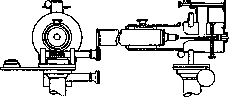
Figure 2. Michelson actinometer.
radiation and consequently bends. The bending can be measured with a microscope with an eyepiece scale. The plate is mounted on the axis of a hollow massive cylinder of red copper. Due to the small mass of the plate, radiation measurements can be made every 15 seconds. The instrument is very convenient for work in solariums. - The Link actinometer. Built on the thermoelectric principle. One set of junctions is in the shade, while others are exposed to solar radiation. The thermocurrent goes to a galvanometer which has a scale divided into calories. - The Arago-Devi actinometer, redesigned by Kalitin, is the simplest of existing instruments, giving the sum of solar and scattered radiation on a horizontal surface. The actinometer consists of two thermometers placed side by side with hemispherical reservoirs facing upward with the flat side (see Figure 3). The flat side of one reservoir is covered with soot, the other is shiny. Each thermometer is in a vacuum. This actinometer is especially suitable for resorts, as it gives the sum of solar and diffuse radiation on a horizontal plane, which is particularly valuable. - The Kalitin actinometer. A thin constantan strip is stretched at an obtuse angle on a massive plate of invar. The blackened constantan strip, subjected to radiation, lengthens somewhat; consequently, the angle at which it is stretched changes. This change is transmitted to a pointer, which shows the radiation intensity on a scale. The Kalitin actinometer is the simplest of existing ones, but at the same time sufficiently accurate. Suitable for resorts. Another model of Kalitin's is used in factories for large radiation (up to 30 calories). - The Ångström pyranometer measures the intensity of atmospheric scattered radiation in absolute units; it is constructed similarly to the compensation actinometer for measuring radiation. One of the receiving
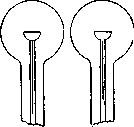
Figure 3. Upper part of the
Arago-Devi-Kalitin actinometer.
surfaces is covered with magnesium oxide, and the other with platinum black. There are simpler pyranometers: Kalender's, Aldrich's, Savinov's, Kalitin's. - The Ångström pyrgeometer, for measuring terrestrial (night) radiation, consists of two pairs of plates; one pair is gilded, and the other is covered with platinum black. The temperature difference resulting from radiation produces a thermoelectric current, which is compensated by heating the blackened plate with current from an element. The instrument gives absolute values, i.e., the number of calories lost by 1 sq. cm of a black surface per minute. - There are also ether actinometers, the operation of which is based on measuring the amount of distilled ether; they are simple but not very accurate,
Related articles
Mentioned in
Cite this page
“Actinometry.” Soviet Medical Encyclopedia. English translation of Bolshaya Meditsinskaya Entsiklopediya, 1st ed. (Moscow, 1928–1936), ed. N. A. Semashko. https://sovietmedicalencyclopedia.pages.dev/article/actinometry/