Enema
Historical document, translated for reference. It reflects medical knowledge of the 1920s–30s and is not medical advice.
Summary
An enema is a medical procedure involving the introduction of liquid substances into the rectum for therapeutic, diagnostic, or nutritional purposes. This 1930s Soviet medical encyclopedia details the equipment, methodology, indications, and precautions for various types of enemas.
Encyclopedia article (1928–1936)
ENEMA, clyster (from Greek klyzo-I wash out), a technical procedure consisting in the introduction of some liquid substance into the rectal cavity-water, medicinal solutions, oil, liquid suspensions, etc. The main purpose of E.-therapeutic effect; incomparably more rarely E. is used as a special research technique and finally as an auxiliary method of feeding.-A. Therapeutic E. aim at mechanical emptying of the large intestine, a laxative effect, washing of the intestines, medicinal effect on them, and introduction into the organism through the intestine of water, medicine, and nutrients.-B. As a research technique, E. may aim at the introduction of a contrast substance for X-ray diagnosis. Instrumentation. 1. Reservoir, which is most often 1) an irrigator in the form of a cylinder or jug with a drawn-out nipple-tube at the bottom (Fig. 1). The best should be considered a glass one with graduations marked for every 100 cm3. A conical glass irrigator by Leiter is also suitable (Fig. 2). The glass graduated irrigator by Esmarch is very common. The glass graduated irrigator has advantages, as it allows one to follow the rate of decrease of the liquid and can be more easily kept clean. 2) A bottle with a tube with a capacity of 1-5 liters, closed with a plug with a curved glass tube inserted for air intake; the bottle is placed on a high stand. It is used mainly for introducing into E. a large amount of liquid for absorption. 3) A glass funnel 15-20 cm in diameter, with a capacity of 1/2-1 liter, proposed by Hegar.-2. A glass thermometer for measuring the temperature of the liquid in the reservoir.-3. A rubber tube for conducting the liquid; it is put on the tube of the irrigator, bottle, or funnel.-4. Intestinal tube; various types are used: 1) a soft thick-walled polished rubber tip, not less than 15 cm long; the end inserted into the intestine is rounded around the terminal opening (Fig. 3); 2) the intestinal tube by Quincke, thick-walled of the same material (with a lumen of about 1-1½ cm in diameter, up to 30-40 cm long) with a blind and rounded end, with two lateral windows on different sides, near the end (Fig. 4); 3) a rubber intestinal probe by Kuhn with a spiral wire spring inside; 4) an ordinary rubber gastric probe of small size; 5) a soft or semi-soft urethral catheter; 6) a hard intestinal tip-horn, glass, ebonite, or semi-soft (from sholka impregnated with mastic). Hard tips are not advisable, as with careless and improper introduction they can damage the mucous membrane of the rectum and even cause perforation of it.-5. Connecting tube for connecting the liquid-conducting tube and the intestinal tube: 1) so-called faucet, with two olive-shaped ends; 2) a glass tube about 10 cm long, about 1 cm in diameter with olive-shaped ends, for putting on both rubber tubes. When using the described instruments, the liquid enters the rectum by its own gravity. Along with this, especially for introducing a small amount of liquid, instruments are used which are arranged so that the liquid is forced into the intestine. These are: 1) a pear-shaped balloon of thick rubber, with a capacity of about 200 cm3 with a hard intestinal tip, on which a soft rubber one should be put on. In pediatric practice, an ear-shaped rubber bulb is also used; 2) large syringes of various capacities of the Janet type; 3) small syringes (Fig. 5), from 1 to 20 cm3, connected with thin catheters, for introducing in small doses strongly acting substances-microclysters; 4) rubber enema pump-a thick-walled balloon of ellipsoidal shape with 2 valves, connected with 2 rubber tubes; through one liquid is sucked from some vessel, through the other it is forced into the intestine; this tube ends with a hard tip, on which it is better to put a soft intestinal tube. Technique. To properly and without harm to the patient perform E., one should not introduce an excessive amount of liquid, so that the tone of the intestinal muscles is not disturbed by excessive stretching. Therefore, it is hardly permissible to introduce at one time into E. more than 2 liters. In general, the amount of liquid that can be introduced and retained longer in the large intestine without harm depends on the strength of the mechanical and thermal irritations produced on the intestinal wall, and the liquid introduced should have body temperature or higher. The chemical and physico-chemical properties of the liquid introduced are of no less importance. Hypotonic or slightly hypotonic solutions of substances that are part of blood and lymph, and also those most commonly found in normal intestinal contents, irritate the least. Hypertonic solutions of the same substances, e.g. NaCl and soda, and even more so of medium salts, already irritate considerably, which must be taken into account with prolonged use of E. In individual cases, using E. of inappropriate temperature and composition, one can cause inflammation, ulceration of the mucous membrane of the rectum and even consecutive periproctitis. Technique. The liquid needed for infusion is poured into the reservoir, placed or held at a certain height, the faucet or clamp is opened and part of the liquid is let out, holding the tip almost at the same level as the liquid in the reservoir, in order to fill the conducting tube with liquid and remove the air present there. The patient lies on his side with the sacrum brought to the free edge of the bed and the knees drawn up to the abdomen; only a small pillow can be put under the head. The patient can also be placed in the knee-elbow position, according to Hegar, whereby the introduction of liquid is greatly facilitated. The liquid reservoir is fixed on the wall or a special stand or is held at a height of ½ to 1½ m above the level of the bed, but for most cases only moderate pressure is indicated. The intestinal tube (tip) is well lubricated with vaseline or some other fatty substance and carefully inserted into the anus, avoiding the protruding folds of the mucous membrane and hemorrhoidal nodes, then with light rotary movements the intestinal tube is first passed upward and forward to a depth of 4 cm, and then, changing the direction almost at a right angle, carefully push it upward and backward to a depth of 10-11 cm. At the slightest difficulty that the intestinal tube may encounter during its insertion, it is necessary to immediately stop the advancement of the tube and check with the index finger the nature of the mechanical obstacle to advancement and the release of intestinal contents, 4) in chronic neuropathic conditions due to functional (neurasthenia) and organic lesions of the brain and spinal cord (tabes). In addition, an evacuating E., even if there is no obvious delay in stool, is necessary before operations, childbirth, X-ray examination of the gastro-intestinal tract, kidneys and urinary tract, before the introduction through the intestine of physiological solution, nutritional and medicinal substances. - Contra
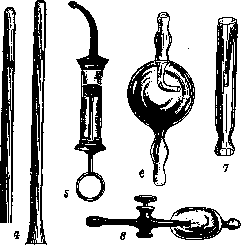
Figure 1. Irrigator with drawn-out nipple. Figure 2. Leiter's irrigator. Figure 3. Rubber tip.
Figure 4. Quincke's intestinal tube. Figure 5. Syringe for microclyster. Figure 6. Martin's ball. Figure 7. Tube for drip enema. Figure 8. Brown's apparatus. After introducing the intestinal tube to a length of 10-12 cm, the tap or clamp is opened moderately, and during the entire time of infusion, it is necessary to ensure that the liquid in the reservoir decreases evenly and not too quickly. Sometimes the tube becomes clogged with feces, then it needs to be cleared and reinserted. The liquid entering the rectum stretches it, but then it often begins, often with loud rumbling, to pass quite quickly to the higher sections of the large intestine, which is clearly felt by the patient, and at the same time the feeling of tension in the rectum decreases. Often, shortly after, non-intense, spasmodic pains and the urge to defecate appear. To soften hard fecal masses, to affect the intestinal mucosa or for absorption of liquid, a certain time is required, and therefore, for appropriate indications, the patient is advised to, by an effort of will, retain the introduced liquid in the intestine for the necessary period. Therapeutic enemas. 1. Evacuating enemas are performed with the aim of causing a bowel movement in temporary or prolonged constipation. For this purpose, a significant amount of liquid of indifferent composition and temperature is usually introduced into the intestine. The main indications are various types of constipation: 1) in atony of the intestines, 2) in reflex-spastic conditions of the large intestines, 3) in indications for evacuating enemas are the following conditions: 1) painful processes in the area of the anus and perineum (fissure, acute hemorrhoidal phlebitis, etc.), 2) insufficiency of sphincters or gaping of the anus, 3) painful processes in the area of the rectum and sigmoid colon (acute, especially ulcerative proctitis, purulent paraproctitis, disintegrating cancer, sigmoiditis, as well as lesions of nearby urinary and sexual organs and pelvic cellular tissue), 4) painful processes in the higher sections of the large intestine and surrounding tissues (in fresh adhesions near an abscess, incarcerated hernia, etc.), 5) general acute peritonitis, 6) general severe condition requiring absolute rest (e.g., profuse bleeding, deep decline in cardiac activity, etc.). The greater or lesser effect of the evacuating enema depends on the composition, temperature, quantity, and method of administration of the enema. Composition of enema: drinking water is most often used, soapy water, sometimes with the addition of vinegar, glycerin, and salt. Pure water is not indifferent to the mucous membrane (it irritates it); soapy water, prepared from 1 tablespoon of grated plain (or better medical) soap per 1 liter of water, more contributes to softening hard feces (Penzoldt) and more irritates the intestine. Toilet soap is unsuitable for enemas. The addition of vinegar (rarely) and glycerin (2 tablespoons per 1 liter of water) to water and hypertonic NaCl solutions (above 1%, especially strong solutions up to 5-8%; Nothnagel) increase peristalsis. The temperature of the infused liquid is usually prescribed within 20-40°C. Colder enemas cause strong peristaltic movements. They are indicated for atonic and paralytic constipation. In colitis and spastic conditions, cold enemas are contraindicated, and only very warm enemas at 37.5-40-42.5°C are indicated. The amount of liquid introduced ranges from 7½ to 17½ liters, according to indications. Pressure. The height of the irrigator should usually not be more than 1 m above the level of the bed, and the rate of flow should in no case be great. In all doubtful cases, when emptying the intestine itself is urgently needed, but an evacuating enema is contraindicated, another method of action should be chosen, for example, to use only a washing siphon enema. 2. Laxative enemas are intended for a specific laxative effect. For this purpose, the following are used: 1) Oil enemas (Kussmaul); with them, the oil penetrates between the intestinal wall and the fecal masses, which mechanically greatly facilitates their removal; it is not absorbed in the intestine and is only partially saponified and broken down under the influence of intestinal enzymes into glycerin and fatty acids, both of which have a laxative effect; in spastic constipation, oil relaxes spasms. Oil enemas are used in spastic coprostasis, stenosis of the intestines, in dysentery, and also sometimes as a cholagogue. For enemas, Provence, sesame, first-pressing poppy, flax, hemp, and sunflower oils are used, which should not be rancid, as well as vaseline oil. For a laxative effect, sometimes only 50-100 cm³ of oil is sufficient; initially, larger amounts are often used - 200-300 and even 500-1,000 cm³ (Strassburger), and later, half as much is used (Stursberg). For its introduction, it is much more convenient to use a large syringe of the Janet type with 100-200 cm³ capacity, a funnel, or an irrigator with a tube. After introducing the oil, it is necessary to lie quietly for a long time. A bowel movement usually occurs after 12-30 hours. In addition, oil can be introduced in an emulsified form; for this, 1-2 yolks are first rubbed in a separate vessel (like a large cup), adding 1/2 teaspoon of soda, with gradually added oil, and then this mixture is mixed with hot water in the amount of 1-2 glasses and introduced into the intestine in the usual way. The official oil emulsion (Emulsio oleosa) can also be used. 2) Glycerin enemas, acting by chemical irritation of the rectal mucous membrane, cause easy emptying of not too hard feces accumulated in the rectum after a short time. For this, only 5-10 cm³ of pure glycerin is required, which is introduced with a syringe (Fig. 5). Glycerin can be used for quite a long time and does not lose its laxative effect during this time, but not more than once a day. 3) Microclysters. a) Pilocarpine, proposed very recently (1928) by Wichert, is used in persistent constipation, mainly of an atonic nature. For the enema, 10 drops of a 1% solution of pilocarpine are taken per 2 cm³ of water with the addition of 0.2 potassium chloride. The following formula is more convenient: Pilocarpini hydrochl. 0.05, Kalii chlorati 2.0, Aquae destil. 20.0; for one microclyster, 2 cm³ of this solution is required. It is introduced through a thin catheter with a syringe. b) Quinine (25 cm³ of a 2% solution of Chin, bimur.) and c) antipyrine (0.3 : 2.0) in a microclyster (Wichert) work well in spastic constipation. 4) Enemas with middle salts, causing abundant transudation from the intestinal wall, give more abundant, liquid, often repeated laxation. The main indications for this are: a) general edema, especially of renal origin; b) poisonings, in which it is necessary to cause abundant bowel movements, while the introduction of a laxative by mouth is impossible; c) rushes of blood to the brain, cerebral hemorrhages and increase in intracranial pressure. The simplest is to use a solution of 30.0 Na₂SO₄ or MgSO₄ per 100.0 of warm water or 100.0 of a warm infusion of Alexandrian leaf with the addition of 15.0-30.0 of the indicated salts. 3. Washing enemas aim to wash the large intestines as much as possible from products of fermentation and putrefaction, bacterial toxins, mucus, pus, and the strongly irritating inflammatory exudate of the mucous membrane. Indications for them are fermentative and putrefactive dyspepsias, acute and subacute colitis. For washing, relatively weak solutions of disinfectants and slightly astringent agents are used, such as boric acid (10:1,000), sodium benzoate (10:1,000), hydrogen peroxide (10:1,000), potassium permanganate (1:1,000), borax and sodium salicylate (20:1,000), tannin (2-3:1,000), zinc and copper sulfate (1:500). The best method is siphon washing of the large intestines after a salt laxative. For this, the required liquid, heated to 42.5°C, in an amount of up to 2 liters, is introduced into the intestine with the help of a funnel. After the liquid is introduced, the funnel is lowered almost to the level of the bed, as a result of which the liquid, along with clumps of mucus, pus, and feces, and sometimes with abundant bubbles of intestinal gases, passes back into the funnel and flows into a bucket. This procedure is repeated several times. In intestinal spasms, it is necessary to first calm the intestine with a microclyster of adrenaline, opium, or antipyrine. Washing enemas also include the etheroclyster of Cantani and the acidoclyster of Genersich, proposed mainly for the treatment of cholera. Cantani introduced into the rectum at one time several liters of a ½% warm solution of tannin, and the liquid introduced under high pressure penetrated into the small intestines. Genersich increased the amount of the 1-2% solution of tannine introduced to 15 liters, and the liquid reached the stomach and was vomited. Thus, practically the entire digestive tract was washed through the rectum. But since this violates the natural relationships, this method of treatment can hardly be considered advisable. 4.
Medicinal enemas for local action on the large intestine are used mainly in cases of irritation, inflammation, ulceration, and spastic conditions of the intestine, as well as against certain parasites living in it. In cases of colitis, it is most appropriate to systematically administer at night or in the morning 2-3 glasses of hot, 40-42.5°, hypo- or isotonic solutions of salt and soda (3.0-5.0 per 1 liter of water) with the addition of an infusion from two tablespoons of chamomile per glass of boiling water. In cases of a tendency to constipation, the use of soda-salt enemas with the addition of 2 tablespoons of glycerin is preferred; in cases of a tendency to laxity, a hot 1% solution of borax or borax and sodium salicylate (5.0 per 1 liter) is preferable. A 1/2-1% solution of tannin, a 1-2% solution of calcium chloride may be useful. Enemas of carbonic, saline, alkaline, saline-alkaline, and lime mineral waters: Karlovy Vary, Selters, Neuenahr, Vichy, Essentuki Nos. 4 and 17, Starorussky salt spring No. 7, saline-hydrogen Matsesta water, Zheleznovodsk, Slavyanovsk (Vikhter), or Smirnov, Borjomi, Kislovodsk narzan (Vikhter). In acute infectious and ulcerative colitis, as disinfecting and astringent agents, in addition to tannin, solutions of argolite (1:1,000-5,000), protargol (0.6-1.25-2.5:1,000), collargol (0.25-1.0:100), argyrol, and tincture of iodine (1 teaspoon per 4 glasses of water) are used. In addition, suspensions of dermatol, bismuth, zinc oxide, and powdered metallic aluminum (2.0 per 200.0) of starch or salep decoction or emulsion from gum arabic, 1% solution of yatren 105 (in dysentery) are used. In profuse diarrhea and cholera, enemas are made with powdered white clay (50-250 g per 1 liter of water), as well as with animal or vegetable powdered charcoal. Starch enemas calm the intestine. Starch decoction is prepared from 6.0 g of potato flour, beaten in 1/2 glass of lukewarm water, which is poured into a metal vessel containing 3/4 glass of boiling water. Enemas of the following composition also deserve attention: decoction of rhatany (15.0:200.0) or extract from it (2-5.0 per 200.0), tincture of valerian (30-40 drops) or infusion of chamomile (30.0:200.0), decoction from flaxseed, from Colombo (6-10.0:200.0), small (50-100.0) enemas of oil with belladonna and adrenaline. In case of putrefactive processes in the intestines, enemas with salicylic acid, silver preparations, potassium permanganate, and hydrogen peroxide are indicated. In case of intestinal bleeding, enemas of gelatin and 3% solution of coagulen, microclysters with antipyrin and 10 drops of 1% solution of adrenaline (Vikhter) are successfully used. For pinworms, enemas of garlic decoction on milk, of 1-2 tablespoons of vinegar per 1-2 glasses of water, enemas with 15-20 drops of oil of Chenopodium in emulsion from 0.5 gum arabic, of 1.0-2.0 naphthalene dissolved in 100-150 g of vegetable oil or 50-100 g of cod liver oil are recommended. For Balantidium coli, as well as for Entamoeba histolytica, enemas of ipecacuanha decoction and 1% solution of quinine are used; for Trichomonas intestinalis- of 1% solution of cresol, for Lamblia- of turpentine (1:3,000). Among therapeutic enemas for local action include small hot (up to 43-44°) enemas of physiological solution or of saline and saline-sulfur mineral waters, retained and gradually absorbed in the intestine. Such enemas have a very beneficial effect on subacute and prolonged inflammatory processes in the abdominal cavity, especially in the area of the small pelvis. 5. Enemas for absorption are made when the intestine is in a normal state for introducing water, medicines, and nutrients into the body when it is impossible to do so by other means. Irritation of the lower part of the large intestine and relaxation of the sphincters are contraindications for the use of such enemas. A preliminary cleansing enema is always necessary. Water is well absorbed from the large intestine, but should be introduced only in the form of physiological or Ringer's solution or in somewhat hypotonic solutions of NaCl (5-6:1,000). The main indications for introducing water through the rectum are: chronic obstruction of the esophagus, pylorus, and upper part of the small intestine, the period of recovery after surgery on abdominal organs, acute peritonitis, as well as the condition of severe infection, intoxication, auto-intoxication, the condition of exsiccosis in infants, and acute anemia after profuse bleeding and bloodletting. For introducing large amounts of fluid into the body, the best results are given by drip enemas (fig. 6, 7 and 8) (see Drip infusions).-2. Many medicines, like water, are successfully absorbed through the unchanged mucous membrane of the large intestine and are introduced in this way (in case of impossibility of administering them orally). To avoid irritation of the intestine, they should be introduced in a relatively low concentration in a microclyster or diluted in a small amount (100-200 cm³) of warm physiological solution or a coating substance. In this way, quinine bicarbonate, sodium salicylate, bromine and iodine preparations (in particular Jodipin), infusion of digitalis or digalen (gitalen), caffeine, diuretin, cardiozole in usual doses with physiological solution; collargol or electragol in 1/2-1% aqueous solution, chloral hydrate 1.0:-2.0 in 100.0 emulsion from gum arabic or in starch decoction are introduced. It is possible to introduce into enemas many other medicinal substances, such as neosalvarsan and its modifications, as well as therapeutic sera and vaccines. The substances introduced should be introduced into the intestine preheated, very slowly, and under low pressure. - 3. Nutritive substances introduced through enemas are in most cases absorbed from the large intestine with great difficulty (see Artificial feeding). Enemas for roentgenodiagnosis are made with a suspension of contrast substances for the precise determination of the location, shape, length, and width of the lumen of the large intestine. The methodology and technique [proposed by G. Ya. Gurevich and recommended by Holzknecht, Weber, etc.]. After emptying the entire intestine with a laxative in the evening and a cleansing enema 1 hour before the examination, the subject is introduced into the rectum a mass prepared from 60 g of potato flour and 200-250 g of chemically pure barium sulfate, beaten in 7 liters of warm water in a separate vessel and slowly poured into another vessel containing 2 liters of boiling water. Up to 2 liters of barium mass are introduced in total. In this case, on the screen and on the plate, an extremely clear image of all the large intestines with all details is obtained, as far as possible for projection on a plane. When less than 2 liters of contrast mass is introduced into the intestine, it does not fill the large intestine and therefore is distributed unevenly, so that some sections remain outlined quite indistinctly. French authors have proposed a suspension of contrast substances in an emulsion of gum arabic.
G. Gurevich. Enemas for children are divided into 1) evacuating, 2) medicinal, and 3) nutrient. Evacuating enemas are most often made from boiled water at a temperature of 35-25°. The Esmarch funnel is hung on the wall at a height of 7 2/3-3/4 m or held at this height by hands. A rubber nozzle is placed on the gutta-percha tip of the funnel or the bone tip of the balloon, which is abundantly smeared with vaseline before use. Size of enema. Age of child Size of enema (in cm³) Newborn balloon No. 1 1-3 months » No. 2 3-6 months » No. 3 6-9 months 120-150 » No. 4-5 9-12 months 1 funnel No. 6 or Esmarch funnel 1 year 2-5 years Esmarch funnel 5-9 years » » 9-14 years » » Enemas are best done in the evening. The child is placed on the right side, with the left hand the thigh of the child is bent at a right angle, and with the right hand the nozzle is inserted into the anus 2 cm and with the right hand pressure is slowly applied to the balloon until it is completely empty. To fill the balloon with water, it is squeezed by hand until all the air is displaced, and then, turning the nozzle downward, it is immersed in a glass of water to the bottom, while gradually releasing the hand so that the walls of the balloon expand and fill with water. After this, the balloon is raised with the nozzle upward, and by pressing slightly on the balloon with the hand, the air is expelled from it. From the Esmarch funnel, to expel air, a little water is released from the tap or, after opening the tap, the nozzle is raised to the level of the liquid in the funnel. After inserting the nozzle into the rectum, the tap is opened gradually so as not to cause immediate severe pain and spasm of the sphincter. After the enema, it is necessary by persuasion to try to make the child retain the water for five-ten minutes, after which defecation occurs. To enhance the effect of the evacuating enema, in addition to lowering the temperature of the water, glycerin can be added to it from one teaspoon to one tablespoon per enema, or oil enemas can be made. Oil enema is made from boiled Provence, sunflower, or vaseline oil in an amount of 15 g to 100 g, depending on age. If the oil enema also does not work, then after two hours an ordinary water enema with glycerin is given. In severe constipation, deep enemas are given, in which a soft nozzle or Nélaton catheter No. 17 is inserted 10-15 cm into the intestine. Medicinal enemas are used in children much less frequently than in adults, since it is often difficult to make the child retain the contents of the enema. Med. enemas are used mainly in diseases of the large intestine to affect the process in the mucous membrane or to calm the irritation of the latter. Thus, in colitis, a warm enema of physiol. solution is used, starch enema from 15 to 50 g, depending on age. Rice or wheat starch or potato flour is first mixed with a small amount of cold water so that there are no lumps, and then boiled until a paste is obtained. The amount of starch is from 1/4 to 1 teaspoon per enema. The enema is administered with the child's pelvis elevated, and after administration, the anus is clamped with cotton wool for about 5 minutes. Temp. of enema 38-40°. In chronic colitis, astringent enemas with tannin and starch (1 teaspoon of each) are used, size 1-2 glasses; t° 35-38°; give enemas in the evening. Various substances are also introduced into children with enemas, such as: quinine, opium, atropine, chloral hydrate (in convulsions), etc. In severe intestinal distension in infants for removing gases in colics, a chamomile enema (1 teaspoon per glass of hot water, strain) is used as a purely symptomatic measure (eliminate the main cause!); size according to age. Nutrient enemas are retained rather poorly in children. To compensate for the lack of water in the body in vomiting, loss of appetite, unconscious state, hot enemas (40°) from Ringer's solution are used in an amount of 15-100 g, depending on age, several times a day. For the same purpose, so-called drip infusions (see) from physiol. solution are used, which are done twice a day for 2 hours in order to introduce 200-400 g of fluid per day. However, drip infusions are not always well retained by the child, and sometimes they have to be abandoned, especially if the child has diarrhea. As a fluid for nutrient enemas, a 5-15% glucose solution is most often introduced; some authors use boiled cow's milk in an amount of 50-100 cm³ with the addition of sugar from 1 to 3 teaspoons, egg yolk or peptone (2.0 per enema). Sometimes instead of milk, strong broth is used in the same amount with peptone and salt. Nutrient enemas (t° 38°) are always given after an evacuating enema 2-3 times a day, but where possible, they should be replaced by feeding through a tube introduced into the stomach. Constant use of enemas for constipation in children should be avoided, fighting constipation with the help of an appropriate regimen. In general, at present, the use of enemas in children is significantly reduced.
N. Langovoy.
Related articles
Mentioned in
Cite this page
“Enema.” Soviet Medical Encyclopedia. English translation of Bolshaya Meditsinskaya Entsiklopediya, 1st ed. (Moscow, 1928–1936), ed. N. A. Semashko. https://sovietmedicalencyclopedia.pages.dev/article/enema/