Alopecia
Historical document, translated for reference. It reflects medical knowledge of the 1920s–30s and is not medical advice.
Summary
This article from the 1928–1936 Soviet medical encyclopedia defines alopecia as partial or complete hair loss, classifying it into various forms including congenital, seborrheic, premature, and symptomatic types. It discusses the clinical presentation, potential causes—such as nervous system disorders, infections, and parasitic diseases—and the therapeutic approaches of the era, including X-ray epilation and endocrine treatments.
Encyclopedia article (1928–1936)
ALOPECIA, partial or complete hair loss, baldness, can be either congenital, which is observed extremely rarely (usually representing a familial trait), or acquired; acquired alopecia is observed frequently, can be diffuse or focal, is temporary in nature or persists steadily, and is divided into several forms: 1) alopecia areata, 2) seborrheic, 3) premature, 4) senile, 5) alopecia in connection with parasitic diseases, 6) alopecia due to the influence of X-rays or internal intake of thallium acetate, 7) alopecia as a consequence of injuries to the scalp with the formation of scars, 8) alopecia in connection with acute infectious diseases, 9) syphilitic alopecia, 10) alopecia in leprosy, lupus erythematosus, and other diseases. Alopecia areata (alopecia areata, area Celsi) proceeds without subjective symptoms. The affected areas have the appearance of hairless, pale, round patches, ranging in size from a ten-kopeck coin to a silver ruble. In addition to the more frequently encountered lesions of the scalp, alopecia areata sometimes appears on the eyebrows, beard, in the axillary cavities, and in the pubic region. Initially, one patch arises, to which others may join; the latter, by merging, can lead to very extensive hair loss. Alopecia areata is encountered somewhat more frequently in men than in women; it also occurs in children over 5 years of age; the disease is usually observed at the age of 30-40 years. Among the theories of the origin of alopecia areata, the theory considering it a consequence of disorders of the sympathetic nervous system deserves attention; the theory of the parasitic origin of alopecia is devoid of grounds. The average duration of the disease is several months. In addition to general treatment of the nervous system, local remedies are indicated, especially the quartz lamp. Usually ending in complete recovery, alopecia areata retains a tendency to recur and can, in stubborn cases, become permanent. Much more frequently than alopecia areata, seborrheic alopecia is observed, arising, as a rule, at the end of the second decade of life. It can be
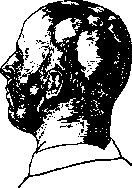
Alopecia areata.
small and large; the disease can be a consequence of oily or dry seborrhea, and with oily dandruff, the prognosis is worse. The disease begins with an intensification of normal hair loss, but the growing new hair still makes the beginning thinning unnoticeable. After 5-7 years, the seborrheic process, by disrupting the nutrition of the hair, leads to its thinning and weak growth, while the increased hair loss gradually creates a bald spot, which begins at the temples or forms on the back of the head. Seborrheic alopecia initially, when there is not yet significant thinning of the hair, is amenable to treatment, but in the later stages of the disease, treatment does not achieve its goal. Of the proposed remedies, sulfur preparations work best. Premature alopecia is clinically analogous to seborrheic, but proceeds without seborrhea. In it, hair loss usually begins in the third decade of life and is often of familial origin. In some families, especially among blonds and predominantly in men, there exists such a tendency toward baldness, but it is also encountered among women. The formation of premature baldness is also facilitated by anemia, severe illnesses that have exhausted the body, diseases of the gastrointestinal tract, and pregnancy. Wearing a tight, heavy cap and a tightly tied headscarf is extremely harmful. Thus, for the proper treatment of alopecia, it is necessary, first of all, to eliminate these harmful factors; in addition to treating the usually accompanying seborrhea, it is desirable, in view of the familial origin of the disease, to try endocrine gland preparations. Hair loss in connection with parasitic skin diseases can be encountered in ringworm and favus. In the first case, in ordinary trichophytosis, there is temporary hair loss, since the hair is not destroyed at the root, but only becomes dull and breaks off due to the penetration of fungi into the hair itself. In favus, the fungi eventually lead to the formation of atrophic scars with complete loss of vegetation. In chronic forms of favus, there can be diffuse permanent alopecia. For epilation in the treatment of parasitic diseases of the scalp, X-rays are usually used. Recently, internal intake of thallium acetate has been proposed for this purpose, under the influence of which (0.008 per kilo of weight) temporary hair loss also occurs after 3 weeks. With unskilled handling of X-rays, scars and permanent baldness can sometimes arise. Temporary hair loss can also appear in individuals with particular sensitivity to X-rays when the latter are used for diagnostic purposes. Permanent baldness can also remain after various kinds of injuries (linear scars). Acute infectious diseases, e.g., typhus, scarlet fever, erysipelas, etc., almost always lead to temporary diffuse thinning of the hair, to avoid which it is desirable to shave the hair at the very beginning of the disease. From chronic infec-
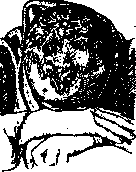
tious diseases leading to temporary alopecia, syphilis stands in first place. Unlike alopecia areata, syphilitic alopecia of the secondary period manifests itself in the form of small patches covering the entire scalp. Anti-luetic treatment for 2-3 months eliminates early syphilitic alopecia. In gummatous syphilid of the scalp, the matter ends in scarring with complete loss of hair. The same
Alopecia syphilitica.
occurs on the eyebrows in leprosy. Tuberculosis can weaken hair growth only in a far-advanced process. In cases of lupus erythematosus affecting the scalp, atrophic scars form, leading to permanent alopecia. Severe exhausting diseases, for example, cancer, can also lead to thinning of the hair due to the weakening of the body.
Related articles
Mentioned in
Cite this page
“Alopecia.” Soviet Medical Encyclopedia. English translation of Bolshaya Meditsinskaya Entsiklopediya, 1st ed. (Moscow, 1928–1936), ed. N. A. Semashko. https://sovietmedicalencyclopedia.pages.dev/article/alopecia/