Dercum Disease
Historical document, translated for reference. It reflects medical knowledge of the 1920s–30s and is not medical advice.
Summary
Dercum disease, also known as adiposis dolorosa, is a rare condition characterized by painful fatty deposits that can occur diffusely or as nodules throughout the body. The article describes its etiology, clinical manifestations, pathological findings, and treatment approaches as understood in the 1930s.
Encyclopedia article (1928–1936)
DERCUM DISEASE (morbus Dercumi), or painful obesity (adipositas dolorosa), was first described by the American Dercum in 1888. The characteristic feature of D. disease is extremely painful fat deposits, which occur either as diffuse obesity or as separate fatty nodules scattered throughout the body. Sometimes cases of the disease are observed with both forms of obesity simultaneously—diffuse and nodular. The etiology and pathogenesis of the disease are linked to lesions of a number of endocrine glands, considering Dercum disease a polyglandular disease. Dercum saw the cause of the disease in dysthyroidism. There is an opinion (Waldorp) that painful obesity is a consequence of disorders of trophic centers in the brain. At present, most authors consider that D. d. belongs to the endocrine type of obesity and at its basis lies a violation of hormonal correlation of all glands of internal secretion, with changes in the thyroid gland, hypophysis and sex glands being in the forefront. Regarding heredity, it can be noted that parents of D.d. patients have syphilis, obesity, alcoholism, arthritism and diseases of the nervous system. In the patients themselves, alcoholism, neurasthenia, hysteria and epilepsy are often found in the anamnesis. Path.-anat. changes in D. d. consist mainly of changes 1) in subcutaneous tissue, 2) in the endocrine apparatus, 3) in the bone system and 4) in the sympathetic nervous system. In the subcutaneous tissue, abundant deposition of adipose tissue is found, so that in some cases the thickness of the fat layer can reach 10-15 cm. Microscopic examination of adipose tissue often reveals, along with proliferation of connective tissue, inflammatory perivascular cellular infiltration. A histological feature of fatty nodules in D. d. is the sharply developed network of blood vessels, so that an impression of a tumor is obtained, which can be characterized as an angiolipoma. Changes found in the endocrine glands consist mainly of atrophy and sclerosis. In many cases, changes were noted in the thyroid gland in the form of colloid degeneration and inflammatory processes with significant proliferation of connective tissue and atrophy of follicles. In some cases, changes are found in the hypophysis in the form of inflammatory changes, proliferation of connective tissue and tumors. Changes in the sex glands (ovarian cysts, hypoplasia of the testes) occur rarely and apparently have no special significance. From the side of the bone system, osteoporosis with mucous degeneration of bone marrow is noted in some cases. Changes from the sympathetic nervous system consist in the appearance of binucleate cells in the sympathetic ganglia (N. Anderson). Clinical picture. The disease is most often observed in elderly people, with women after the onset of menopause being predominantly affected. D. d. begins in some cases with symptoms of increasing weakness and pain sensations, and later obesity appears; in other cases, the disease begins with the appearance of obesity, and then characteristic pains and general weakness appear. The obesity itself occurs in three forms established by Roux and Vitaut: 1) nodular form, 2) diffuse-localized form and 3) diffuse-generalized form. In the first case, there are separate fatty tumors of various sizes, delimited from each other. In the second case, separate areas of diffuse obesity are observed, affecting mainly the chest, abdomen, back, shoulders and thighs. In the third case, obesity affects the whole body, with the need to note that the face, hands and feet remain unaffected in all 3 described forms. The greatest degree of obesity is usually observed in the abdomen and chest area (see Figure 1). In the initial forms of the disease, the skin is soft and mobile, in later stages of the disease it is hard and unyielding to pressure. In the nodular form of obesity, the appearance of fatty tumors is observed, in some cases located in symmetrical places, in other cases without definite localization and occurring in the most various parts of the body (see Figure 2). The size of the fatty tumors varies—from a hazelnut to a large apple. The tumors usually have clear boundaries and are often encapsulated, and in most cases these fatty tumors are mobile, and only in rarer cases they fuse with the skin and the underlying aponeuroses and muscles. The pains in D. d., which in some cases reach extraordinary strength, are either independent, sometimes occurring without any apparent cause and lasting for several hours, or are caused by pressure on the obese parts of the body, with painful sensations arising even when touching the body with underwear. Characteristic features in D. d. include asthenia and disorders in the psychic sphere. Asthenia, manifested by a feeling of general weakness, forces patients in some cases to avoid any movement and to remain in bed all the time. Muscle weakness constantly accompanies the disease to a greater or lesser degree, reaching in severe cases such a degree that patients can only perform minimal muscular work. From the side of the psyche, in some cases, phenomena of its sharp weakening (dementia), decreased memory, distraction, depressed state of mind are noted; only in relatively rare cases is the development of more severe psychic phenomena in the form of excitement, delusional ideas, etc. observed. In many cases, various neuritic disorders, paresthesias, sensory disorders, vasomotor-trophic disorders (cyanosis, dilation of blood vessels in the area of fatty nodules, ecchymoses, edema, loss and brittleness of hair, loss of teeth, thickening of the skin and dystrophy of bone tissue, manifested by fragility of tubular bones) are observed. Among the general symptoms, dizziness, headaches and fainting can be noted. Often in D. d., bleeding (Schwenkenbecher) is observed. Profuse uterine bleeding and repeated nasal bleeding have been observed, as well as gastric bleeding. Sweating is usually noticeably reduced, which to some extent may depend on the pressure of obese areas on the sweat glands and their excretory ducts. Studies of basal metabolism in D. d. give conflicting data. In most cases, the complete clinical picture of the disease is established only over several years. The course of the disease is chronic, with lighter intervals often observed, characterized by decreased pain and improved general well-being, after which a deterioration in the general condition may again occur in connection with the appearance of new areas of obesity and increased pain. In differential diagnosis of D. d., the characteristic painfulness of fat deposits and their characteristic distribution, not affecting the face, hands and feet, are extremely important symptoms for distinguishing this disease from other forms of obesity. Additional signs of the disease are asthenia and disorders from the psychic sphere. In the nodular form of painful obesity, neurofibromatosis (Recklinghausen's disease) must be taken into account, in which there is also significant pain on pressure on neurofibromas. In these cases, for differential diagnosis, the fact that neurofibroma nodes are usually significantly denser than fatty tumors in D. d. is of importance; in addition, neurofibromas in some cases are observed on the face and hands, which remain free of fatty tumors in D. d. The prognosis for D. d. in relation to the life of the patient is favorable: patients can live to a very old age. In relation to recovery, the prognosis is unfavorable in most cases, although in some cases under the influence of therapy, all painful phenomena can significantly decrease. The results of therapy for D. d. are not very encouraging. Most often, treatment with thyreoidin is used, from which in some cases good results are observed. Some authors noted a therapeutic effect from the use of iodine therapy and lipolysin, containing the active principles of the thyroid gland, hypophysis, pancreas and sex glands. In some cases, radiotherapy gives good results. Massage, hydrotherapy and symptomatic therapy are also used.
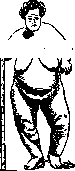
Figure 1. Diffuse form of obesity in a 68-year-old woman with Dercum disease.
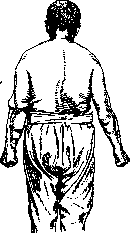
In succession, the skin is hard and unyielding to pressure. In the nodular form of obesity, the appearance of fatty tumors is observed, in some cases located in symmetrical places, in other cases without definite localization and occurring in the most various parts of the body (see Figure 2). The size of the fatty tumors varies—from a hazelnut to a large apple. The tumors usually have clear boundaries and are often encapsulated, and in most cases these fatty tumors are mobile, and only in rarer cases they fuse with the skin and the underlying aponeuroses and muscles.
Figure 2. Fatty tumors on the forearms.
Dercum G., A peculiar affection of the adipose tissue, Philadelphia med. journ., v. IX, 1902; Dervis Th., Dercumsche Krankheit behandelt mit Sanarthrit, Deutsche med. Wochenschr., 1924, № 32; Jillic W., Zur Nosologie u. Therapie der Dercumschen Krankheit, Med. Klin., 1925, № 32; Roux J. et Vitaut L., Maladie de Dercum, Rev. neurologique, v. IX, 1901; Schwenkenbecher F., Uber die Adipositas dolorosa, Deutsch. Arch. f. klin. Med., B. LXXX, 1904; Zondek H., Uber die pluriglandulare Insuffizienz, Deutsche medizinische Wochenschrift, 1923, № 11. See also literature to the article Internal Secretion.
Related articles
Cite this page
“Dercum Disease.” Soviet Medical Encyclopedia. English translation of Bolshaya Meditsinskaya Entsiklopediya, 1st ed. (Moscow, 1928–1936), ed. N. A. Semashko. https://sovietmedicalencyclopedia.pages.dev/article/dercum-disease/