Sanitary Transport
Historical document, translated for reference. It reflects medical knowledge of the 1920s–30s and is not medical advice.
Summary
This article describes the various methods of sanitary transport used in the Soviet medical system for transporting patients, wounded, and others requiring medical care, including manual transport, stretchers, animal-drawn vehicles, and automobiles.
Encyclopedia article (1928–1936)
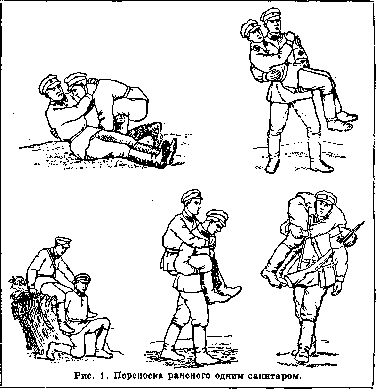
SANITARY TRANSPORT is intended for the transportation of the sick, wounded, those affected by chemical agents (OB), and other contingents requiring medical care. In the public health system, it is used with the purpose: a) to ensure the fastest possible delivery of these contingents to medical aid stations (see), which are equipped with all necessary technical equipment and trained medical personnel for providing qualified medical assistance; b) to hospitalize those requiring it in specialized hospitals. The work of sanitary transport acquires special importance in situations of mass casualties, mainly during wartime, when it is necessary to organize sanitary evacuation (see), for which sanitary transport is the primary technical means. The technical specifications characterizing various types of sanitary transport determine the tactical norms for its operation; among the latter, the most essential are: lifting capacity, speed of movement, comfort of transportation, etc. Sanitary transport is divided by type of route into land, water, and air transport. Land routes are divided into rail and non-rail. Rail routes include railways, suspended cable railways. Non-rail routes include surfaced (paved, highways, cobblestone, brick, asphalt, etc.) and unsurfaced, or dirt roads. The motive power for various means of sanitary transport can be animal power or mechanical traction. All this makes the assortment of means of sanitary transport extremely diverse and extensive. In sanitary transport, special sanitary carts or devices exist that allow the use of various types of passenger or freight transport for medical transportation. The simplest form of transporting patients (wounded, those affected by chemical agents, etc.) is carrying them by hand. For this, there are numerous methods involving carrying the patient by one or two 'bearers' (figs. 1 and 2). Most often, improvised objects are used to facilitate such carrying [chair, small ladder, board, sticks, canvas (figs. 3 and 4); in military practice—rifles, scabbards from cold weapons, greatcoats, belts, etc.]. However, such transportation, while not requiring special technical equipment, is characterized by low speed of movement (1 km in 30 minutes), great fatigue of the bearers, i.e., low productivity of their labor, and discomfort for the transported person. Therefore, for carrying patients by hand, sanitary stretchers suspended from straps placed over the bearers' shoulders are used. The most convenient type of straps are those worn on both shoulders and allowing adjustment of the height of the stretchers above the ground. But even when using sanitary stretchers, the labor of the bearers is one of the most strenuous types of physical work. Therefore, as a transport unit, there is a calculation of 4 people for each stretcher, working in pairs in shifts and called a stretcher team. The work of bearers is especially difficult in an atmosphere of chemical agents, when they have to use gas masks and protective clothing. It is impossible to work with sanitary stretchers in winter on deep snow. For this purpose, in winter conditions, sanitary stretchers are placed on skis. Ski-stretcher installations allow the use of not only special skis but also the wounded person's own skis and have very significant importance for armies operating in theaters of military action located in areas with prolonged snow cover. Sometimes in winter, for transporting stretchers, ski-sled installations or special sledges are used, which is mainly the case in mountainous conditions. In summer, to facilitate the work of stretcher-bearers operating on more or less level terrain with firm ground, wheeled devices attached to sanitary stretchers and consisting of one or two wheels are used. The maneuverability of single-wheeled stretchers is greater, but they have no stability, so working with them is more difficult. Instead of ordinary sanitary stretchers, consisting of two poles and canvas stretched between them, hammocks suspended from a single pole placed on the shoulders of two stretcher-bearers walking one behind the other, or specially designed aprons or seats allowing the wounded to be carried on shoulders, are used. These devices are not widely used because they cause difficulties when loading and unloading such stretchers, which is most painful for the transported person. To avoid any transfers of the wounded from stretchers, there is a tendency to standardize sanitary stretchers, aiming to have a type that would completely eliminate the need to change stretchers until the wounded person, once placed on stretchers, is delivered to the operating table or hospital bed. In particular, the sanitary service of the Red Army has such standardized stretchers (see), designed not only for manual carrying but also for transportation by all other types of sanitary transport. In naval practice and in other conditions when it is necessary to extract a wounded person vertically from deeply located premises with the help of blocks, special stretchers (marine stretchers, packet stretchers) that allow secure fixation of the transported person to these stretchers must be used. Essentially, such stretchers are an immobilizing bandage, a splint fixing the entire human body, and must satisfy similar requirements ('physiological' position, prevention of compression, etc.). - During stretcher transportation, the elevated position of the head should never be forgotten (except in cases when medically contraindicated), for which special headrests or pillows are used, because prolonged stay on stretchers without a headrest is very distressing for the transported person. Ski-sled stretchers can be transported by dog sleds. When it is possible to use horse-drawn traction, sanitary stretchers are placed on two poles, into which, like shafts, one horse is harnessed (resulting in a 'drag' - fig. 5), or these poles are suspended from pack saddles of two horses specially trained to transport stretchers in this way (pack stretchers - fig. 6). There are methods of attaching one or a pair of stretchers to a pack saddle for one horse. Pack stretchers are also transported by camels, mules, and donkeys. The area of application for pack transport is mountain and steppe terrain inaccessible to wheeled transport. Pack transport, like stretcher transport, being indispensable due to its maneuverability, is characterized by high speed compared to the walking speed of stretcher-bearers, but this speed is limited by the fact that the pack animal must be led on foot by a stretcher-bearer guide. The efficiency of pack transport is also not high. The main type of sanitary transport is wheeled transport. The simplest wheeled sanitary vehicle is the sanitary two-wheeled cart (fig. 7), harnessed to one or two horses. The high wheels of the sanitary two-wheeled cart provide it with high maneuverability when moving off-road and in particular when fording water up to 1 meter deep. The sanitary two-wheeled cart holds two loaded stretchers or three to four sitting patients and has a canvas top. The sanitary two-wheeled cart is equipped with soft springs that prevent excessive overloading. The negative properties of the two-wheeled cart as sanitary transport are its low stability in the horizontal plane, which is especially noticeable for those transported on uneven or broken roads, because the wheels of the two-wheeled cart are set wider than the gauge of ordinary carts. Four-wheeled horse-drawn vehicles for transporting evacuees are almost not used in our country. In some foreign armies, they still survive. A four-wheeled vehicle holds four stretchers in two tiers, which raises its center of gravity and makes it less stable when moving and turning. During the world war and after it, automobile sanitary transport came to the forefront as the main type of transport on non-rail routes, having greater speed and greater capacity compared to horse-drawn sanitary transport. If by the end of August 1914, on automobile transport in the French army, 48,000 battle casualties and sick persons were transported, then in July 1918 this figure reached 445,000. In total, in the French army on the western front during the world war, 10,411,156 evacuees were transported by automobile transport, and in the English army - 6,354,000. Automobile sanitary transport (fig. 8) also has significant advantages in terms of the ever-increasing comfort of medical transportation. Reduction of shaking and calmness during movement depend on many reasons: quality of the road surface, softness of springs, presence of shock absorbers for 'damping vibrations' (preventing swaying), skill of the driver, degree of pressure in pneumatic tires, etc. Among these conditions, the presence of special springing devices for sanitary stretchers installed in the automobile plays a significant role (see below). The speed of movement of automobile sanitary transport on dirt roads (12-15 km per hour) i
pa
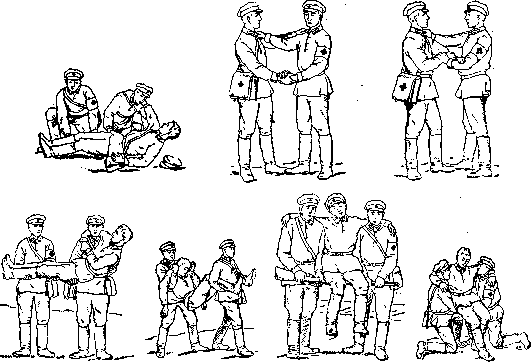
Figure 2. Transport of a wounded person by two orderlies.
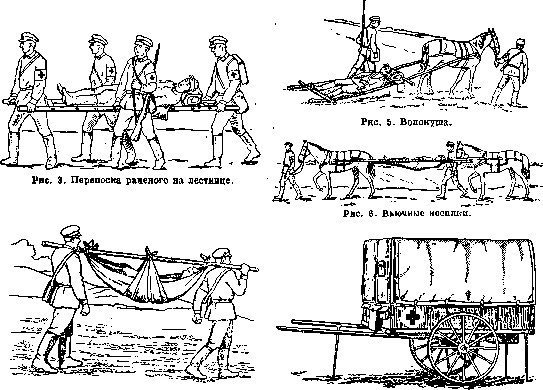
Figure 4. Transport of a wounded person on a pole in a tent canvas.
Figure 7. Sanitary two-wheeled cart. bo
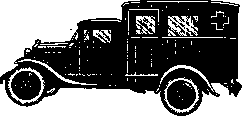
Figure 8. Sanitary automobile.
per hour) i
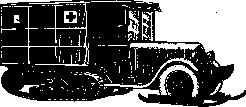
Figure 9. Sanitary automobile on rubber tracks (caterpillar) with skis instead of front wheels.
exceeds the speed of horse-drawn sanitary transport, reaching 30-40 or more km per hour on highways. Another advantage of the sanitary automobile lies in the possibility of using it for significant periods without interruption, whereas the need for such breaks in horse-drawn sanitary transport is connected with the necessity to give horses rest. The increased cross-country capability of sanitary motor vehicles is achieved by increasing the grip on the ground through doubling the tires (pneumatics) on the rear wheels or by mounting the body on three axles (six-wheeled vehicles). However, this is not always sufficient, for example when moving on sand, deep snow. Therefore, there are models of sanitary motor vehicles in which the rear wheels are replaced by a wide rubber track (caterpillar), and the front wheels in winter are replaced by skis (fig. 9). Since the need for sanitary transport sharply increases in wartime, and various kinds of vehicles intended for the delivery of food, ammunition, and other types of military supplies return from the troops to rear bases, the question of adapting the return trip of empty vehicles has enormous practical significance. Freight transport has stiff springs or has no springs at all, and with great lifting capacity in terms of weight of cargo transported, it usually allows for very limited placement of sanitary stretchers on vehicles. The purpose of using spring-mounted devices is therefore to cushion jolts and shaking during sanitary transport on freight vehicles, to allow for the placement of a greater number of sanitary stretchers, and to ensure convenient loading and unloading. Tests conducted in this regard with various models of spring-mounted devices gave the following results: 1) spring-mounted devices should be simple in design, not bulky, as light as possible, but sufficiently strong, easy to mount on any vehicle, and allow for convenient loading and unloading of evacuees; 2) the reduction of shaking can be achieved by using springs that work in tension or compression, or leaf springs; stretchers are suspended from springs or mounted on them (fig. 10); 3) the stiffer the springs of the vehicle itself, the softer the springs of the spring-mounted devices should be; 4) when recording on a kymograph the jolts and shaking experienced by sanitary stretchers when transported in a truck, the French devices showed the best performance; in this case, movement on a smooth road differs sharply from movement on a paved road (fig. 11), and even more so on an uneven dirt road. French devices are attached to the floor of the cargo vehicle's body and consist of a frame made of solid steel tubes, along which the suspensions for sanitary stretchers slide (the front pair on rollers). These devices provide great convenience for loading and unloading sanitary stretchers. The weight of the apparatus is 70 kg. The highly advertised abroad Austrian Tintner spring-mounted devices are attached to the sides of any vehicle, are also made of steel tubes, and allow for the placement of stretchers in two tiers. However, their testing did not show a high springing effect. The spring-mounted devices for sanitary stretchers adopted in the RKKA resemble ordinary railway couplings with springs between hooks, one of which is attached to the side of the vehicle's body, and the other to the handle of the stretcher. Sanitary transport on railway tracks is intended for mass transport in wartime and, in terms of comfort and convenience for evacuees, has indisputable advantages. In railway cars, essentially, a whole hospital can be placed with modern technical equipment, which allows for long sanitary transport over significant distances. Sanitary trains, according to their equipment and purpose for work in one zone or another, are divided into field and rear trains. Field sanitary trains operate in the area of the active army and consist of cars of the main and auxiliary parts. In the main part are placed the personnel, kitchen, warehouses (armory), pharmacy, dressing station, the severely wounded. The auxiliary part consists of passenger cars and boxcars equipped with stretchers for transporting evacuees. Such a train accommodates 275 evacuees under normal load, 375 under dense load. Rear sanitary trains have a similar composition of cars, but are equipped with greater comfort and accommodate from 315 to 450 people. Permanent trains have electric lighting, internal telephone communication; for storing perishable products, insulated cars are attached to them. All this further brings the conditions during transport in a sanitary train closer to the conditions in a stationary medical facility, provided evacuees are placed there. In the forward area, especially in areas of the greatest concentration of the active army's manpower (on the main attack directions), the throughput capacity of the forward sections of the railway usually makes it difficult to use permanent military sanitary trains that travel empty to the front, while freight railway transport moves from the front unloaded. Therefore, in the forward area, temporary sanitary trains are used, formed in areas where property and personnel reinforcements for the army are unloaded from freight cars (boxcars) that have been freed from cargo and healthy people, with the addition to this 'variable' railway composition of three specially equipped cars (a cadre of reserve cars). These include: a pharmacy-dressing car, a car for the severely wounded, and a kitchen car. Freight cars for temporary sanitary trains are brought in thoroughly cleaned (washed and, if necessary, disinfected) and are equipped with standard military flooring (boards). In cars intended for transporting lying wounded, standard Kruzilin stretchers on springs are installed. Kruzilin springs, with their conical upper fork, support the stretcher handle, while from below they are attached to the boards of the military flooring. 12-14 sanitary stretchers are placed in a freight car in two tiers, 3-4 on each side. When 12 stretchers are placed, it is still possible to approach them from the side. In cold weather, a stove is placed in the car; a permanent fixture of a freight car equipped for sanitary transport is a lantern, a portable vessel (bucket), and a tank for drinking water. Cars for sitting wounded do not have sanitary stretchers; in them, seats (benches) or bunks are arranged using the boards of the military flooring. The car for the severely wounded is from the passenger park; its usual equipment with seats and places for lying is removed, and in its place are placed Kriger spring-mounted frames, which sufficiently well absorb lateral and vertical jolts. In the forward area, narrow-gauge railways with horse or mechanical traction are often laid as auxiliary lines. For sanitary transport in this case, special cars are built, smaller in capacity but equipped with everything necessary for the purposes of sanitary transport, or ordinary cars and platforms are used, their adaptation being carried out improvisationally with available means.
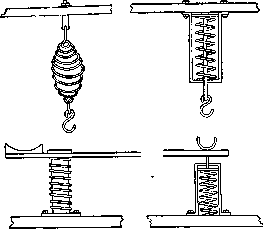
Figure 10. Various types of spring-mounted devices with leaf springs.
when suspended on four springs on asphalt - Same on paved road. Suspension on a French frame on asphalt - Same on paved road. When stretchers are placed on a rigid asphalt base - Same on a zigzag road. On a Tintner apparatus on asphalt - Same on paved road Figure 11. Recording on a kymograph of the jolts experienced by sanitary stretchers when transported in a freight truck.
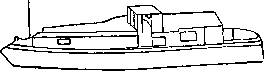
Figure 12. Diagram of a sanitary launch.
In mountainous conditions, aerial tramways (telepherique) provide great convenience for sanitary transport. In places difficult to access for ascent and descent, steel cables are stretched between special towers, along which cars or trolleys move on pulleys, powered by a motor on the ground. The useful load of a large car can reach 500 kg, its capacity being 1-2 lying or 4 sitting wounded. The useful length of the cable can reach 2,500 m with one end being 800 m higher than the other. For operation, a 35 HP motor is sufficient, the speed of the car being 90 meters per minute. For intra-city and suburban transport in wartime, trams and buses are used. For this purpose, passenger cars can be converted to accommodate sanitary stretchers, usually in two tiers; the greatest difficulties arise in ensuring convenient loading and unloading of stretchers: it is necessary to install a door in the rear wall of the car (body) or make a wide entrance from the side. A significant advantage of rail transport is the possibility of reliably protecting cars against chemical warfare agents, which is very important in modern warfare. The cars are sealed as much as possible, and in addition, powerful forced ventilation is installed in them, allowing for the creation of slightly increased pressure (air pressure) inside the car, which prevents the entry of chemical warfare agents inside. For non-rail transport, the same problem is solved with greater difficulty. In the naval fleet, after combat operations, there is a need to transport the wounded, sick, and those affected by chemical warfare agents to the shore, and when far from the shore, to a special hospital ship intended for the treatment of evacuees. For such transports, ordinary lifeboats and launches are more often used, some ports have special sanitary launches (Fig. 12). A hospital ship (Fig. 13) is similar in purpose to a sanitary train, but has greater capabilities for organizing qualified medical care in stationary conditions. For fast water transport over short distances, attempts are currently being made to construct sanitary gliders, propelled by a propeller and sitting very low in the water, or fast motorboats (sea automobiles, Fig. 14) are used. River transport has special advantages in terms of providing very calm transport for evacuees. For this purpose, specially built, but more often converted, river sanitary steamers, launches, and barges are used. Compared with maritime means of transport, they have lower speed, however, the calm conditions during transport, especially of towed vessels, in many cases make this type of transport preferable. A specific feature of water sanitary transport means is the requirement to provide them with everything necessary for rescuing drowning persons.
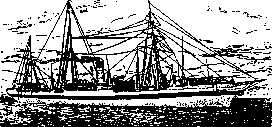
Figure 13. Hospital ship.
With the current growth of civil and military aviation, it can be stated that the future of sanitary transport for long distances will largely belong to air means of communication. Airplanes were already used during the world war (mainly in the French army) for the transportation of evacuees. After the world war, the construction of special sanitary airplanes began in a number of countries, which now number a considerable number of models. During the military operations of the French and English armies in the 20s of the current century in the colonies (Morocco, Syria, Levant), sanitary aviation was widely used, and the number of evacuees by air began to be counted in the hundreds and thousands. At the same time, the sanitary airplane found application as a means of emergency aid in peacetime. Currently, in a number of countries (USSR, France, Poland), there exists such 'air emergency aid', successfully serving a number of air routes and directions. The development of passenger and cargo traffic along air routes, the use of towed gliders raise the questions of adapting air transport for wartime in exactly the same way as they stand in relation to railway, maritime, river, urban and other transport. The main advantage of sanitary airplanes is the speed of their movement (150-200 km per hour) and the significant calmness of this movement. In ensuring the timeliness of qualified medical aid requiring complex technical conditions, in combating the development of wound infections, sanitary aviation is an indispensable means, but the dependence on ground equipment, on the proximity of aerodromes to medical institutions, the relative high cost of construction and operation of sanitary airplanes, as well as their small capacity, still prevent them from being recognized as mass sanitary transport means. Medical contraindications to the use of sanitary aviation, based on the assumption of the adverse effects of reduced pressure in the upper layers of the atmosphere, have not been confirmed by experimental verification, or apparently do not have great practical significance. Sanitary airplanes can be classified into three main groups: 1) single-seat sanitary airplanes ('flying sanitary stretchers') - for individual cases of emergency air evacuation, 2) small group sanitary airplanes for 2-4-6 stretchers - for the forward area and evacuation to cities closest to the areas of military operations, 3) heavy, multi-seat sanitary airplanes with a large radius of action - for transport over long distances (more than 200-300 km). The scope of application of sanitary airplanes will significantly expand with the improvement of autogyros, which do not require large-sized areas for takeoff and landing. But even at present, especially under the conditions of the modern class maneuverable war with the deployment of combat operations in the enemy's rear (raids of motorized-mechanized units, combat work of air landings), and in peacetime when providing medical aid to expeditions working in little-researched and roadless areas, the sanitary airplane has become the only applicable means of Sanitary Transport. The problem of Sanitary Transport as a whole for the USSR in the current period of socialist construction is of great importance. The work of field brigades in the vast agricultural fields of state farms and collective farms, the development of new areas for the extraction of natural resources, the grandiose construction of new industrial bases, and finally the strengthening of the country's defense capability - all this urgently requires the provision of technical means for rapid medical and highly qualified aid, among which sanitary transport holds the first place. The XVI All-Russian Congress of Soviets, in its report by the People's Commissar of Health of the RSFSR, particularly emphasized in its resolutions the need to allocate various means of sanitary transport for sanitary needs, including sanitary airplanes, sea and river launches.
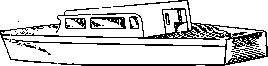
Figure 14. Sea automobile - Lincoln limousine
with a 300 horsepower motor, capable of doing 60 km per hour. Range without refueling 300 km.
Related articles
Mentioned in
Cite this page
“Sanitary Transport.” Soviet Medical Encyclopedia. English translation of Bolshaya Meditsinskaya Entsiklopediya, 1st ed. (Moscow, 1928–1936), ed. N. A. Semashko. https://sovietmedicalencyclopedia.pages.dev/article/sanitary-transport/