Medical Aid Station
Historical document, translated for reference. It reflects medical knowledge of the 1920s–30s and is not medical advice.
Summary
A historical overview of the Medical Aid Station (PMP) as defined in the early Soviet period, detailing its role as a mobile or permanent facility for triage and urgent care rather than long-term hospitalization. The article describes the organization of forward and main aid stations, their equipment, and their integration into the military evacuation chain.
Encyclopedia article (1928–1936)
MEDICAL AID STATION, a sanitary (medical) facility deployed on-site, designated for providing medical assistance. The primary difference between a Medical Aid Station and a hospital is that it does not retain those seeking medical help; instead, after providing aid, it directs those requiring hospitalization to a hospital or limits itself to outpatient assistance for those who do not need inpatient care. Medical Aid Stations are either permanent or field-based. Permanent Medical Aid Stations are maintained in peacetime at the sanitary units of troops. Field Medical Aid Stations are deployed in the immediate rear of the active army or during the liquidation of the consequences of an air attack on troops and populated areas in wartime. Regarding the nature of the work of wartime Medical Aid Stations, there was a discussion in military-sanitary literature after the Russo-Japanese War; some authors believed that in the rear of the troops, on the path of the wounded, there should be only one Medical Aid Station where medical assistance is provided, followed by the placement of the evacuee in a hospital bed, while others believed that Medical Aid Stations should be deployed in two types: forward stations, where the most urgent medical aid necessary only for saving life or organs is provided (stopping bleeding, tracheotomy, primary immobilization of fractures), and main stations, where qualified medical assistance is carried out. At present, the issue has been decided in favor of the second opinion, and the division of labor into forward (PPM) and main (GPM) Medical Aid Stations is based on the theory of the organization of echeloned or staged treatment. According to the latter, Medical Aid Stations are viewed as outposts of a single medical block (medical institution) partitioned across the terrain. Accordingly, the Medical Aid Station has the following functions: a) receiving and collecting those in need of medical assistance; b) sorting them by type of aid and method of transportation; c) providing urgent (at the PPM) and first qualified (at the GPM) medical assistance. The basic requirement for the organization of work at a Medical Aid Station is the consistency and continuity of the medical measures carried out there. Forward Medical Aid Stations are, as it were, the receiving rooms of a single hospital, the parts of which are located (echeloned) along the evacuation route. Forward Medical Aid Stations must be in the immediate vicinity of the location of active troops. Since modern troop tactics and their saturation with firepower do not permit the presence of living targets in the zone of rifle and machine-gun fire, creating a picture of the "emptiness of the battlefield," forward Medical Aid Stations are located outside this zone to avoid exposing the contingents they serve to the danger of secondary injury. Paths (roads, trails) leading to forward Medical Aid Stations are equipped with directional signs. The severely injured are delivered to forward Medical Aid Stations on stretchers by orderlies. Easing the labor of the latter is achieved by placing stretchers on wheels (in summer) or on skis (in winter), as well as by sending sanitary carts to meet them. The furthest points to which it is possible to advance sanitary carts for loading stretchers onto them are called sanitary transport posts (PST). Such posts are usually designated in advance for day and night time. Groups of those needing medical assistance delivered to the forward Medical Aid Station or arriving independently are sorted by the degree of need for medical aid. Wounded with life-threatening symptoms (bleeding, shock, etc.) are immediately sent to the dressing-operating room; those affected by chemical warfare agents (CWA) undergo sanitary processing with a change of clothing that has adsorbed the CWA; the wounded with a bandage applied in the field are also given appropriate assistance, with attention paid to the immobilization of fractures. To be able to provide this medical assistance at a forward Medical Aid Station, it is necessary to have a supply of medical property and equipment (dressing material, surgical instruments, serums and vaccines against wound infections, medications, nursing items, tents, etc.). All this property must be non-bulky, light in weight, and easily brought into working readiness. The latter is achieved by packing into "standard boxes," built on the principle of using them simultaneously as furniture for equipping the dressing room (Figures 1–3). Figure 1. Standard packing of medical property for a forward medical aid station: a—shelf unit, assembled from trays b, packed in box c.
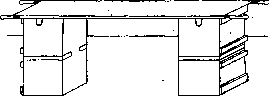
Figure 2. Operating table made of two standard boxes and a sanitary stretcher.
The property of forward Medical Aid Stations is loaded onto military carts, some of which (pharmacy carts) are specially manufactured for this purpose, and some belong to the administrative troop train (administrative carts, two-horse wagons). Standard boxes with property for deploying a Medical Aid Station are arranged on the carts in such a way that items necessary for a specific part or function of the medical aid station—for the dressing room, operating room, pharmacy, etc.—are placed on one cart. With the introduction of chemical weapons into warfare, particularly persistent chemical warfare agents (PCWA), a mobile washing unit in the form of a cart with a water-heating device and showers has become an integral part of forward Medical Aid Stations. Merely washing those affected by persistent chemical warfare agents does not exhaust the aid; a change of clothing and decontamination of equipment, the train, transport means, etc., are also required. This forces the Medical Aid Station to unite with a decontamination point, which carries out the neutralization of military property from CWA, and with a veterinary aid station, having independent supplies of clothing, linens, decontamination agents and devices, etc. All property moves as part of the 1st-echelon supply train. In case of the need for deployment...
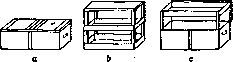
Figure 3. Types of standard boxes adopted in...
Red Army: a—folded; b—shelving unit; c—another type of box with a tray fixed to the lid. The equipment of the supplementary Medical Aid Station (DPM) for the sanitary units of the troops is assembled in such a way that it allows for its division into two or more parts. The growth of combat aviation and the threat of air attack require a dispersed arrangement of Medical Aid Stations so that in the event of a forced cessation of work by one of them, another would continue its activities. All those arriving at the advanced Medical Aid Station or the supplementary advanced Medical Aid Station are registered on medical cards of the forward area, where the diagnosis is noted according to the international nomenclature of military wounds, the aid rendered is indicated, and the type of transport to be used by the evacuee is designated, after which the wounded requiring surgery or hospitalization are sent to the main Medical Aid Station; those not needing bed care are sent to the unit's infirmary at the 2nd-grade baggage train or returned to duty, while those unable to withstand transportation are detained on site. The medical card of the forward area is attached to the outer clothing of the evacuee and accompanies him to the next stage of sanitary evacuation. Main Medical Aid Stations (GPM) have the task of providing qualified medical aid in the immediate rear, playing the role of an operating room in the overall system of the echeloned treatment facility. The main Medical Aid Station receives evacuees from the advanced Medical Aid Stations, sending its sanitary transport to the latter according to the principle of "evacuation toward oneself." The main Medical Aid Station is deployed using the resources of the divisional sanitary organization (divisional dressing detachment), has more extensive medical equipment and supplies, and more powerful sanitary transport. Main Medical Aid Stations are located outside the range of the enemy's light field artillery fire, i.e., 8–10 km from the line of contact. The equipment of the main Medical Aid Stations is assembled in such a way that, if necessary, it allows for the allocation of an auxiliary Medical Aid Station (VPM) for parallel work. Since the distance of the Medical Aid Station from the troops must be as constant as possible, and troops in maneuver warfare often change their location, both the advanced Medical Aid Station and the main Medical Aid Station must be moved following the advancing units or withdrawn to the rear in advance during a retreat. Therefore, the wounded are generally not detained at the main Medical Aid Stations and, after medical aid, are immediately sent to first-line hospitals (divisional), which is noted in the medical card of the forward area. The location of the troop Medical Aid Stations is announced in command orders. The choice of locations rests with the sanitary chiefs (senior regimental physician, divisional physician) and is made depending on the operational situation and local conditions. Medical Aid Stations must be located on the routes of movement to the rear for evacuees and situated near water sources while observing camouflage rules. It is not recommended to locate Medical Aid Stations at road junctions shelled by enemy artillery, in the immediate vicinity of artillery positions, troop reserves, and other targets attractive to the enemy for fire or chemical attack. To bring the practice of troop medical personnel in peacetime closer to the conditions of activity in field-combat situations, since 1931, troop outpatient clinics and infirmaries in the Red Army have been renamed Medical Aid Stations. The motorization of the sanitary service significantly changes the conditions for deploying and organizing medical aid in the field: the mobility of sanitary institutions deploying Medical Aid Stations increases, the carrying capacity of sanitary transports increases, the length of sanitary baggage columns decreases, and consequently, their maneuverability increases, and the coefficient of useful work rises, as motorized transport can work around the clock. Even more favorable prospects appear with the mechanization of individual processes related to the work of the Medical Aid Station, by installing sterilization devices, water-heating units, power stations, pumps for supplying cold and warm water, etc., on motor vehicles or trailers. Naturally, changes in technology entail changes in the tactics of the sanitary service. The motor-mechanization of the latter's troop link makes the advanced Medical Aid Stations the most responsible of the initial stages of sanitary evacuation, where sorting will have to occur not by direction through all the stages located in the rear, but by destination directly to one or another specialized treatment facility. Even broader possibilities are opened by the use of sanitary aviation. Auto- and aero-sanitary transport allows for faster unloading of advanced Medical Aid Stations and main Medical Aid Stations, delivering those in need immediately after medical aid is rendered to the railway station, to rear hospitals, etc. At the same time, the requirements for the qualification of medical aid at the Medical Aid Station and for the correctness of the direction to the appropriate rear treatment facility increase significantly. Medical Aid Stations find themselves in special conditions when they are deprived of the opportunity to rely on an organized sanitary rear. This happens in the case of troops operating in the enemy's rear, e.g., during cavalry raids, during the actions of long-range (DD) groups of motor-mechanized troop units, and during sea and air landings deployed in the rear. In these cases, those needing hospitalization after being rendered first medical aid at the Medical Aid Station sometimes have to be left in the care of socially close population groups sympathetic to the Red Army, or the wounded, those affected by chemical agents, and the sick must be carried along until an opportunity arises to contact their own troops by one means or another. Medical Aid Post—the location of a member of the middle medical personnel (medical assistant, sanitary instructor) with a field bag containing the medical equipment necessary for rendering first aid. The difference between a medical aid post and a Medical Aid Station is its mobility, allowing first medical aid to be rendered at the site of injury. A medical aid post can be reinforced by several orderlies, usually grouped into stretcher teams of 2–4 people each. Orderlies participate in rendering medical aid; they carry the victims, search for them, and perform a number of other functions according to the instructions of the head of the medical aid post. In individual cases, sanitary dogs may be attached to the medical aid post to search for victims. The establishment of medical aid posts is most often practiced in combat situations in troop subunits (in companies, in squadrons, etc.) and during the anti-aircraft defense (PVO) of populated areas. In battle, medical aid posts are established in the immediate rear of each rifle company (RPM—company medical aid post) at the expense of the sanitary sections of these companies. The head of the company medical aid post is the sanitary instructor—the commander of the sanitary section; the entire personnel of the company is informed of the location of the company medical aid post in the starting position. With the start of the battle and the appearance of combat losses, the wounded usually group not far from the site of injury, forming so-called "nests of wounded"; the company medical aid post is immediately moved here, remaining at this location until medical aid has been rendered to all the wounded, and those incapable of independent movement have been ensured evacuation from the battlefield. In the system of the PVO sanitary service, medical aid posts can be established through the initiative of the population itself (at enterprises, in dormitories, in housing cooperatives) and through special teams whose purpose is to render medical aid at the site of injury. In both cases, the medical aid post is limited in terms of the completeness of medical assistance by the assortment and quantity of medical equipment available to it, as well as by the training of its personnel, but the speed of rendering pre-medical aid at the site of injury is its indisputable advantage. Regarding surgical aid, it is most often a matter of placing the wounded in a comfortable position, stopping bleeding, immobilization in case of bone fractures, and bringing the wounded to consciousness. In the event of danger from chemical agents (OV), the importance of emergency medical aid is even greater, as it is usually combined with removing the victim from the poisoned atmosphere, performing artificial respiration, giving O2, and replacing the gas mask. The success of these types of aid for those affected by chemical agents depends on the speed of its provision even more than for the wounded. Bibl.: Leonardov B., Organizatsiya meditsinskoy pomoshchi v pole, M., 1929; Rukovodstvo po sanitarnoy evakuatsii v RKKA, M., 1929; Timofeyevsky P., Sanitarnaya taktika, M., 1931; Spire C. et Lombardy P., Précis d'organisation et de fonctionnement du service de santé en temps de guerre, P., 1925. B. Leonardov.
Related articles
Mentioned in
Cite this page
“Medical Aid Station.” Soviet Medical Encyclopedia. English translation of Bolshaya Meditsinskaya Entsiklopediya, 1st ed. (Moscow, 1928–1936), ed. N. A. Semashko. https://sovietmedicalencyclopedia.pages.dev/article/medical-aid-station/