Ivan Petrovich Pavlov
Historical document, translated for reference. It reflects medical knowledge of the 1920s–30s and is not medical advice.
Summary
A biographical overview of the renowned Russian physiologist Ivan Petrovich Pavlov, detailing his early education, influences, and foundational work in the physiology of digestion and higher nervous activity.
Encyclopedia article (1928–1936)
PAVLOV Ivan Petrovich (born in 1849), academician, a famous Russian physiologist who gained worldwide fame thanks to his works in the field of the physiology of digestion and especially in the field of the physiology of higher nervous activity. He is the creator of the theory of conditioned reflexes, but his scientific activity is not limited to this: he made major studies in his time on the question of the innervation of the heart and blood vessels, as well as a number of other physiological and pharmacological works. Pavlov was born in Ryazan, in the family of a priest. Pavlov received his secondary education at the Ryazan Theological Seminary. In his youth, he was greatly influenced by the popular scientific articles of D. I. Pisarev, who was engaged in the propaganda of the materialism of Büchner, Vogt, and Moleschott. This determined Pavlov's striving for the natural sciences, and upon graduating from the theological seminary, he entered the natural sciences faculty of St. Petersburg University, where he studied first chemistry, and then physiology. A strong impression was made on Pavlov while still in his youth by the book by I. M. Sechenov, 'Reflexes of the Brain.' Upon graduating from the university, Pavlov entered the Military Medical Academy, where he studied for another four years, finishing his education in 1879. Thanks to brilliant lectures on physiology by Prof. Cyon, Pavlov finally chose physiology as his specialty. While in his last year at the Military Medical Academy, Pavlov worked as an assistant to Prof. Ustimovich, who directed the department of physiology at the Veterinary Institute. In 1877, Pavlov, while still a student at the academy, was abroad and worked in the physiological laboratory of Prof. [gap] the dissection of movements in connection with the development of mass serial assembly-line production in the last period of the development of capitalism. Great importance for the development of the sphere of Sensations also has the establishment of new methods of movement (cf. the so-called 'sixth' sense of pilots, connected in the final analysis with the sensation of movement, pressure, and many others). But the prospect of the further development and study of our Sensations is, of course, not limited to this. In the coming period of building a socialist society, the sphere of Sensations must be enriched even more on the basis of combining productive labor with political education and the direct guiding participation of the worker in the organization of the national economy and the administration of the proletarian state.
After graduating from the Military Medical Academy, Pavlov was retained at the academy for advanced training and became the head of the physiological laboratory at the therapeutic clinic of Professor S. P. Botkin. In 1884–1886, Pavlov worked under Professor Ludwig, through whose laboratory many prominent physiologists of Europe of that time had passed, and under Professor Heidenhain. Both of these scientists (especially Ludwig) exerted a great influence on the development of Pavlov as a physiologist. The works of Ludwig, Heidenhain, Claude Bernard, Cyon, and Sechenov created a certain physiological springboard for the further independent development of physiological science by Pavlov. Upon returning from abroad, Pavlov continued to work under S. P. Botkin as an assistant physiologist, effectively directing all the physiological and pharmacological work of the clinic's doctoral candidates. During these 10 years, a number of scientific reports on pancreatic juice and salivation emerged from the physiological laboratory of the Botkin clinic, and the methodology of "sham feeding" was described. In 1883, Pavlov received the degree of Doctor of Medicine, and in the following year, a privat-docentship at the Military Medical Academy. In 1890, Pavlov took the chair of pharmacology at the same academy. In 1896, he moved from the chair of pharmacology to the chair of physiology and directed the work of this chair at the Military Medical Academy until the summer of 1924, from which time he immersed himself entirely in scientific research work. Pavlov took a most active part in the organization of the State Institute of Experimental Medicine in Leningrad. Here, for the first time in the world, a special tower for experiments with conditioned reflexes was built according to Pavlov's design, and before that, an exemplary physiological operating room, which subsequently became an integral part of every physiological laboratory. From the first days of this institute's existence, he directed and continues to direct the physiological laboratory within it. In this institute, Pavlov performed the majority of his works. In 1907, Pavlov was elected a member of our Academy of Sciences. In the Academy of Sciences, he remains to this day the director of the physiological institute, which is engaged in the study of higher nervous activity in dogs. Furthermore, at the present time, Pavlov directs the scientific work of the Biological Station of the Institute of Experimental Medicine, which has as its task the study of the genetics of higher nervous activity and the influence of the environment on the formation of higher nervous activity in dogs. Pavlov is a subtle and profound experimenter, possessing a marvelous command of operative technique. I. M. Sechenov, who knew well all the famous physiologists of his time, said that Claude Bernard was the first vivisector in Europe, but I. P. Pavlov is the greatest of them. Pavlov is an honorary and full member of the academies of most states of the world. Pavlov took an active part in many international physiological and other congresses. He created a major physiological school of world significance. The overwhelming majority of prominent physiologists of the USSR emerged from the school of Pavlov. Several generations of physiologists and scientists of other medical specialties have passed through his laboratories. The physiological school of Pavlov has a colossal scientific output in the form of many hundreds of scientific works on various questions of physiology. All of Pavlov's works are divided into 3 groups: 1) research in the field of blood circulation, 2) research on digestion, and 3) research on the physiology of higher nervous activity. These three groups correspond in the main to the three periods of his scientific activity. The first period was devoted primarily to the study of the innervation of the heart and blood vessels. Included here is Pavlov's remarkable dissertation "The Centrifugal Nerves of the Heart" (St. Petersburg, 1883). In this research, the presence of augmenting and weakening nerves of the heart was established for the first time in the heart of a warm-blooded animal. To this period belong articles on the mechanisms of adaptation of blood vessels and the work on the innervation of the left ventricle of the heart (done under the guidance of Ludwig). Already in this first period, Pavlov's thought was occupied by questions of the physiology of digestion: at this time he published a number of articles on digestion; included here, for example, is a report on the nervous mechanism of the secretion of pancreatic juice (1878). In the following year, Pavlov published the methodology for creating a pancreatic fistula, which is considered classic. Pavlov was engaged in the study of pathological phenomena with the goal of developing a scientific, experimentally grounded therapy; in this, the influence of S. P. Botkin's clinic was evident. Along this line of scientific activity, Pavlov has a number of works: experimental osteomalacia in dogs with a pancreatic fistula, with a bile duct fistula, metabolism in dogs with a pancreatic fistula, dietary treatment of diseases of the gastric mucosa, therapeutic application of natural gastric juice, etc. With the discovery of the influence of the vagus nerve on the secretory work of the gastric glands and the invention of a method for obtaining gastric juice in dogs by means of "sham feeding" (1890), the systematic experimental development of the physiology of digestion begins. In connection with this, Pavlov created the physiological surgery of the digestive tract. By means of a carefully developed methodology for creating fistulas of the salivary glands, the stomach, various sections of the intestinal tract, the gallbladder, the bile duct, and the pancreatic gland, the study of the secretory activity of all digestive glands is performed. In 1894, Pavlov introduced into the scientific research practice of physiological laboratories the methodology of the "isolated stomach" (the so-called "Pavlovian isolated stomach"). Thanks to this improved methodology, a clear picture of gastric digestion in the dog with different types of food is established. In Pavlov's laboratory, the methodology of the isolated intestinal loop was developed. The foundations of the physiology of the liver were developed by Pavlov (jointly with Nencki)—experiments with the Eck fistula. The Mett method for determining the strength of protein and starch digestion was developed. In 1895, Pavlov and Glinsky created an ideally simple and convenient fistula of the salivary glands, which subsequently entered the arsenal of methodology for the study of conditioned salivary reflexes. In Pavlov's laboratory, a major discovery was made—the discovery of enterokinase. In 1897, Pavlov wrote his famous "Lectures on the Work of the Principal Digestive Glands" (St. Petersburg, 1897). This book was translated into German, English, and French, and thanks to the novelty of its ideas, the abundance of factual material, and the vividness of its presentation, it had enormous success; the third edition of the "Lectures" was published in 1924 in the series "Classics of Natural Science" (Leningrad). In 1904, Pavlov was awarded the Nobel Prize for his works in the field of the physiology of digestion. It will not be an exaggeration to say that the foundations of the physiology of digestion were created by the works of Pavlov and his school. These studies had a definite positive significance for clinical practice, although the enthusiasm for Pavlovian methods of experimental study of the pathology of the gastrointestinal tract gave rise to a special trend among clinicians: they attempted to solve questions of the pathology and therapy of the human gastrointestinal tract and questions of human dietetics through experiments on fistulated animals. Here it should be noted that Pavlov conducted his research under difficult conditions: due to a prolonged conflict with the head of the academy, he was for a long time not given permanent staff or foreign travel assignments, and the majority of the work was performed by military doctors attached to the Academy, who naturally did not possess serious physiological training. The data cited on the physiology of blood circulation and digestion do not exhaust the entire circle of physiological and pharmacological questions with which Pavlov was concerned. A peculiarity and originality of Pavlov as a physiologist is his interest in "nervism"; thus, when studying the physiology of the cardiovascular system, he is interested primarily in the innervation of the heart and vessels; when developing the physiology of digestion, he focuses his attention primarily on the nervous regulation of the secretory process.
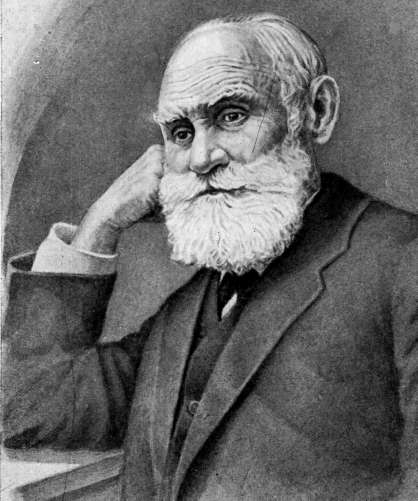

The Pavlovian school of physiology has a colossal scientific output in the form of many hundreds of scientific works on various questions of physiology. All of Pavlov's works are divided into 3 groups: 1) research in the field of blood circulation, 2) research on digestion, and 3) research on the physiology of higher nervous activity. These three groups correspond in the main to the three periods of his scientific activity.
...on the nervous regulation of digestion, on the innervation of the glands of the gastrointestinal tract. The logical continuation of this 'nervism' is the third chapter of his fruitful scientific work—the theory of conditioned reflexes. Scientific research in this field was begun by Pavlov at the very beginning of the current century. The first work by Dr. Tolochinov on conditioned reflexes was published in 1902. The first report made by Pavlov himself on these questions dates to 1903 (a speech at the International Medical Congress in Madrid on the topic: 'Experimental Psychology and Psychopathology in Animals'). Pavlov, relying on the experimental work of numerous collaborators of his school, created a new department of physiological science—the physiology of higher nervous activity. The theory of conditioned reflexes of Pavlov dealt a mortal blow to all sorts of metaphysical and spiritualistic constructions about the soul and mental activity, revealing with great experimental mastery the material foundations of psychic activity. In this lies its greatest historical significance. The theory of conditioned reflexes gave an impetus to the development of the 'reflexology' of V. M. Bekhterev, the 'training' method of Otto Kalischer, and laid the foundation for a multitude of experimental works on the study of higher nervous activity in humans; the method of conditioned reflexes is one of the methods of modern behaviorism. There are about 300 works on the theory of conditioned reflexes, done under the direct guidance and with the most active participation of Pavlov. Pavlov himself published two books: 'Twenty Years of Objective Study of the Higher Nervous Activity (Behavior) of Animals' (4th edition, Moscow-Leningrad, 1929), where Pavlov's reports, speeches, and articles are collected in historical order, and 'Lectures on the Work of the Cerebral Hemispheres' (2nd ed., Moscow-Leningrad, 1927), where for the first time a complete systematic exposition of the theory of conditioned reflexes is given (see Conditioned Reflexes). Among the external facts in the life of Pavlov in recent years, one should note his participation in all international physiological congresses, where he is given ovations each time. Despite the conservatism of Pavlov's political convictions and the disbelief in socialist construction repeatedly expressed by him, the Soviet government has always surrounded him with maximum attention and care. In connection with his 80th anniversary, the Council of People's Commissars of the USSR adopted a special resolution 'on further measures to ensure the most favorable conditions for the scientific research work of the physiological laboratory at the State Institute of Experimental Medicine of the People's Commissariat of Health of the RSFSR, directed by Academician I. P. Pavlov.' In this resolution, it was said, among other things: '...To instruct the People's Commissariat of Finance of the USSR to specifically provide in the budget for the 1929/30 budget year 100,000 rubles for the re-equipping of the soundproof chambers of the said laboratory and for the construction of a new building for the biological station attached to it in Koltushi... To propose to the Council of People's Commissars of the RSFSR, in order to ensure special conditions for the scientific work of this laboratory, to instruct the Leningrad Soviet to divert traffic from the part of Lopukhinskaya Street adjacent to it.' In recent years, Pavlov has become more and more interested in questions of psychiatry and neuropathology and is attempting to interpret certain psychic and nervous diseases, e.g., schizophrenia and hysteria, from the point of view of the physiology of higher nervous activity. Pavlov as the ideological leader of the school took shape in the historical struggle of mechanism against vitalism in the field of biology and physiology. Being the head of the Russian physiological school after I. M. Sechenov, Pavlov is at the same time a direct continuator of the work that was conceived by the latter in 'Reflexes of the Brain'—to reduce psychic processes to physiological foundations. Pavlov boldly embarked on this path of research and transformed Sechenov's thought into an experimentally substantiated theory. A strict scientific-objective approach was established for the explanation of animal behavior. 'The thought of the machine-like nature of the brain, under any conditions whatsoever, is a treasure for any naturalist' ('Reflexes of the Brain', p. 32, L., 1926). This thought of Sechenov, the thought about the machine-like nature of the reflex activity of animals and humans, is the methodological basis of all the work of Pavlov and his school in the field of the study of higher nervous activity. The methodological basis of the theory of conditioned reflexes and the entire Pavlovian school was and is mechanistic materialism. Even in his lectures on the work of the digestive glands, Pavlov stood firmly on the basis of mechanistic materialism. In 1906 in London, in a speech dedicated to Huxley ('The Natural Scientific Study of the So-called Mental Activity of Higher Animals'), Pavlov said: 'I am very glad that to the memory of the great naturalist, who understood physiology as Maschinenlehre des lebenden Mechanismus, I have the occasion to dedicate thoughts and facts illuminating from this uniquely fruitful point of view the very top, the most complex section of this mechanism' ('Twenty Years of Experience...', p. 71). Pavlov did not create the mechanistic methodology, but took it ready-made, as it was in the natural science and physiology of his time. All the development of the experimental work of the Pavlovian school proceeded under the sign of this mechanistic methodology, inherited from Ludwig, Heidenhain, Sechenov, and others. But at the same time, it should be emphasized that the entire history of the Pavlovian school shows how the dialectic of facts revealed by it does not fit into the narrow framework of the mechanistic concept of the creator of the theory of conditioned reflexes. It is a great and responsible task to show, based on the carefully developed history of Pavlov's school, how in the process of its development the insufficiency of mechanistic constructions became more and more apparent [misunderstanding of the qualitative uniqueness of biological phenomena ('equilibrium theory'), the tendency to substitute physiological laws for social ones, etc.]. The mechanistic worldview of Pavlov inevitably suffers the fate of any mechanistic worldview by virtue of its inconsistency as materialism. In the introduction to 'Twenty Years of Experience...', he writes: 'And now I am deeply, irrevocably, and ineradicably convinced that here, primarily, on this path, is the final triumph of the human mind over its last and supreme task—to know the mechanisms and laws of human nature, from which alone can come true, complete, and lasting human happiness. Let the mind celebrate victory after victory over the surrounding nature, let it conquer for human life and activity not only the entire solid surface of the earth but its water depths, as well as the air space surrounding the globe, let it easily transfer for its diverse purposes the grandiose energy from one point of the earth to another, let it destroy space for the transmission of its thought, word, etc., etc.—and yet the same man, with this same mind of his, directed by some dark forces acting within himself, causes himself countless material losses and unspeakable suffering through wars and revolutions with their horrors, reproducing inter-animal relations. Only the latest science, the exact science about man himself—and the surest approach to it from the side of all-powerful natural science—will lead him out of the present darkness and cleanse him of the present disgrace in the sphere of inter-human relations.' Pavlov underestimates the significance of the social sciences that study the social existence of man. The causes of wars and revolutions are placed on the same level and are sought in some 'dark forces' embedded in man himself. His position on this question is idealistic. In connection with all the above, Pavlov's negative attitude toward philosophy also stands. The denial of philosophy unites Pavlov with our Soviet mechanists, who threw out the slogan 'philosophy overboard.' Pavlov and his school could never have created a new physiological direction having world significance if they had stood only in a closed circle of facts. The hypotheses and theories created by Pavlov and going far beyond the limits of facts destroy this vicious circle of 'creeping empiricism' and are the logical plan for the further experimentation of the entire school. For the methodological evaluation of Pavlov and his school, three main problems have decisive significance: 1) the problem of the social and the physiological, 2) the problem of the objective and the subjective, and 3) the problem of analysis and synthesis. The mechanistic reduction of social laws to physiological ones is one of the main stumbling blocks of the Pavlovian school. The reactionary essence of works in the field of the so-called 'physiological sociology' of some of Pavlov's students (such as, for example, Prof. V. V. Savich and others) has been sufficiently covered in the press and in relevant documents. Of course, the basis for their works is partly a number of erroneous statements by Pavlov: the doctrine of the 'reflex of purpose,' the 'reflex of freedom,' statements about upbringing, etc. The question of the relationship between the objective and the subjective, the physiological and the psychic, is a question of the relationship between physiology and psychology. Pavlov's position on this question is as follows: the subjective world exists, and it would be absurd to ignore and deny it. The task of science is to fully understand and explain it. For this, one must take into account subjective experiences when studying the higher nervous activity of man.
In this way, we will arrive in the future at a complete fusion, an identification of the subjective with the objective, of the psychic with higher nervous activity, i.e., ultimately, Ivan Petrovich Pavlov stands on a mechanistic point of view of reduction, not seeing any difference in this unity. Of the two paths of scientific research—from the simple to the complex and from the complex to the simple—Ivan Petrovich Pavlov recognizes only the first, i.e., the analytical, inductive path. This moment permeates the work of the entire school as a whole and gives it a character of analytical one-sidedness. The latest doctrine of Ivan Petrovich Pavlov on "systematization" should be considered as an attempt to overcome this analytical one-sidedness to some extent. The modern doctrine of higher nervous activity undoubtedly opens up great scientific prospects regarding the development of the comparative physiology of the higher nervous activity of animals, as well as the physiology and pathophysiology of human higher nervous activity. But this matter requires a deeply critical approach to the theory of conditioned reflexes itself and its fundamental methodological re-evaluation on the basis of dialectical materialism.
Related articles
Cite this page
“Ivan Petrovich Pavlov.” Soviet Medical Encyclopedia. English translation of Bolshaya Meditsinskaya Entsiklopediya, 1st ed. (Moscow, 1928–1936), ed. N. A. Semashko. https://sovietmedicalencyclopedia.pages.dev/article/ivan-petrovich-pavlov/