Moleschott
Historical document, translated for reference. It reflects medical knowledge of the 1920s–30s and is not medical advice.
Summary
Jacob Moleschott (1822-1893) was a physician-physiologist and prominent representative of 19th-century vulgar materialism. He founded a major physiological school, conducted extensive research in areas like respiration, circulation, and nutrition, and popularized scientific knowledge through his writings.
Encyclopedia article (1928–1936)
MOLESHOTT Jacob (Jacob Moleschott, 1822-1893), physician-physiologist, one of the outstanding representatives of vulgar materialism of the 19th century. Moleschott's initial scientific activity in the field of physiology and medical practice took place in Holland (Utrecht), where he was originally from. Here, together with the great Dutch physiologist Donders, he laid the foundation for the modern Dutch physiological school through periodic publication: "Hollandische Beitrage zu den anatomischen und physiologischen Wissenshaften" (Dusseldorf-Utrecht, 1846-48). After leaving Holland in 1847, M. worked in Heidelberg until 1854, then moved to Zurich and finally, starting from 1861 until the last days of his life, he lived and worked as a physiologist, theorist, popularizer, and practicing physician in Italy.
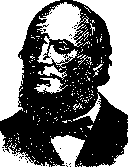
M. is the creator of an extensive physiological school and organizer of experimental work in many areas of physiology (respiration, blood circulation, excretory processes, nutrition, metabolism); M.'s research in the field of horn substance formation and his views and works in the field of nutrition are particularly interesting. Possessing extensive experimental material and being the head of a physiological laboratory, M. at the same time engaged in popularizing physiological science, being in this respect a first-class worker. His popular works in the field of nutrition ("Sources of Human Strength"), in the field of respiration ("In the Fresh Air") and others, collected in "Physiologisches Skizzenbuch" (Giessen, 1861; Russian ed.-"Physiological Sketches", with notes by A. Palkhovsky, SPB, 1865), are brilliant examples of popular works in the field of animal and human physiology.
In his works, M. is particularly interesting as a bright representative of militant materialism of the group that, besides M., is associated with the names of Buchner and Vogt. The main significance of this group lies in the direct, at times sharp, criticism of vitalistic tendencies in the natural sciences, in particular directed against Liebig ("Kreislauf des Lebens, physiol. Antworten auf Liebigs 'Chemische Briefe'", Mainz, 1852; reissued; Russian ed.-"The Circulation of Life", Kharkov, 1866). However, remaining within the narrow limits of 18th-century mechanical materialism, the group to which M. belonged, and M. himself, suffered from the three "limitations" of French materialism revealed by Engels: the application "exclusively of the scale of mechanics to processes of chemical and organic nature"; metaphysics, "the anti-dialectical nature of their philosophy", and finally "the preservation of idealism at the top in the field of social science and the misunderstanding of historical materialism" (Lenin). Engels ("Ludwig Feuerbach", Chapter II and other works), as well as Lenin ("Materialism and Empiriocriticism") gave due evaluation to M. and the entire group of "vulgar" materialism to which M. adhered.-The majority of M.'s works appeared in Russian translation in the 1860s and undoubtedly played a major role in the formation of materialist thought in the natural sciences, as well as in the development of the 1860s materialistic worldview. Pisarev specifically stopped at M.'s "Physiological Sketches", presenting them and giving them an evaluation and criticism. Besides those mentioned above, the most important works of M.: "Physiologie der Nahrungsmittel" (Darmstadt, 1850); "Physiologie des Stoffwechsels in Pflanzen und Thieren" (Erlangen, 1851). A number of M.'s articles are collected in the book "Kleine Schriften" (Vol. I-II, Giessen, 1880-1887). M. wrote a number of physiological articles in Italian. The greater part of Moleschott's works were published in Russian; for example, besides those listed above-"Natural Science and Medicine" (Speech, SPB, 1865); "The Doctrine of Food" (SPB, 1868); "Causes and Actions in the Doctrine of Life" (M., 1868); "The Unity of Science from the Point of View of the Doctrine of Life" (SPB, 1879). Individual articles by Moleschott are included in the collections: "The Circulation of Life in Nature" (SPB, 1857) and "General Conclusions of the Positive Method" by N. Necluydov (SPB, 1867).
Related articles
Mentioned in
Cite this page
“Moleschott.” Soviet Medical Encyclopedia. English translation of Bolshaya Meditsinskaya Entsiklopediya, 1st ed. (Moscow, 1928–1936), ed. N. A. Semashko. https://sovietmedicalencyclopedia.pages.dev/article/moleschott/