Cremation
Historical document, translated for reference. It reflects medical knowledge of the 1920s–30s and is not medical advice.
Summary
An overview of cremation from the 1928–1936 Soviet Medical Encyclopedia, detailing its historical practices across ancient and modern civilizations, sanitary justifications, technical evolution, and the establishment of cremation in the Soviet Union.
Encyclopedia article (1928–1936)
CREMATION (from Latin cremare - to burn), the burning of human corpses. In the narrow sense, cremation means only "corpse-burning", and in a broader sense, "fiery burial" (keeping of the deceased, farewell ritual, burning, and keeping the ashes in an urn). According to available data, the burning of the dead existed as early as 7,000 years before Christ. Among many ancient peoples (Assyrians, Babylonians, ancient Greeks, Romans, Germans, Japanese, Slavs), burning the dead was considered an honorable method of burial. Thus, many legendary heroes of ancient Greece (Patroclus, Hector, Achilles), as well as prominent figures of Rome (Julius Caesar, Brutus, Pompey, Augustus, Nero), were given a fiery burial amidst solemn circumstances. The ancient Greeks resorted to mass burning of the dead as a sanitary measure. Thucydides describes the burning in Thebes of those who died from plague during a plague epidemic. Ardent adherents of fiery burial, from ancient times to the present, are Indians and Japanese as followers of Buddha, who was cremated after his death. In modern Japan, the burning of the dead, aside from its religious ritual, also plays the role of a sanitary and land-economic measure due to Japan's land shortage. According to data for 1926, 43% of all deaths in Japan were cremated, counting both rural and urban populations, and for 1927—45.55%. In our era in Europe, fiery burial with the spread of Christianity increasingly gave way to burial in the ground. The first Christians attached no significance to the method of burial; Judeo-Christians buried their dead in the ground, while Roman Christians cremated theirs. Since Christianity initially drew its adherents from the poorest classes, cremation as a more expensive method began to be replaced by cheaper burial. In addition to economic considerations, the choice of burial was also influenced by belief in the second coming of Christ and the associated belief in the bodily resurrection of the dead. Later, political and tactical considerations were added. An example is the famous rescript (the so-called "Capitulare Paderbrunnense") of Charlemagne (785). Under pain of death, Charlemagne forbade the Saxons to burn their dead "after the pagan fashion" and to "turn bones to ashes." After Charlemagne's rescript, cremation disappeared in Europe for 1,000 years. However, the use of corpse-burning as a sanitary measure, both on a large scale and in isolated cases, was practiced during this interval as well. Thus, according to the hygienist Corradi, mass burnings were resorted to under Charles VII after the Battle of Fornovo (1495), in Venice during the plague epidemics (1509, 1576), in Apulia after the earthquake, epidemics, and rampant diseases (1627), and in various cities of Italy and Dalmatia in similar cases (1630, 1656, 1743, and 1764). In 1822, enormous impression was made in Europe by the cremation by Lord Byron of his deceased friend, the English poet Percy Bysshe Shelley, who drowned at sea during a storm. Also in Russia, burning on a large scale as a hygienic and sanitary measure was used during past epidemics. Thus, burnings of plague victims together with their dwellings and household utensils are known during epidemics in Astrakhan (1876), Vetyanka, and Manchuria (1876, 1901, 1910, 1911). In 1901, two victims of science—Dr. Vyazhnishkevich and Schreiber—were burned in the crematorium furnace of the laboratory for the production of anti-bubonic plague preparations (Alexandrovsky Fort in Kronstadt). Their ashes in urns are kept in the Institute of Experimental Medicine in Leningrad. Mention should also be made of the use of funeral pyres for killed Japanese soldiers during the Japanese-Chinese (1894) and Russo-Japanese (1904–1905) wars, and finally, the burning used in the USSR during the epidemics and famine of 1919–1921 (Beloretsk and Novosibirsk). The sharp growth of urban population, which began as early as the Middle Ages, often created "cemetery crises." To eliminate them, it was necessary to annex neighboring plots of land to old cemeteries or allocate new areas on city outskirts, which with the further growth of the city ended up within city limits. The frequent cases of unsanitary conditions in cemeteries observed since approximately the 16th century prompted many physicians and economists to advocate for the resumption of the old method of burning on a pyre. In the 19th century, prominent representatives of medicine and hygiene—Moleschott, Pettenkofer, Vogt, Virchow, and others—insisted on the resumption of this measure as the best form of burial from a hygienic point of view. Most authoritative medical bodies, such as international medical congresses in Florence (1869), Rome (1871), Dresden (1876), London (1891), Budapest (1894), and Moscow (1897), also spoke in favor of the expediency of introducing cremation. Apart from inertia, prejudices, and superstitions of the broad masses of the population, the resumption of corpse-burning was strongly hindered by the negative aspects of the primitive pyre: the duration of the combustion process, spreading acrid smoke and odor, and the mixing of the remains of the cremated with the ash and cinder from the fuel material. Only in the 1870s did the German engineer Friedrich Siemens (Dresden) succeed in designing a regenerative furnace that lacked the aforementioned drawbacks of the pyre and laid the foundation for modern technically advanced cremation. Since then, cremation has become increasingly widespread. Cremation in the USSR. Cemetery crises and the unsanitary state of cemeteries in many Russian cities, especially Petersburg (now Leningrad), prompted the question of introducing cremation as early as the late 1880s. Subsequently, the same question was raised in the 1st and 3rd sessions of the State Duma. But the favorable resolution of this issue was hindered by stubborn resistance from the Synod. Only after the October Revolution was cremation decreed in Soviet Russia by a resolution of the Council of People's Commissars on December 7, 1918. The rules developed by the People's Commissariat of Health in furtherance of this decree are currently being revised taking into account two years of practice of the Moscow crematorium and modern conditions of life and everyday routine. Cremation is provided for 48 hours after death. A physician's certificate (or medical institution certificate) on the causes of death, registration with the Civil Status Office, and permission from forensic-medical expertise are required. The crematorium physician (forensic-medical expert) must examine the deceased, and without their sanction, cremation cannot be carried out. In the Moscow crematorium, autopsies are performed in 2/3 of cases. To perform cremation, the written or oral wish of the deceased or the wish of persons or institutions bearing the funeral expenses is sufficient. The capsule with ashes is issued for burial in the ground or for storage in a columbarium or in a public place. For everyday reasons, keeping ashes at home is not permitted in the USSR. In Petrograd, a temporary crematorium was built on the 14th line of Vasilyevsky Island, which from December 14, 1920, to February 21, 1921, performed 379 cremations. The Moscow crematorium began functioning on October 7, 1927. It was converted from the crypt church of the New Don Monastery according to the design of architect Osipov (Figs. 1 and 2). Out of a total of 30,240 deaths in Moscow for 1929, 5,208 (17.25%) underwent cremation. Of these, 3,432 persons (65.9%) fall under "administrative" (stillbirths, post-autopsies, miscarriages, unowned, etc.), and 1,776 persons—under "voluntary",
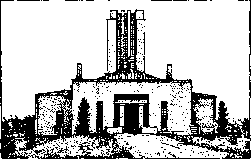
FIG. 1.
of which 1,160 were non-party adults, 340 children, and 276 members of the All-Union Communist Party (Bolsheviks). Over the first 21/2 years of the crematorium's existence, more than 9,600 cremations were performed. Technique of Cremation. The International Medical Congress in Dresden on June 7, 1876, issued the following resolution, which formed the basis of the cremation business: 1) the body must be burned in an incandescent air jet; 2) the burning
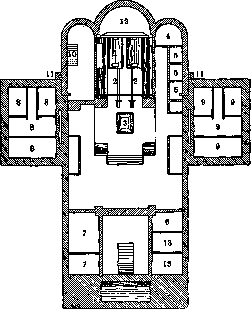
Figure 2. Plan of the cremation department (semi-basement floor) of the Moscow crematorium: 1-furnaces; 2-movable rails; 3-elevator; 4-section room; 5-shower room and break room for staff; 6-doctor's room; 7-workshops; 8-morgue cubicles; 9-same for infectious cases; 10-stairs to the basement floor; 11-chimney; 12-fuel storage space; 13-lavatories.
must be complete: no charred remains should be left; 3) cremation is permitted exclusively in special cremation furnaces; 4) during cremation, foul-smelling gases must not be formed; 5) bones and ashes must be clean, white, and collecting them should not be difficult; 6) the cost of the furnaces and the cremation itself should be as low as possible; 7) the crematorium must include: a hall for farewells, a room for cremation, a room for medical autopsies, a room for storing corpses and various auxiliary needs, and toilets. In the development of these basic provisions, the practice of German crematoria has developed a number of rules now adopted in the USSR: 1) the coffin is permitted to be made of light wood species (spruce, aspen, poplar) or of zinc sheet no thicker than 1 mm; a cardboard lid cheapens and accelerates combustion; 2) the lower part of the coffin must be no thicker than 18 mm, and the lid no thicker than 15 mm; 3) the size of the coffin must not exceed 225 cm in length, 75 cm in width, and 72 cm in height; 4) metal parts (nails, wire, handles, legs, and decorations) are not permitted; metal nails are replaced by wooden pegs; handles and legs are made removable, and decorations are made of cardboard or paper; 5) varnishing is replaced by stain; 6) pillows filled with fluff, feathers, ash, sand, or straw are not permitted (wood shavings are used); 7) clothing (underwear, shoes) must burn easily and quickly (cotton or paper are best); 8) live flowers (wreaths, bouquets) are not burned. Of various kinds of furnaces for corpse cremation, one of the most perfect in its design is the Schneider recuperative furnace (Fig. 3). Components: A - generator-loading shaft, in which
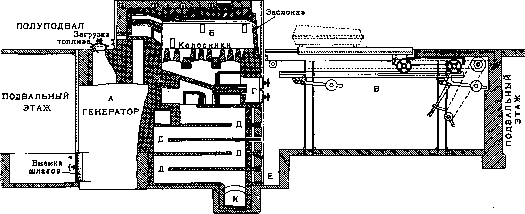
Figure 3. Longitudinal section of the Schneider furnace,
solid fuel (coal, turf, firewood) is converted into "generator gas" with a very high temperature; B - chamber for the cremation of the deceased, introduced into the coffin in a mechanized way; B - mechanism of movable rails. A shutter-plate made of fireclay brick, rapidly rising and falling on a block; G - place for ash extraction; D - recuperator consisting of brick or metal channels arranged in several rows, with some channels arranged in one direction and others in the opposite direction. When, 2-3 hours after heating the furnace, "generator gas" is obtained, it passes into chamber B, heats its walls to white heat, passes through connecting passages into one of the systems of recuperator D, and carries away the products of incomplete combustion in the form of smoke through the flue and chimney (K) of the crematorium. At the same time, the walls of the remaining, still empty channels of recuperator D, running in the opposite direction, are heated. When the walls of these channels are heated to white heat, the stoker raises the 2 valves (E) located on the outside of the furnace and admits room air. Passing from bottom to top through the walls of the recuperator heated to white heat, the room air acquires a temperature of 860-1,100° and enters the prepared chamber B. The generator gases are now directed, bypassing the combustion chamber, directly into the recuperator. Thus, the cremation of the introduced coffin with the body takes place in a stream of heated room air, and not in the flame from fuel, as happens on a pyre. Through the exhaust vents located in the upper part of the chamber, connected by channels to the chimney, vapors and all products of incomplete combustion (including light ash from the coffin and clothing) in the form of smoke are carried away into the external atmosphere. The bones and ashes of the human body, being heavier, fall through the grates of the chamber and are collected here in a basin or pan. To convert an adult deceased into white, clean, porous, easily crushable bones and ashes (approximately 2-3 liters in volume and 11/4-21/2 kg in weight) usually requires 1 hour to 1 hour 30 minutes of time. With less suitable fuel, for example, firewood
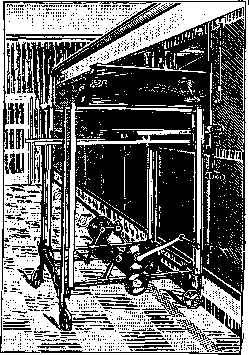
fuel, the cremation period can increase up to 3 hours. The remains, cooled after approximately 2-3 hours, are collected in a metal capsule, the lid of which is hermetically soldered shut. Each deceased entering the crematorium is recorded in a special book under a sequential number and provided with a corresponding number tag made of fireclay brick. The number tag is placed on the coffin and introduced into the furnace together with the coffin, and is then collected together with the remains, thereby guaranteeing the complete impossibility of confusing the remains of different persons. The most suitable fuel is considered to be gas coke (coal), fuel oil, and illuminating gas (if a gas plant is available). To kindle the furnace and the first cremation, coal (about 250-300 kg) and firewood or shavings for kindling are required. For subsequent cremations, only topping up with coal is required, on average about 50-80 kg, i.e., costing about 1 ruble 20 kopecks to 2 rubles. In the Moscow crematorium during continuous operation, with the cremation of an average of 15 people per day and without cooling the furnace for the night, the average coal consumption is expressed as approximately 25-30 kg per 1 deceased, and the cost price of one cremation, including operating expenses and depreciation of the building and equipment, is approximately 12 rubles for each cremated person. The capacity of the furnace is 16-18 adults and children per day. A crematorium is usually a single-story building with semi-basement and basement floors. On the first floor are located: the "farewell hall" with a catafalque adapted for the mechanical movement of the coffin into the cremation department, a waiting room, a small room for a speaker or clergyman, a place for musicians or singers. Choirs intended to accommodate an organ or harmonium, orchestra, and singers are permitted; sometimes niches are arranged in the walls for storing urns with ashes, or a columbarium intended for storing urns with ashes is placed in a separate building. The semi-basement floor is intended for the cremation department. Here is located the upper part of the furnace, with usually 2 furnaces arranged side by side. On this same floor are located the dissection room with a room for the forensic medical expert, a room for the maintenance staff, a shower room, a morgue chamber, a workshop with a stamping press, storerooms (for empty capsules, wreaths, disinfection products, linen, etc.), and toilets for the public. The basement floor accommodates the lower part of the furnace with the ash extraction place and the recuperator. Here are located the equipment for the mechanical movement of the coffin from the farewell hall to the cremation furnace, staff toilets, fuel stores, and the heating device. Morgues for better preservation of corpses are arranged in the form of refrigerators (Fig. 4), and separate chambers must be available for those who died from contagious diseases. The office should be arranged on the territory of the crematorium, but outside its walls. The construction of crematoria must in all its parts comply with existing rules and norms of sanitation (morgues, ventilation devices, etc.) and labor protection (volume of office premises, shower room, safety measures, etc.). The participation of sanitary supervision in the crematorium construction commission is mandatory. Chimneys must provide sufficient draft (18-25 m high) and receive architectural and artistic decoration on the outside. The external appearance of the crematorium and its interior decoration are best suited by strict forms with the calculation that they produce a harmonious and calming impression as much as possible. Gloomy colors and forms should be avoided. Vegetation in all its forms (palms, laurel and similar trees, flowering plants, lawns) inside and outside, as well as pools with fountains, contribute to creating a calming mood and attracting sympathies to "fiery burial." Cemeteries at crematoria should be pre-planned nicely and conveniently, keeping in mind the arrangement of graves measuring 74 × 1/2 × 3/4 [sic], 1 m2) intended for individual families with the right to bury
Figure 4. Delivery into the refrigerator.

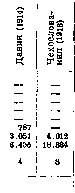
depending on the size of the plot, 4-16 capsules (or urns) with ashes. A border of greenery or shrubs separates one grave from another. Gratings or fences are not customary. Monuments are permitted only low ones; square slabs (of stone, marble, granite) with inscriptions have become widespread. A park character is the most successful form for such cemeteries. Cremation must be publicly accessible economically. This is one of the main conditions for its success. For small towns, one can limit oneself to [table of the number of cremated bodies from 1876 to 1928, country and year of opening of the first crematorium]. In addition, crematoria exist in Austria, Australia, Argentina, Africa, Holland, India, China, Mexico, Romania, the USSR, Finland, and Japan.
a small hall and reduce the number of service rooms in the cremation department, as well as limit the facility to just a single furnace, in which cremation is performed only a few times a week as several deceased individuals accumulate. In Germany, small towns with 5,000 to 10,000 residents frequently attach a cremation department to an existing cemetery chapel. In most cases, this department is built on the same level as the chapel hall, so that after the farewell service, the coffin is delivered in a horizontal rather than a vertical position. This reduces the cost of the catafalque equipment. Such crematoria in Germany cost around 50,000 marks (25,000 rubles). For cremation statistics, see the table. Propaganda for the idea of cremation. In all countries, the opening of crematoria (the first crematorium was opened on January 22, 1876, in Milan; Fig. 5)
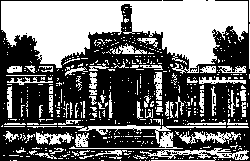
Figure 5.
funeral bureaus, their own insurance funds, and their own journals and literature.
H. Bartel. From a medico-legal standpoint, it is essential that the interests of justice do not suffer in connection with the destruction of corpses by cremation, since this method precludes the possibility of a late, sometimes repeated examination of the corpse, which is often so necessary for uncovering a crime. When a body is buried in the ground, exhumation is usually resorted to in such cases, thus yielding additional data—depending on the degree of decomposition of the corpse—for judging the cause of death. On the other hand, the ashes and bones remaining after cremation have no diagnostic value as yet, even with regard to the detection of poisoning. In countries where cremation began to be practiced, these considerations gave rise to the need for improving forensic medical expertise and necessitated the issuance of special rules guarding as far as possible against an incorrect diagnosis of the cause of death. In Western Europe, permits for cremation are issued by police or investigative and judicial authorities on the basis of a physician's certificate (or autopsy report), as well as all information pertaining to the death of the given individual. The regulations of some countries include a clause on the necessity of establishing the identity of the corpse. The question of the timing of cremation is resolved differently: in England no time limit is established, in Germany and Austria cremation is permitted 3 days after death, and in our country after 48 hours. In the USSR, cremation is regulated by the temporary rules of the People's Commissariat of Health dated January 30, 1929. A new draft of the corresponding instruction is currently being prepared. From a medico-legal perspective, it would be most rational in cases subject to cremation to always perform an autopsy and chemical analysis of the internal organs. An exception to this procedure could be made for individuals who died in hospitals after a more or less prolonged stay there, with the cause of death fully clarified by pathological-anatomical examination. Unfortunately, the practical implementation of such a rule is impossible.
v- Vladimirsky.
Related articles
Mentioned in
Cite this page
“Cremation.” Soviet Medical Encyclopedia. English translation of Bolshaya Meditsinskaya Entsiklopediya, 1st ed. (Moscow, 1928–1936), ed. N. A. Semashko. https://sovietmedicalencyclopedia.pages.dev/article/cremation/