Max von Pettenkofer
Historical document, translated for reference. It reflects medical knowledge of the 1920s–30s and is not medical advice.
Summary
Max von Pettenkofer (1818–1901) was a prominent German hygienist and one of the founders of experimental hygiene. He is known for his work on ventilation, soil sanitation, and nutrition, as well as his controversial localist theory of cholera.
Encyclopedia article (1928–1936)
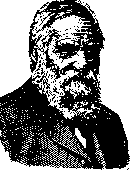
PETTENKOFER, Max (1818–1901), a famous German hygienist, one of the founders of experimental hygiene, who first introduced the methods of scientific experiment into this science (see Hygiene). He was born in Lower Bavaria, worked first as an apprentice in a pharmacy, and graduated from the medical faculty of the university in 1843. He further studied physiological chemistry (among others, under Liebig); in 1847, he received the chair of medical chemistry in Munich and began to develop a number of problems related to hygiene. In 1865, he took the chair of hygiene. In 1890, he was elected president of the Bavarian Academy of Sciences. In 1901, being an 83-year-old man, Pettenkofer committed suicide. Pettenkofer's works cover almost all areas of hygiene. He is responsible for establishing the method for determining CO2 in the air, which served as the basis for Pettenkofer's research on the ventilation of residential premises (CO2 as an indicator of air pollution). Furthermore, Pettenkofer is responsible for classic works on the hygiene of clothing, which established the sanitary significance of air in fabrics; Pettenkofer's works on the hygiene of soil and on the processes of its self-purification made it possible to experimentally substantiate practical measures in the field of sewage and city cleaning. In the field of nutrition, Pettenkofer is responsible for works on the gas exchange (see) of humans (Pettenkofer's apparatus), which served as the basis for his further work (together with Voit) on establishing hygienic norms of nutrition. Finally, Pettenkofer is the creator of the well-known localist theory of cholera. From 1885, Pettenkofer was the editor of the first German hygienic journal, "Archiv für Hygiene" (Munich-Leipzig, since 1883). Through Pettenkofer's efforts, a hygienic institute was founded in Munich.
A number of major hygienists from various countries emerged from Pettenkofer's school, including Erisman, Dobroslavin, and others. Pettenkofer is also known as an excellent popularizer of hygienic knowledge; he repeatedly spoke in public lectures, at congresses, and at conferences for doctors, engineers, and for broad social groups. Such are his popular printed lectures on clothing, on soil, on cholera epidemics, and on the reduction of mortality in connection with sanitary-technical measures. Pettenkofer also emphasized the socio-economic significance of the latter. In his lectures on the "value of health" (Munich, 1873), he emphasized the conclusion that "a city community, by sacrificing for the treatment of diseases, for their prevention, and for the strengthening of the health of its inhabitants, pursues not only humane goals but also creates capital that yields high interest." While emphasizing this side of the issue, Pettenkofer, in his interpretation of hygienic problems, still provided mainly an analysis of external physical-chemical factors ("external environment") and their influence on the biological processes of the human organism: social conditions as an etiological moment of sanitary hazards were still little considered by him; the further development of hygiene (see Hygiene) introduced these social moments into the study of hygienic disciplines.
At the present time, Pettenkofer's works are being republished in Germany. Despite the indisputable positive significance of Pettenkofer's methodological works in the creation of experimental hygiene, his theoretical views on the scope and tasks of hygiene already belong to a significant degree to the historical past of this science.
Related articles
Cite this page
“Max von Pettenkofer.” Soviet Medical Encyclopedia. English translation of Bolshaya Meditsinskaya Entsiklopediya, 1st ed. (Moscow, 1928–1936), ed. N. A. Semashko. https://sovietmedicalencyclopedia.pages.dev/article/max-von-pettenkofer/