KEFIR
Historical document, translated for reference. It reflects medical knowledge of the 1920s–30s and is not medical advice.
Summary
Kefir is a slightly acidic, carbonated, low-alcoholic beverage prepared from milk through combined alcoholic and lactic acid fermentation. It originates from the northern slopes of the Caucasus mountains and is used as a refreshing nutritious drink and dietary remedy for various conditions.
Encyclopedia article (1928–1936)
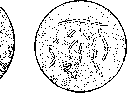
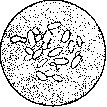
KEFIR (from Turkish 'kef' meaning health), a slightly acidic, rich in carbon dioxide, low-alcoholic beverage prepared from milk through combined alcoholic and lactic acid fermentation. K. has been known since ancient times by peoples inhabiting the northern slopes of the Caucasus Mountains. In Russia, the first information about K. was reported in 1876-77 by doctors Jogin and Sipovsky. The material for preparing K. is primarily cow's milk. The initiators of the ripening processes of K. are microorganisms contained in the so-called kefir grains. These grains have the appearance of bumpy, hard lumps of yellowish color, ranging in size from a millet seed to a pea. Large grains (the size of a walnut) are considered inferior and unfit for consumption. In a dried state, kefir grains, when stored in a dry place, can retain their properties for years (fig. 1). The characteristic features of a healthy kefir grain are its white color, elastic consistency, and its property of floating to the surface of the milk. When contaminated with other types of bacteria, e.g., with improper care of the kefir grain, diseases of K. are observed. The most common condition is the sliminess of kefir grains, which become flabby, easily crush between the fingers, and are covered with mucus. When using kefir grains affected by this disease, the beverage obtained has an unpleasant sour smell and taste, and the casein precipitates in large clumps poorly absorbed by the body. Preparations of kefir ferment in the form of powder and cakes are less reliable than natural grains. The main flora of kefir grains consists of three groups of microbes: yeasts, lactic acid bacteria, and peptonizing bacteria, corresponding to the three main processes determining the ripening of kefir - alcoholic and lactic acid fermentation and peptonization. The accidental admixture of bacteria usually consists of putrefactive, butyric acid, and others. According to Nikolaeva's research, kefir grain represents a clot of casein penetrated by lactic acid bacteria and yeasts, with the latter located mainly on the periphery of the grain or lying in small islands inside it, while the bacteria fill the entire mass of the grain (fig. 2). The constant initiator of alcoholic fermentation of kefir is two types of yeast-like organisms: Torula kephir and Torula ellipsoidea. The cells of Torula kephir are round in shape and have a diameter of about 3-4 μ. Torula kephir has the ability to vigorously ferment cane, grape, and milk sugar both under aerobic and anaerobic conditions. Torula ellipsoidea forms elongated-oval cells reaching 6-9 μ in length. These yeasts are capable of decomposing cane and grape sugar, but not milk sugar. The initiators of lactic acid fermentation are two types of bacteria: Bac. caucasicus and Bact. Guntheri. Bac. caucasicus is a large, non-spore-forming, immobile rod, in some cases slightly curved, about 0.4-0.5 μ in thickness. Its length varies considerably depending on the nutrient substrate and the age of the culture. This microbe belongs to typical lactic acid microbes and produces significant acidity. The primary role in kefir fermentation belongs to Torula kephir (fig. 3) and Bac. caucasicus (fig. 4). Torula ellipsoidea (fig. 5) and Bact. Guntheri have secondary importance.
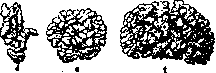
Fig. 2. Cross-section of a kefir grain. в»7
Fig. 3.
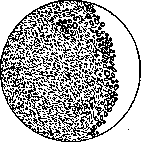
Fig. 4. The length of this microbe varies considerably depending on the nutrient substrate and the age of the culture. This microbe belongs to typical lactic acid microbes and produces significant acidity. The primary role in kefir fermentation belongs to Torula kephir (figure 3) and Bac. caucasicus (fig. 4). Torula ellipsoidea (fig. 5) and Bact. Guntheri have secondary importance.
There are two methods of preparing K.: the aul, or burdock, and the urban, or bottle method. The Caucasian highlanders prepare K. in burduks, i.e., in leather bags specially designed for this purpose. Due to the fact that remnants of casein get into the folds and seams of the burduk, where they undergo rotting, burdock K. often acquires an unpleasant taste and smell of leather. In the bottle method, dry grains are soaked for several hours in boiled lukewarm water, and then, placing them on a sieve, unsuitable grains (slimy, flabby) are removed. Healthy K. grains are placed in a vessel with warm or freshly boiled milk. If the milk is too fatty, it is diluted with a little water. The next day, the grains are again transferred to fresh milk and this operation is repeated for several days. Usually on the eighth day, the grains begin to float to the surface and become white, elastic, and significantly swollen, resembling a cauliflower in appearance. The floating of the grains indicates that they have acquired the proper activity and can be used to prepare the starter.
Fig. 5.
For this purpose, the last portion of soured milk is added to three times the volume of fresh milk, or one tablespoon of rejuvenated kefir grains is added to two glasses of milk. Fermentation is carried out at a temperature of 15-18° in a vessel closed with a cotton plug or cloth. The liquid is shaken every 2-3 hours. After a day, the starter is ready. The milk is drained from the grains through a sieve and diluted with twice the volume of boiled and cooled milk. The liquid ferments at 15° in tightly sealed bottles. Bottles are taken in small sizes and not filled to the top. Every 2-3 hours, the bottles are slightly shaken. After a day, the milk turns into 'weak' one-day K., after 2 days - into 'medium' two-day K., and after 3 days - into 'strong' three-day K. A simpler method of preparing K. was proposed by Podvysotsky: fill one-fifth of the bottle with freshly prepared K., and fill the remaining 4/5 with milk, after which the bottle is tightly sealed and kept at 20° with frequent shaking until K. ripens. For the next portion, again leave 11ъ, and fill the rest with milk. The weakness of this method lies in the possibility of culture degeneration and deterioration of the beverage quality. One-day K. ('weak') is a slightly foamy sweet liquid of the consistency of sour cream. Two-day ('medium') K. foams strongly and when the bottle is opened, gases may be ejected from it. It is thinner than one-day K. and has a pleasant sour taste and smell of fresh sour cream. Casein in it is in a very finely ground state, although it may give a sensation of lumps on the tongue. Three-day K. ('strong') is thinner and more sour than two-day K. and foams even more strongly, often bursting bottles. Older kefir is very sour, its flakes become voluminous, and curd lumps appear. Chemical composition of kefir (in %). Components Lactic acid Milk sugar Casein...... Peptones...... Albumin..... Alcohol..... Fat........ Ash........ Water........ Fermentation duration 2 days 4 days 6 days 0.66 3.70 2.57 0.07 0.42 0.23 3.62 0.64 88.09 0.83 2.24 2.59 0.09 0.40 0.81 3.63 0.62 0.90 1.67 2.56 0.12 0.39 1.10 3.63 0.63 89.00 Well-prepared K. should foam and contain no more than 1% of lactic acid. In order to increase the digestibility of K., it was proposed to add a little pepsin to it (pepsinized K.), but such a measure did not become widespread. The alcohol present in K. has a somewhat stimulating effect, and the lactic acid bacteria and lactic acid counteract putrefactive processes in the intestine. Observations show that K. can be consumed more readily and in significantly larger quantities than ordinary milk, especially in hot weather, when it is used as a thirst-quenching beverage. The feeling of satiety caused by K. lasts for a very short time. K. is used as a refreshing and tasty nutritious beverage and as a dietary remedy in diseases associated with nutritional decline. It is believed that in addition to easy digestibility, K. has the ability to thin mucus and increase its secretion, increase diuresis, enhance the excretion of urea, chloride, and phosphate salts, and, by improving general nutrition, increase body weight. K. is most often used in chronic disorders of the gastrointestinal tract, mainly in those forms of the disease that are accompanied by digestive disorders and sluggish peristalsis (usually 'weak'). Usually, treatment is started with one glass, which is drunk in several portions. Gradually increasing the portions by one glass per day, one usually reaches six glasses. The maximum dose is considered to be 4 bottles per day. Being very close in dietary terms to kumiss (see), K. has the advantage over the latter that it can be more easily prepared anywhere at any time of year.
KEFIR 6вО
M. Lukyanovich. Kefer in children's nutrition began to be applied, at least in the USSR, significantly later than in the nutrition of adults. Priority in the matter of introducing K. as a therapeutic and nutritional means in pediatric practice belongs to Filatov. K. with difficulty made its way into the dietetics of children and only thanks to a series of works on the significance of lactic acid bacteria in the fight against putrefactive processes occurring in the human intestine, in particular that of a child, K. in recent years has become one of the favorite means in pediatric practice. K. along with yogurt, buttermilk and protein milk is now widely used in many nutritional disorders in children, both acute and chronic (dyspepsia, intoxication); but it works especially well in banal colitis, i.e. those caused by Bact. coli commune, Bac. proteus vulgaris and Bac. perfringens. Small children can be given K. with rice broth (1:2, 1:1, 2:1, etc.), starting with large dilutions and ending with small ones. In these cases, the average K. is recommended, i.e. two-day. The amount is from 150 to 1,000 g per day, depending on age and disease. K. works especially well in the dietary therapy of chronic colitis, affecting both local intestinal processes and the improvement of general nutrition. In these cases, K. can be given for 2-3 months. Most children drink it willingly and tolerate it very well. In case of refusal, a little saccharin or sugar can be added to it to improve the taste, depending on the disease. In addition, one-day K. is sometimes very useful for constipation as a means of regulating bowel movements. The amount is 1-2 bottles per day, depending on age. Finally, K. is a very valuable nutritional substance in tbc and other diseases accompanied by nutritional decline, in an amount that does not interfere with the variety of food. Some doctors, such as Girsh, recommend K. for many infectious diseases, e.g. in scarlet fever, whooping cough, measles, diphtheria.
B. Brukhensky.
Related articles
Mentioned in
Cite this page
“KEFIR.” Soviet Medical Encyclopedia. English translation of Bolshaya Meditsinskaya Entsiklopediya, 1st ed. (Moscow, 1928–1936), ed. N. A. Semashko. https://sovietmedicalencyclopedia.pages.dev/article/kefir/