Leptandra
Historical document, translated for reference. It reflects medical knowledge of the 1920s–30s and is not medical advice.
Summary
Leptandra (Veronica virginica) is a perennial herbaceous plant of the Scrophulariaceae family, native to North America and Siberia, whose rhizome has been used in medicine as an emetic, laxative, and cholagogue. Chemical analyses by Power and Rogerson identified various constituents such as essential oil, tannin, and resin, though the previously described glucoside leptandrin was not confirmed as a distinct chemical entity.
Encyclopedia entry (1928–1936)
LEPTANDRA (Veronica virginica), Leptandra virginica (L.) Nutt.; a perennial herbaceous plant up to 2 m in height, of the figwort family (Scrophulariaceae); found in the USA and Siberia. In medicine, the rhizome of the plant is used.

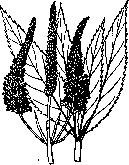
According to Power and Rogerson, it contains a small amount of essential oil, sugar, tannin, dimethoxycinnamic acid, mannitol, a bitter principle, resin, and phytosterol. The presence of the previously described glucoside leptandrin as a pure chemical entity was not confirmed by them. It is used as an emetic, laxative, and cholagogue. Preparations—Extractum Leptandrae fluidum 2.0–4.0 pro dosi.
Related articles
Cite this page
“Leptandra.” Soviet Medical Encyclopedia. English translation of Bolshaya Meditsinskaya Entsiklopediya, 1st ed. (Moscow, 1928–1936), ed. N. A. Semashko. https://sovietmedicalencyclopedia.pages.dev/article/leptandra/