Thomas Hunt Morgan
Historical document, translated for reference. It reflects medical knowledge of the 1920s–30s and is not medical advice.
Summary
A biographical overview of the prominent American biologist Thomas Hunt Morgan, detailing his pioneering work in experimental embryology, regeneration, and especially genetics using the fruit fly Drosophila, which laid the foundation for modern genetics and the chromosome theory of heredity.
Encyclopedia article (1928–1936)
MORGAN, Thomas Hunt (born 1866), one of the leading contemporary biologists, professor of experimental zoology at Columbia University (New York), and president of the American National Academy of Sciences. Morgan's early works were devoted to questions of experimental embryology and regeneration. However, his greatest significance lies in his work in the field of genetics. Taking as his object the fruit fly Drosophila (see), first used as a scientific object shortly before him by Carpenter and Castle (1905–1906), Morgan, beginning in 1910, discovered a multitude of mutations, the study of which led to the establishment of a whole series of scientific regularities that formed the basis of modern genetics and even earned the designation of "morganism."
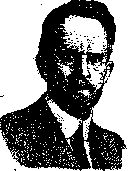
In 1910, by observing the inheritance of sex-linked genes, Morgan began laying the groundwork for the chromosome theory of heredity with a clarity and concreteness not achieved before him. In 1911, Morgan observed the inheritance of two genes in the same chromosome and, utilizing the chiasmatypie theory of the cytologist Janssens, created the theory of linkage and crossing-over (see Chromosome crossover), which later came to be known as Morgan's law. A group of talented young researchers who gathered in Morgan's laboratory and produced an enormous scientific output (Sturtevant, Bridges, Muller, and many others) took part in the further development of these questions. Among the works of Morgan's school, special note must be made of the construction of the first map of gene locations in the chromosome, which is based on the theory of the linear arrangement of genes (Sturtevant, 1913). Of other generalizations, the most important are the theory of the number of linkage groups, the theory of multiple allelomorphism and identical loci, and Bridges' theory of sex. The discoveries of Morgan's school are of great importance in resolving questions of evolutionary theory. (For more details on morganism, see Heredity.) In addition to a very large number of special papers, Morgan wrote: The development of the frog's egg (New York, 1897); Regeneration (New York, 1901); Evolution and Adaptation (New York, 1903); Experimental Zoology (New York, 1907; Russian edition, Moscow, 1909); Heredity and Sex (New York, 1913); The Mechanism of Mendelian Heredity (jointly with Sturtevant, Muller, and Bridges, New York, 1915; 2nd ed., 1923); A Critique of the Theory of Evolution (Princeton, 1916; Russian edition, Leningrad, 1926); Evolution and Genetics (Princeton, 1925); The Physical Basis of Heredity (Philadelphia-London, 1920; Russian edition, Moscow-Petrograd, 1924); The Genetics of Drosophila (jointly with Bridges and Sturtevant, 's-Gravenhage, 1925); The Theory of the Gene (New Haven, 1926; Russian edition, Leningrad, 1927); Experimental Embryology (New York, 1927).
Related articles
Mentioned in
Cite this page
“Thomas Hunt Morgan.” Soviet Medical Encyclopedia. English translation of Bolshaya Meditsinskaya Entsiklopediya, 1st ed. (Moscow, 1928–1936), ed. N. A. Semashko. https://sovietmedicalencyclopedia.pages.dev/article/thomas-hunt-morgan/