Bakhmetyev
Historical document, translated for reference. It reflects medical knowledge of the 1920s–30s and is not medical advice.
Summary
This biographical and medical encyclopedia entry details the life and work of Porfiry Ivanovich Bakhmetyev (1860-1913), a prominent researcher of insect and animal anabiosis. It also covers medicinal sticks (bacilli medicati and styli caustici), outlining their composition, preparation, and clinical uses.
Encyclopedia article (1928–1936)
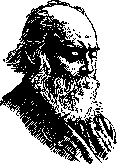
BAKHMETYEV, Porfiry Ivanovich (1860–1913), a prominent researcher in the field of anabiosis. He was a professor at the University of Sofia; from 1912 he lectured in Moscow at the Shanyavsky University. The principal works of Bakhmetyev are devoted to the study of the body temperature of insects. He found that with a certain drop in temperature, insects enter a state of apparent death, from which they revive again upon gradual thawing (see Anabiosis). Recently, Bakhmetyev studied the anabiosis of warm-blooded animals. He succeeded in obtaining anabiosis in bats. However, bats could not serve as a convincing example, since they also exhibit a natural drop in temperature upon the onset of hibernation. Bakhmetyev dreamed of achieving anabiosis in warm-blooded animals that do not undergo hibernation. Death overtook Bakhmetyev just as he was setting up these experiments. Bakhmetyev worked extensively on the application of biometrics to the study of insect systematics, as well as on the question of the boundaries between living and dead nature. Bakhmetyev published 67 scientific works. His principal studies are: «Uber die Temperatur der Insekten nach den Beobachtungen in Bulgarien» (1899); «Experimentelle entomologische Studien» (B. I, 1901, B. II, 1907); «Kalorimetrische Messungen an Schmetterlingspuppen» (1902); «Analytisch-statistische Untersuchungen über die Anzahl der Flügelhaken bei Bienen» (1904).
BACILLI MEDICATI (from the Latin bacillum — stick), Cereoli (cera — wax) — medicinal sticks. This medicinal form includes: I. Suppositories in the form of sticks for introduction into the urethra, uterine cervix, lacrimal canal, fistulas, wound tracts, etc., for the purpose of a more or less prolonged effect of the medicinal substance; they have the appearance of cylindrical sticks, often pointed at one end; the mass must melt at body temperature; they are prepared by mixing the medicinal substance with cocoa butter or with a mixture of gelatin and glycerin; they are shaped either by rolling the mass, or by pouring the previously melted mass into molds, or by expression with special presses. When introduced into wound tracts, it is necessary to keep in mind the possibility of infection from non-sterilently prepared medicinal sticks. II. Styli caustici (stylus — stylus), caustic sticks, formerly also called lapides, solid, as pointed as possible sticks used for local cauterizing or astringent action; they are prepared 1) by sharpening and grinding crystals and 2) by pouring the melted mass into molds. At the physician's request, they are dispensed in a quill casing or in a wooden, glass, and sometimes leaden casing. The most commonly used caustic sticks are: 1) Argentum nitricum fusum, Lapis infernalis, fused silver nitrate (State Pharmacopoeia VII), lunar caustic; 2) Argentum nitricum cum Kalio nitrico, Lapis infernalis mitigatus, a fused alloy of equal quantities of silver and potassium nitrates; 3) Cuprum sulfuricum aluminatum, Cuprum aluminatum, Lapis divinus, Lapis ophthalmicus, eye stone (State Pharmacopoeia VII), an alloy of 17 parts alum, 16 parts copper sulfate, 16 parts potassium nitrate, and 1 part camphor; 4) Cuprum sulfuricum in bacillis, ground and polished crystals of copper sulfate; 5) Kalium causticum fusum, Kalium hydrooxydatum fusum, fused caustic potash (State Pharmacopoeia VII); 6) Lapis causticus viennensis, Pasta caustica viennensis, Viennese caustic paste, an alloy of 1 part caustic lime and 2 parts caustic potash; dispensed in a glass or lead casing.
Related articles
Mentioned in
Cite this page
“Bakhmetyev.” Soviet Medical Encyclopedia. English translation of Bolshaya Meditsinskaya Entsiklopediya, 1st ed. (Moscow, 1928–1936), ed. N. A. Semashko. https://sovietmedicalencyclopedia.pages.dev/article/bakhmetyev/