Dosage Forms
Historical document, translated for reference. It reflects medical knowledge of the 1920s–30s and is not medical advice.
Summary
This article discusses the various dosage forms of medications, their historical development, classification by application method and physical properties, and factors influencing their design and use.
Encyclopedia article (1928–1936)
Dosage forms, the form in which medicinal substances come into use for the patient (human, animal).- The nomenclature of D. f. changes with the development of technology and medicine; new D. f. arise (e.g., tablets introduced since 1872 developed on the basis of press production; ampules- since 1886-as a result of the ideas of asepsis and the role of the bloodstream in the movement of drugs through the body); non-vital forms become obsolete. The emergence and vitality of D. f. are determined by the following properties.- 1. Convenience of administration, introduction, or application. Thus, powders are replaced by tablets, mixtures of herbs (collections)-by ready-made extracts. Ointments in tubes, spread plasters, individual packets for dressings have advantages over previous forms.- 2. Precise dosing. Ready, weighed powders, tablets, pills have replaced taking medicine "on the tip of a knife", "a pinch" etc.- 3. Facilitation of chemical and physiological action. Examples: emulsions, powders instead of undivided or unground substances T ready-made liquids for injection in ampules.-4. Compactness and portability. Tablets and pills contain the required amount of medicine in a small volume; on journeys, as well as in conditions of serving a rural population or army scattered over a large territory, they have a great advantage over mixtures and even powders, which take up more space. An example of a non-vital D. f., forgotten due to lack of portability-"draught" (haustus), i.e., a mixture taken all at once; also not portable is the Citman-n decoction- (from sarsaparilla), prescribed in quantities from 3 to 12 bottles.-- 5. Stability. D. f. that need to be prepared "ex tempore", rapidly deteriorating mixtures, emulsions, infusions, decoctions, some ointments, even powders etc. do not allow for mass preparation in advance.- 6. External properties of D. f. Taste and smell, as well as the color and appearance of the medicine should not be unpleasant. These considerations have given rise to creams and powders with fragrance, confectionery D. f. (cough lozenges, laxative gingerbread, coated wafers and pills); on this basis many reject mixtures containing salicylate preparations or tannins along with iron salts, or berry syrup-sweetened mixtures with alkaline content etc. due to the unattractive color of these combinations.- 7. Economic considerations. This question acquires, especially in the USSR, primary importance; for economic reasons, pills coated with gold and silver, many confectionery D. f., cut-out spread plasters and many other D. f. have disappeared from use. D. f. are divided by method of application or by physical (production) characteristic. By method of application, forms for internal (powders, tablets, pills, collections, mixtures, drops etc.), external (dusting powders, hot compresses, compresses, ointments, plasters, rubbings), cavity (douches, enemas, suppositories, pellets, sticks, inhalations, mouthwashes, insufflations), ocular (drops, lamellae, powders), parenteral (subcutaneous, intravenous, intramuscular injections), wound (dusting powders, washings and dressings for wounds) etc. are distinguished.- It is more rational to divide D. f. by physical and production characteristics.-- 1. Solid (dry, dense) D. f.: collections, powders (undivided, divided, or dosed, in capsules and wafers), granulated powders, tablets, wafers, pills, granules;- 2. Gaseous D. f.: gases (oxygen, nitrogen, laughing gas) in bombs or cushions, carbonated beverages (lemonades, saturations, effervescent waters and wines), effervescent powders, powders for oxygen, carbonic and sulfur baths, fumigations, inhalations and snuff salts.- 3. Liquid D. f.: mixtures, solutions, suspensions, drops (for internal use and ocular), oils and other liquids in gelatin capsules, aqueous extracts (infusions, decoctions, macerates, digests), ampules, emulsions.- 4. Soft or intermediate D. f.: pastes, pulps, boluses, ointments (including dosed and spread), creams and pastes, suppositories (pellets, sticks, balls), medicated soaps and soap preparations, plasters, mustard plasters, hot compresses and dressing materials. (On individual D. f.- see corresponding articles.) D. f. are prepared in pharmacies; those allowing mass preparation are mainly prepared in factories and packaging workshops, which makes it possible to mechanize and reduce the cost of dispensing medicines. The possibility of replacing medicines made in pharmacies with D. f. of mass (factory) preparation is limited by the instability of many D. f., aggravated by storage conditions in warehouses until they arrive at the pharmacy. At present, the People's Commissariat of Health has published lists of prescription formulas, according to which mass production of dosage forms is permitted.
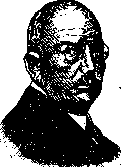
I. Obergard. LEXER Erich (Erich Lexer, born in 1867), famous German surgeon, student of E. Bergmann, who is the teacher of a whole generation of physicians not only in Germany but also in many other countries, since his famous guide to general surgery, already in its 16th edition in Germany, has been translated into almost all languages. As early as the first edition of this guide in 1904, L. showed himself not only as a highly educated surgeon but also as a good pathologist, whose works, especially on the pathogenesis of osteomyelitis, are considered classical. In his activities, L. paid special attention to tissue and organ transplants, setting forth his vast experience on this issue in a two-volume monograph (1919). L. succeeded in successfully transplanting a knee joint from a freshly amputated limb. In the post-war period, L. was much engaged in the problem of eliminating the consequences of injuries, mainly of the face and joints, subsequently publishing a monograph on reconstructive surgery (1920). L.'s academic activity took place in Königsberg, Freiburg and in Munich, where he took the chair of Sauerbruch. Together with K. Garre and G. Küttner, L. is the editor of the classic "Handbuch der praktischen Chirurgie" (Vols. I-VI, Stuttgart, 1922-1927). The main works of L.: "Die Entstehung entzündlicher Knochenherde und ihre Beziehung zu den Arterienverzweigungen der Knochen" (Arch. f. klin. Chir., Vol. LXXI, 1903); "Die freien Transplantationen" (T. 1-2; Stuttgart, 1919); "Lehrbuch der allgemeinen Chirurgie" (Vol. I-II, Stuttgart, 1920; 3rd Russian ed.- L., 1928-29); "Wiederherstellungschirurgie" (Lpz., 1920); together with F. König and L. Wrede-- "Die Operationen am Gesichtsteile des Kopfes" (Chirurgische Operationslehre, ed. by A. Bier, H. Braun, H. Kummell, Vol. I, Lpz., 1922); "20 Jahre Transplantationsforschung in der Chirurgie" (Arch. i. klinische Chir., Vol. CXXXVIII, 1925).
-*►«►
Related articles
Mentioned in
Cite this page
“Dosage Forms.” Soviet Medical Encyclopedia. English translation of Bolshaya Meditsinskaya Entsiklopediya, 1st ed. (Moscow, 1928–1936), ed. N. A. Semashko. https://sovietmedicalencyclopedia.pages.dev/article/dosage-forms/