Tablets
Historical document, translated for reference. It reflects medical knowledge of the 1920s–30s and is not medical advice.
Summary
Tablets are a pharmaceutical form obtained by pressing powders, dominating among mass-produced medicinal preparations. This article details their manufacturing process, advantages over powders, disadvantages, and proper storage methods.
Encyclopedia article (1928–1936)
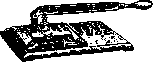
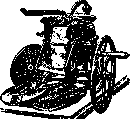
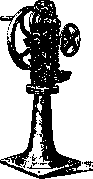
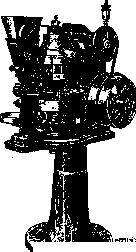
TABLETS (from Latin tabula - a small board, tablet), a pharmaceutical form obtained by pressing powders. At present, tablets occupy a dominant place among medicinal forms of mass (factory) preparation, constituting on average up to 40% of all prescriptions. Manufacturing tablets manually is possible by weighing doses of powders in a special (usually lever) press (fig. 1), developing pressure up to 100 kg per 1 cm2. In mechanized production, where individual doses are not weighed but measured by a machine at a speed of up to 10 doses per second, the powders must be properly prepared. Only a few, easily water-soluble powders with a crystalline form can be pressed directly. All other substances and especially mixtures of powders must undergo the following operations: 1) binding the material into uniform in composition and even granules (granulation) (fig. 2); 2) adding disintegrating (swelling) substances (starch, gelatin, dried yeast, pectin, casein, agar-agar, etc.), ensuring rapid disintegration of tablets in water; 3) adding lubricating substances, ensuring uniform flow of powder in the measuring devices of machines, without which tablets at high machine speed would have varying weights. As lubricating substances, talc is permitted. Tablets have a number of advantages over powders. 1) The possibility of mechanizing the tableting process (fig. 3 and 4). Modern machines produce up to 400,000 tablets per working day with one worker; hence follows the economic advantage of this work. 2) Cleanliness and hygienic working conditions. In tablet production, manual labor and techniques such as triturating pills, filling powders into capsules, etc., are eliminated. 3) Significant accuracy of dosing; variations in weight for tablets are allowed only within ±2%, while for powders and pills they are set at ±5%. 4) Pressed medications occupy less volume; they are portable and convenient to use in the army, on travels, etc. A pharmacy, having ready-made tablets, can dispense medicine to the patient without delay. A physician can carry a set of pressed medications when visiting patients, which is important, for example, in rural areas remote from centers. 5) The composition of pressed tablets is less subject to harmful effects of external conditions, e.g., moisture, air, light, dust, etc. Apomorphine, diuretin and other medications are preserved better in tablets than in powders. 6) When taking tablets, the unpleasant or bitter taste characteristic of some medicinal substances (e.g., quinine) is significantly weakened. The surface of tablets can additionally be coated with various protective layers, e.g., sugar, chocolate, gelatin, salol, etc. 7) Many preparations that cannot be turned into powder at all or are difficult to make into pills can also be given in tablet form. 8) Inscriptions can be pressed onto tablets, replacing labels, which eliminates one possibility of errors (fig. 5).
Fig. 1.
Among the disadvantages of tablets, the following should be noted: 1) with improper manufacturing, many tablets do not disintegrate in the gastrointestinal tract (this is eliminated by proper selection of the tableting formula and careful work); 2) children and many adults do not know how to take tablets; 3) many preparations cannot be taken in tablet form because, when taken in dry or concentrated form, they can cause irritation in the stomach (e.g., potassium iodide, potassium bromide, sodium bromide, etc.) and even cauterization of the mucous membrane (salicylic acid); such preparations can be dispensed in tablets on the condition that they will be dissolved in water; 4) many medications cannot be directly converted into tablets, e.g., tinctures, liquid extracts, etc.; these preparations can, however, in most cases be dried, and the dry residue converted into tablets; 5) with many tablets, various foreign (inert) substances are introduced into the stomach and intestines, e.g., starch, talc, sugar, etc.
Fig. 2. Granulating machine.
Fig. 3. Coating machine.
Fig. 4. Rotary machine.
Fig. 5.
A technical criterion for the suitability of tablets is their solubility or complete and rapid disintegration in water. Uncoated tablets should dissolve or disintegrate in warm water (36-37°) with shaking within no more than 5 minutes. Coated tablets, except those coated with keratin, should dissolve or disintegrate at 36-37° with shaking within no more than 30 minutes. A very significant disadvantage of tablets is that the physician does not know exactly either the composition of the tablets or their physical properties (disintegrability, quality of binding, disintegrating and lubricating additives, fineness of the powders in the composition). When operating at high speeds, the pressing parts become noticeably heated. This heating to some extent depends on the degree of compression of the compressor (the device regulating pressure during pressing), sometimes it can cause the material being pressed to melt (salol); such tablets are extremely difficult to disintegrate and, especially in gastric diseases (ulcer!), can cause significant harm. It should also be mentioned that some compositions in tablet form spoil faster (e.g., a mixture of Aspirin+Caffeine sodium salicylate) due to close contact of mutually reacting components.
A very important role in ensuring the value of tablets is played by their storage method. Tablets should be stored in a dry place at ordinary temperature in well-sealed glass jars or tubes. Many tablets, when in contact with air, harden and lose their ability to disintegrate in water. Tablets made from insufficiently dried materials or kept in a damp place often become damp or swell on their own or crumble when shaken. Therefore, tablets, more than powders, require storage in well-sealed vessels and possible dryness. When prescribing tablets, it is often recommended to either dissolve them or grind them when taking. Along with tablets, other forms were proposed to replace dosed powders; among them should be noted: 1) lozenges (pastillae, or trochisci), obtained by cutting or forming from a dough-like mass; 2) sugar wafers (rotulae), made by pouring drops of boiling, very concentrated sugar syrup onto cold tin or marble, followed by moistening such wafers with a solution of the medicinal substance and further drying; 3) gelatin lozenges, obtained by pouring a thick gelatin jelly containing an admixture of the medicinal substance onto a board, divided into equal parts; after setting, rectangles are obtained (if they are very thin, they are called flakes - lamellae), containing exactly equal doses of the medicinal substance and easily soluble in warm water. Such flakes are common in the USA and England, where they are especially used for introducing into wounds, body cavities, the conjunctiva of the eye, or for preparing eye drops or injection fluids at the bedside of the patient or in outpatient practice. A patented form of this kind has been released in Germany under the name Gelonida; powders in gelatin capsules have also been released under the same name.

I. Oberhard. TABOPARALYSIS, taboparalysis. Given the common syphilitic origin of tabes and progressive paralysis, a combination of both forms in the form of T. is often observed. The somewhat inaccurate position of Möbius that progressive paralysis is tabes of the brain, and tabetic-paralysis of the spinal cord, forms the basis of the view that T. is a homogeneous process spread in both the brain and spinal cord. On this basis, the diagnosis of T. is made in all cases of complication of paralysis with spinal cord symptoms resembling tabes. However, this approach requires corrections. It is undeniable that in progressive paralysis, spinal cord damage is a frequent phenomenon, but it cannot always be identified with tabes. The paralytic changes in the spinal cord in T. are more diffuse, less selective, and as a rule do not have such a slow chronic course as in tabes. If sometimes in progressive paralysis predominant damage to the posterior columns is observed, then unlike tabes, the damage is localized not only in the exogenous, originating from the root systems, but also in the endogenous pathways (ventral field of the posterior columns, Redlich's dorso-medial bundle, Flechsig's main field, etc.). In general, the spinal cord changes in progressive paralysis are partly the result of secondary degenerations (due to damage to nerve cells in the brain). At present, only those cases should be classified as T. when clinically tabes with all its characteristic symptoms precedes the development of progressive paralysis (often by many years). Theoretically, of course, the simultaneous onset of both forms and even a later onset of tabes is possible, but in such cases, due to the more rapid and malignant course of progressive paralysis, the latter dominates too much in the picture of the disease, and the slower tabetic process does not have time to fully develop. From the standpoint of symptomatology, T., in addition to the presence of tabetic phenomena (ataxia, absence of knee reflexes, sensory disturbances, atrophy of the optic nerves), differs from ordinary paralysis by a slower course of mental degradation, more frequent hallucinations (especially optical), and paranoid delusional ideas. However, in T., other clinical forms characteristic of ordinary paralysis (expansive, agitated, depressive, etc.) are also possible. The Wassermann reaction in the fluid in T. is often less pronounced than in ordinary paralysis (a positive result sometimes only with high concentrations of fluid). The onset of progressive paralysis in a tabetic patient is often marked by a stroke. The differential diagnosis of T. may present difficulties in distinguishing it from tabetic psychoses. The latter are relatively benign, episodic, and do not have some of the characteristics of paralysis of the cerebrospinal fluid (Lange curve). The pathological anatomy of T. consists of tabetic and paralytic lesions. Treatment - as in ordinary progressive paralysis (malaria, etc.). Lit.-see lit. to the article Tabes dorsalis, Progressive paralysis.
Related articles
Mentioned in
Cite this page
“Tablets.” Soviet Medical Encyclopedia. English translation of Bolshaya Meditsinskaya Entsiklopediya, 1st ed. (Moscow, 1928–1936), ed. N. A. Semashko. https://sovietmedicalencyclopedia.pages.dev/article/tablets/