Extracts
Historical document, translated for reference. It reflects medical knowledge of the 1920s–30s and is not medical advice.
Summary
Extracts are galenic preparations obtained by extracting raw plant or animal material with liquids followed by evaporation of the solvent. They come in various forms including dry, thick, semi-liquid, and liquid extracts, with production methods designed to preserve active constituents while minimizing unwanted substances.
Encyclopedia article (1928–1936)
EXTRACTS, or extracts, Extracta, galenic preparations obtained by extracting plant or animal raw materials with liquids followed by evaporation of the solvent (extractant). Depending on the extractant used, aqueous, alcoholic (by international agreement, in the absence of specification, alcoholic extract is always implied), ether extracts are distinguished; factory production also produces chloroform, benzene, gasoline and other extracts. Aqueous extracts are prepared by evaporating infusions (see Infusum), decoctions (see Decoctions) or macerates (cold infusions, see Infusum); alcoholic extracts are prepared by evaporating alcoholic extracts (see Tinctures). Methods for producing extracts were developed taking into account the capabilities of the pharmacy and its small laboratory; only with the development of the pharmaceutical industry (from the mid-19th century) did the introduction of more modern methods and technical means begin (extractors, diffusers, vacuum apparatus, vacuum, belt, spray and other dryers). In pharmacopoeias, including in Ph VII, methods for producing extracts are standardized for pharmacy use; therefore, pharmacopeial methods are limited to the following: 1) Extraction is carried out by maceration (see Tinctures) or percolation. The latter method aims to extract all substances soluble in the used extractant from the material and is carried out in special apparatus called percolators (Fig. 1). For percolation, the dry and crushed material is moistened with a sufficient amount of extractant to impregnate it and placed in a percolator, after which more extractant is added so that there is still a layer of liquid above the material. By placing a receiver, the percolator stopcock is opened just enough to count the drops falling (pharmacopoeias regulate the flow rate). Percolation is continued until clear extractant begins to flow from the stopcock; the flow of liquid is regulated by adding or automatically so that there is always liquid above the material. The percolate is collected in portions in separate vessels. 2) Separation of the extract from the residual material is necessary only when prepared by maceration or the hot method; for this purpose, pressing (Fig. 2) is used followed by filtration. 3) Evaporation of the extract. Extracts containing substances that easily change upon heating (especially when in contact with air) must be evaporated under vacuum (see); others are evaporated in water or steam baths. Evaporation over a fire always leads to partial destruction (burning) of the extract against the walls of the vessel. Depending on the degree of removal of the extractant, dry extracts (Extr. sicca, moisture content below 10%), thick extracts (Extr. spissa, moisture about 10% and above), semi-thick or semi-liquid extracts (Extr. tenua, moisture about 25%) and liquid extracts (Extr. fluida, from which only part of the extractant is evaporated with the calculation that 1 part of material yields 1 part of liquid extract) are distinguished. The introduction of liquid extracts or fluidextracts (first adopted by the British Pharmacopoeia in 1864, but previously prepared in the USA) took into account the difficulty for pharmacies to evaporate extracts under conditions ensuring the constancy of the constituent substances; therefore, these fluidextracts are prepared in such a way that 100 parts of material are percolated only until 85 parts of extract are obtained; then, changing the receiver, percolation is continued until complete extraction (exhaustion) of the material. Only this second extract is evaporated and mixed with the previously obtained 85 parts; the mixture is then brought to a weight of 100 parts with the prescribed extractant. Thus 85% of the fluidextract is not subjected to heating. Due to the great advantages of dry extracts (greater stability, convenience in weighing and the possibility of inclusion in both powders and liquid dosage forms), so-called dried extracts were introduced; they are prepared by adding to a thick extract some substance that easily absorbs water but is not hygroscopic; by adding such substances, the thick extract is brought to a certain definite weight (after drying) in relation to the thick extract or to a certain content of active principles. The main purpose of extract production is to extract the necessary substances from the raw material (plant or animal organ) without extracting unnecessary (ballast) substances (such as cellulose, resins, etc.) as much as possible, and then to bring the extract to the smallest possible volume convenient for use. With the application of modern chemical methods in extract production, new types of preparations have emerged—extracts purified from ballast substances by additional extraction with other extractants (e.g., aqueous extract is additionally extracted with chloroform or benzene), precipitation (e.g., the extract is dissolved in water, filtered from insoluble particles, and the filtrate is precipitated by adding acetone or alcohol, etc.) or adsorption (clarification with charcoal, kaolin, etc.); these extracts or their solutions are marketed under the name of neogalenic preparations (neogalenica). Concentrated infusions (see Infusum) should also be classified as extracts; in recent times, a number of such concentrated infusions have also been released in dry form. Extracts are most conveniently used in pills, since most extracts contain mucilaginous, proteinaceous, resinous substances or dextrins possessing adhesive properties. Extracts are less used in powders, mixtures, etc. Fluidextracts are used per se, in the form of drops or in liquid dosage forms. In addition to the pharmaceutical preparations mentioned, extracts are also prepared for other purposes. Special care is required in the preparation of extracts from organs belonging to organopreparations (see), especially from organs of internal secretion; during their preparation, both temperature conditions and strict asepsis must be observed, and antiseptics can only be used in special cases. Often it is also necessary to exclude the influence of atmospheric oxygen, especially at high pH. In many cases, all operations must be carried out at temperatures below 56° (critical temperature for protein denaturation), including evaporation; but often, especially in a weakly acidic medium, brief heating to a higher temperature is permitted, necessary for the removal of proteins by coagulation. Similar precautions are necessary when preparing extracts from other tissues and organs (e.g., organs of external secretion, such as gastric mucosa, pancreas, etc.), embryonic extracts (see Tissue culture) or bacterial preparations; the latter include some tuberculins (see) and preparations of the antivirus type (see). Extracts are also prepared in various industries for food purposes (meat extract and malt extract) as well as for technical needs (tannin extracts in the leather industry, licorice extract for fire extinguishing foam generators and for tobacco products, dye extracts and many others).
Figure 1. Percolators.
still a layer of liquid.
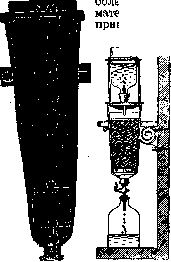
Figure 2. Presses: a-hand screw; b-differential (wine-making); c-hand hydraulic.
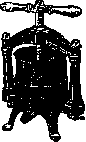
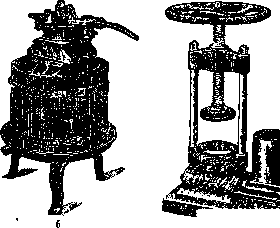

For aqueous extracts, the hot extraction method is also used, i.e., boiling with water or pouring the material with boiling water. 2) Separation of the extract from the residual material is necessary only when prepared by maceration or the hot method; for this purpose, pressing (Fig. 2) is used followed by filtration. 3) Evaporation of the extract. Extracts containing substances that easily change upon heating (especially when in contact with air) must be evaporated under vacuum (see); others are evaporated in water or steam baths. Evaporation over a fire always leads to partial destruction (burning) of the extract against the walls of the vessel. Depending on the degree of removal of the extractant, dry extracts (Extr. sicca, moisture content below 10%), thick extracts (Extr. spissa, moisture about 10% and above), semi-thick or semi-liquid extracts (Extr. tenua, moisture about 25%) and liquid extracts (Extr. fluida, from which only part of the extractant is evaporated with the calculation that 1 part of material yields 1 part of liquid extract) are distinguished. The introduction of liquid extracts or fluidextracts (first adopted by the British Pharmacopoeia in 1864, but previously prepared in the USA) took into account the difficulty for pharmacies to evaporate extracts under conditions ensuring the constancy of the constituent substances; therefore, these fluidextracts are prepared in such a way that 100 parts of material are percolated only until 85 parts of extract are obtained; then, changing the receiver, percolation is continued until complete extraction (exhaustion) of the material. Only this second extract is evaporated and mixed with the previously obtained 85 parts; the mixture is then brought to a weight of 100 parts with the prescribed extractant. Thus 85% of the fluidextract is not subjected to heating. Due to the great advantages of dry extracts (greater stability, convenience in weighing and the possibility of inclusion in both powders and liquid dosage forms), so-called dried extracts were introduced; they are prepared by adding to a thick extract some substance that easily absorbs water but is not hygroscopic; by adding such substances, the thick extract is brought to a certain definite weight (after drying) in relation to the thick extract or to a certain content of active principles.
The main purpose of extract production is to extract the necessary substances from the raw material (plant or animal organ) without extracting unnecessary (ballast) substances (such as cellulose, resins, etc.) as much as possible, and then to bring the extract to the smallest possible volume convenient for use. With the application of modern chemical methods in extract production, new types of preparations have emerged—extracts purified from ballast substances by additional extraction with other extractants (e.g., aqueous extract is additionally extracted with chloroform or benzene), precipitation (e.g., the extract is dissolved in water, filtered from insoluble particles, and the filtrate is precipitated by adding acetone or alcohol, etc.) or adsorption (clarification with charcoal, kaolin, etc.); these extracts or their solutions are marketed under the name of neogalenic preparations (neogalenica). Concentrated infusions (see Infusum) should also be classified as extracts; in recent times, a number of such concentrated infusions have also been released in dry form. Extracts are most conveniently used in pills, since most extracts contain mucilaginous, proteinaceous, resinous substances or dextrins possessing adhesive properties. Extracts are less used in powders, mixtures, etc. Fluidextracts are used per se, in the form of drops or in liquid dosage forms. In addition to the pharmaceutical preparations mentioned, extracts are also prepared for other purposes. Special care is required in the preparation of extracts from organs belonging to organopreparations (see), especially from organs of internal secretion; during their preparation, both temperature conditions and strict asepsis must be observed, and antiseptics can only be used in special cases. Often it is also necessary to exclude the influence of atmospheric oxygen, especially at high pH. In many cases, all operations must be carried out at temperatures below 56° (critical temperature for protein denaturation), including evaporation; but often, especially in a weakly acidic medium, brief heating to a higher temperature is permitted, necessary for the removal of proteins by coagulation. Similar precautions are necessary when preparing extracts from other tissues and organs (e.g., organs of external secretion, such as gastric mucosa, pancreas, etc.), embryonic extracts (see Tissue culture) or bacterial preparations; the latter include some tuberculins (see) and preparations of the antivirus type (see). Extracts are also prepared in various industries for food purposes (meat extract and malt extract) as well as for technical needs (tannin extracts in the leather industry, licorice extract for fire extinguishing foam generators and for tobacco products, dye extracts and many others).
Related articles
Mentioned in
Cite this page
“Extracts.” Soviet Medical Encyclopedia. English translation of Bolshaya Meditsinskaya Entsiklopediya, 1st ed. (Moscow, 1928–1936), ed. N. A. Semashko. https://sovietmedicalencyclopedia.pages.dev/article/extracts/