Extractives
Historical document, translated for reference. It reflects medical knowledge of the 1920s–30s and is not medical advice.
Summary
An overview of extractive substances, defined as organic compounds found in animal and plant organisms in minute quantities that require concentrated extracts to detect. The article discusses their role as metabolic intermediates, their physiological properties, and their division into nitrogenous and non-nitrogenous groups based on foundational biochemical research.
Encyclopedia article (1928–1936)
EXTRACTIVES, organic substances found in animal and plant organisms in such insignificant quantities that their detection requires the preparation of concentrated extracts (infusions). Extractives represent a collective group of substances of diverse chemical composition; they are intermediate metabolic products of the complex constituent parts of the organism.
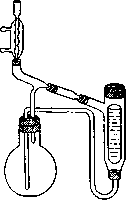
Figure 4.
The study of the chemical structure of extractives, the sources of their formation in the organism, and the products of their further transformation makes it possible to judge the nature of the processes taking place in a healthy and diseased organism, which would be impossible to do by studying only the final products of substance transformation in the organism. Many extractives possess a strong physiological action. Such are, for example, hormones (adrenaline, thyroxine, etc.); meat extractives, for example in the form of broth, are energetic stimulators of gastric secretion, and possibly also stimulators of bile output; alkaloids (see) can also be classified among plant extractives. Extractives can be divided into two groups: nitrogenous and non-nitrogenous. One of the most widespread methods for studying extractives belongs to Gulevich, who discovered the main nitrogenous extractives of muscles: carnosine (see), anserine, carnitine (CH3)3N-CH2-CH2-CH(OH)-CO (betaine of gamma-amino-alpha-hydroxybutyric acid), methylguanidine (see), oxalyl-methylguanidine (creatone) /NHa + H2O HN=C 4N(CH3).CO-COOH. For the isolation of a number of extractives (certain alkaloids, hormones), specially developed methods exist. Since certain constituent parts of the animal and plant organism differ little in chemical respects (e.g., proteins, nucleic acids, phosphatides, etc.), their transformation products are approximately the same, which leads to the finding of compounds similar to trimethylamine, choline, betaines, creatinine, arginine, histidine, purine bodies, urea, etc., among the extractives of both animals and plants; at the same time, characteristic differences are observed in the composition of extractives not only between animals and plants, but also between various animal species. Numerous studies of extractives in many organs of various animals and plants, carried out mainly by the schools of Gulevich and later of Ackermann, laid the foundation for the development of comparative biological chemistry.
Related articles
Mentioned in
Cite this page
“Extractives.” Soviet Medical Encyclopedia. English translation of Bolshaya Meditsinskaya Entsiklopediya, 1st ed. (Moscow, 1928–1936), ed. N. A. Semashko. https://sovietmedicalencyclopedia.pages.dev/article/extractives/