Plasters
Historical document, translated for reference. It reflects medical knowledge of the 1920s–30s and is not medical advice.
Summary
Plasters are a medicinal form for external application, denser than ointments, which adhere well to skin and form an elastic, waterproof coating. The article describes three types: lead plasters, cerates (wax-based plasters), and rubber plasters, detailing their preparation, composition, and application methods.
Encyclopedia article (1928–1936)
PLASTERS, Emplastra (from Greek emplasso- I fill in, smear, wrap), a medicinal form for external application, of a denser consistency than ointments, not melting at body temperature but adhering well to the skin and covering it with an elastic, waterproof coating; prepared from resins, gum resins, turpentine, wax, lard, fats, oils, metal oxides, etc. (ordinary plasters-FUP) or from rubber (rubber plasters-FUP). Historically known is the plaster of Menecrates, physician to Emperor Tiberius (beginning of 1st century) (see Diachylon plaster). The essence of the plaster cooking process (saponification of fats with lead oxide in the presence of water and formation of lead salts of high-molecular fatty acids) was explained by Scheele and Chevreuil. At present, plasters of three types are prepared. 1. Lead plasters. The base for most plasters of the State Pharmacopoeia is simple lead plaster (Empl. Plumbi simplex). For its preparation, linseed oil, lard, and lead oxide (the latter in the form of the finest powder, pre-mixed with a small amount of water) are thoroughly mixed and heated over a fire in a large vessel, constantly adding water to replace the evaporating water until the pink particles of lead oxide completely disappear; continuous stirring is necessary to prevent burning. During this process, the entire mass becomes whitish and, after cooling, forms a sticky mass, insoluble in water, and unstained after washing. The semi-cooled mass is mixed with warm water and kneaded, replacing the water several times with fresh warm water until the pressed water no longer contains glycerin, which is recognized by the absence of a sweet taste; then the entire mass is slightly heated to remove the remaining water (carefully to prevent burning) and either poured into paper capsules or metal molds or manually or mechanically formed into cylindrical rods. In factory preparation of lead plaster, the fats are usually replaced with a corresponding amount (about 95 parts instead of 100 parts of fat) of technical oleic acid, in which case glycerin is not formed and therefore its removal is not necessary.-Other plasters of the pharmacopoeia are prepared by adding various substances, both medicinal and improving consistency, to simple lead plaster. Thus, to obtain an adhesive plaster for spreading (Empl. adhaesivum extensum), 10 parts of simple plaster are melted with rosin, wax, larch turpentine, dammar resin * and anhydrous lanolin, taken in 1 part each; mercury plaster (Empl. Hydrargyri) contains, in addition to lead plaster (60%), wax, lanolin, and mercury (20%); compound lead (gum) plaster (Empl. Plumbi compositum)-rosin and turpentine, increasing the adhesion of simple lead plaster; soap plaster (Empl. saponatum)-soap, wax, Provence or other vegetable fatty oil, and camphor; plasters with a significant admixture of resins are sometimes distinguished under the name resin plasters (Emplastra resinosa). Simple lead plaster is used to prepare lead ointment-Urig. Diachylon (FVII). The authentic prescription of Hebra prescribed the preparation of lead ointment by saponifying fats with an insufficient amount of lead oxide for complete saponification, without removing glycerin. "Burnt" plasters-Emplastra adusta-have almost completely gone out of use; in their preparation, the plaster mass or part of it, e.g., the basic lead plaster, is heated over a fire (in a small pot) until it takes on a brown color and the characteristic smell of burnt fat. 2. Cerates (Cerata, Emplastra cerata). As their Latin name indicates, these are alloys of wax (Cera) with or without the addition of medicinal substances, having the consistency of plasters. Among the FUP plasters, cerates are essentially plasters made from Spanish flies (Empl. Cantharidis) and melilot plaster (Empl. Meliloti); they contain wax with an admixture of rosin, fat, and medicinal substances: in the first case, powder of Spanish flies, in the second, oil extract from melilot. The latter, according to the FVII prescription, is separated from the powder by filtration. According to other prescriptions, the finely powdered melilot herb is added to the ready-made alloy of wax with fat; such plasters with powdered herb were sometimes distinguished in a special category of "herb" plasters. It should be noted that in FVII the name "cerate" is given to the wax ointment (Ung. cereum), despite its very soft, ointment-like consistency. 3. Rubber plasters. In 1897, Unna introduced rubber plasters, or Collemplastra (from French collant-sticky-and Emplastrum), the base of which is a mixture of gutta-percha or rubber * with anhydrous lanolin and with resins or balsams. Rubber plaster has the advantages of very great strength, insolubility, long-lasting adhesion, harmlessness, and therefore is willingly used on damaged skin (on wounds and ulcers) instead of lead plaster, which is not completely free of poisonous properties and easily decomposes. Most commonly used in pediatric practice is leukoplast (Leucoplast)-a rubber plaster with 25% zinc oxide added to neutralize the resin acids contained in the plaster. To prepare rubber plasters, rubber is dissolved in the smallest possible amount of ether or low-boiling gasoline (petroleum ether); to the solution are added balsams (copaiba, turpentine) or resins (rosin, dammar), ensuring the adhesion of the plaster, and wax and lanolin, preventing it from drying out, and then other substances. The thick mass is immediately spread on bookbinding cloth in a thin layer and left until the "gasoline" evaporates. Rubber plasters are not left unspread. Various firms abroad produce rubber plasters under all sorts of names (Hansaplast, Para-plast, Guttaplast, etc.). The name "paraplast" was proposed by Unna for plasters made from "para" grade rubber, which has high elasticity and long-lasting adhesion; the name "guttaplast"-for gutta-percha plasters. The resin of mistletoe (Viscum album) was also proposed as a resin for preparing plasters under the name viscina, as well as a substitute for mastic for skin varnishes. Practically not used. Ready plasters (Emplastra and Cerata) are spread in a semi-melted state on canvas, leather, gauze, fabric, silk, etc. (spread plasters-Empl. extensa, Sparadrap). In case of preparing spread plasters according to individual prescriptions, the physician should indicate the size of the plaster, where the pharmacist takes a piece of fabric slightly larger and leaves free edges. The physician can instead of indicating the dimensions prescribe the formats of the plaster according to the FUP data: the size of a sheet (quarter or eighth), playing card, palm, hand, ear shell, or half-palm, half-playing card, etc. Templates for such plasters are attached to the FUP. In case of rectangular formats, it is preferable to indicate the required dimensions in centimeters. To calculate the amount of plaster needed for spreading, the pharmacopoei's recommendation is used to spread the plaster in a layer not thicker than 1 mm; with specific gravity of lead plasters about 2.0 and plasters not containing heavy metals about 1.0, this gives per 1 cm2 in the first case 0.2 of lead plaster, in the second-0.1 of non-metallic plaster. The spreading of plaster itself in large production is done with the help of a machine, in which the warm mass is evenly distributed over the moving bookbinding cloth as it passes between rollers. In small production, a trough is used for spreading plaster, in which the melted mass is located; excess mass is removed from the plaster with a wide knife" (fig. 1). For individual prescriptions, the material is simply spread with a wide knife, occasionally dipping it in hot water.
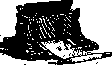
Figure 1. Apparatus for spreading plasters, heated by water.
if the patient can spread the plaster himself. Sticks are rolled out of the heated plaster mass in a primitive way by hand, which is called "malaxation of the plaster." Such work is generally a relic; malaxation of plaster from Spanish flies is even dangerous for the pharmacist. There exist

Figure 2. Universal press with nozzles for making plaster rods.
presses (fig. 2) equipped with special nozzles for this purpose.
t The meaning of the plaster form lies mainly in creating a waterproof, sufficiently dense (denser than an ointment) covering on the skin to protect it from external influences (air, dust, and bacteria) and to macerate the skin with its secretions. Deep action of the medicinal substances included in plasters cannot be expected, with the exception of the cantharides plaster and the mercury plaster; the action of the latter is significantly less energetic than that of mercury ointment, as the denser plaster mass significantly hinders the absorption of its contents. If the purpose of using a plaster is only for the action of the medicinal substances contained in it, then coated plasters are perforated, i.e., covered with a network of holes allowing for skin transpiration. For piercing plasters, both runic and mechanical perforators are used. In the prescription, "Empl. extensum perforatum" is noted. To cover the skin instead of plasters, such preparations as the English plaster, which is not essentially a plaster, are also used. Plasters were once a very favored medicinal form; at present, plasters are not used as frequently; popular are the corn plaster (see Salicylic Collodion), mercury plaster (with 20% mercury), lead and adhesive plasters, plaster from Spanish flies ("fly"). The main indications for the use of plasters in dermatology: limited chronic infiltrates (psoriasis, lichen planus, Vidal's lichen); hyperkeratoses (corn, callus, keratotic eczema); small foci of deep pyoderma (abscess, furuncle). Plasters are contraindicated in acute, spreading, and exuding dermatoses. To prevent the development of impetigo under the plaster, caused by the frequent presence of pyococci in the hair follicles, the plaster should be changed at most every 1-2 days, and the skin surface should be cleansed with oil, alcohol, ether. The gummatous plaster is also used for non-medical purposes-for makeup. The harmless adhesive plaster is widely used both for therapeutic purposes and as dressings (umbilical dressings for newborns, reinforcement of gauze and other dressings).
Related articles
Mentioned in
Cite this page
“Plasters.” Soviet Medical Encyclopedia. English translation of Bolshaya Meditsinskaya Entsiklopediya, 1st ed. (Moscow, 1928–1936), ed. N. A. Semashko. https://sovietmedicalencyclopedia.pages.dev/article/plasters/