Dental Technical Instrumentation
Historical document, translated for reference. It reflects medical knowledge of the 1920s–30s and is not medical advice.
Summary
This article describes the standard tools and equipment used in dental laboratories during the early 1930s for the fabrication of dentures, crowns, and orthodontic appliances. It details the specific functions of various instruments, including impression trays, articulators, vulcanizers, and specialized pliers for metalwork.
Encyclopedia article (1928–1936)
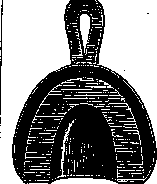
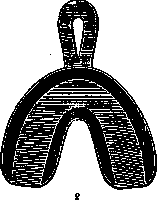
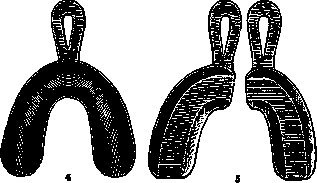
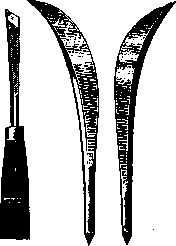
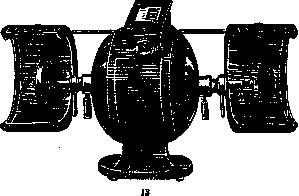
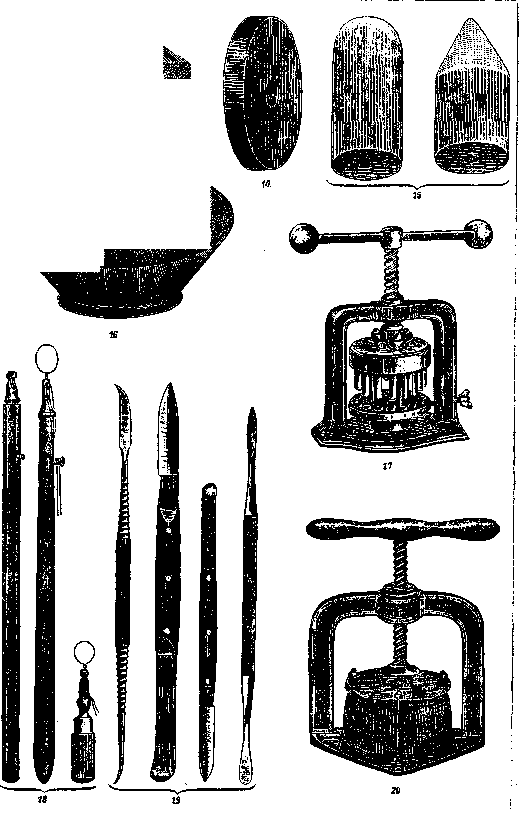
Dental technical instrumentation is used for the fabrication of dental prostheses, obturators for the hard and soft palate, and appliances and splints used in orthodontics and for fractures and other injuries of the jaws. The basic instrumentation of this type is as follows. The oral tray, or impression tray, serves to obtain an accurate impression of the teeth and jaws. It is a thin-walled metal form with a short handle in the front part. An impression mass (plaster, so-called Stents, wax) is placed into such a form and held in it to prevent shifting to the side while being pressed against the teeth and jaws (the positive) to take a negative impression of them. Oral trays negatively replicate the shape and size of the alveolar processes of the jaws and are therefore divided into upper and lower; they come in six sizes. An oral tray for a jaw with teeth (Figs. 1 and 2) has a deep groove with a flat bottom for housing the alveolar process with teeth. This groove is shallower in an oral tray for edentulous jaws (Figs. 3 and 4) and has a rounded bottom corresponding to the ridge of the alveolar process that lacks teeth. In upper oral trays, the inner edges of the alveolar groove are connected by a well-defined palatal elevation of varying height. Partial trays (Figs. 5 and 6) are used to obtain unilateral impressions when fabricating bridge prostheses, individual dental crowns, and post-and-core teeth of various systems. Furthermore, dental technical instrumentation includes the articulator (see), and the vulcanizer (see Vulcanization). The flask (Fig. 7) is a metal box, either solid or consisting of two or more separable parts. It is intended for enclosing plaster and other masses used for embedding wax patterns, vulcanizing rubber prostheses, and casting metal parts. The shape of the flask varies; they are made of copper, bronze, etc. The flask holder (Fig. 8) is a device for holding the flask at the moment of melting out the wax. Steel files are used for filing rubber and metal work. Scrapers (Fig. 9) and gravers (Fig. 10) are tools for finishing rubber work; pluggers (Fig. 11) are tools for packing rubber. The grinding machine (Figs. 12 and 13) is used for grinding, lapping, and giving the necessary shape to artificial mineral teeth and for finishing (polishing) rubber and metal prostheses. The grinding machine consists of two parts. On its upper part, a grinding device (Fig. 12) is fixed, onto one end of which grinding wheels made of carborundum or corundum (Fig. 14) are screwed for grinding and polishing teeth, and onto the other—wheels made of felt (felt wheels, Fig. 15) and brushes (Fig. 16). The foot-operated grinding machine is set in motion similarly to a foot-operated sewing machine. To vent the filings of mineral teeth and rubber to the outside, special pipes are installed to suck away these harmful filings. The Taggart apparatus (Fig. 17) is used for the fabrication of metal (gold, platinum, etc.) crowns. The apparatus consists of a series of steel cylinders and corresponding holes, with the help of which hollow cylinders of the required volume are stamped out from metal plates, to which the shape of the prosthetic tooth is subsequently given. The dentimeter is a special instrument (Fig. 18) used to determine the volume of the tooth neck and root for the fabrication of soldered crowns and rings, and Richmond system post-and-core teeth. It consists of a metal handle, the tapered end of which is equipped with two holes for securing iron wire (binding wire) in them. The latter is placed on the neck of the tooth and tightened by turning the dentimeter until it firmly grips the tooth. Then the loop is cut in the middle, straightened, and a plate of the required size is cut from it for the fabrication of crowns (gold, platinum). A metal spatula (Fig. 19) is used in the fabrication of wax patterns and plaster models. A wheel and hand spinner are used for casting metal parts of prostheses. The Taggart and Solbrig apparatuses are more complex devices for casting. A press (Fig. 20) for flasks is used for pressing rubber and removing excess plaster from the flasks. Tweezers are used during soldering (Fig. 21). Furthermore, the following tools are also needed: flat-nose pliers, round-nose pliers, wire cutters, a coping saw, a horn mallet and a metal mallet, metal separation discs with diamond grit (Fig. 22) for the separation and grinding of teeth serving as supports for prostheses; crown scissors (Fig. 23), which are nothing other than metal shears, but with very short blades curved along the plane; contouring pliers, beak-shaped (Fig. 24) for giving hollow crowns, rings, and clasps the necessary shape corresponding to the shape of natural tooth crowns; crampon pliers (Fig. 25)—universal clinical-technical pliers, replacing wire cutters, flat-nose pliers, and other instruments in the clinic; pliers for cutting crowns fixed with dental cement in cases where it is necessary to remove a bridge or an individual crown (Fig. 26), and pliers (Fig. 27) for repairing (riveting) facings of fixed bridge prostheses in the patient's mouth.
I. Furman.







Dental Technical Instrumentation III
/
Dental Technical Instrumentation IV
Related articles
Cite this page
“Dental Technical Instrumentation.” Soviet Medical Encyclopedia. English translation of Bolshaya Meditsinskaya Entsiklopediya, 1st ed. (Moscow, 1928–1936), ed. N. A. Semashko. https://sovietmedicalencyclopedia.pages.dev/article/dental-technical-instrumentation/