Prostheses
Historical document, translated for reference. It reflects medical knowledge of the 1920s–30s and is not medical advice.
Summary
An overview of prostheses and artificial limbs from the 1928-1936 Great Medical Encyclopedia, detailing their classification, functional and cosmetic requirements, stump preparation, and manufacturing types in the Soviet Union.
Encyclopedia article (1928–1936)
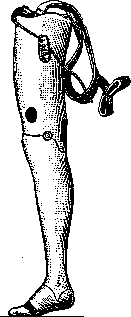
PROSTHESES (from Greek protithemi - I substitute), mechanical devices, appliances, and apparatuses that compensate for various defects and conceal injuries to individual parts of the body. In most cases, prostheses are functional and cosmetic devices that enhance or even restore the function of a damaged organ. More rarely, prostheses are purely cosmetic, hiding severe defects and injuries of the body, predominantly the face, from prying eyes. The first group includes mainly prostheses of the upper and lower extremities, as well as dental, jaw, and general oral cavity prostheses; the second group includes facial prostheses: artificial eyes, noses, auricles, and the like. Prostheses of the lower and upper extremities are called artificial limbs and represent the most extensive and important group in terms of functional and cosmetic results. In the Soviet Union, prostheses are issued free of charge to all pensioners and working citizens and their families, regardless of the causes and timing of their mutilation. Mutilated individuals employed in certain industries receive two prostheses: one of the usual artificial limb type and another more adapted to their specific profession - a working prosthesis. In addition, various mechanical working appliances capable of improving the working capacity of the mutilated worker are also issued free of charge. To gain a clearer understanding of the modern significance of artificial limbs, they cannot be considered independently, separate from contemporary medical achievements in this field; the improvement of prostheses goes hand in hand with the successes of orthopedics and surgery in this area, is closely connected with them, and constitutes a single indivisible whole - the practice of prosthetics for the mutilated. The latter is understood broadly - not only in the sense of manufacturing a corresponding prosthesis, but also in the sense of preparing the mutilated person for prosthetics, performing additional operations to improve the condition of the stump and its function, training the mutilated person himself (strengthening his nervous system, adapting to new static conditions, teaching how to correctly use the prosthesis and handle it, especially mastering the proper use of the prosthesis during labor). In this understanding, prosthetics should maximally influence the restoration of the working capacity of the mutilated person. The enormous functional significance of artificial limbs has forced a review of former amputation principles and the creation of new principles and methods based on the technical improvements of artificial limbs. The medical and technical aspects are so closely intertwined in prosthetics that the principles of prosthetics must be well known to every surgeon. Along with technical requirements, high cosmetic demands are also placed on a modern prosthesis; the latter are viewed not from the standpoint of satisfying the whim of the mutilated person, but from the standpoint of circumstances that sharply increase his working capacity. Every mutilated person suffers to a greater or lesser extent due to the fact that his mutilation is noticeable to others and singles him out among them - this has a depressing effect on his well-being. The elimination of external flaws by a prosthesis has an extremely beneficial effect on the mutilated person, raising his well-being and working capacity. The following requirements are placed on a modern prosthesis (artificial limb): the prosthesis must be relatively light, durable, well-fitted to the stump, respond to the movements of the healthy limb, fully correspond to its external shapes, require a minimum expenditure of the patient's strength, cause no pain, chafing, abrasions, and produce no noise (clattering, squeaking, etc.). As a principle during walking, there should be free movements in the knee joint even with thigh amputation and disarticulation at the hip joint. Along with the prosthesis, the stump must also meet certain requirements, without which even a beautifully constructed prosthesis cannot provide a sufficiently full function. The stump must not be too long or too short; for the thigh, the limit of maximum stump length is the transition point of the diaphysis into the metaphysis, and the minimum length is 10 cm below the ischial tuberosity along the plumb line. The limit of maximum stump length for the lower leg is the middle of its lower third, and the minimum is 10 cm from the knee joint line. Disarticulations of joints, especially large ones, are unsatisfactory from the prosthetics point of view and can be used only in the most exceptional cases. The stump must be normally mobile, without contractures, have a bluntly truncated cylindrical shape with a well-mobile, non-redundant, smooth skin flap covering a painless, smooth bone saw cut without bone proliferations and well-covered on the sides with soft tissues; the skin scar must be painless, movable, and not coincide with the weight-bearing surface. The skin of the entire surface must have normal nutrition, blood circulation, and innervation, be sufficiently hardened and resilient to the pressure of the prosthesis, especially at the points of support. The best under all specified qualities are weight-bearing stumps that bear pressure on the end of the bone saw cut. It is impossible to use a prosthesis soon after amputation, especially of the lower extremity in the thigh region, middle and upper third of the lower leg, because the stump must be formed and regenerated in a special way under the influence of appropriate preparation. The truncated muscles that moved the amputated parts of the limb must undergo significant persistent atrophy, the abundant subcutaneous fat, especially usual on the thigh stump, must also sharply atrophy, post-amputation edema must disappear, and normal blood circulation conditions in the stump must be restored; if a weight-bearing stump is being prepared, it is necessary to methodically accustom it to weight-bearing on the end. Regeneration of the stump occurs fastest under the influence of special tight bandaging and the use of so-called temporary prostheses. Measurements from the stump can under no circumstances be taken before the complete completion of its regeneration. If a prosthesis, especially one with a rigid socket, is fitted to a insufficiently formed stump, after a few days of wearing such a prosthesis, the stump will decrease in volume, sit deeper in the socket, and the prosthesis will appear wide and short. The average period for stump regeneration with careful and skillful care, especially when using temporary prostheses, is 11/2-2 months. After amputations and during the stump preparation period, one should remember the possibility of stump contracture and apply appropriate preventive measures. The mutilated person himself must also be prepared for wearing a prosthesis. He should be placed on crutches early, especially on temporary prostheses, and develop confidence in movements, stability on the healthy leg, and free mobility through special gymnastics, so that the waiting period for the permanent prosthesis is fully utilized to prepare the mutilated person for the new static-dynamic conditions of walking on a permanent prosthesis. Upon receiving the permanent prosthesis, a trial wearing of it for 4-5 days is necessary, because often some defects of the prosthesis are revealed not immediately, but gradually, after the passage of several days; this is especially important for mutilated persons receiving a prosthesis for the first time. Prostheses in lower extremity amputation, artificial legs, according to design features are divided into prostheses with soft sockets, or splint-socket prostheses, and prostheses with hard sockets - wooden, fiber, metal, or made of hardening materials (celluloid, emalitin, liquid glass, carpenter's glue with shavings, etc.). In the USSR, a type of prosthesis is quite widespread in which the thigh socket is soft - leather, while the entire lower leg is wooden and hollow. This type of prosthesis is usually called "semi-American," whereas the entirely wooden prosthesis is called "American" (it first appeared in America). For now, the mandatory state standard type in the USSR is the splint-socket prosthesis (Fig. 1), but measures are being taken to replace it with the American prosthesis with hard sockets - wooden - III AND S P L I N T - S O C K E T (figure 1). The basis (figure 1) consists of two metal splints - internal and external (figure 1a), having corresponding to the knee joint hinges that allow the splints to bend backward, in accordance with the flexion in the knee joint. The hinges are of various systems (slip-on, split, mortise, milled, etc.), and in most cases with thigh amputations and high lower leg amputations, they are equipped with a special mechanical device called a "lock" (Fig. 1з), which is located on the outer splint or on both and, when put into action, locks the knee joint and prevents the splints from bending. This lock is essentially an attribute of obsolete systems, when as a rule people walked on prostheses for thigh amputations with a closed lock, i.e., without flexion in the knee joint, to avoid its buckling, and opened the lock only at the moment when they sat down in order to bend the prosthesis at the knee.
Modern prostheses are made so stable at the knee joint that they are guaranteed against accidental bending at the knee, and a lock is an exception rather than a rule in them; it is used only for very short thigh stumps and when the disabled person frequently has to walk on a slippery and very uneven surface. The outer and inner side bars of a side-bar and socket prosthesis are connected at the top by a specially curved metal half-ring, located at the back and serving for seating the corresponding half of the pelvis on it. This half-ring is connected to a leather thigh socket located between the side bars, lined with felt, and covered with chamois or soft kid leather along with the inner surface of the thigh socket. A semi-rigid upholstery is obtained, called the seat (Figure 16), on which the ischial tuberosity and part of the buttock rest. The thigh socket (Fig. 1d) is split in front and its halves are drawn together around the stump either by lacing or straps; the degree of tension and consequently the degree of compression of the stump can be dosed according to the sensations of the disabled person; in case of shrinkage of the stump, it is possible to tighten the socket more densely and reduce its volume, which is a known advantage of prostheses with soft sockets. The calf socket (Fig. 1d) is made of leather corresponding to the shape of the lower leg and is secured between the side bars. The side bars are made of soft structural steel, grooved for strength, and polished and nickel-plated to prevent rusting. The calf part of the prosthesis ends in a wooden shin part (Fig. 1c), to which the side bars are firmly attached by through bolts, with their ends slightly deflected forward. The shin part is connected to the wooden foot (Fig. 1l) by means of a steel roller, the ends of which enter the ends of the side bars and are riveted or screwed to them with nuts. In the middle of the roller, a shackle with a screw-threaded rod extends downward. This rod passes through a hole in the foot to its plantar surface and is tightly screwed there with two nuts. When tightening the nuts, the shackle presses the roller against the foot, on which bronze bearings embracing a third of its circumference are cut for it. Thus, during the movement of the wooden foot in the sense of flexion and extension, the roller, fixed immovably to the side bars, rotates on the bronze bearing, and the degree of its pressure on the bearing is regulated by the tension of the shackle rod using nuts on the sole of the foot, recessed into its thickness. The bearing must be occasionally lubricated with vaseline. The shin part and the foot are made of pliable, light wood (linden, aspen, sallow); the artificial foot must correspond in size to the healthy foot. It is divided along its length into three equal parts; the front third is cut off from the rest by cutting out a wedge with its base located upward, and is rejoined to it by means of a piece of dense rawhide or good yuft leather screwed from the plantar side; a leather loop is obtained which allows the front segment of the foot (toe part), thanks to the cut-out wedge, to bend upward at the end of a step. In order for the toe part to offer a certain resistance during movement and assume its previous middle position at the end of the step, shallow holes are made in the walls of its wedge-shaped cut, in which a buffer made of either elastic rubber or steel spiral is placed. The wedge-shaped cut is closed from above and from the sides with leather (Fig. 1m) attached with thin nails along the edges of the cut, and the toe part is fixed in a slightly dorsiflexed position. The rear two-thirds of the artificial foot are divided by the bearings cut into them for the roller and the hole for the shackle rod into two equal parts—the front and the rear, of which the front is called the front lever of the foot, and the rear the heel lever. The bearings are cut into the dorsal part of the foot obliquely with respect to its length, at an angle of 12–15°. The aforementioned cut of the front third of the foot must be parallel to the line of the bearings. This is done so that the foot when walking is set somewhat outward (does not pigeon-toe) and so that the toe flexion at the end of the step gives the movement of the prosthesis forward in the correct sagittal direction. The movement of the roller on the bearings corresponds to the movement in the ankle joint. From the plantar side, especially in the heel region, the foot is lined with felt or, better, thin filter felt in order to increase its elasticity at the moment of support—the beginning of the step—and to muffle the sound when lowering it to the ground. The wooden parts of the shin and foot are either polished or coated with oil or emalitin varnish. The foot is a relatively delicate mechanism and, being wooden, must be well protected from the action of moisture. Boots worn on the foot must be strong and waterproof in wet weather. In case of getting wet, the foot requires careful drying, cleaning, and lubrication. It is also necessary to monitor the action of the buffers, their wear and tear, and the tension of the shackle bolt so that the roller is evenly and tightly pulled against the bearings and does not wobble on them. The range of dorsal and plantar flexion of the foot must be strictly regulated according to the height of the shoe heel, the height of the disabled person, and the habitual length of his step at an average walking speed. Many mistakenly believe that the foot is merely a cosmetic part of the prosthesis, allowing one to wear a boot. The foot is the most critical part of the prosthesis in terms of its function. A correctly crafted and adjusted foot provides a smooth, easy gait and relieves the disabled person from unnecessary heavy muscular tensions. In feet of the ordinary system, a front and rear buffer (rubber or steel spiral) are installed, with the rear one being stronger and higher, and the front one low and weak. These buffers are placed in special sockets drilled conically in the foot and shin part; they serve as a springy spacer between the foot and the shin part. At the beginning of the step, the rear buffer is compressed, at the end of the step, the front one. The foot is held in the middle position by the buffers. In newer foot designs, the front buffer is eliminated and instead a layer of elastic rubber 3–4 mm thick is laid between the shin part and the cut of the foot. The rear buffer is made very elastic and, thanks to the extension of the ankle joint (roller) forward, a sufficiently long heel lever provides a fairly large range of buffer movement and, by increasing elasticity in this way, absorbs the impact of the foot on the ground well at the moment the step begins. Dorsiflexion of the foot must be limited and, as indicated above, calculated for the height of the heel and the width of the step so that at the end of the step the full limit of dorsiflexion occurs—the resting of the shin part on the front lever of the foot—and so that flexion at the toe joint begins immediately. Such is the design of the foot used predominantly at the Scientific Research Institute of Prosthetics in Leningrad. In general, there are very many systems of feet. For example, there are several designs in which, besides plantar and dorsal flexions, pronation and supination are imparted to the artificial foot (Nieny, Windler, Nyrop, and others); then, to obtain the same movements and greater elasticity, the spring principle was introduced into the design (Lengfellner, Kaufmann, and others). All these inventions did not acquire practical significance, since feet of such a design did not have the necessary stability, especially when walking on uneven surfaces. A living foot regulates and brakes its movements with an active muscular apparatus; in artificial feet there is no activity, every extra movement is not braked in time to a sufficient degree, and instability results. The most practical and common foot systems are: the one described above, and then Marx's felt and rubber systems. The felt foot differs from the described one mainly in that the bending front third of the foot in it is entirely replaced by felt, at the expense of the elasticity of which the bending of its front part (toe part) occurs at the end of the step. However, the felt foot has the disadvantage that over time the felt loses its elasticity and the toe part of the foot remains raised upwards, which is cosmetically unsatisfactory. In such cases, a steel springing plate has to be applied to the insole of the boot, which, however, easily breaks and requires replacement with a new one. Marx's system foot differs sharply from the systems just described mainly in that it does not have an ankle joint and does not resemble the function of a healthy foot during walking. In Marx's foot, the wooden shin part is directly connected to the foot, which is made of rubber and covered with soft kid leather, which also grips the shin part. In the heel region, for greater elasticity, the rubber is made porous, just like in the region of the toe bend. Two steel plates are laid inside the rubber along the entire foot, which increase the springiness of the front part. Walking on Marx's foot is quite elastic, but the foot also has major negative qualities: firstly, it is heavier than the wooden and felt feet, and secondly, not having an ankle joint, it cannot be used in the latest systems of artificial limbs built according to the most favorable conditions of statics in terms of the stability of the knee joint and the smoothness of the gait. The modern type of prosthesis...
The Leningrad Institute of Prosthetics (both the splint-and-socket and the wooden types) is constructed in such a way that the knee joint is located 1-1.5 cm posterior to the line of the lateral splints, and the ankle joint 2-2.5 cm anterior. Thus, if the upper load-bearing point (the ischial tuberosity) and the lower point (the ankle joint) are connected by a straight line, the knee joint will turn out to be significantly behind it; this indicates that when the prosthesis is loaded in the aforementioned direction, the knee joint will tend to extend rather than bend, i.e., a stable position of the prosthesis is obtained without the use of a lock on the knee joint. In prostheses with the Marx foot, such stability cannot be obtained, especially in the first half of the step, when the point of support of the Marx foot serves as its postero-inferior surface of the heel. Good stability in prostheses with the Marx foot is obtained only if one relies on the forefoot rather than the heel, for which it is necessary to walk either with very short steps or in such a way that the artificial leg remains behind the healthy one all the time, which in most cases is observed in individuals using prostheses with the Marx foot. In exceptional cases, if desired, one can take a large step with the Marx foot as well, but in such a case the amputee has to make a special backward movement with the stump at the beginning of the step, pushing the femoral socket backward and thereby preventing the forward bending of the knee joint. Amputees resort to such unnecessary muscular efforts when walking without a lock in the knee joint on a prosthesis that is statically incorrectly constructed; the modern prosthesis, however, is designed in such a way that minimal muscular effort is required when using it. On a prosthesis for thigh amputation, a so-called kick-out spring is made, which at the end of the step, at the moment of the lifting of the thigh, pushes the lower leg forward, i.e., performs the function of active Figure 2. Knee joint prosthesis (figure 2). amputati-This spring must be correctly ad- on, American "American" wooden lower leg, upper part of justed so that it does not push the the femoral leather socket. lower leg forward too quickly or too slowly.
Wooden prostheses (Fig. 3) are widespread in America, Germany, and England; recently, their production has been established in the USSR in order to establish them as a state standard. For the production of wooden prostheses, dry linden or aspen logs are used, and in order to simplify production and rationalize it at the Moscow Central Prosthetic Plant, wooden parts are manufactured in mass quantities on special copying machines according to certain average sizes; feet with the shin part, and the femoral and lower leg parts of the knee are manufactured. Locally, these semi-finished products are assembled, and the femoral and lower leg sockets are added to them. The most critical part in the construction of a wooden prosthesis is the femoral socket with its recess for the stump and the seating of the ischial part, as well as the statically correct general alignment of the prosthesis, the same as in modern splint-and-socket prostheses. When the rough prosthesis is well fitted, the femoral socket is glued with wooden dowels to the knee, and the lower leg socket to the shin part; the latter is connected by short metal plates, by means of a roller and a link, to the wooden, felt-lined foot described above. Then the prosthesis is given a rounded normal external shape. All excess wood thickness is removed in order to lighten its weight as much as possible; after polishing, the prosthesis is coated outside and inside with emalitin varnish, which protects it well from the harmful effects of moisture and gives it an elegant appearance. A prosthesis for thigh amputation has a belt with which it is fixed to the pelvic part of the amputee by means of a metal (for short stumps) or leather tab attached to the upper part of the outer splint. In addition to the belt, an elastic strap is also attached, which runs from the prosthesis across the opposite shoulder and thus transfers part of the weight of the prosthesis to the body-shoulder girdle. In women, in order to avoid pressure on the chest, instead of the belt and shoulder strap, a pelvic band is used, which is fastened to the prosthesis and Fig. 3. American wooden holds the latter from slipping down. There are many systems of shoulder straps, harnesses, and under- prosthesis. straps fixing the prosthesis; the simplest prosthesis widely used in the Soviet Union is described here.
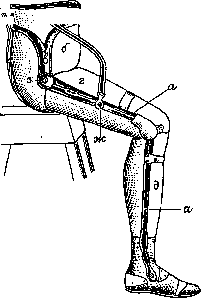
Prostheses made of hardening masses are made on special molds, dismantling blocks, of which it is necessary to have a certain set — right, left, varying in length and volume. Usually, the femoral and lower leg sockets of the required sizes are prepared and connected by a knee joint; the lower leg socket is connected to a wooden or felt foot of conventional design. Outside, these prostheses are coated with emalitin varnish, and on the inside, the ischial seat is lined with kid leather or suede, as in splint-and-socket prostheses. The latest innovation is the attempt to make a rigid seat in these prostheses, like in wooden prostheses, and coat it with emalitin varnish. Until now, the production and construction of prostheses for thigh amputation have been described as the most frequently used. Among other varieties, one can point to prostheses for disarticulation of the hip or for a very short thigh stump with which it is impossible to actively control the prosthesis. By design, a prosthesis for hip disarticulation (Fig. 4) is generally similar to a prosthesis for thigh amputation, with the difference that it has a wide pelvic part made of leather or hardening mass (Fig. 4b) that completely covers the gluteal region with the ischial tuberosity of the amputated side and the region of the pelvic bones and part of the waist of the healthy side. This pelvic part is connected to the femoral socket of the prosthesis, of the artificial limb type for thigh amputation (Fig. 4d), by means of a massive hinge (Fig. 4z) corresponding to the hip joint. To accommodate this hinge and give strength to the connection of the pelvic part with the femoral part, the outer splint is specially forged thick, massive, and wide, mainly in its upper part, where, having formed a strong wide milled recessed hinge, it splits in the form of a fork and embraces the pelvic part of the prosthesis (Fig. 4v), fastening to it with separate small additional splints riveted to the leather of the pelvic part. In the hip joint (Fig. 4z), as a rule, a lock is made (Fig. 4zh) which closes during walking and opens at the moment of desiring to sit down and bend the pelvic part in relation to the femoral part. The described type of prosthesis for hip disarticulation is the so-called single-jointed type; there are several other systems of connecting the pelvic part with the femoral prosthesis, such as double-jointed ones — with a large outer hinge and a small hinge on the inner splint; single-jointed with support on the cup of the femoral socket, corresponding in shape to the gluteal part of the prosthesis; with an outer hinge and support of the inner ischial part of the pelvis on rollers attached to the end of the inner splint. Rollers are made so that when bending the pelvic part and walking on an open hip lock, it slides more smoothly along the femoral part.
|
Nordqvist). One of the elegant and lighter systems is the so-called "French" system. In this system, on the outside
Figure 4. Splint-and-socket prosthesis for hip disarticulation: a — steel splints; b — leather pelvic part; c — pelvic splint with an outer hinge; d and e — femoral and lower leg leather sockets; l — lock, z — outer hinge.
.
a small hinge is made, and on the inside, along the groin and the anteromedial edge of the pelvic part, which is blocked along a correct semicircle, a thin steel semicircular strip is placed that thickens toward the perineum, with a slot in the middle along its entire length: a metal rod with a head, fastened at the end of the inner splint, enters the slot. Under load, the weight of half of the pelvis is transmitted to the semicircular steel strip, to the shoulders of the rod and the inner splint of the prosthesis; in turn, the outer hip joint with the outer splint is also loaded. A uniform load of the outer and inner splints is obtained, which due to this do not need to be made too thick, since they are connected by transverse ties and constitute a more or less rigid and durable system. During walking, when sharp, abducting movements are possible, the semicircular splint with the rod restrains them and prevents the relatively thin outer splint from bending. Recently, a technical improvement has been introduced into the design of prostheses for hip disarticulation, which generally consists in the fact that the arrangement of the joints and the bends of the splints are made so that the prosthesis is statically extremely stable and does not need locks that lock the joints during walking. On such prostheses, amputees walk, producing movements in the hip and knee joints corresponding to physiological movements; the gait on such prostheses is light, smooth, differing little from the physiological one. With very short thigh stumps (shorter than 10 cm), prostheses of the same type are used. The stump is flexed to a right angle and captured together with the buttock and ischium by the pelvic part of the prosthesis. The amputee in such a prosthesis sits on it with one half of the pelvis, like on a chair; an excellent untiring stable support on the prosthesis is obtained. The movement of the prosthesis—throwing the socket (femoral) forward—is produced by a special movement of the pelvis, to which amputees quickly adapt. Artificial limbs for lower leg amputation are used in various systems, depending on the quality of the stump and the level of amputation. In lower leg amputation, it is most often possible to obtain a so-called weight-bearing stump, i.e., a stump that is able to bear the full or partial weight of the body on its end. Weight-bearing stumps from the point of view of prosthetics are the best, significantly simplifying prosthetics and increasing its functional and cosmetic effectiveness. With good weight-bearing lower leg stumps, especially with the removal of protruding bone parts of the fibula, it is possible to use semi-limbs—very light and elegant prostheses made of wood or emalitin in such a way that the external shapes of the foot and lower leg completely correspond to the shapes of a living limb, and a properly adjusted foot during walking is externally and functionally quite similar to a healthy one. On such semi-limbs, women walk in short skirts, in open shoes, on French heels, and only with an experienced and attentive gaze is it possible to distinguish the artificial limb from a living one (Fig. 5). In such a semi-limb, a support for the end of the stump is made; upward it extends to the level of the knee bend, where it tightly grips the lateral parts of the tibia. The foot is arranged in the same way as the felt or wooden ones described above; it only needs to have the steepness of the ankle part corresponding to the height of the heel, for example, a ladies' French heel. To prevent such a semi-limb from slipping off the stump, a soft cuff is made for the thigh, which is connected by side straps to the semi-limb. The cuff is tightly laced above the condyles and prevents the semi-limb from slipping off. Some women prefer to use a long ladies' stocking; the stocking is put on the limb and fastened on the thigh to a garter, which holds the prosthesis in place. With a low-weight-bearing or very short stump, it is necessary to add a thigh socket to the lower leg socket by means of metal splints and joints. The latter is tightly laced on the thigh and receives support on its soft tissues, which are used for loading.
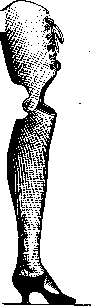
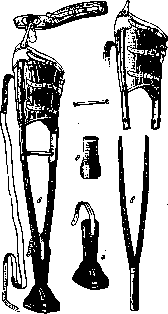
Figure 5. Ladies' semi-limb prosthesis for lower leg amputation for walking on a French heel (Fig. 5). Walking on such prostheses is certainly less convenient, because the point of support is located significantly higher than the end of the stump, and in addition, the tightened soft tissues of the thigh are somewhat atrophied and restricted in movement. That is why in those cases where possible, they strive to provide a support-seat on the tuberosity of the tibia and the edge of the patella. This seating is often quite difficult, especially with a painful, irregular shape, thickened at the end of the stump with protruding projections of the fibula. In such cases, it is best to perform a re-amputation of the stump or additional operations by which the shape of the stump is corrected. These measures usually significantly improve the function of the stump and the effect of prosthetics. In exceptional cases, when support on the tuberosity of the tibia is impossible, and on the soft tissues of the thigh, due to their atrophy, is insufficient, one has to lengthen the femoral socket and finish it with a semi-rigid leather seat for the support of the ischium and the gluteal part. The latter clearly proves the importance of the shape, condition, and quality of the stump for prosthetics. Prosthetics is also greatly complicated in the case of excessively long lower leg stumps, especially with supra-malleolar or trans-malleolar amputations. With such long stumps, it is impossible to accommodate the tibial part of the foot, the mechanism of the ankle joint, and build a normal type of prosthesis. One has to build an atypical prosthesis with a metal cup instead of the wooden tibial part; such prostheses are heavier and coarser than the normal type, and less convenient in functional and cosmetic terms. Very short lower leg stumps, shorter than 8-10 cm, are also unsuccessful for prosthetics, especially if they are observed in manual workers, where good stability and knee activity are required. The calculation that with such short stumps the disabled person will walk well on a prosthesis, relying on a bent knee, is completely wrong. The supporting stump of the lower third of the thigh is much better than the bent-knee stump. First of all, the design of the prosthesis with a supporting thigh stump is simpler, more elegant, and lighter than the bent-knee prosthesis. A bent-knee prosthesis is built with a metal cup riveted to the femoral splints, and this cup is made wider than the contour of the bent knee, since it is lined with a soft pad for knee support and on its sides there are also knee joints with outer and inner splints. The prosthesis turns out to be wide, clumsy in the knee area, and heavy. The prosthesis for a supporting stump in thigh amputation differs externally from the usual one only in that it does not have a seat for the ischium, since the prosthesis socket has a platform for supporting the end of the stump. Prostheses for Pirogov and Chopart amputations are generally similar to each other. They have a tibial socket, which is fixedly or by means of splints with hinges in the ankle joint area connected to an artificial foot having a toe flexor. Both types of prostheses are quite clumsy: they are wide in the tibial part and the area of the ankle joint; a normal boot cannot be put on them, one has to make a special one with a wide heel, ankle, and tibial parts. Recently, special inserts in boots made of emalitin or hollow wood have been used, supplementing the missing front part of the foot. These inserts are cosmetically better than the leather or leather-splint devices described above, but functionally they are also not sufficiently satisfactory; walking on such prostheses noticeably differs from normal. Under the influence of load, the Chopart stump easily undergoes changes that disrupt its normal statics and function, which in turn complicates prosthetics and requires additional operations correcting the stump. Pirogov's amputation, performed somewhat atypically in the sense of a higher section of the ankles and calcaneus, gives a shorter and narrower supporting stump, which is functionally and cosmetically quite well fitted with a prosthesis. The Pokrovsky system prosthesis has the main difference that the splints of the tibial socket are located not on the sides, but in front and behind, thanks to which the prosthesis appears more elegant and lighter. Working prostheses for lower limb amputation differ from artificial limbs mainly in that they do not have a foot, but end with a round wooden piece that expands somewhat at the very bottom. In thigh amputation, they come with and without a bend in the knee joint. The main advantage of the working prosthesis is that it is lighter than an artificial limb, does not have a foot, does not require wearing a boot of a certain weight, and allows walking in wet and muddy places; it is cheaper and is indispensable as a spare prosthesis and artificial limb. There are many designs of working prostheses, or as they are also called, "pegs." They are made either entirely of wood, without a bend in the knee joint, or of the splint-socket prosthesis type, in which the tibial part and the foot are replaced by a turned wooden stick. Lighter and easier to handle is the crutch-type "peg" of the G. Albrecht system; it can be successfully used both as a working and as a temporary prosthesis (Fig. 6). It consists of a short femoral socket with a seat lining, like in an artificial limb, with metal side splints reaching the level of the lower third of the thigh; here the splints end in grooves into which the ends of the wooden crutch are pushed, cut to the required length of the prosthesis (Fig. 6b). A crutch rubber tip for walking on solid ground (Fig. 6d) or a removable "shoe" made of yuft leather (Fig. 6g) is put on the end of the crutch, which, gradually expanding downwards, provides the necessary supporting area for walking on boggy, wet, soft ground. This "peg" is especially convenient because it is light, its weight is about 1.5 kg, and this weight is located predominantly in the upper part, thanks to which it is even less felt during movement; in addition, its design is very simple and the lower part, which may be subject to wear, is easily replaceable even by a non-specialist. The "peg" is especially recommended for agricultural work. There were attempts to make the simplest temporary prostheses from wicker-work twigs, but they did not gain practical significance because they were coarse, did not meet static conditions, and, when dried, creaked and broke loudly.
Upper limb prostheses are extremely diverse in design. Much thought and energy of technical...
brecht. technical and medical workers, especially during the imperialist war, which produced a huge number of amputees. All prostheses of the upper extremity should be divided into four large groups: 1) cosmetic prostheses, 2) functional-cosmetic, 3) active, and 4) working. Before the imperialist war, almost exclusively cosmetic artificial upper extremities were manufactured. With sockets made of wood or leather, they compensated for the defect of the limb, with the forearm socket ending in an artificial hand of very diverse construction. Usually, a leather glove was worn over the artificial hand. The most elegant hands were Japanese. The Japanese prosthesis was wooden, with ivory fingernails of artistic workmanship, the fingers lacquered to match skin color; but despite all the artistry of execution, this hand noticeably differed from a living one, and it was also necessary to wear a glove over it. The designs of cosmetic prostheses in terms of their sockets and their interconnection differed little from each other, as well as regarding mobility in the wrist joint, at the junction of the hand with the forearm socket; the design of the hand itself varies. A hand with five fixed fingers, fixed in a middle semi-flexed position; a hand with four fixed fingers and a thumb movable in the metacarpophalangeal joint; the same, but with a spring that pressed the thumb against the second and third, and this thumb could only be abducted with the healthy hand: a small object placed between the three fingers was held by the spring of the thumb; a hand with passively movable joints corresponding to all joints of the phalanges of all fingers; any position can be given to the fingers of this hand with the healthy hand, but it is impossible to hold any object with them. Then hollow rubber hands appeared; thin, steel spring plates were laid inside them, and the cavity of each finger was tightly packed with cork sawdust. A rubber hand is more convenient than a wooden one because when lowered onto a table it does not knock, and it is more pleasant for the amputee to touch it with the healthy hand, since due to its certain elasticity it resembles a living hand. The design of functional-cosmetic prostheses in general consists in the fact that, in addition to the cosmetic effect, the prosthesis can perform some work without the help of the healthy hand, for example, grasp and hold a light object, bend and unbend the hand, the forearm, and in the best designs all these movements can be automatically fixed in certain positions and, what is even more important, combined with others, for example, simultaneous movement of bending the elbow joint and fingers; it is even better if these two simultaneous movements are combined with a third—adduction or abduction of the entire limb. Other combinations are also possible, such as flexion of the hand and simultaneous grasp of the fingers and vice versa. Of course, the more combined movements, the more perfect the prosthesis, but one should not get too carried away with this; in ordinary work with a functional prosthesis of the upper extremity, minimal movements are usually sufficient, since the rest can be obtained not at the expense of a separate mechanism of the prosthesis; for example, during the extension of the forearm, a certain part of the movement can be performed by tilting the torso; pronation and supination of the hand—by abduction and adduction of the shoulder (elbow) with the flexed forearm. A prosthesis that is complex in the work it performs is also complex in its construction. This should not be forgotten, especially with the amputation of one arm, when the main work is performed by the healthy arm, and the artificial arm provides only some assistance in the work of the living one. The first functional prosthesis was constructed in 1812 by Ballif (Ballif); all the phalanges of all fingers of this prosthesis were movable and were held in a flexed position by the tension of a spiral spring with a cable attached to the nail phalanx of each finger. By the tension of another cable, common to all, the fingers were extended; the latter cable was fixed on the shoulder socket and when the elbow joint was extended it was tensioned, the fingers extended, when bending, the cable relaxed and the fingers bent by the force of the spring—a grasp was obtained. This prosthesis is rather clumsy, not very elegant, and generally has only historical value, as does the prosthesis of Caroline Eichler (C. Eichler, 1846). The basic principle of the design of a functional prosthesis is that one or two straps are fixed on the healthy shoulder girdle, running either along the posterior or anterior surface of the chest and communicating with the mechanism of the hand, moving the fingers or bending the hand, or bending the forearm. Moving the shoulder stump forward tightens the rear cable and produces the action of the corresponding mechanism; moving the stump backward tightens the front cable, etc. The shoulder girdle of the amputated side is also used. Thus, the cable from the mechanism runs along the anterior surface of the shoulder, across the shoulder girdle-scapula downwards—along the posterior surface and is attached either to a special belt or the belt of trousers in men. If the scapula is raised, the cable will be tensioned and, the higher it is, the stronger the action of the mechanism will be. A transverse cable running across the chest and fixed on the healthy shoulder, through a pulley, descends along the shoulder socket from front to back; upon abduction of the stump with the prosthesis, the cable is tensioned and produces the movement of the prosthesis; most often this movement is used to bend the forearm. The mechanisms producing the movement of the fingers are very diverse, ranging from the most primitive, simultaneously bending only the thumb and index fingers in the metacarpophalangeal articulation, to more complex ones, bending all the phalanges of all fingers. One can point to the designs of Spitzy, Rohrmann, Spiekerman, Lange, Fischer, Bethe, Carnes (Spitzy, Rohrmann, Spiekerman, Lange, Fischer, Bethe, Carnes), the "Germany" hand, and many others. It was said above that the best design of an artificial arm is one that provides as many combined movements as possible; in this regard, the Carnes arm should be put in first place, however, the design of this prosthesis is so complex that some individual parts of its mechanism must be made of a certain grade of metal and with an accuracy of up to 1/100 mm; in addition, this prosthesis is extremely heavy and requires a very large skill to use it. With the amputation of one arm, such a complex design is not needed, and with the amputation of both
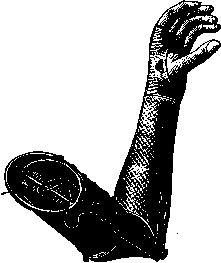
Figure 7. Functional-cosmetic prosthesis for high forearm amputation (Leningrad Institute of Prosthetics). When using it, the amputee has to carry too large a load on their shoulders, which tires them out. These conditions caused the Karies arm, despite its rather combined function, not to be widely distributed. At present, one can recommend the functional-cosmetic prostheses of the Leningrad Institute of Prosthetics; their design is very simple, and they are distinguished by a very light weight (Fig. 7). Their function is designed for grasping light objects without the aid of the healthy hand and providing some assistance in work: pressing paper to the table during writing or drawing work, moving small objects, etc. In shoulder amputation, the shoulder and forearm sockets are made of emalitin, semi-elastic; the hand is partly wooden, namely the metacarpus and wrist made of wood, hollow, the thumb and first phalanges of the index and middle fingers are wooden, connected at the base with the thumb and by a hinge to the metacarpal part, so that the movement of the thumb simultaneously causes their movement. The remaining fingers and phalanges of fingers II and III are made of a flexible steel strip, tightly wrapped with a cloth strip, and covered with leather on top. The result is springy, slightly elastic fingers, set in a semi-flexed position. At the base of the thumb, inside the metacarpal part, a coil spring is reinforced, which keeps it pressed against fingers II and III. A string cable extends from the dorsal surface of the base of the thumb, which passes inside the forearm socket; if this is an artificial arm for shoulder amputation, the cable passes through the axis of rotation of the elbow hinge, then goes along the shoulder to the scapular region and across the back to the scapula of the healthy side, where it is fixed with a soft strap in the form of a loop passing through the armpit. If the scapula of the healthy side is abducted or moved forward, the cable will tighten and spread the compressed fingers; bringing them in this form to the object to be grasped, the scapula is adducted, the cable is relaxed, and by the action of the spring the fingers converge and clamp the object. With a correctly positioned and well-adjusted cable tension, a small movement of the healthy scapula, imperceptible under the clothing, is needed to reveal the operation of the fingers. The hand is connected to the forearm by a wooden hemispherical hinge, allowing passive flexion of the hand up to an angle of 40°. This flexion is necessary because if one wishes to put the artificial arm into a trouser pocket, the non-flexing hand sticks forward and produces an unnatural impression. Changing the degree of flexion of the hand is performed passively by pressing the hand against a table or some other object, one's own leg while sitting, etc. In forearm amputation, the design is simplified by the presence of the active elbow joint itself; in this case, the prosthesis has a socket that fits tightly onto the forearm, which is connected by two straps to a soft cuff tightly grasping the supracondylar part of the shoulder; by this cuff, the prosthesis is prevented from slipping off. Sometimes additional straps extend upward from the cuff, which approach a shoulder pad connected in turn by ties to the shoulder pad of the healthy side. A general system is obtained which makes it possible to carry certain weights in the prosthesis. For the latter purposes, fingers IV and V are made more durable, non-springy, semi-flexed and serve as a kind of hook with which one can take a package tied with rope, a suitcase handle, etc. In shoulder amputation or very high forearm amputation, the forearm socket is connected by light slip-on hinges and side bars to the shoulder socket, which is fixed to the shoulder girdle by leather straps. A lock is made in the elbow hinge, with which the forearm can be fixed at any angle. There are very many lock systems; the best is one that can be turned off and on at will, and in addition can be operated without the help of the healthy hand. In a very high shoulder amputation, the shoulder socket is made long, up to
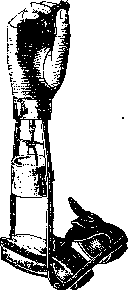
the level of the humeral head, where it is attached by short lacing to a special shoulder pad, well fixed by ties through the shoulder girdle and the armpit of the other side. With a very short stump, the functionality of the prosthesis is significantly weakened.
In forearm amputation no higher than the border of the lower and middle thirds, the prosthesis of the G. Albrecht system, built on the principle of Dalisch (use of pronation and supination of the stump) is successfully used (Fig. 8). Between the bars enclosing the forearm, a bracelet is installed on a rod, which tightly grips the end of the stump. By performing pronation and supination, the stump rotates the bracelet, which transmits this movement to the rod; at its end, two gear wheels are installed at right angles with a connecting rod moving up and down. The connecting rod is connected to metal strips that run along the second and third fingers, bending according to the phalangeal joints; it is also connected to the thumb, which has movement according to the metacarpophalangeal joint. Downward movement of the connecting rod (pronation) produces flexion of all 3 fingers (I, II, and III) opposed to each other, upward movement (supination) produces extension. The grasp (finger flexion force) is sufficiently strong and is regulated by the force of pronation and supination, and the initially expended force is little spent on the transmission mechanism, since it is very simple. In amputation of both upper extremities above the elbow, a prosthesis of a somewhat different design is required. Here, one of the important movements is flexion and extension in the elbow hinges so that the grasped object can be brought to the mouth, to the face. In our Union, there is a similar prosthesis of the G. Albrecht system, which performs these functions (Fig. 9). The prosthesis consists of a leather half-vest, a shoulder socket, an aluminum forearm socket, and a wooden hollow hand with 3 movable fingers. The forearm and shoulder sockets are connected by thin steel bars and hinges, both hinges being connected by a through bolt fixed motionlessly to the forearm socket. A wooden roller with two parallel grooves is fixed on the bolt. Two cables are wound onto this roller in opposite directions, so that when one is pulled and unwound, the other is wound up and vice versa. One cable rises from the front of the shoulder socket (Fig. 9a), the other from the back of it, and they converge on the shoulder girdle to a metal plate sliding along a slot located Figure 8. Active prosthesis in forearm amputation; operated by
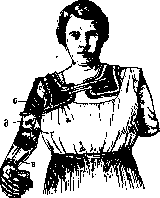
Figure 9. Active prosthesis for shoulder amputation of the G. Albrecht system; operated by a muscle loop and cables: a - leather half-vest; b - leather shoulder socket; c - aluminum forearm socket; d - front cable; e - muscle channel with a bracket threaded into it - operates the mechanism that bends the fingers.
attached to the semi-vest of the shoulder girdle from front to back and curved in an arch shape, according to the shape of the shoulder girdle (Fig. 9a). In the rear part of the slot there is a small rod which automatically fixes the plate with the attached cables as soon as it bumps into it. By slightly raising the shoulder girdle, the rod is lowered by a traction cord attached to the belt and releases the plate with the cables. In a quiescent state, when movements in the elbow joints are not required, the plate with the cables freely slides along the slot during the movement of the artificial limb while walking; if one wishes to produce movements in the elbow joints, the stump pushes the prosthesis forward and at that moment the plate with the cables slides back along the slot and is automatically fixed there by the rod. If the stump makes a movement backward, then the front cable, fixed by its end on the plate, will begin to tension and unwind on the pulley, i.e., rotate the pulley fixed on the forearm socket and bend the latter; at the same time, the lengthening rear cable will wind onto the pulley. When the stump with the prosthesis moves forward, the reverse action will occur: tension of the rear cable, relaxation and winding of the front one, and extension of the elbow. These movements are wonderfully used during eating. Into the hand, into special grooves, are inserted specially adapted handles of a spoon, fork, glass holder, etc., food is grasped and smoothly and naturally brought to the mouth. Naturally because these mechanical movements fully correspond to physiological ones: if we want to take an object, we simultaneously push the limb (shoulder) forward and extend the forearm, while if we wish to bring an object to the mouth, we push the shoulder backward and flex the forearm. The same coordination occurs in the described mechanical movements of the prosthesis. These movements, moreover, can be performed with the position of the limb in various planes of adduction and abduction. The grasp is performed by the fingers of the artificial hand in this prosthesis either by means of the cables described above or by active skin-muscle loops of the stump (see below). Active prostheses are usually called those which are set in motion by the contraction of muscles remaining on the stump and specially treated for this purpose. The designs of these prostheses differ little from the functional ones just described, except for the small devices that are made to connect the cable or traction cord, which drive the finger mechanism, to the source of active force—the skin-muscle or tendon loop. The idea of using the remnants of living force in the stump (muscles) belongs to the Italian physician Vanghetti, who in 1898 proposed a plastic surgical method for obtaining a tendon loop sheathed in skin on the forearm stump; a traction cord was attached to the loop, which drove the fingers. The contraction of the muscles whose tendons formed the loop caused the movement of the latter, and thus the muscular force of the loop served as the force driving the fingers of the prosthesis. Vanghetti's idea did not receive wide practical significance, partly because the technique of manufacturing such prostheses at that time seemed relatively complex, and partly because the force exerted by the loop was insufficiently powerful, since only one, at most two muscles participated in the work, rather than a whole muscle group as happens in physiological movements; moreover, this small muscular force of the loop was largely lost to friction and weakened by the levers of the mechanism that flexed the fingers. The process of utilizing the remnants of the stump muscles for the indicated purposes is called the cinematization of the stump. This forgotten idea was revived with new enthusiasm in 1916 by the German surgeon Sauerbruch, who developed a number of operative methods for the cinematization of the stump by forming skin channels passing through the muscle bellies of the stump and driven by the contraction of the corresponding muscle (Fig. 9). Several such channels can be made on the stump and each used for specific movements—of the fingers, hand, or elbow joint of the prosthesis. The improvement of the operative technique of stump cinematization served as the reason for the technical improvement of the corresponding prostheses; new designs appeared, among which mention should be made of the Sauerbruch prosthesis in Germany, and G. Albrecht in our Union (Fig. 9). Large surgical and technical improvements in this field did not, however, yield great practical results, and the period of enthusiasm was replaced by some disappointment, but thought is again working quietly and looking for new, more practical achievements in this field. Prostheses for the amputation of a part of the hand, fingers, and individual phalanges of the fingers are for the most part cosmetic, without active movements. The essence of such prostheses consists in the fact that either from wood or from light hardening masses, the missing part is manufactured according to a cast and fixed on the stump with a dense
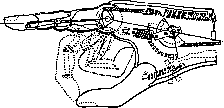
Figure 10. Artificial hand of the Bethe system; all phalanges of all fingers are flexed.
leather bracelet; a glove is worn over the prosthesis, concealing the artificial parts. In the absence of fingers and the violation of independent
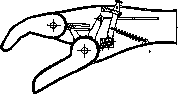
Figure 11. Fischer artificial hand; fingers I and II are flexed at the metacarpophalangeal joints.
grasp, efforts are made to construct the prosthesis in such a way as to restore the grasp (Figs. 10 and 11). This is comparatively easily achieved if the thumb is present or at least half of its first phalanx, whereas in the absence of the thumb it is difficult to accomplish the task. Such prostheses are exceptionally individual and their functional success depends on the joint work, experience, and inventiveness of the physician and technician. In the presence of injuries and defects on only one arm, one can be satisfied with more primitive devices that smooth out mainly the cosmetic defect, since during work with the limbs the main work is performed by the healthy arm, while the injured one provides only some assistance, which in most cases will be more realistic without a prosthesis, since the latter eliminates the sense of touch, which is so valuable during work. With the shortage of one finger or a part of it, the defect is easily compensated by a leather glove, in which the missing finger is filled with horsehair, cotton wool, or very elastic felt with cuts corresponding to the flexion of the phalanges and is sewn along the interdigital line to the neighboring finger. Such a glove, worn on the hand, with the movement of the healthy finger will also give movement and a cosmetic effect, resulting in the impression of active movement of two fingers simultaneously. With a defect of several fingers, artificial ones are manufactured in the same way as fingers of an artificial hand. Here, at the patient's request and according to the degree of possible participation in function, fingers with passively movable phalanges, springy, rubber, felt, etc., are manufactured. The drawback of all artificial fingers is the mandatory condition of constantly wearing a glove; the latter arouses the curiosity of others, which disturbs the peace of mind of the maimed person. Very often, maimed persons with defects of individual finger phalanges strive to obtain a cosmetic prosthesis-glove, not realizing that the glove as such itself attracts the attention of others; it is much more correct to learn to assume such a position of the hand and fingers (flexion gathered into a fist, etc.) in which sometimes even a significant defect remains hidden from others. Working prostheses and devices are additional appliances for the amputated upper limb, by means of which it is possible to utilize the active action—the force of the stump—to perform work of various specialties. There are very many designs of such devices and they can all be divided into three large groups
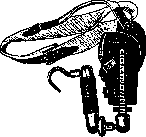
Fig. 12. Roth working prosthesis.
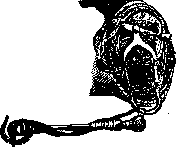
py. The first are universal prostheses, which are simultaneously both cosmetic and working; the second are specially working, splint-and-socket prostheses with a complex design of clamps and hinges, particularly in amputation of the arm; the third are simplest devices that are slipped onto the stump without complex additional structures. Prostheses of the first group, universal ones, are constructed in such a way that in an ordinary cosmetic splint-and-socket prosthesis a detachable hand is made and instead of it Fig. 13. Böhm's working arm. are inserted and fixed with a special lock various working devices, for example, a three-pronged clamp, or the so-called working paw, a hook, a ring with a screw, and all sorts of other working devices. In amputation above the elbow, the construction is complicated by the fact that it is necessary to have sturdy hinges in the elbow bend and a solid lock for them, which would reliably fix the forearm at various flexion angles necessary during work; furthermore, the fixation of the prosthesis itself on the stump must be more secure. These inevitable conditions make it necessary to make the universal prosthesis more massive and heavier than would be required by functional and cosmetic tasks. In our Union, the standard type is still the splint-and-socket prosthesis with a detachable hand, but, as already indicated, additional devices are provided, special for performing various operations.—The second group consists of complex mechanical constructions connected with the stump socket. These constructions are particularly complex in amputation above the elbow. The most original construction is Rota's working arm (Fig. 12), in which all hinges are spherical, fixed in various planes by the semi-rotation Figure 14. Brandenburg's work. arm. of a special nut. Next belong Böhm's working arm (Fig. 13), designed for a relatively short upper arm stump; Brandenburg's device (Fig. 14), and Tannenberg's device, very similar to it, which very carefully fix the elbow bend and firmly clamp and easily release various working devices with the help of the other hand; the hand of Lüer, Siemens-Schuckert, and many others. All constructions of working arms of this group are distinguished by solidity, strength, and have a significant weight, which tires the disabled person during work. The latter circumstance served, among other things, as the reason that these constructions have not acquired great practical significance. Their disadvantages also include their rigid system and rigid grasp. During work with such devices, all inevitable jolts are sharply transmitted to the stump and to the surviving joints of the limb, the stump quickly tires and becomes painful.
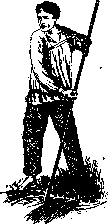
ki for working with a scythe, rakes.
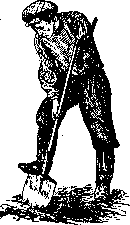
Devices belonging to the third group differ sharply from those just described in that they are light, extremely simple, and do not have a rigid grasp. These qualities served as the reason for their wide dissemination. Some of these simplest devices were invented by disabled peasants and then only somewhat technically formalized. Such are, for example, a strap harness with a ring on the stump of the arm on the left side for working with a scythe (Figure 15). A wooden strut with two deep crutch tips between the plow handle and the armpit of a high-amputated arm, caught to the shoulder girdle and the handle with straps, makes it possible to work with a plow. A grab-shaped metal tip, putting on the handle of a shovel, pitchfork strap harness with a ring in amputation of the left arm and resting against the armpit of the amputated arm, makes it possible to confidently work with a shovel with one hand; in this case, the introduction of the shovel into the ground is helped by pressure with the body and pressure with the foot, and when throwing earth from the shovel, the armpit serves as a support for throwing off the shovel with the healthy hand (Figure 16). These simplest devices are interesting in that even with a very short upper arm stump they help to work without burdening the disabled person either with their weight or the complexity of the gripping construction.—Other varieties of such devices are interesting in amputation of the forearm. Here a small leather-splint socket is required, connected by straps with the shoulder girdle and elbow. In the bottom of this socket there is a lock for holding the simplest clamps giving an elastic grasp. Such clamps include Keller's paw Fig. 16. Working with a shovel {Fig. 17); it consists of a steel cylinder, in the bottom of which a rod is strengthened, connected with the socket; from the cylinder depart two or three steel grasps, set up like spaced, semi-bent fingers. These grasps are applied to the handle of the tool transversely or longitudinally and pressed tightly or weakly by a strap, one end of which is attached to the cylinder, depending on need". The paw can slide freely along the handle or be tightly pressed; the rotation of the paw in one direction or the other brakes the free sliding of the handle, so that at the moment of work

it is possible to change the force of the grasp without changing the tension of the strap. Riedinger's elastic clamp (Figure 18) represents a leather plate of 3–4 stitched layers of dense leather with an oval hole in the middle, according to the thickness of the tool handles. This plate is inserted into the socket either directly or by means of a double iron ring with a pin riveted to it. The handle inserted into the hole of the plate can freely move and rotate in it, but if it is desired to clamp the handle more tightly, the plate either rises or twists somewhat; the stronger the twisting, the stronger the grasp. There are many other clamp systems, but they are somewhat more complex and not as convenient in work. A very simple device for working with a scythe and rakes, not requiring the participation of the stump, is Figure 17. Keller's grip-paw.
ler.
it represents a wide leather belt with a rotating iron ring strengthened on it, into which the handle of the scythe or rake is slipped; when operated by the healthy hand, the handle of the tool receives a certain support in the ring, making it possible to work with one hand. The enthusiasm for inventing and building complex constructions of working devices was caused by the desire to enable a handless disabled person to perform complex highly skilled work, especially if he performed it before the disability; to try to leave the carpenter, locksmith, turner at their former work. Practice over several years has shown that no matter how good the working devices are and no matter how skillfully the disabled person uses them, he could not compete either in the accuracy or the speed of work with two healthy hands of equal qualification and ability.
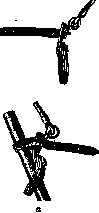
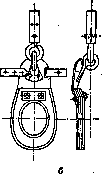
Figure 18. Riedinger's elastic grip (a) and its drawing (b).
a thoughtful attitude towards the employment of the disabled person is required; one should not belittle the importance of prosthetics and overestimate it in certain cases. When working with a living hand, the sense of touch, so strongly developed especially in the fingers, has, as is known, enormous significance, and its absence in an artificial upper limb having an active grasp is a major disadvantage, diminishing to a certain extent the functionality of the prosthesis. This circumstance directed thoughts toward utilizing the stump of the upper limb, its sense of touch, for direct participation in the performance of possible work. Thus, even small remnants of the wrist are successfully used, especially mobile ones, with the preservation of the wrist joint; along the palmar surface of the forearm, a thin, light steel plate is strengthened with two straps, ending in a spatula reaching the end of the stump. If it is desired to grasp an object with such a device, the mobile remnant of the wrist rises, extends, the plate is slipped under the object to be grasped, which is then pressed against the spatula by the wrist remnant through active muscular tension (flexion) dosed by the sense of touch. The constructions of such—all of them are based
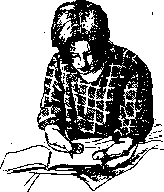
Fig. 19. Amputation of both forearms in the middle third. Stumps activated according to the idea of Krukenberg by G. A. Albrecht's method (at desk work).
several grips, and on the principle of clamping an object between the bared stump and the springing base of a steel plate-spatula fixed on the stump. A further development of the idea of utilizing the activity of the stump and the sense of touch was the excellent proposal of Krukenberg (see Krukenberg hand). Seeking also to activate short forearm stumps, G. Albrecht proposed a surgical method by which Krukenberg's idea can be implemented even on short forearm stumps where there are no tendons, but only muscle bellies. The method generally consists in that, after skin incision, all muscle bellies are excised except for the brachioradialis, pronator, supinator, and sometimes flexor carpi radialis muscles. The interosseous ligament is completely divided, and the separated bones are skin-grafted. This method does not require additional skin plasty, as the skin is sufficient to cover the resulting two thin fingers as it were, which have an active grip. The brachioradialis muscle abducts the radius from the ulna, and the simultaneous contraction of the pronator and supinator adducts it and provides a grasp. Both of these methods have found wide practical application, especially in double-amputee cripples. For cosmetic purposes, functional-cosmetic prostheses are worn on the stumps, which conceal the severity of the mutilation and perform some work. In practice, cases are not uncommon where double-amputee cripples, through surgical techniques and thoughtful prosthetics, were turned into capable citizens who performed both professional and social work (Figure 19). In amputations of the upper extremities, every centimeter must be saved; there can be no such definite positions here as in amputations of the lower extremities. For lower extremity stumps, definite types of prostheses with good practical results have been established, which is not the case for upper extremity stumps: here prosthetics is in a period of quests. The only thing that can be strongly recommended is not to make disarticulations of joints, as they hinder all types of prosthetics. Bearing stumps are also desirable here, especially in cases where working prostheses are used. Facial prostheses for defects of the nose, part of the upper jaw, eyebrow arch, auricle, and the like are made of light plastic masses (celluloid, enamelitin, papier-mâché, etc.) from a preliminary cast made of modeling clay or plasticine and dismantleable molds. The prepared prosthesis is carefully and artistically painted to match the color of the surrounding skin and fastened with some device fixing it; most often such a device is an eyeglass frame, which, thanks to the temples, quite reliably fixes the prosthesis in place. Eye prostheses—see Artificial eye. The manufacture of artificial limbs in the USSR is carried out exclusively by state enterprises. The high purpose of these prostheses made it necessary to improve their design and rationalize their production. The artisanal pre-revolutionary method of production was abandoned, more improved types of designs were established, and their individual parts were transferred to factory mass production from material of a definite quality with correct technical processing. Everything that was possible was standardized; according to specific orders, it is manufactured at the State Moscow Central Prosthetic Plant named after N. A. Semashko and sent out in separate kits and parts to peripheral plants and prosthetic assembly workshops. Each prosthesis is assembled individually according to a specific measurement or cast of the cripple on the spot, but its individual parts, which are basic and general, are received from the center. In 1930, with the formation of the State Association of Prosthetic Enterprises, the supply of cripples with artificial limbs, orthopedic apparatuses, orthopedic shoes, bandages, and other small orthopedic devices passed into the jurisdiction of the People's Commissariat of Social Welfare. The Association established the financing, guidance, and management of the prosthetic business in its production-technical, medical, and economic-accounting parts; centralized the supply of all workshops with semi-finished products and basic materials; for the development of the scientific thought of the prosthetic business, the improvement of the medical and technical parts, and the creation of personnel, it expanded and strengthened the research institutes of prostheses and organized a Scientific Council under the association. The latter establishes topics for scientific development, examines, and in case of suitability approves new parts and designs of prostheses and generally regulates all scientific work of the prosthetic business. Thanks to major rationalization measures, it was possible to significantly improve and cheapen the production of prostheses. The Association has a network of prosthetic plants with branches and regional workshops located in various cities. Plants: in Moscow, Leningrad—at the Research Institute of Prosthetics, Uralsk, Tomsk—at the Research Institute, Voronezh, Rostov-on-Don, Saratov, Samara, Sverdlovsk. Some plants have branch workshops: Moscow—in Tula, Tver, Yaroslavl, Kostroma; Rostov-on-Don—in Pyatigorsk and Krasnodar; Voronezh—in Tambov and Kursk; Saratov—in Stalingrad and Astrakhan; Samara—in Orenburg. Regional workshops: in Gorky, in Kazan, in Simferopol (Crimean), in Alma-Ata (Kazakh), in Khabarovsk (Far Eastern), in Irkutsk, and in Vologda. In addition, there are workshops and plants in Belorussia in the city of Minsk. In Transcaucasia: in Azerbaijan—in the city of Baku; in Georgia—in Tiflis; in Armenia—in Erivan; in Uzbekistan—in Tashkent, in Samarkand; in Ukraine—in Kharkov, Kiev, Odessa. The Research Institute of Prosthetics in Leningrad with an orthopedic hospital and a prosthetic plant under it conducts developments in the part of improving surgical techniques, improving the quality of the stump and alleviating various forms of mutilation and orthopedic diseases, techniques of preparation for prosthetics, improving systems and individual parts of prostheses, orthopedic apparatuses and shoes, and also, thanks to the department of orthopedics and prosthetics existing under it, disseminates knowledge of the prosthetic business and creates personnel of necessary workers. A similar institute is being deployed in Tomsk. In Moscow, the medical part of the plant and scientific developments by agreement with the Associations are managed by the Institute of Traumatology, Orthopedics, and Prosthetics of the Moscow Health Department. Locally, direct supervision of prosthetic plants and workshops is carried out by regional, city, and district departments of social welfare. Citizens in need of prostheses apply: pensioners, war invalids, peasants, collective farmers—to district departments of social welfare, and all insured workers and employees—to district health departments, which direct them to the appropriate workshops to receive a prosthesis. Prostheses are issued for certain periods: artificial lower extremities with an additional simplest working prosthesis for 2 years, and during this period the necessary repairs are carried out free of charge; upper extremity prostheses—also for 2 years; orthopedic shoes—for a year. After the expiration of the wear period, as necessary, a new prosthesis can be ordered. All cripples subject to prosthetics are attached according to their place of residence to certain districts having plants or workshops in which they can receive prostheses free of charge. Lit.: Shordvinov K., Artificial Limbs, A Guide to the Study of Prosthetic Technique, Moscow, 1927; Prosthetic Business, collection of articles edited by N. Burdenko and A. Malyshev, Moscow, 1928; Prosthetic and Orthopedic Aid, translation from German, edited by N. Priorov and M. Vovshkevich, Moscow, 1932; Recklinghausen H., Gliedermechanik und Lähmungsprothesen, vol. I-II, Berlin, 1920; Strauss J., Über Weichteilprothesen, Zurich, 1924. Additionally to the literature given for the article Dental Prostheses: journal "Sovetskoe zuboprotezirovanie" (Soviet Dental Prosthetics), Moscow, 1932 (in 1930–31 under the title "Zuboprotezny rabotnik"). See also literature to the article Orthopedic Apparatuses and Orthopedics.
G. Albrecht. PROTEIDS: see Proteins.
Related articles
Mentioned in
Cite this page
“Prostheses.” Soviet Medical Encyclopedia. English translation of Bolshaya Meditsinskaya Entsiklopediya, 1st ed. (Moscow, 1928–1936), ed. N. A. Semashko. https://sovietmedicalencyclopedia.pages.dev/article/prostheses/