Degkwitz
Historical document, translated for reference. It reflects medical knowledge of the 1920s–30s and is not medical advice.
Summary
Rudolf Degkwitz (born 1889) was a professor and director of the children's clinic in Greifswald from 1925. He made significant contributions to the study of measles, developing a serum treatment method and researching the measles virus.
Encyclopedia article (1928–1936)
DEGKWITZ, Rudolf (Rudolf Degkwitz, born in 1889), professor and director of the children's clinic in Greifswald from 1925. Received his medical education at the universities of Lausanne and Munich. In 1920, he defended his doctoral dissertation on blood platelets ("Studien iiber Blutplattchen", Folia Haematologica, Vol. XXI, 1920). Almost from the very beginning of his scientific career, D. has persistently worked on the problem of measles. His first works on this topic appear 60
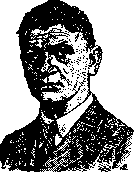
in 1922, D. introduced the treatment of measles with convalescent serum—a method now widely used not only
for measles, but also for a number of other infectious childhood diseases. Degkwitz's monograph on the prevention of measles is a valuable contribution to science (see Degkwitz's vaccinations). Interesting is D.'s attempt to obtain a therapeutic anti-measles serum from animals. In the most recent years, D. has approached the question of the causative agent of measles. In a work published in 1927, D. reports on a method of obtaining from the blood of a measles patient a culture of the measles virus ("Uber den Masernerreger", Klinische Wochenschrift, 1927, No. 51).
Related articles
Mentioned in
Cite this page
“Degkwitz.” Soviet Medical Encyclopedia. English translation of Bolshaya Meditsinskaya Entsiklopediya, 1st ed. (Moscow, 1928–1936), ed. N. A. Semashko. https://sovietmedicalencyclopedia.pages.dev/article/degkwitz/