Delmas Method
Historical document, translated for reference. It reflects medical knowledge of the 1920s–30s and is not medical advice.
Summary
This article details the Delmas method, a 1928 obstetric procedure for rapid uterine evacuation at the end of pregnancy using spinal anesthesia and manual dilation, and discusses its indications, risks, and reception.
Encyclopedia article (1928–1936)
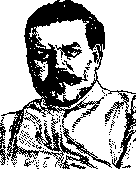
DELICIN, Sergei Nikolaevich (1858-1918), professor of operative surgery and topographical anatomy at the Military Medical Academy. Upon graduating from the Military Medical Academy in 1884, Delicin served as a military physician until 1887. In 1887, he was appointed assistant at the department of normal anatomy of the Military Medical Academy. In 1889, Delicin received the degree of Doctor of Medicine after defending a dissertation on the topic "On the displacement of organs of the neck during certain movements of the head" (dissertation, St. Petersburg, 1889). He was successively prosector and privat-docent of the academy, then professor of operative surgery and topographical anatomy of the Women's Medical Institute until 1901, and from 1901 at the Kharkov University. In 1902, he was elected and confirmed professor of the academy. Altogether, Delicin published about 20 works on anatomical-topographical questions, of which the experimentally-anatomical study on the pathogenesis of movable kidney (jointly with M. Volkov, "Pathogenesis of Movable Kidney", St. Petersburg, 1897; German edition--Berlin, 1899), awarded the prize of the Military Medical Academy, and the aforementioned dissertation are especially distinguished. In addition, Delicin authored: "General and Local Anesthesia" (Russian Surgery, part 5, St. Petersburg, 1904), "A Short Course of Topographical Anatomy and Operative Surgery" (parts 1-2, St. Petersburg, 1905-06) and "Operations on the Cadaver" (St. Petersburg, 1910). Delicin was one of the most capable students of V. Gruber and an outstanding specialist in topographical anatomy.
DELMA METHOD (Paul Delmas; 1928) for the rapid emptying of the uterus at the end of pregnancy. Delmas' method is essentially a new modification of accouchement force (see), with the sole difference that delivery is performed immediately, without any labor activity, at any moment of the end of pregnancy (Gassouichement al'heure fixee). The method consists of manual dilation of the cervix followed by extraction of the fetus (rotation or, in exceptional cases, forceps) after preliminary application of spinal anesthesia. The essential point is spinal anesthesia, which contributes to the particular pliability of the cervical canal and the lower segment of the uterus (according to Delmas, spinal anesthesia eliminates spasm of the uterus, but at the same time does not destroy its contractions and retraction). The technical execution of the method consists of the following points: 1) spinal anesthesia; 2) manual dilation-opening of the uterus; 3) rotation of the fetus on the leg (with preliminary rupture of the fetal sac in case of its integrity); 4) expulsion of the placenta. - Usual preparation for spinal anesthesia: a special needle proposed by Delmas is used to puncture the lumbosacral region, 10-15 cm3 of fluid is drawn into the syringe (in 20 cm3); 5 cm3 of fluid is placed in a pre-prepared ampoule containing 0.1 of sterile Seurocain. This mixture is used for anesthesia. After the usual preparation for the operation, the right hand is introduced into the vagina according to general rules (as for performing a rotation), the index finger is directed into the cervical canal, and screw-like oscillatory movements are carried out to the lower segment as deep as possible; then, after bending the second and third phalanges of the finger, massage and stretching of the lower segment are performed without violence until it is possible to introduce the middle finger; the remaining fingers are introduced in the same gradual manner. Upon opening of the cervix, sufficient for the introduction of the hand (after a certain pause necessary sometimes for changing hands), the whole hand performs a series of additional movements from the uterus into the vagina and back for complete opening of the uterus. This preparatory procedure to delivery by Delmas is divided into two stages - digital and manual. - Extraction of the fetus-rotation, according to Delmas, is usually performed easily, even in cases of a significant passage of time after the discharge of waters, due to the absence of uterine spasm. In exceptional cases, in the presence of uterine retraction and impossibility to perform rotation-forceps are applied. After extraction of the fetus-vaginal douching. - Expectant management of the placental period (Delmas initially applied manual separation; later he abandoned it due to rapid spontaneous separation of the placenta). After the expulsion of the placenta-intrauterine lavage (T-ra Jodi), examination of the soft birth canal. In cases of prolonged stay without waters-canalization of the uterus with a tampon soaked in Bezerdeka vaccine. Prophylactic subcutaneous administration of 0.12 Sulph-azepine or, better (easier to tolerate),- 1 ampoule of Pyoformin. Based on 40 cases successfully conducted both for the mother and the child (one death due to placenta praevia centralis on the basis of acute anemia), Delmas notes that the duration of the operation on average equals 15 min. (dilation of the cervix in the most difficult cases 12 min., on average 3 min., extraction of the fetus 6 min., separation of the placenta 3 min.), but its performance is contraindicated in the presence of strictures, scar changes in the cervix, inflammatory diseases and neoplasms. Delmas considers all pathological states during pregnancy (e.g., eclampsia, eclampsism, early discharge of waters and danger of infection, placenta praevia, heart diseases, prolapse of the umbilical cord, etc.) threatening to the mother or fetus as indications for the application of the Delmas method. Delmas apparently considers the possibility of applying his proposed method in normal cases (in case of categorical demand of the patient!), but still advises against it in physiological pregnancy, especially for an inexperienced obstetrician. - Despite the attractiveness of the idea of the Delmas method, it must be admitted that it is far from being as safe as the author depicts it, that it will find a very limited circle of indications in pathological cases; for inducing normal births it will hardly be applied. The dangers and complications of the method can be expressed first of all in the known risk of the anesthesia itself (especially in some pathological processes for which pregnancy is interrupted), in injuries of the soft birth canal, in difficulties in performing the rotation, in applying forceps with an undetermined head, in a whole series of additional interventions and inevitably associated with them or at least very probable possibility of introducing infection and finally in some danger for the fetus itself. Authors who applied this method speak of the fact that one cannot widely set indications for it (Dujol); they advise first of all not to be carried away by it, to study it (Rouville), to precisely clarify indications and contraindications (Porgue, Laquiere); others point out that this method deserves attention and study (Boquel) and that although the risk here is no greater than in other obstetric and surgical operations, nevertheless this method must be applied only in exceptional cases (Sappey). In relation to spinal anesthesia, one must reckon with the fact that it may not facilitate the rotation, but complicate it (Brmdeau, Lantuejoul, Carrera), and sometimes even intensify hypertonia of the muscularity of the uterus (Scemla). In particular, individual points of the method also do not always appear as an innocent intervention for the mother (Condamin); dilation of the cervix here rather represents a rupture (Le Lo-lier; on 8 cases - 7 ruptures, 1 death, 1 phlegmasia) and is performed not so quickly (10-30 min.), rotation is not always successful (Carrera) and always heavy (Metzger), subsequent bleeding is also possible (Metzger). - In view of the fact that the Delmas method is in the stage of study, its application must be limited; it can be performed only by an experienced obstetrician in a clinical institution in some pathological processes. Applying it in normal cases, at the will or demand of the woman, is absolutely inadmissible, since birth (in the words of Carrera) is a physiological function, not a chapter of pathology. The indications for the method given by Delmas need further clarification; its application in threatening infection and placenta praevia, regardless of the degree of urgency, is hardly expedient.
Delicin, Sergei Nikolaevich (1858-1918), professor of operative surgery and topographical anatomy at the Military Medical Academy. Upon graduating from the Military Medical Academy in 1884, Delicin served as a military physician until 1887. In 1887, he was appointed assistant at the department of normal anatomy of the Military Medical Academy. In 1889, Delicin received the degree of Doctor of Medicine after defending a dissertation on the topic "On the displacement of organs of the neck during certain movements of the head" (dissertation, St. Petersburg, 1889). He was successively prosector and privat-docent of the academy, then professor of operative surgery and topographical anatomy of the Women's Medical Institute until 1901, and from 1901 at the Kharkov University. In 1902, he was elected and confirmed professor of the academy. Altogether, Delicin published about 20 works on anatomical-topographical questions, of which the experimentally-anatomical study on the pathogenesis of movable kidney (jointly with M. Volkov, "Pathogenesis of Movable Kidney", St. Petersburg, 1897; German edition--Berlin, 1899), awarded the prize of the Military Medical Academy, and the aforementioned dissertation are especially distinguished. In addition, Delicin authored: "General and Local Anesthesia" (Russian Surgery, part 5, St. Petersburg, 1904), "A Short Course of Topographical Anatomy and Operative Surgery" (parts 1-2, St. Petersburg, 1905-06) and "Operations on the Cadaver" (St. Petersburg, 1910). Delicin was one of the most capable students of V. Gruber and an outstanding specialist in topographical anatomy.
Related articles
Mentioned in
Cite this page
“Delmas Method.” Soviet Medical Encyclopedia. English translation of Bolshaya Meditsinskaya Entsiklopediya, 1st ed. (Moscow, 1928–1936), ed. N. A. Semashko. https://sovietmedicalencyclopedia.pages.dev/article/delmas-method/