Dental Drill (is used in dentistry to impart rotational)
Historical document, translated for reference. It reflects medical knowledge of the 1920s–30s and is not medical advice.
Summary
The dental drill is a device used in dentistry to rotate dental burs. It comes in foot-operated and electric models, with the foot-operated version developed in 1868 by American dentist Morrison.
Encyclopedia article (1928–1936)
DENTAL DRILL, is used in dentistry to impart rotational motion to the bur (see Dental Bur). Dental drills are available in foot-operated (see fig. 2) and electric models (see figure 1). The former are activated by the dentist's foot (or his assistant); electric dental drills are equipped with a suitable motor. The modern dental drills were preceded by various manual devices. It is believed that the prototype of the modern foot-operated dental drill was constructed in 1868 by the American dentist Morrison.
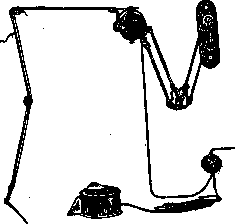
FIG. 1.
The main components of the dental drill are: the upper part, consisting of the so-called sleeve and attachment, and the lower part, consisting of the pedal, flywheel, and stand. The interior of the sleeve consists of a large spiral, about one meter long, and a small spiral (10-15 cm long). The attachment serves to secure the bur. Production of dental drills until recently was exclusively foreign (at present, the manufacture of foot-operated dental drills is being established in the USSR as well).
FIGURE 2.
Related articles
Mentioned in
Cite this page
“Dental Drill (is used in dentistry to impart rotational).” Soviet Medical Encyclopedia. English translation of Bolshaya Meditsinskaya Entsiklopediya, 1st ed. (Moscow, 1928–1936), ed. N. A. Semashko. https://sovietmedicalencyclopedia.pages.dev/article/dental-drill-2/