Deviation Conjuguee
Historical document, translated for reference. It reflects medical knowledge of the 1920s–30s and is not medical advice.
Summary
Deviation conjuguee is a symptom involving combined deviation of the head and eyes to one side, commonly observed in brain lesions, especially during epileptic seizures, strokes, and cerebral hemorrhages. This symptom can result from either muscle tension causing the deviation or paralysis of antagonistic muscles, with different implications for diagnosis depending on the direction of deviation relative to body paralysis.
Encyclopedia article (1928–1936)
DEVIATION CONJUGUEE of the eyes, combined deviation of the head and eyes to one side—a symptom observed in lesions of the cerebrum and brain stem, especially frequent in epileptic seizures (see illustration), in strokes, and in cerebral and stem hemorrhages and thromboses. It can be either a consequence of tension in the muscles that perform the combined deviation of the eyeballs and head to one side, or a consequence of paralysis of their antagonists. To evaluate the symptom when making a topological diagnosis, it is necessary to remember that in the cerebral cortex there are centers that control the movement of the eyes and head to the opposite side, and in the brain stem—subordinate centers that control the movement of the eyes to the same side. If a patient has convulsions of half the body and his eyes are turned to the same side, then one should assume that we are dealing with an irritative process in the opposite hemisphere of the brain: here are the centers for the movement of the limbs and the movement of the eyes to the same side. If the eyes are turned, on the contrary, to one side, and the limbs are convulsed on the other side, then one should assume the presence of an irritative process in the brain stem: here are the centers for turning the eyes to the opposite side, and here also passes the pyramidal path, innervating the opposite limbs. The same considerations apply to paralytic processes. If the patient's gaze is deviated to one side, and the limbs are paralyzed on the other side, then the case is one of damage to the hemisphere of the cerebrum. If the patient's gaze is deviated to the side of the paralyzed limbs, then one should assume damage to the brain stem.
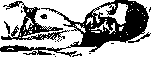
Deviation conjuguee of the head and eyes during left-sided convulsions of the facial muscles at the beginning of the attack in Jacksonian epilepsy with a right-sided brain tumor. (From Bing.) 16 to the opposite side, and here also passes the pyramidal path, innervating the opposite limbs. The same considerations apply to paralytic processes. If the patient's gaze is deviated to one side, and the limbs are paralyzed on the other side, then the case is one of damage to the hemisphere of the cerebrum. If the patient's gaze is deviated to the side of the paralyzed limbs, then one should assume damage to the brain stem.
Related articles
Mentioned in
Cite this page
“Deviation Conjuguee.” Soviet Medical Encyclopedia. English translation of Bolshaya Meditsinskaya Entsiklopediya, 1st ed. (Moscow, 1928–1936), ed. N. A. Semashko. https://sovietmedicalencyclopedia.pages.dev/article/deviation-conjuguee/