Diazo Reactions
Historical document, translated for reference. It reflects medical knowledge of the 1920s–30s and is not medical advice.
Summary
An overview of diazo reactions as used in laboratory and clinical practice during the 1930s, specifically focusing on Ehrlich's diazo reaction in urine for diagnosing and prognosticating infectious and febrile diseases.
Encyclopedia article (1928–1936)
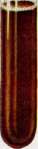
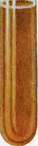
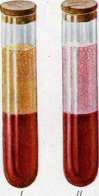
DIAZO REACTIONS in the sense that this term is used in laboratory practice, consist in the formation of colored products as a result of the action of a diazo reagent on the substances under study. Many substances are known that give compounds with the diazo reagent. The most interesting of them are those that possess a bright color depending on the azo group -N=N- formed during the reaction. Such substances include, for example, aromatic amines and phenols. The diazo reaction was introduced into the clinic in 1882 by Ehrlich, who discovered the ability of urine in certain diseases to give an intense color with the diazo reagent (Ehrlich's diazo reaction). Two solutions are needed for the reaction. A: a 0.5% aqueous solution of sodium nitrite NaNO2, stored in a dark bottle with a ground-glass stopper; it must be prepared anew from time to time because it spoils upon standing. B: a 0.5% solution of sulfanilic acid in diluted hydrochloric acid. Since sulfanilic acid dissolves poorly, it is best to triturate in a mortar 5 g of sulfanilic acid with 50 cm3 of hydrochloric acid (specific gravity 1.12) and gradually add water up to one liter. The solution is allowed to settle or is filtered. Both solutions are kept separately, and immediately before performing the reaction, 5-10 cm3 of solution B are mixed with a few drops of solution A. A rapid diazotization of sulfanilic acid into diasulfonic acid takes place. The resulting reagent is called the diazo reagent or Ehrlich's reagent. SO3H-C6H4-NH2 (HCl) + NaNO2 = SO3H-C6H4-N=N + NaCl + 2H2O. An excess of solution A can impair sensitivity (there should be no smell of nitrogen oxides after shaking). Diazo reaction in urine. To the diazo reagent prepared in this manner, an equal volume of urine is added (approximately), and the mixture is alkalinized with ammonia. The reaction is considered positive if a red coloration of the solution and its foam appears [see separate table, fig. 6 (I and II)]. Upon standing, the color often fades (the diazo reagent itself turns yellow upon the addition of ammonia). Sometimes after adding the acidic diazo reagent to urine, a bright yellow coloration appears before alkalinization with ammonia. This yellow Ehrlich reaction (eigelbe primäre Diazoreaktion) is considered to originate from urobilinogen, occurs in pneumonia and other diseases accompanied by urobilinogen excretion, and has not entered clinical practice. Pauli's reaction (Pauli; reagent + urine + soda) has also not gained widespread acceptance. The diazo reaction cannot be performed in jaundiced urine because bilirubin gives a dark red-purple color with the diazo reagent, which can serve as proof of the presence of bilirubin, but is not considered a positive Ehrlich diazo reaction in the clinical sense. Among medicinal substances, alkaloids, the salicylic acid group, antipyrine, caffeine, and also benzonaphthol do not interfere with the reaction. Intakes of orthoform and phenacetin cause a red coloration. Ketonuria does not give a red coloration, despite the fact that acetoacetic acid reacts with the diazo reagent. It has not yet been possible to ascertain which substance appears in the urine during a positive diazo reaction. According to its chemical structure, the resulting compound should correspond to the formula: SO3H-C6H4-N=N-R, where R is an unknown radical. Since its solution possesses an intense color, it can be assumed that the diazo compound combines with some aromatic or generally cyclically structured body appearing in the urine. Since the reaction is carried out in an ammoniacal-alkaline environment, this body likely possesses the properties of an amine or phenol. The idea that a histidine derivative (containing an imidazole group) is of significance here is not entirely convincing, because azo compounds of histidine derivatives possess different properties. In some cases, Ehrlich's diazo reaction is apparently caused by the presence of urochromogen and is related to Weiss's reaction characteristic of this body (yellowing of the urine upon the addition of a few drops of potassium permanganate solution). There are probably several different substances that give Ehrlich's diazo reaction. It has been possible to prove that sometimes these bodies are steam-volatile, while in part they are bound in the form of ethereal sulfuric acids and are released by hydrolysis. These data speak in favor of their phenolic nature. Through complex processing of large quantities of normal urine, it can be proven that it too contains negligible traces of substances giving the diazo reaction. But a typical diazo reaction in normal urine without prior processing is never observed. The Ehrlich reaction does not depend on diet, even with intentional feeding with tyrosine and histidine. In severe cases (typhoid, tuberculosis, meningitis) with a positive diazo reaction, patients are in an unconscious state and often fast. Therefore, one has to think about the significance of intracellular endogenous metabolism for the Ehrlich reaction. Cyclic compounds originating from the breakdown of cellular protein are oxidized in the side chains, but the ring parts escape destruction, and the resulting bodies of the mono- or polyphenol type enter the urine and give Ehrlich's diazo reaction. Its intensity often changes sharply in a short period of time. Many clinical studies have been made on the appearance of the diazo reaction in urine. Most often, the reaction is observed in febrile diseases. In first place is measles, in which the diazo reaction has no bad prognostic significance and appears often even in benign cases. Conversely, in scarlet fever, the diazo reaction is observed rarely and is here characteristic of more severe forms. All typhoids, especially typhoid fever and typhus, can give a positive diazo reaction. The stronger the febrile phenomena, the more sharply expressed the diazo reaction usually is. However, even in severe cases, it may be absent.


The time of appearance of the reaction is variable; sometimes it is noticeable already by the end of the first week. Changes in brightness coincide with the improvement and worsening of the patient's condition. During relapses, a disappeared diazo reaction appears anew. Tuberculosis in all its manifestations with high temperature can give a diazo reaction. The prognosis is darkened by this, but it should not be considered unconditionally bad. All sorts of septic processes also cause Ehrlich's reaction. It was less frequently described with high temperature depending on other infections (influenza, tonsillitis, etc.). To point out such a severe febrile process in which the diazo reaction can never appear is hardly possible. The diazo reaction is significantly less characteristic of neoplasms, Hodgkin's disease, etc. Thus, Ehrlich's reaction is not a symptom of any single disease and is applicable for diagnosis only with the simultaneous consideration of all clinical and laboratory data. It has greater significance for characterizing metabolism and assessing the general condition of the patient. In all cases of the prolonged persistence of the diazo reaction, we are dealing with a profound and essential pathological deviation of metabolism, although a remediable one, and a positive diazo reaction always indicates a certain severity of the disease process (except for mild cases of measles).
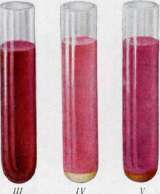
e. Fromhold. The diazo reaction in the blood serves to determine bilirubin in it. As early as 1883, Ehrlich pointed out the characteristic red-violet coloration that the diazo reagent gives with bilirubin; Proscher in 1900 managed to prove that it depends on the formation of azobilirubin. In clinical practice, the diazo reaction for the determination of blood bilirubin was introduced only in 1913 by Hijmans v. d. Bergh, whose name it bears at present. Due to its simplicity and high sensitivity (detecting bilirubin at a dilution of 1:1,500,000), it is currently most widely used in comparison with other reactions for determining blood bilirubin. It is suitable not only for qualitative but also for quantitative determination. For qualitative determination, the so-called "direct reaction" of Hijmans v. d. Bergh can serve: to 1 cm3 of serum—whole or diluted depending on the degree of yellowness—are added 1/4 to 1/2 of the volume of Ehrlich's reagent; a red-violet coloration of the solution quickly appears. For control, it is compared under incident daylight on a white background with a correspondingly diluted serum without the diazo reagent. Depending on the speed of the onset of coloration, a distinction is made between: 1) the rapid direct reaction [see separate table, fig. 6 (III)]—the coloration appears immediately, with its maximum intensity no later than 30 seconds from the moment of adding the reagent; according to Hijmans v. d. Bergh, such a type of reaction is given by bilirubin already excreted by the liver into the bile and, upon stasis of the latter, reabsorbed into the bloodstream ("stasis bilirubin" of Lepehne); 2) the delayed direct reaction—the onset of the reaction is after 2-4 minutes and later; according to Hijmans v. d. Bergh, it is given by bilirubin that has not yet passed through the liver (blood bilirubin in hemolytic jaundice, pernicious anemia, etc., "functional bilirubin" of Lepehne). Between these types there are transitions—the so-called two-phase direct reaction: rapid appearance of the onset of coloration followed by its intensification. For the quantitative determination of bilirubin according to Hijmans v. d. Bergh, the so-called "indirect reaction" is usually used: to 2 cm3 of alcohol (96%) in a centrifuge test tube are added 1 cm3 of whole or diluted (depending on the degree of yellowness) serum not containing dissolved hemoglobin resulting from hemolysis; it is centrifuged, 1 cm3 of the liquid located above the coagulated settled protein is aspirated, 0.25 cm3 of freshly prepared diazo reagent is added, 2-3 minutes are awaited for the reaction maximum, and it is subjected to examination in an Autenrieth colorimeter [see separate table, fig. 6 (IV and V)]; the standard is a wedge filled with a 2% cobalt sulfate solution or a 1:32,000 iron thiocyanate solution in ether (the latter corresponds to a bilirubin content of 1:200,000). The values found are expressed in conventional units; the bilirubin content of 1:200,000 is taken as a unit. Lately, a number of modifications of the Hijmans v. d. Bergh reaction have been proposed for the quantitative determination of blood bilirubin. They have not yet found widespread application in the clinic. The application of the Hijmans v. d. Bergh reaction in the clinic for the differential diagnosis of stasis jaundice from jaundice of other origins is based on the ability of various sera to give different types of the reaction. The Hijmans v. d. Bergh reaction is also of great importance for the diagnosis of so-called latent jaundice, i.e., jaundice without visible yellowish coloration of the integuments. The diazo reaction for the determination of bilirubin in duodenal contents, transudates, and exudates is performed in the same way as in serum. The diazo reaction must be performed as quickly as possible after obtaining the fluid to be analyzed in order to avoid rapid decomposition of bilirubin (especially in the light).
Related articles
Mentioned in
Cite this page
“Diazo Reactions.” Soviet Medical Encyclopedia. English translation of Bolshaya Meditsinskaya Entsiklopediya, 1st ed. (Moscow, 1928–1936), ed. N. A. Semashko. https://sovietmedicalencyclopedia.pages.dev/article/diazo-reactions/