Graphology
Historical document, translated for reference. It reflects medical knowledge of the 1920s–30s and is not medical advice.
Summary
An overview of graphology from the 1930s Soviet medical perspective, discussing the history of handwriting analysis, its anatomical and physiological basis in central and peripheral nervous processes, and its application in psychiatry, neurology, and forensic medicine.
Encyclopedia article (1928–1936)
GRAPHOLOGY (from Greek grapho to write and logos doctrine), the scientific study of handwriting in the healthy and the sick. Graphology, or 'chirogrammatomancy' (which translates from Greek as 'divination from manuscript'), originated as the art of determining a person's character and temperament from their writing. The founder of graphology is generally considered to be the 17th-century Italian physician and professor at the University of Bologna, Camillo Baldo, who authored the work 'On the Methods of Recognizing the Lifestyle, Character, and Personal Qualities of a Man by His Writing.' However, Aristotle had already suggested that the external appearance of writing may correspond to the mental qualities of the writer. Leibniz, the brilliant philosopher and mathematician, and Goethe, the great poet and naturalist, acknowledged that human individuality is reflected in handwriting. Goethe, who gathered an extensive collection of autographs of prominent contemporaries, interested the poet Lavater (a Zurich abbot) in the problem of handwriting; Lavater expanded the diagnostic significance of handwriting, asserting that handwriting bears national characteristics just as physiognomy does, and that a parallelism exists between speech, gait, and handwriting. From the early 18th century, a number of representatives of the French clergy (Bishop Boudinet, Cardinal Regnier, Abbot Flandrin, the Jesuit Marten) took an interest in the study of writing; in the second half of the 19th century, the name 'graphology' appeared for the first time, its introduction into literature belonging to Abbot Michon, whose work 'Système de graphologie' already contained a number of methodological guidelines. With the appearance in 1883 of the work by German physiologist Schwiedland, 'Die Graphologie, Geschichte, Theorie und Begründung der Handschriftendeutung,' a new period in graphology began, which can be characterized as placing an anatomical and physiological foundation under the assumptions of the early adherents of graphology.
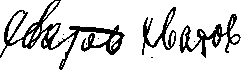
The achievements of experimental physiology in the doctrine of the localizations of brain functions, confirmed and supplemented by clinical observations, brought a significant degree of clarity to the question of the anatomical and physiological substrate of the elements of writing, revealing its close connection with the central localization of speech and establishing a special writing center (the lower section of the second frontal gyrus—Exner's center). It must be noted that in this complex issue complete unanimity has not yet been achieved among representatives of the principal scientific schools, and at the present time clinical and sectional material on various forms of speech and writing disorders of central origin is investigated with special care to test the theories advanced by various authors (see Aphasia and Agraphia). The basic anatomical and physiological propositions, as proven by experiments, are beyond doubt and can be used by objectivist graphologists: writing can be treated as written speech, i.e., as a projection of our consciousness in the form of conventional expressive movements. The act of writing is composed of two components: the central-psychic (the activity of the associative centers of speech and writing in the cerebral cortex) and the peripheral (processes arising in sensorimotor centers and their conduction pathways with the muscular apparatus of the writing extremity). The features of both factors exert an influence on writing, reflecting on its content and form. Everything that constitutes our consciousness, our sensations, ideas, methods of their combination, the speed of the flow of ideas, etc., is reflected in the content of the writing and at the same time leaves its imprint on its external appearance, imparts typical features to the handwriting, because our psyche, manifesting itself outwardly through movement, transmits its state to it, increasing or decreasing the impulse to movement, accelerating or slowing down its tempo. The study of writing now proceeds in an experimental direction, and the boundaries of gathering material are expanding beyond the limits of the healthy personality, encroaching upon the realm of pathology. The investigations of prominent psychologists, clinicians, and sociologists (Preyer, Lombroso, Ribot, Gross, Kraepelin, Sikorski) established the scientific significance of graphology, freeing it from the speculative claims of ignorant 'fortune-tellers,' and created the principles for building a graphological method of studying personality.
Ribot writes: 'I regard graphology as a doctrine based on the indisputable principle that our movements convey the most intimate states of character, feelings, and mindset. Handwriting has an advantage over facial expression and gestures because it can be fixed.' In modern objective psychology, the graphological method has acquired substantial significance; it is regarded as one of the methods possessing symptomatic value. Klages, one of the most authoritative investigators of handwriting, points out that the graphological method can reflect with sufficient objectivity such characterological features as the predominance of volitional attitudes or their weakness, the degree of a person's excitability, their emotional balance, etc. All these features can be reflected both in the delineation of individual letters (regular, uniform or jumping, irregular, jerky handwriting, strong and weak pressures, sharp or rounded strokes of individual letters, etc.) and in the rhythm and tempo of writing, in the manner of accentuating and highlighting individual (e.g., first) letters when writing, using underlining, flourishes, etc. In psychiatry, the graphological method finds application as an objective way of studying the clinical picture of a disorder, facilitating differential diagnosis, illustrating fluctuations in the course of the disease, and allowing a prognosis to be made with greater confidence (see figures 1 and 2). The clinical evaluation of the writing of the mentally ill is carried out both in terms of its content and its appearance. The principles of psychological and psychiatric analysis of writing bring the graphological method into the sphere of forensic medical practice as well. Knowledge of the features of writing in various states of the emotional-volitional sphere (see figure 3) and in pathological deviations of the personality is necessary for both the physician and the jurist, since sometimes a manuscript is the sole material for a judicial investigation (in cases of the death of a witness or defendant) and since document and signature forgery very frequently figure in court.

In the clinic of nervous diseases, the graphological method also brings substantial benefit in view of the fact that it makes it possible to register various forms of motor disorders (changes in tone, strength, coordination disorders, involuntary movements; see figures 4 and 5). In neuropathological practice, the graphic method serves this same purpose as the most sensitive in capturing even the very initial stages of motor disorders. It must be noted that the desire to secure for the graphological method the significance of an exact experiment prompts graphologists to design instruments that register its individual components during writing. Thus, for example, Kraepelin's balances make it possible to register specifically the character of the pressures exerted during writing; with the aid of this instrument, such factors as the influence of alcohol, fatigue, and affect on handwriting have been established. The further development of graphology depends on the accumulation of material and its evaluation according to the method of correlation with various personality traits revealed by strictly objective methods. At the present time, graphological material is gathered in many directions, among which the most reliable can be pointed out: the influence of age on handwriting, sex characteristics of handwriting, national characteristics of handwriting, the influence of general and special endowment on handwriting, the establishment of specific influences on handwriting from the emotional-volitional sphere during positive and negative emotional reactions, the relationship between handwriting and constitution, etc.
[]
Related articles
Mentioned in
Cite this page
“Graphology.” Soviet Medical Encyclopedia. English translation of Bolshaya Meditsinskaya Entsiklopediya, 1st ed. (Moscow, 1928–1936), ed. N. A. Semashko. https://sovietmedicalencyclopedia.pages.dev/article/graphology/