Hysteria
Historical document, translated for reference. It reflects medical knowledge of the 1920s–30s and is not medical advice.
Summary
This 1930s Soviet medical article defines hysteria as a functional nervous system disorder, examining its etiology, pathogenesis, symptoms, diagnosis, prognosis, and treatment. It discusses historical views, the role of emotional trauma, heredity, gender differences, and the complex pathogenesis involving suggestion and affect.
Encyclopedia article (1928–1936)
HYSTERIA. Contents: Etiology................... 800 Pathogenesis.................... 802 Symptomatology............... 805 Diagnosis and prognosis .............. 814 Treatment ................... 815 Hysteria (from Greek hystera-uterus), a disease whose onset was formerly considered to be in the most direct connection with lesions of the female sexual organs, in particular with lesions of the uterus. Only from the middle of the 19th century was this view, which was completely incorrect, abandoned and gave way to new views—specifically, from the appearance of Briquet's monograph, and especially thanks to Charcot's lectures, the new view of H. as a disease of the nervous system and moreover as a functional disease found general acceptance. A more detailed definition of H., which would have enjoyed such general acceptance, does not yet exist. Disagreements arise even over the basic question of the existence of H. as a specific nosological unit. Charcot understood H. as a disease with completely specific symptomatology and etiology—specifically as a constitutional disease, in all cases without exception hereditary and possessing unquestionable nosological unity. At present, such a definition meets with major objections; there are proposals not to speak of H. as a disease at all, but to speak only of hysterical reactions. There also exists a compromise solution to the question, recognizing both hysteria as a specific constitutional psychopathy and hysterical reactions, which can arise with any pathological constitution, and sometimes also in people who are more or less completely mentally normal. This understanding of hysteria is at least practically the most convenient, as it allows one to encompass without particular difficulty that truly enormous amount of factual material encountered in this field. Etiology. In the etiology of hysteria, both precipitating factors and predisposition play a major role. Among precipitating factors, emotional shocks are particularly important. These shocks are often connected with sexual life, in wartime—with experiences of mortal danger. The question of the significance of constitutional factors in the etiology of hysteria is resolved differently. Charcot considered H. as a disease, always inherited: 'Heredity figures in the forefront in the etiology of H.—whether it is a matter of homogeneous heredity or of transformed heredity, when parents suffer from other diseases of the nervous system—psychosis, epilepsy, etc.' Wildermuth found hereditary predisposition in 75% of his cases, Kraepelin in 70-80%, Hammond in 62%, Ziehen in 40%, Binswanger in 60%, etc. In any case, the role of the hereditary factor is evaluated highly, and only the position regarding the absolute necessity of this factor's participation in the development of each given case of hysterical neurosis is questioned. As observations of hysterical epidemics during the last war show in particular, the etiology of H. is characterized especially by the relationship between constitutional and emotional factors. If the genotypic factor is strongly expressed, then mild emotional shocks are sufficient for the disease to develop. Conversely, with mild predispositions, very strong shocks are necessary to produce a pathological effect. Since in the psyche of so-called normal people traits of hysterical character can be hidden, according to Mobius's observation, many, and perhaps all people, are potential hysterics. This means that with excessive shocks, hysteria can develop even in a normal average person. The next very important question in the etiology of H.—the question of the significance of sex. In former times, hysterical neurosis was closely connected with diseases of the female sexual sphere, which on the one hand gave the disease its name, and on the other—made for a long time the development of the doctrine of male H. impossible. Despite the fact that Galen had already spoken in the opposite direction, despite medieval epidemics like the Aachen one, in which both sexes were affected to the same extent, despite the old works of Lepois, Willis, Sydenham, only in the second half of the 19th century did the possibility of H. in men become a generally recognized fact thanks to the works of the French school (1870s), especially thanks to Charcot's lectures. After Charcot, some disagreements are noted only in the views regarding the frequency of the disease in each sex. The female sex is still considered predominant in this respect. Thus, according to Raimann's statistics, for 1 sick man there are 38 women, according to Ziemssen—17, according to Gilles de la Tourette—2, etc., although some accept the reverse relationship. P. Marie, for example, studying outpatient material, found H. in men in 5.7% of all observations, in women—only in 3.3%. In general, in peacetime, primacy still apparently belongs to the female sex. The emotional shocks that provoke the development of hysteria in peacetime are connected primarily, although of course not always, with sexual life. Sexual factors in a woman's life play in general undoubtedly a greater role than in a man's life. The question of the influence on the development of hysterical neurosis of age arouses the least disagreement. At present, it should be considered proven that H. can develop at any age—both in early childhood and in mature people. Kraepelin expresses this distribution with the following table, more or less coinciding with the observations of other authors: up to 5 years—3%, up to 10 years—7.2%, up to 15 years—24.4%, up to 20 years—38%, up to 25 years—14.9%, up to 30 years—7.4%, up to 35 years—2.8%, up to 40 years—1.6%, up to 45 years—0.7%. The curve of diseases thus makes a huge surge toward the time of sexual maturity and the period immediately adjacent to it (15-20-25 years), in order then to quickly descend to comparatively very small numbers. Social conditions undoubtedly have great significance. However, hysteria, although far from to the same degree, is encountered in all classes of the population—both in urban and rural (numerous cases of 'cliques' among us), and in well-to-do classes, and among the poor, and among less cultured nationalities (merachenie in Siberia). In other respects, exhausting factors of all kinds predispose—infections, intoxications, overwork, etc. The pathogenesis of hysteria is very complex. Briquet already defined H. as a 'dynamic' suffering of those parts of the brain that govern affective life. The excitability of these parts increases, affective reactions begin to proceed excessively, and in part also pervertedly. Charcot assigned a large place in the origin of hysterical disorders to suggestion and even identified hysterical symptoms with those symptoms that he caused in the patient by means of hypnosis. However, Charcot's views were complex; alongside the factor of suggestion, he also assigned a very large place in the pathogenesis of H. to affect, emphasizing the deep internal connection that exists between affect and suggestibility. Analyzing cases of hysterical-traumatic monoplegia and proving 'not only similarity but also identity' of this monoplegia with monoplegia caused here in a lecture by hypnotism in hysterical women, Charcot definitely expressed the hypothesis of the identity of the hypnotic state and the state arising under the influence of an emotional shock ('choc nerveux'), in the sense of creating there and here a predisposition to the production of hysterical-somatic symptoms, i.e., symptoms that more or less closely imitate symptoms of organic lesions of the nervous system—paralysis, anesthesias, convulsions, etc. 'By virtue of the clouding of the 'self', produced in one case by hypnosis, in the other by an emotional shock, a given idea, fixing itself in consciousness and dominating there undivided, without any control, develops and acquires sufficient strength to realize itself objectively in the form of paralysis.' In another place Charcot expressed this thought in no less definite form: 'Among the mental states, unconscious or subconscious, during which suggestion can easily be realized, besides the states of hypnotic somnambulism... one can also name emotions, mental shocks.' Taking into account that in his judgments on the origin of hysterical symptoms Charcot also assigned a large place to the splitting of consciousness and its automation in the form of the so-called 'condition seconde' ('second state', 'second consciousness', more or less independent from the general consciousness), it must be recognized that in his understanding of H. there were essentially all those views that now dominate in neurology and which are only a further development and detailing of one or another aspect of his doctrine.—The role of suggestion in the origin of hysterical symptoms received very high evaluation especially in Mobius's doctrine of ideogenesis and in Babinski's doctrine of pitiatism. Mobius for the first time apparently in a definite form limited the concept of H. to the concept of ideogenesis: 'all morbid phenomena that are caused by representations are hysterical.'
Sommer, as 'psychogeny,' isolated in exactly the same sense the pathological states that 'are created by representations and are generally subject to their influence.' The most famous attempt in this direction, however, was that of Babinski to dissect the complex concept of H. with the isolation of pithiatism (peitho--I persuade, iatros--physician) as a completely separate and independent group, which includes exclusively symptoms arising through self-suggestion and external suggestion. This isolation, however, proved to be little corresponding to the observed relationships. If suggestibility in hysterics is indeed one of the most characteristic signs of this neurosis, it is still only a sign, far from exhausting the entire essence of the disease and in turn postulating the existence of disorders in the complex mechanisms outlined in the research of Janet and Freud, partly already outlined in the views of Charcot. A more correct role in the origin of hysterical disorders should be attributed to pathological affectivity. 'As a whole, hysterical manifestations should be defined as being caused by the great stability of symptoms produced by emotional shock,' while suggestability, as a secondary symptom, depends only on one degree or another of loss of intellectual control, conditioned by the affectivity which has basic significance (Dejerine). Dupre, defining emotion as 'the fundamental moment of dislocation of personality,' also pointed to the dependence on it of suggestability, and to the secondary significance of the latter. Bleuler defined suggestability as a partial manifestation of affectivity. Pitres also spoke of the secondary significance of pure ideogenesis: 'I think that a pure idea, cold, not accompanied by emotion, is incapable of causing the appearance of hysterical disorders; emotional shocks, or ideas associated with intense emotional processes, on the contrary, are capable of producing a whole series of hysterical symptoms.' - Among theories attributing primary importance in the origin of hysterical symptoms to affective disorders, the most developed is Freud's theory. According to this theory, the main hysterogenic significance belongs to the repression of unreacted-at-the-time and, for this reason, dissociated from the corresponding representations affects and their displacement into the sphere of the subconscious, where they play the role of a constantly acting pathogenic cause. 'If the initial affect has not discharged in a normal, but in an 'abnormal reflex,' then the excitation originating from the representation associated with it is 'converted' into a hysterical-somatic symptom.' This symptom remains a persistent manifestation of the pathogenic affect, while the affect itself is no longer conscious to the patient and its connection with this symptom can be clarified only through very complex research, through the so-called psychoanalysis (see). The corresponding affects relate mainly to childhood sexuality, which is much richer in content than has been assumed up to now, while presenting at the same time peculiar characteristics that are later smoothed out and undergo repression, sublimation, and amnesia, provided, however, that the further development of the individual's sexuality (pubertal period) proceeds normally. The basic concept with which Freud operates, besides the pathogenic affect, is the concept of the subconscious, in which all the processes of splitting of the affect, its repression and conversion into a hysterical-somatic symptom take place.-Janet also attributes enormous importance to the subconscious. He sees the essence of the hysterical neurosis in a peculiar violation of the synthesis of personality, in the splitting of consciousness, in the narrowing of the field of consciousness, which makes it impossible for the hysteric to include a whole series of impressions in consciousness and connect them with his 'I.' The splitting of consciousness, the automation of its parts find their most striking expression in such states as hysterical convulsive seizures, somnambulistic trances, etc. The splitting of consciousness also explains the occurrence of such symptoms as hysterical paralyses and anesthesias. The tendency toward dissociation of personality, according to Janet, is innate, and emotions give the impulse to such dissociation, to which Janet generally attributes enormous importance in the origin of neuroses. Claparede also attributes great importance to emotions in the genesis of hysteria. - He defines H. as a tendency to atavism and to phylogenetically old types of reactions, which are emotional reactions. Likewise, Kraepelin identifies the symptoms of H. with the external manifestations of mental experiences, comparing hysterical vomiting with the feeling of disgust, hysterical mutism and aphonia with fear, etc., and recalling the teaching of Darwin, for whom the external manifestations of emotions were modified primitive means of defense and resistance, instinctive forms that gradually disappeared during phylogenesis and appear in man only in a rudimentary form and only under special conditions. Kretschmer also bases his understanding of hysteria on the participation of phylogenetically old mechanisms: 'We call hysterical primarily those psychogenic forms of reaction in which a certain tendency of representation uses instinctive, reflexive, or other biologically prepared mechanisms.' Thus, the hysterical seizure is nothing other than a typical 'motor storm,' a phylogenetically early motor reaction characteristic of elementary organisms; hysterical lethargy is an equally phylogenetically early 'feigned death reflex,' etc. - Disorders in the emotional sphere to a large extent presuppose the presence of disorders in vegetative functions. It is therefore undoubtedly that the latter should be assigned a significant role in the pathogenesis of hysteria. The details here are still little clarified. Nevertheless, it should be noted the remarkable fact that typical vegetative diseases very frequently accompany hysteria (the so-called 'hysterophilic' diseases of Levandovsky--migraine, bronchial asthma, colitis membranacea, Quincke's disease, etc.).-New, very broad perspectives for understanding the pathogenesis of hysteria, as well as other psychoneuroses, are opened by I. P. Pavlov's teaching on conditioned reflexes. The author of the method himself observed in his dogs the development of neurotic symptoms as a result of conflict between the processes of inhibition and excitation in the cerebral cortex and compared them--with great caution and only in a very general form--with the phenomena of hysteria, neurasthenia, hypnotic states, etc. in man. Attempts to reduce some neurotic disorders to conditioned reflexes are also beginning to be introduced by clinicians (especially in the pediatric literature). Symptomatology. The basis of the extremely diverse clinical manifestations of the hysterical neurosis lies in a much more definite and narrower symptom complex, expressed by a number of very typical characteristics of hysterical character ('habitus hystericus'), and all the external symptoms of H. are essentially only a derivative of its peculiar properties. One of the most special traits is the peculiar egocentrism of hysterics, their morbidly heightened interest in everything that is more or less intimately connected with their 'I,' and parallel to this--a certain dullness of interest in everything that has no direct relation to their personal life. Since the conditions of ordinary life do not provide sufficient material for self-satisfaction in the corresponding direction, on the one hand 'daydreams' appear, satisfying the demands of hysterics and creating, along with the ordinary life of consciousness, an excessively developed life of the subconscious, which becomes a rich source for the development of typical deviations from norm both in the mental life and in the area of somatic functions. On the other hand, this property determines all the behavior of patients--their striving to play the leading role everywhere and by any means and at any cost to attract the attention of those around them: constant affectation, theatricality, a peculiar boasting of their real and imaginary misfortunes and especially of their illness, and for the same purposes also a conscious exaggeration of its manifestations. Hence the so close connection between hysterical symptoms and purely simulative manifestations, which has so often attracted the attention of researchers and sometimes even prompted them to a great rapprochement of both states. Everything that relates to our 'I' receives in normal life a particularly bright emotional coloring; all external experiences are much paler. It is therefore understandable that the emotional life of hysterics with their egocentrism is extraordinarily rich in deviations from norm. Pathological emotivity occupies a central place in the clinic of H.; the influence of affects in the genesis of this disease is rightly attributed at present completely outstanding importance. The third peculiarity of the hysterical character is the narrowing of the field of consciousness of hysterics, their tendency to peculiar processes of splitting of consciousness, which is a consequence of the extraordinarily richly developed life of the subconscious.'
In the field of clear consciousness, relatively very little remains; even purely somatic functions, such as movement and sensitivity, can apparently be pushed beyond its boundaries. On the other hand, the life of the subconscious periodically manifests outward in the form of hysterical seizures, cataleptic states, somnambulistic trances, etc., which essentially constitute direct manifestations of 'psychical automatism,' inherent to a certain degree even in normal mental life, but in H. pathologically hypertrophied. The narrowing of consciousness should apparently also be connected with the increased suggestibility of hysterics—a feature whose significance was undoubtedly exaggerated earlier, but which plays a major role in the production of many hysterical symptoms. The remaining properties of the hysterical character have less significance. The emotiveness of hysterics and their very egocentrism have an infantile character: overvaluation of trivial events, instability of emotional reactions, sometimes an extraordinary need for approval and participation from others. In the moral sphere, the egoism of hysterics, their complete inability to enter into the interests of others even to a small degree, their extreme claims to exclusive attention to themselves, and in connection with this often truly tyrannical treatment of others, their lying—have justly given them a bad reputation, lending the very word 'hysteria' an unpleasant, offensive connotation for the sick. It should be noted, however, that much here depends on the conditions, and a hysterical woman may exhibit outstanding traits of 'altruism,' devotion to a common cause, an idea—only if this altruism attracts the attention of others, presents her in a favorable light from her point of view, allows her to play a beautiful and evoking general sympathy role. In the intellectual sphere, one can note essentially only the narrowness of judgment, weakening of criticism, and sometimes the striking subjectivism of hysterics in evaluating their surroundings, completely incomprehensible to an ordinary person and dictated by the life of the subconscious: completely unmotivated sympathies and antipathies toward people, events, and even objects, completely unmotivated transitions from sentimental ecstatic worship to furious hatred. In the sphere of will—stubbornness dictated by the subconscious sphere, increased suggestibility. In the sphere of drives—peculiar taste for inedible things (coal, chalk, etc.), tendency to bite nails (onychophagia), etc., especially frequent disorders in the sphere of the sexual drive: as a frequent symptom—sexual frigidity, in some rarer cases, a strong increase in libido (nymphomania), and finally, unique combinations of increase and decrease in drive in the most peculiar forms. Among the partial manifestations of H., one should first dwell on the characterization of hysterical seizures as a symptom having a direct connection with the very nature of hysterics. According to the well-known Charcot scheme, these seizures are characterized by a series of planned sequential states. 1. The aura period, which can be very diverse in its constituent phenomena; special attention should be paid to unpleasant sensations in the heart area (the classic 'palpitations'), noise in the ears, sensation of beating in the temples, darkening before the eyes, most often the so-called 'globus hystericus'—the sensation of a ball rising to the throat. 2. The seizure itself in 4 phases: 1) the epileptoid period, including the tonic and clonic phases and the resolution phase; 2) the period of 'contortions,' large movements, clownism; 3) the period of passionate poses; 4) the final period with delirium and hallucinosis. But even in Charcot's time, such major seizures with complete development of phases were by no means the most frequent, greater importance was attached to abortive seizures, in which this or that phase of the major seizure acquired independence; thus were distinguished: 1) epileptoid attack, 2) demonic attack (possession), 3) ecstatic attack, 4) delirious (paranoid) attack. At present, the most frequent should be considered seizures characterized above all by 'passionate poses,' full of expressiveness and conveying either sexual experiences (especially the so-called arc de cercle, a unique hysterical opisthotonus) or religious ecstasy, or a state of extreme fear and anxiety, sometimes silent, sometimes accompanied by cries that clarify the content of the hallucinosis with which the patients are overcome. In addition to convulsive seizures, other distortions of consciousness also occur, the so-called hysterical trances, which could be considered their equivalents. These include attacks of catalepsy: patients are completely immobile, maintain any posture given to them, no matter how inconvenient and absurd it may be, their limbs acquire the characteristic property of waxy flexibility (flexilitas cerea), their face is devoid of expression or retains a fixed expression of some affect (especially typical is the expression of religious ecstasy).—To such equivalents should also be attributed states of somnambulism, which includes the well-known noctambulism, or sleepwalking. During these states, the behavior of patients differs little from normal; they perform a series of very complex and coordinated actions, can make distant journeys (the so-called fuga hysterica), arousing no suspicion in others regarding their mental health. And yet these states are disconnected from the normal consciousness of patients, their actions are automatic and lack the necessary continuous connection with the content of normal consciousness, just as upon awakening complete amnesia is discovered for all experiences that filled the state of somnambulism (amnesia hysterica). In some, however, very rare cases, somnambulistic states, alternating with states of waking consciousness, form a kind of second life with its own stock of experiences and memories, with its own special individual peculiarities: in the same subject, two completely different 'I's are combined (cases of dual 'I'). Hysterical distortions of consciousness also include hysterical sleep, or lethargy, hysterical stuporous states, hysterical twilight states. (For more details on these—see Hysterical Psychoses.) In addition to the mentioned changes concerning the psychic sphere itself, the clinic of hysteria presents a long series of disorders in the somatic sphere, which Freud designates as hysterosomatic symptoms, in contrast to organic symptoms, which characterize organic diseases of the nervous system. Paralyses of mono-, hemi-, and paraplegic type are common, sometimes flaccid, much more often spastic. Sometimes, especially in monoplegias, a rather close resemblance to peripheral paralysis (plexitis) occurs, even small atrophies and vasomotor disorders are possible, as well as a slight decrease in excitability, but never qualitative changes, reaction of degeneration occur. Hemiplegia often has a rather close resemblance to organic hemiplegia; in this respect, the so-called disease of Dejerine-Achar is particularly interesting, in which hysterical hemiplegia begins in a stroke-like manner, starting with hysterical sleep. But never in H. are such symptoms as Babinski's, Oppenheim's, Rossolimo's, Mendel-Bechterev's signs observed, and the distribution of paralyses and contractures never completely corresponds to the selective type of Wernicke-Mann (Fig. 1). Rather characteristic is the difference in gait: the organic patient 'drags' the foot, describing a semicircle with it, while the hysterical patient drags it as an unnecessary appendage (Todd's sign).
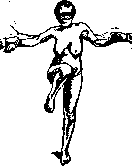
Figure 1. Hysterical contracture of the right lower limb.
Finally, it is characteristic that in hysterical hemiplegia the cranial nerves (VII and XII pairs) are spared, the involvement of which is so frequently observed in organic hemiplegias. True, in some rare cases in hysteria, glossolabial spasm is observed, which can imitate paresis of the opposite muscles (Brissaud-Mari syndrome). However, the distinction does not present particular difficulties, since here facial movements are possible on the supposedly paretic side and because the tongue and mouth usually deviate in the same direction, which does not happen with organic lesions. The presence of spasm, rather than paralysis as in organic hemiplegia, is indicated by the formation of folds at the corner of the mouth, the frequent presence of fibrillary tremors here, the thickening of the corresponding half of the tongue, and the difficulty experienced by the examiner when attempting to forcibly bring the patient's tongue to the middle position. In hysterical paraplegias, in addition to the absence of pathological reflexes, it is also characteristic the absence of sphincter disorders, so common in organic lesions of the spinal cord. Characteristic of hysterical paralyses is the symptom of Goslin (Hosslin): if resistance is applied to a paretic muscle, for example the extensor of the leg, and then suddenly removed, the leg remains bent due to the tension of the antagonists, which the patient subconsciously simulates as the presence of paralysis. Disorders of complex coordinative functions are not uncommon. As a particularly characteristic disorder of gait, astasia-abasia should be mentioned here—the inability to walk and stand despite the absence of paralyses. Even more typical is the disorder of another complex function—speech: mutism, characterized by complete muteness and at the same time complete preservation of the ability to understand what is heard and read and the ability to write—a combination of signs that is completely impossible in organic aphasia. Hysterical aphasias, which more closely imitate organic aphasias, are noted as a very great rarity. As very frequent speech disorders in H., aphonia and stuttering should be mentioned. Both disorders can occur independently, but more often they are remnants of not fully cured mutism. The extreme degree of hysterical aphonia is known under the name of aphthiria; with it, not even whispering is possible. Hyperkineses are very frequent. Contractures sometimes very closely imitate organic forms. To a certain extent, the relationship of the tense muscles to examination helps in recognition: bringing the ends of a tense muscle together in an organic patient weakens the hypertonia, in a hysterical patient it sometimes even intensifies it. Hysterical tremor is characterized by colossal diversity. Here the most diverse forms are possible, sometimes extremely closely imitating organic tremor, so that diagnosis becomes possible only by evaluating other concomitant symptoms. Finally, hyperkineses of the most bizarre form are possible, which by their very extravagance reveal their belonging to hysteria. It is necessary, however, to remember that in the evaluation of such hyperkineses, apparently, particularly many errors have been made and that a number of hyperkineses, which were previously considered functional, are now with full justification regarded as undoubtedly organic symptoms (hyperkineses in lesions of the striatum). Disorders of sensitivity in the past received a great deal of attention in the clinic of H. and were encountered very frequently. At present it has been established that there were many exaggerations here and that in most cases anesthesias are an artifact, the result of involuntary suggestion on the part of the examining physician. In any case, now with the application of a more careful research technique, anesthesias are encountered much less frequently. Their distribution does not follow anatomical principles, but according to the naive notion of the distribution of functions that patients have. This is either hemianesthesia (Fig. 2) or anesthesia with geometric boundaries (in the form of a glove, stocking, jacket, etc.). Less commonly, spotted anesthesia is encountered in the form of irregularly scattered areas over the entire body with loss of sensitivity. The lesion of sensitivity affects all its types, although here everything depends on the method of research, and since sensitivity to pricks is investigated the most, analgesia usually prevails over all other anesthesias.
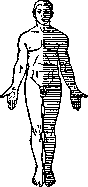
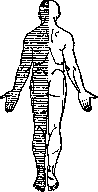
Figure 2. Hysterical hemianesthesia from the front and back.
Hysterical pains, hysteralgias, are very frequent and sometimes rather closely imitate true neuralgias. But usually there is no particular tenderness at the points of Valleix, the distribution of pains is not so typical, in hysterical ischialgia there is no typical Lasègue symptom. Hysterical arthralgias, simulating true arthritis, are not uncommon, and here the classic coxalgia (so-called disease of Brody) should be placed in the first place, which can present extraordinary diagnostic difficulties. Here the symptom of Brody has significance—tenderness of the skin surrounding
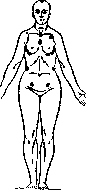
Fig. 3. Hysterogenic zones of the anterior surface of the body.
hip joint. Finally, pains in hysteria can also have a completely unique distribution. Thus is the classic clavus hystericus—a sharp headache in a very limited place, as if from a driven nail. Such is hysterical onychalgia, pain in the nails or hyperesthesia of the nails. Such finally is hysterical panalgia—painfulness of all parts of the body. Hyperesthesias are frequent and varied. Particularly well-known are ovarian hyperesthesias—pressure in the lower abdomen, supposedly corresponding to the position of the ovaries, causes pains and the extremely unpleasant sensations listed above as part of the phenomena characterizing the aura period of the convulsive attack, which sometimes actually leads to a crisis. This is one of the most important so-called hysterogenic zones, but there can be very many of them—the interscapular point, the area of the mammary glands, etc. (fig. 3). Often the same zones are also 'hysterophrenic,' or inhibitory zones, i.e., pressure on them stops an incipient attack. In the area of the senses, disturbances of vision are particularly characteristic. Here concentric narrowing of the visual field is most frequently encountered, often expressed very sharply—the visual field is narrowed more or less uniformly from all sides. At the same time, sometimes there is an inversion of color perception, and the boundaries for red color turn out to be wider than the boundaries for blue color, which does not happen in normal conditions. Less frequently than concentric narrowing of the visual field, hysterical scotomas are encountered. As a very great rarity, hysterical hemianopsias are described. In rare cases, complete amaurosis occurs, amblyopias are less rare. A relatively frequent symptom is kopiopia hysterica, or asthenopia, rapid fatigue of vision. Furthermore, sometimes such bizarre inversions of function occur as macropsia and micropsia, in which visible objects appear unnaturally large or small, and polyopia monocularis, in which an object appears multiple even when viewed with one eye, which does not happen in organic diplopias, where doubling is observed only with binocular vision. In hysteria, photopsia is often noted—a sensation of light, sparks, etc., in the eyes. More often in combination with disturbances of vision, less frequently in isolation, disturbances of the oculomotor apparatus are observed. Here, first of all, hysterical pseudoptosis, already described by Charcot, should be noted. It is caused not by paralysis of the m. levator palpebrae, but by spasm of the antagonist, i.e., the m. orbicularis palpebrarum. The presence of spasm of this muscle is indicated by the lower position of the eyebrow on the affected side, as well as the tension experienced by the examiner when attempting to forcibly open the eye. Hysterical paralysis of other eye muscles are only pseudoparalyses and are imitated by spasm of antagonists. Particularly well-known are cases with spasm of convergence, giving convergent strabismus. From the side of hearing, deafness is often noted, usually imitating a lesion not of the conducting apparatus (middle ear), but of the perceiving apparatus, with deviation of Weber to the healthy side. Anesthesias in the area of smell and taste are not infrequent, and in ageusia, the dissociation between the territories of the trigeminal and glossopharyngeal nerves, so typical in organic cases, is of course never noted. Pathological reflexes, i.e., Babinski's, Oppenheim's, Rossolimo's, Mendel-Bechterev's reflexes, should always arouse the greatest doubts when recognizing hysteria in a given case. Tendon and periosteal reflexes may be increased, but clonus is rarely encountered, and if it is encountered, it does not have a typical character, i.e., it does not possess the rhythm and continuity that characterize clonus in lesions of the pyramidal tract. Absence of tendon reflexes is not part of the picture of hysterical disorders. On the contrary, cutaneous reflexes may apparently be absent in hysteria, and absence of reflexes from mucous membranes is even often encountered, and in the absence of pharyngeal and palatal reflexes, a sign, to a certain degree pathognomonic for hysteria, is seen. Disturbances of pupillary reflexes are not observed in hysteria. Disturbances of sphincters are encountered as a great rarity, and in such cases they mostly have such a unique character that they can hardly be confused with organic ones. It should be noted, however, that in former times their possibility as a symptom of hysterical neurosis was readily admitted. Charcot's case is particularly well-known, in which there was hysterical anuria along with persistent vomiting containing urea. Cases of ordinary retention of urine in hysteria, Charcot considered a 'common phenomenon' ('un fait vulgaire'). Autonomic nervous system disorders are very frequent, complaints of distressing sensations from the heart, etc., in many cases of hysteria stand out prominently. Mostly the pulse is accelerated at this time. But sometimes sensations of palpitation are not accompanied by tachycardia. As a not infrequent symptom, a tendency to changes in facial color, to redness and paleness, should be noted. Spontaneous bleedings are a great rarity—cutaneous, as well as from internal organs (stomach, uterus, kidneys). Trophic disorders in hysteria still constitute a subject of dispute in neuropathology. While some completely exclude their possibility in hysteria, since in this disease symptoms should arise only by the ideogenic path (Babinski's pithiatism), others admit this possibility. Particularly not infrequent are edemas of the distal parts of the limbs, either of a cyanotic hue (blue edema, so-called Grasset's disease) or tense, non-pitting, white. In hysteria, skin disorders such as erythema, pemphigus, even multiple neurotic gangrene have been repeatedly described. Their connection with hysterical neurosis arouses particularly great doubts. Disturbances of internal organs are frequent. Dyspeptic disorders: hysterical eructation (ructus hystericus); regurgitation, or mericism (aerocismua hystericus), generally being a sign of psychoneurotic diathesis; hysterical vomiting, in which food, mixed with saliva and mucus, is expelled almost immediately after ingestion, i.e., in almost undigested form—a disorder that can be extremely persistent and last for many years; persistent constipation, less frequently diarrhea; the classic hysterical meteorism, which can curiously imitate pregnancy, which was already noted in Briquet's observations (pseudograviditas hysterica). Of the disturbances of the respiratory apparatus, by their frequency, tachypnoe hysterica particularly deserves mention. The listed diverse symptoms, grouping in various combinations, create the clinical pictures of hysteria, which in different cases can be extremely different. In some cases, it is a matter of pictures rich in symptoms, showing both sharply expressed changes in character and hysterical attacks in one form or another, and a whole series of hysterosomatic symptoms. Much more frequently cases are encountered where the clinical picture is paler, where the matter is limited to the presence of increased emotivity and increased suggestibility, characteristic of hysterical neurosis, along with this sometimes also the presence of one or another hysterosomatic symptom, so-called monosymptomatic hysteria. Hysteria is also encountered in early childhood, up to 5 years of age, since the hysterical constitution cannot help but manifest itself, but its symptomatology is not yet developed. Undoubtedly, even in the earliest age, before the child has acquired the ability to separate his 'I' from the surrounding world, hysterical reactions exist, but they are called in the mass neurotic. Great suggestibility, tendency to imitation, and the relative abundance for the child of various kinds of psychic traumas (e.g., a loud sound, an unexpected bright light, a fall, etc.) create a favorable soil for the development of hysterical reactions with a predisposing heredity. It can be definitely noted that the reaction to these precipitating moments in children of hysterical mothers has a completely special coloring. The closer to 5 years, the more hysterical manifestations differentiate, often taking on a monosymptomatic character, e.g., in the form of vomiting, abdominal pains, intermittent stuttering, cough, and at the same time the hysterical appearance of the child, striving to attract the attention of those around, often with a tendency to fantasizing, is revealed. In the period after 10 years, hysteria in children differs from hysteria in adults rather in quantitative than in qualitative aspects. Besides psychic trauma, in childhood, acute infections often serve as a precipitating factor. Diagnosis and prognosis. In former times, in recognizing hysteria, very great importance was attached to the so-called hysterical stigmata. These included hemianesthesia, absence of the pharyngeal reflex, presence of hysterogenic points (interscapular, etc.), concentric narrowing of the visual field. At present, the significance of these signs has been considerably diminished: some of them, with proper research technique, turned out to be very infrequent signs, others (like absence of the pharyngeal reflex) are frequent and even occur in normal conditions.
In any case, they have retained some diagnostic significance to the present time. But the diagnosis of H. should be based mainly on other factors: on the evaluation of the entire mental appearance of the patient and on the establishment of the peculiarities of the character of somatic symptoms and the course of their development. Indeed, relating to somatic functions—movement, sensitivity, etc.—these symptoms are at the same time determined exclusively by processes occurring in the psyche of patients and are in part the result of their affectivity (disorders in the area of vasomotor and secretory innervation, certain forms of hyperkinesis, etc.), and in part the result of ideogenic processes—suggestion, autosuggestion, imitation (ideogenic symptoms). Analyzing the anamnesis of hysterical patients, one can very often isolate in their past one or another moment that determines the presence of this particular symptom rather than any other, which directly proves the ideogenic origin of this symptom. This includes: the very nature of the psychotrauma that directly caused the development of the hysterical illness and revealed H. in its latent form in this case; organic or functional diseases in the past of patients, less frequently in their relatives, which have left a lasting impression in their memory and determine the locus minoris resistentiae toward which the development of the neurosis proceeds; mental contagion (imitation) and external suggestion; finally, the temperament of patients: subjects with an agitated temperament more often give hyperkinetic forms of neurosis, while lethargic subjects give such symptoms as mutism and paralyses. Undoubtedly, very often such a determination of hysterical-somatic symptoms proceeds according to more complex principles, and here symbolism plays a huge role—'symbolic determination,' where 'between the affect and its reflex lie whole series of associated representations.' To decipher such determinations, the application of very complex and by no means always objectively reliable methods is necessary, which collectively bear the name psychoanalysis. Hysterical-somatic symptoms also have much significance in their external character, regardless of determination, which is not always provable. First of all, however closely the hysterical syndrome may imitate an organic disease, there is still a series of clinical signs (reaction of degeneration, pathological reflexes, etc.) whose presence almost completely excludes the diagnosis of hysterical illness. Furthermore, in H. a characteristic systematization of signs is noted, indicating the loss of certain functions rather than anatomical systems. Thirdly, one can often note the restoration of functions under special, artificially created conditions, under which the patient finds himself in an unfamiliar environment and, being unable to cope with the new situation for him, loses the ability not only to conscious but also to subconscious simulation of one symptom or another. Finally, conclusions ex juvantibus are in this area as valuable and conclusive as in any other. In two respects, caution should be exercised in the diagnosis of H. First, in the presence of a hysterical constitution, H. very readily complicates minor organic diseases, which in this case play the role of a 'splinter'—for example, to a panaricitis is added a hysterical monoplegia of the corresponding limb, etc. In such cases, upon discovering an undoubtedly organic symptom, one may attribute the entire syndrome to the organic disease, thus making a gross error, which is by no means indifferent to treatment. In this regard, it is necessary to make a diagnosis based on the totality of symptoms, not on the basis of one sign. Second, very often along with a hysterical constitution, traits of other pathological constitutions are encountered. Thus, epilepsy often occurs with H. and sometimes to such an extent that hysterical crises may alternate with epileptic seizures; often with a dominant picture of hysteria, traits of schizophrenia, manic-depressive psychosis, constitution of obsessive states, etc., can be discovered. The diagnosis should not be one-sided and schematic, but as exhaustive as possible, since, not to speak of the principial side of the question, the character of the prognosis and the character of proper treatment are directly connected with taking into account the extraneous elements that enter into the picture of H. Prognosis. The course and outcome are determined mainly by the degree of hereditary predisposition. If the illness developed primarily due to genotypic anomalies of character, then prospects for complete recovery are completely negligible. If, on the contrary, the role of pathological heredity is negligible and only the excessiveness of the emotional shock threw the psyche out of balance, then the prognosis is much more favorable. A fine illustration of this is the comparison of peace and wartime materials. However, all this concerns only the illness as a whole. Individual symptoms very often yield to treatment without particular difficulty, even in the presence of a strongly expressed hysterical constitution. The treatment of H. can pursue various goals—either complete cure or the elimination of individual hysterical-somatic symptoms. The first task is very difficult in itself, at least as far as constitutional hysteria is concerned, and here one has to rely more on prevention than on the treatment of an already developed illness. In this connection, it must be borne in mind that in relation to constitutional H., educational measures are primarily necessary. The upbringing of children showing a tendency to hysterical manifestations should be strict, though in no way harsh, should be devoid of any sentimentality, should develop a sense of duty, discipline, should accustom them to fully take into account the interests of others, should distract from fantasies and daydreaming (reading) and should accustom them to work pursuing real interests (manual labor, natural sciences). In a whole series of cases, upbringing away from the home environment, in special sanatorium schools, proves beneficial. In this case, the beneficial influence of the collective stands out especially sharply. In adults, one can hardly count on much in the way of re-education, which is why prospects for complete recovery here are much less favorable. Since, due to the very nature of the patients, very difficult relationships with relatives are created, which are primarily harmful to the patients themselves, removal from the familiar environment in most cases undoubtedly proves beneficial. Complete isolation of patients, recommended by Déjerine, is apparently very useful, at least for the first time. But since, by the very nature of things, the possibility of re-educating the character of patients in the spirit of strict discipline is only rarely in the hands of the physician, prospects for complete recovery even under conditions of isolation always remain very modest, and relapses are always more than possible. The matter is different with individual symptoms. Here it is very often possible to achieve their complete elimination, and suggestive therapy is of great importance in this. Hypnotic treatment also has many supporters, although quite reasonable warnings are raised against its application. When using suggestion, one promotes the strengthening in patients of states of splitting of consciousness, their autosuggestibility, which constitute the main evil of the hysterical neurosis, and thus, by curing partial symptoms, one worsens the illness itself. However, one must recognize the complete harmlessness and often the definite benefit of a whole series of indirectly suggestive methods, such as electrotherapeutic procedures, pharmacotherapy, therapeutic gymnastics, etc. With sufficient intelligence of the patient, treatment by persuasion according to the system of Dubois (the so-called 'rationalistic' therapy, see Psychotherapy) is of great importance. In general, however, it must be emphasized that there is probably not a single method of treatment by which hysterical symptoms and entire syndromes have not sometimes been cured. This circumstance is easily explained by the great suggestibility of hysterical subjects and by the influence that the personality of the physician often has on them, completely independently of the therapeutic method he applies. This factor, i.e., the physician-psychotherapist as an authority, as an object of respect, attachment, love, an object on which the scattered, insufficiently organized affects of the hysterical patient are concentrated, plays a large role in the theory of psychoanalysis as an explanation of the mechanism of healing (see Psychoanalysis). Whatever one's attitude toward the teachings of Freud may be, one cannot deny that in a whole series of difficult cases, prolonged treatment by psychoanalysis (by the method of free associations) leads to the patient gradually understanding himself, eliminating his internal contradictions and achieving such a synthesis of personality as he previously lacked for reasonable adaptation to the demands of real life. The universally recognized difficulty and complexity of this method require special knowledge and great experience.
In addition to the above-mentioned treatment methods, the method of Alfred Adler (individual-psychological method) has recently become widely used. For the social significance of hysteria, prevention, and social approach to therapy, see Psychoneuroses.
Related articles
Mentioned in
Cite this page
“Hysteria.” Soviet Medical Encyclopedia. English translation of Bolshaya Meditsinskaya Entsiklopediya, 1st ed. (Moscow, 1928–1936), ed. N. A. Semashko. https://sovietmedicalencyclopedia.pages.dev/article/hysteria/