Milk Bioryzation
Historical document, translated for reference. It reflects medical knowledge of the 1920s–30s and is not medical advice.
Summary
Bioryzation is a special pasteurization method using a bioryzator apparatus that rapidly heats and cools milk, reducing bacterial content while preserving its sensory properties and increasing shelf life.
Encyclopedia article (1928–1936)
MILK BIORYZATION, a special method of pasteurization performed in a pasteurizer-bioryzator, which has the form of a double-walled drum heated by steam (see Figure 1 and 2). Entering through a tube under pressure of 3-4 atm. into the bioryzator A, where the temperature is 75°C, the milk immediately turns into the finest droplets (is atomized) and is almost instantly heated to a temperature of about 73°C. After settling at the bottom of the bioryzator, the milk flows through an outlet tube to a cooler B, where it is quickly cooled to 10-15°C, and then automatically poured into sterile bottles V or canisters and sold under the name of bioryzated or "enzymatic" milk. The method of B. m. by Lobeck, published in 1912 and introduced in Germany before the war, gives
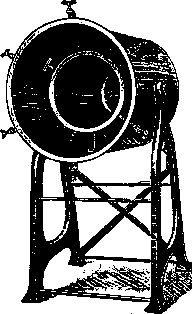
Figure 1. Boiler for heating milk during bioryzation.
good results: bacteria of tuberculosis, cholera, typhoid, paratyphoid, diphtheria, dysentery, coli, enteritidis Gartneri, pyocyaneus, fluorescens, etc., perish; spore-formers (hay, potato bacilli) and vegetative forms of some heat-resistant bacteria, including some lactic acid bacteria, and antitoxins (diphtheria) remain alive; the content of bacterial enzymes, catalase and reductase decreases; the number of bacteria in 1 cubic cm decreases from 100,000-150,000 to 300-400; the color, smell, taste, consistency and reaction of the milk do not change,
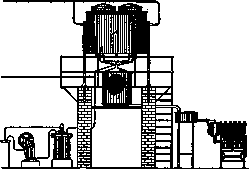
Figure 2. General view of the system for milk bioryzation.
the ability to settle and curdle is preserved, and stability is increased almost twofold. Since the remaining spore-formers in the milk belong mainly to peptonizing ones, milk should be stored in a cold place to avoid peptonization.
Related articles
Cite this page
“Milk Bioryzation.” Soviet Medical Encyclopedia. English translation of Bolshaya Meditsinskaya Entsiklopediya, 1st ed. (Moscow, 1928–1936), ed. N. A. Semashko. https://sovietmedicalencyclopedia.pages.dev/article/milk-bioryzation/