Refuse
Historical document, translated for reference. It reflects medical knowledge of the 1920s–30s and is not medical advice.
Summary
This article from the 1928–1936 Soviet Great Medical Encyclopedia defines refuse as solid waste of plant, animal, and mineral origin generated by households, trade, and industry. It discusses the composition, caloric value, accumulation rates in various cities, and the bacteriological risks associated with refuse as a medium for pathogens.
Encyclopedia article (1928–1936)
REFUSE, solid waste of plant, animal, and mineral origin, accumulating in domestic and communal life, trade, and industry. Refuse is easily subject to processes of decay, polluting the soil, air, and groundwater, and therefore usually requires immediate removal and liquidation or utilization. The largest percentage of refuse consists of household waste, composed of decaying kitchen scraps, to which ash, room sweepings, etc., are mixed. Trade and industrial waste is usually collected separately. The constituent parts of refuse, according to data from analyses performed in various countries, are approximately as follows (in percentages): [Table data omitted in source text]. The ratio of organic substances, inorganic substances, and water in refuse is as follows (in percentages):
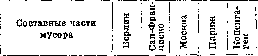
Inorganic substances ........ Water......... Based on the constituent parts of refuse, one can judge: 1) the degree of its putrescibility, 2) the quantity of screenings suitable for fertilizer, 3) the degree of combustibility, 4) the quantity of items that can be extracted from refuse for the purpose of their utilization. In most American cities, refuse is further classified by the content of kitchen waste, which can be used for animal feed or for the extraction of fats. For this purpose, refuse is collected in 3 different containers by type: a) kitchen waste (garbage); b) ash, sweepings, slag, and all other fine mass (ash); c) other large waste (rubbish). The percentage ratio of these constituent parts is approximately as follows (see table on p. 310). The percentage content for all 3 of the above characteristics is not constant; it changes depending on living conditions, the time of year, and climatic conditions. The combustibility of refuse is determined by elementary analysis or by burning an average sample of individual dried combustible parts of refuse in a calorimeter bomb. The calorific value of refuse is not constant and fluctuates within wide limits for different countries, and in each country, the fluctuations are significant depending on the factors mentioned above. The average calorific value of Moscow refuse in working fuel, despite its high moisture content, is about 900 calories per 1 kg, and at this calorific value, refuse can be burned without additional fuel; Berlin refuse, due to its high content of brown coal ash (up to 65%), has a lower calorific value and can be burned without additional fuel only on the condition of preliminary ash screening; English refuse, containing many unburned pieces of coal in the ash, has the highest calorific value compared to the refuse of all other countries in the world. The refuse of French cities and cities in the USA can also, in most cases, be burned without additional fuel. The rates of accumulation in different districts of the same city are different and depend on the same factors that determine its composition. If all refuse is collected together, it is customary to calculate its accumulation per 1 inhabitant per year; if yard and street sweepings are collected separately, then the accumulation of household refuse is attributed to 1 inhabitant per year, and street and yard sweepings to 1 m2 of swept territory. The average rate of total accumulation together with sweepings for cities of the USSR and Western Europe can be taken as about 0.5 kg per inhabitant per day or 180–200 kg per year, which, when converted to volume, equals 0.5 m3 per year with an average specific weight of 0.40 (Moscow); the specific weight of refuse for Western European cities reaches 0.70 and is higher the more mineral parts and ash it contains. (The rates of accumulation in different cities per 1 inhabitant per day are shown in Fig. 1.) At 200 kg per 1 inhabitant in the city of Moscow, in Rome the accumulation is 50 kg, i.e., 4 times less, and in New York and Manchester—500 kg, i.e., 2.5 times more than in Moscow. (How accumulation changes by season in different countries per 1 inhabitant per day is shown in Fig. 2.) The quantity of sweepings per 1 inhabitant per year in different cities ranges from 0.05 to 0.50 m3; in German cities it does not exceed 0.15 m3, in Dutch cities 0.30–0.33 m3, in Copenhagen 0.06 m3, London 0.15 m3, Brussels 0.33 m3, Paris 0.40 m3, Philadelphia 0.42 m3, Rome 0.43 m3, Vienna 0.47 m3; per 1 m2 of paving, according to Steglitz, in Leipzig 17 l, Dresden 10 l, Berlin 30 l, Hamburg 18 l, Moscow 15 l. Refuse, in bacteriological terms, is a medium favorable for the reproduction of all kinds of bacteria, among which pathogens of various diseases may be found. Pathogenic bacteria have been found in the refuse of houses where patients with various infectious diseases were located, as well as in the refuse of hospitals for infectious patients. The presence of pathogenic bacteria in refuse indicates that preventive measures and disinfection during infectious diseases are not always maintained at the proper level. The viability of bacteria found in refuse or introduced into it in any way can be preserved for a very long time. Studies by Almquist, Troili-Petersen, and Hilgermann regarding the growth of some pathogenic microorganisms in refuse and sewage showed that typhoid, dysentery, and cholera bacilli can even multiply in the soil if there is sufficient water; Bact. coli retains its viability for a long time in damp rotting wood and in decayed seaweed. Studies by Hilgermann, which consisted of the direct introduction of pieces of canvas, cotton paper, and paper contaminated with bacteria of typhoid, anthrax, paratyphoid, dysentery, and cholera into a bucket of refuse or into room sweepings or into ash, at different temperatures and under the action of sunlight, showed that 1) in room sweepings, typhoid bacilli live for over 40 days, paratyphoid, pseudodysentery, and anthrax—over 40 days, while cholera vibrios ceased their vital activity after 24 hours; 2) in ash, typhoid bacilli remained alive for up to 115 days, paratyphoid—136 and
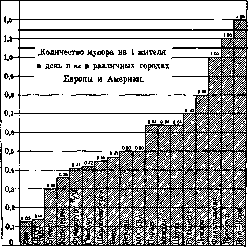
Figure 1.
dysentery—over 48 days; in kitchen waste, viability was less long-lasting: typhoid and dysentery—4–5 days, paratyphoid and pseudodysentery—20–24 days; dust and ash mixed with objects contaminated with typhoid bacilli contained viable typhoid bacilli for up to 44 days; no multiplication of these bacilli was observed in refuse. Statistics on the incidence of infectious diseases, including tuberculosis, among workers engaged in the removal, sorting, and incineration of refuse show that these workers do not fall ill more often than those in other industries, but only when proper cleanliness of the body and clothing is observed, with good ventilation of premises and with the extraction of all dust generated. Figure 2. Accumulation of refuse per 1 resident per day in grams during the year by months.
Rag-pickers, who deal with refuse uncontrollably and without any precautions and who live in extremely difficult conditions, are undoubtedly exposed to danger, as evidenced by reports from a number of authors. The main danger is posed by dirty linen and dressing materials, i.e., such items that, due to their relatively high value, are picked out of refuse with great eagerness. Among rag-pickers, as well as among workers at paper mills processing all kinds of rags, cases of smallpox have been repeatedly noted; likewise, cases of anthrax have often occurred among sorters at paper mills.

Besides the danger of infection from direct contact, refuse heaps usually represent good nutritional material and a refuge for the colonization and reproduction of flies, mice, and rats, which are often transmitters of contagion. Some species of flies, according to research by L. O. Howard and Edward Ross, multiply in such enormous quantities that up to 900,000 larvae have been found in one ton of warm, moist manure. Flies develop most of all in kitchen waste. In view of the fact that rats and mice are spreaders of plague, strict rules for the removal of refuse are prescribed in the port cities of Europe. In Hamburg, refuse from port facilities is removed daily and incinerated. Other infectious diseases can also be transmitted through mice and rats.
Furthermore, food waste contained in refuse, easily undergoing putrefaction, can, if stored improperly, spread an unpleasant odor over a long distance and thereby cause disturbance to the population. Thus, the proper collection of refuse, correct storage, timely removal, and destruction are one of the important tasks of public health. It is necessary to carry out appropriate measures during all manipulations with refuse from the moment of accumulation to its neutralization, and the main task of sanitary supervision is to take all measures to ensure constant neatness and cleanliness during the collection and handling of refuse, both in dwellings and at the base where it is sorted, and at the places where refuse is taken for neutralization or utilization. Here, sanitary engineering comes to the rescue, which over the last 10–20 years has made great progress in improving the system of collection, storage, removal, and neutralization of refuse.
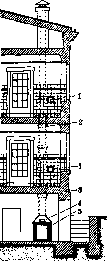
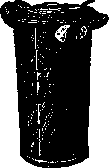
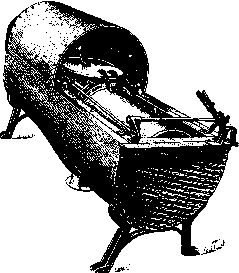
For the collection of refuse in apartments, there are two main systems: a) portable, in a container installed in the kitchen, and b) water-borne, into a refuse chute (Fig. 3) built into the kitchen wall. The capacity of the container for collecting household refuse is calculated for one day's accumulation; the container for putrefying waste is made of iron, galvanized or enameled, convenient for daily washing after emptying; for other types, a simpler container can be used. With a refuse chute, daily washing of the pipe, made of glazed pottery material, with a strong jet of water is used. Containers for refuse installed in the kitchen and the openings of the refuse chute must be covered with a lid. For refuse collectors in courtyards, metal containers must be used, washed on the spot at each emptying if they are non-replaceable (Fig. 4); the most hygienic is the replaceable container (Fig. 5), when a clean, washed, and disinfected container is placed in the place of the filled refuse container in special washing machines (Fig. 6). The removal of refuse is carried out by special transport adapted to the system
of containers installed in courtyards, and therefore transport vehicles are equipped with either bodies of a certain capacity with an appropriate device for dust-free unloading of the contents of non-replaceable containers or a platform for installing replaceable containers on them. The design of the replaceable container is coordinated with the loading hoppers at the neutralization sites: washing machines are adapted to this design. Bodies for pouring refuse from non-replaceable containers, in addition to the adaptation of loading openings for dust-free dumping of refuse, are also adapted for convenient unloading at neutralization sites and are arranged with a hinged bottom, if emptying occurs through the bottom, or with a tipping body (Fig. 7) (there are many other systems as well). In order to keep the inside of the body clean, it is made of iron painted on the inside or of wood lined on the inside with galvanized iron. Removal is carried out in the day
and night time—in one or two shifts. Fig. 6 Machine for washing replaceable refuse bins. To save on transport and avoid downtime, it is preferable to move the container to the gate half an hour before the arrival of the transport, which operates according to a pre-planned route. With separate collection of refuse, each type of refuse is removed by its own special transport. The neutralization and utilization of refuse are carried out by various methods. The most primitive and unhygienic method is removal outside the city to a dump and piling in large layers, where the refuse rots, causing damage to the soil, air, and groundwater. An equally unhygienic method is dumping into the sea in coastal cities. Replacing such primitive liquidation of refuse, the soil method of neutralization has recently been coming into use, where refuse is used for fertilizing land; for this purpose, it is distributed on land plots located outside the city limits in a layer of small thickness and undergoes natural mineralization in a relatively short time (2–3 years). Utilization
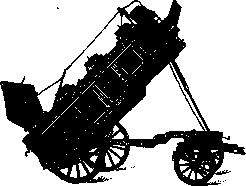
Figure 7. Body in a tipped position for dust-free unloading.
The separate collection of kitchen waste for pig feed or for the extraction of fats at special plants is practiced in some American cities and is one of the most profitable methods of utilizing it. Such kitchen waste must be removed from houses before its decomposition begins. Separately collected ash is used for fertilizer, and other large waste, such as rags, paper, bones, metals, glass, etc., goes for processing at factories and plants, representing valuable raw material for paper production, for metallurgical and other plants. One of the newest methods of disinfection and utilization of refuse is the Beccari method, or the method of "thermal fermentation," where refuse, while in reinforced concrete chambers with a capacity of 20 m3 for 1 1/2 months, with a natural inflow of air, gradually turns into "humus," which is valuable for fertilizer; at the same time, the temperature of the mass rises to 60-70°, and all bacteria perish; valuables are sorted out of the refuse before the chambers are filled with it; however, this method is applicable year-round only in warm countries; for countries with cold winters, it would be necessary to either heat the chambers or build them with double walls; such facilities exist mainly in Italy. The Gerson method is in the experimental stage; it consists of making so-called "refuse fiber" from refuse after sorting out valuable items and screening out fines, which is used as bedding for animals, for the manufacture of pasteboard and cardboard, or as fuel. The most hygienic method of disinfection and utilization of refuse should be considered its incineration (see Incineration of Refuse). For each populated area, a calculation of several options for methods of refuse disposal acceptable for the given locality is usually performed, and by comparing the sanitary and technical-economic advantages and disadvantages of each option, a more profitable and sanitary-acceptable method is chosen. The most ideal method from a sanitary point of view is incineration of refuse. Organization of the matter. In view of the enormous importance of the issue of sanitary improvement of populated areas, the organization of the matter of refuse removal is concentrated under the management of municipal services, which are called upon to take care of the sanitary well-being of the population. The municipalization of cleaning services is one of the means contributing to the regulation of the collection, removal, and disinfection of waste. Simultaneously with the municipalization of the matter of removing household waste, the cleaning of streets, squares, and other public places should also be concentrated under the management of municipal services; by concentrating the entire cleaning operation in one service, a more sanitary-acceptable form of organization can be found, which makes it possible, without burdening the population's budget too much, to keep the populated area clean at relatively low tariffs for this type of service and thereby prevent the development of various epidemics. The method of charging for refuse removal and disinfection services is one of the factors influencing the sanitary well-being of populated areas. The principle of charging is chosen such that it would not be an incentive to hide refuse in the sense of burying it in the ground or dumping it into sewer or storm drain pipes. The most acceptable method from a sanitary point of view is free removal at the expense of the profitability of other municipal enterprises; if this is not possible, then the best principle should be considered a fee based on the rate of accumulation in the given locality per 1 resident.
Related articles
Cite this page
“Refuse.” Soviet Medical Encyclopedia. English translation of Bolshaya Meditsinskaya Entsiklopediya, 1st ed. (Moscow, 1928–1936), ed. N. A. Semashko. https://sovietmedicalencyclopedia.pages.dev/article/refuse/