Utilization
Historical document, translated for reference. It reflects medical knowledge of the 1920s–30s and is not medical advice.
Summary
This article discusses the utilization of waste materials in industry, agriculture, and animal husbandry in the Soviet Union, emphasizing its importance for resource mobilization and production efficiency while addressing sanitation concerns.
Encyclopedia article (1928–1936)
UTILIZATION, the use of waste materials for various purposes in industry, agriculture, and animal husbandry. U. plays a significant role as one of the methods for combating losses in production. Under the conditions of the national economy of the USSR, utilization has important value as one of the sources for mobilizing internal resources. The methods of U. are extremely diverse, just as diverse are the types of waste. The following types of U. are distinguished: 1) utilization of industrial and agricultural waste; 2) U. of solid urban waste (garbage) by extracting from it those parts that can be used in industry as raw materials; 3) U. of feces and other animal waste in agriculture as fertilizer and biofuel; 4) U. of kitchen waste and food residues in animal husbandry and poultry farming as feed for livestock and poultry; 5) U. of animal carcasses and confiscated food items by processing them at utilization plants. U. deserves special attention from a sanitary standpoint, since it deals with waste that presents a danger in sanitary and epidemiological respects (see Waste, Garbage). At the same time, the processing of waste in the course of its U. is associated with a whole series of sanitary hazards: the release of foul-smelling gases, the formation of heavily contaminated and infected wastewater, etc. Therefore, in U. it is necessary to observe the strictest sanitary conditions, regulated by special mandatory regulations, and the most careful sanitary supervision must be maintained over all its stages. In case of technical or economic reasons making it impossible to meet these requirements, U. should not be permitted and the waste must be destroyed. During epidemics, U. of certain types of waste may be temporarily suspended at the request of the sanitary inspection. U. of industrial and agricultural waste aims either to reduce production losses through the most complete use of raw materials or to use waste as raw material for auxiliary productions and in other industries. The first type of U. is carried out by the most complete utilization of all substances used in production, extracting useful parts from wastewater, exhaust gases, capturing dust containing particles of valuable substances. This can also include the regeneration of lubricating oils through their purification, of wiping materials, etc. The second type is carried out either by using waste from one production as raw material in another (for example, using waste from textile production or so-called ends—old wiping material—for paper production) or by organizing utilization shops in the production itself (for example, organizing the production of consumer goods from metal waste of heavy industry, producing toys from waste from woodworking factories, etc.). The organization of collection of agricultural waste—bones, horns, wool, bristles, rags, bird droppings (guano)—can be carried out either by collecting waste in collective farms and state farms through special collectors, delivering them to collection points and sending them for U. to appropriate productions or by organizing the productions themselves directly in state farms and collective farms. The latter is most desirable, as it eliminates the transportation of waste, and its U. becomes an additional source of increasing the profitability of agriculture and makes it possible to most fully cover waste due to the economic interest of the collective farm and state farm. However, compliance with proper sanitary conditions in U. is difficult to achieve in small enterprises, therefore U. should be carried out primarily in the largest farms. U. of solid urban waste usually consists of extracting from garbage bones, paper, metal, textiles, bottlesu corks, ropes, rubber, leather. The amount of utilization raw material in garbage varies sharply depending on the composition of urban waste and the method of its collection. With careful mechanical analysis of garbage in the laboratory, the number of items included in the assortment of utilization raw material often reaches up to 20% by weight of the total mass, while when collected at dumps by garbage collectors this amount rarely rises above 1.5-2%. This is explained by the fact that not all items found in dumps go for utilization, since a significant portion of them is already devalued when lying in the garbage can and then on the dump. The method of collecting utilization material at dumps and from garbage cans by ragpickers, which has not yet been completely eliminated, is unacceptable from sanitary considerations and should be replaced by more advanced methods. The only acceptable methods for collecting utilization material should be recognized as collecting it at the place of formation (in apartments and institutions) or sorting garbage on special mechanized installations, where garbage is brought from an entire city district and where valuable utilization material is selected before burning the garbage or destroying it by other methods. The first method, so-called house-to-house collection of utilization material, is carried out by installing in houses and institutions at least two containers for collecting waste. One of them is used for utilization material, the other for the remaining garbage. House-to-house collection provides utilization material not contaminated by decaying waste, workers do not have to rummage in the foul-smelling mass of garbage, and at the same time the so-called household utilization material, which usually does not get into the garbage can, is most fully covered: old clothing, waste paper, bottles, etc. In order to avoid the need to have two organizations dealing with the collection and removal of waste and to give the entire system the greatest regularity, house-to-house collection of utilization material should be carried out simultaneously with the organization of municipal cleaning of the city by the municipal economy. For successful collection, it is desirable to interest housing administrations, building superintendents, and housewives by paying at least a small fee for collected utilization material. The amount of utilization material in house-to-house collection is 5-6% of the total mass of garbage. Sorting garbage at central stations is permissible only on condition of their mechanization and proper sanitary engineering equipment (ventilation, showers for workers, etc.). The most common scheme for garbage utilization stations or plants is as follows: first, fine particles are sifted out of the garbage using sieves with holes not more than 20 mm in diameter. The fine material goes for fertilizer or as a building material together with the slag from the incinerator. After sifting, the garbage moves on a conveyor, and as it moves, it is sorted partially manually and partially with the help of mechanisms: for example, paper selection is done with a powerful exhaust fan, metal separation is done with an electromagnet. The remaining garbage goes either to the furnace or to agriculture. In some cities there are more complex installations, with emphasis sometimes on the use of garbage as fertilizer (Wister in Holland, stations in Berlin, Puchheim), or the waste is subjected to complex processing to obtain industrial raw materials or fuel (Sutom system, stations in Manchester, Paris, Cologne). At these stations not only are valuable items—utilization material—selected, but organic residues are sorted, pressed, and processed on special apparatus to obtain so-called garbage fiber (used for bedding for livestock, for producing cardboard, roofing felt, etc.). In this case the production becomes so complex that, taking into account the presence of necessary additional workshops—washing rags, bottles, etc.—such installations should already be called garbage utilization plants. In the USSR, the establishment of such plants in large cities is being planned.—Among the rarer methods of garbage processing, one can mention the method of extracting fat from waste by treating them with steam in special apparatus together with fat-extracting substances, or by pressing. This method, once used in the USA, is currently abandoned, as it proved unprofitable and very unsanitary. The amount of valuable items obtained at garbage utilization stations or plants varies greatly depending not only on the composition of the garbage but also on the methods used. At an experimental installation arranged in Moscow in 1929/30 at an incineration station, where the garbage was sifted in a rotating drum and sorted manually as it passed on a conveyor, the amount of sifted material was about 50%, and utilization material not more than 5% by weight of the total mass of garbage. The use of garbage in agriculture can take place either for fertilizing fields (the application rate for the central zone of the Union is 100-200 m per hectare) or as biofuel in hotbeds and greenhouses (the rate is 2 my of garbage per frame or per m2 of greenhouse area). Sometimes garbage is processed into fertilizer in special chambers by the Becchari method (see Garbage). Processing garbage in chambers and using it in hotbeds and greenhouses is the most impeccable from a sanitary standpoint, as the high temperature contributes to the death of pathogenic microbes, and contact between garbage and vegetables hardly occurs (garbage in hotbeds is covered with manure and earth) (Fig. 1). In addition, when garbage is placed in
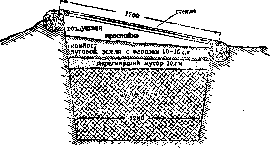
Figure 1. Cross-section of a hotbed with garbage.
in greenhouses in autumn and spring, humus goes for fertilization, i.e., not only the physical (biofuel) but also the chemical properties of waste are utilized. The greenhouse and chamber method of waste utilization should find the widest application in the USSR, as it successfully combines sanitary tasks with utilization. At present, the collection of food scraps (kitchen and table waste) for feeding livestock, mainly pigs, is widely practiced. The organization of collection of these wastes is mandatory in all public catering establishments. The amount of public catering waste depends on the quality and method of food preparation and ranges from 150 to 200 g per 1 meal. With individual nutrition, it amounts to approximately 250 g per 1 person per day. In hospitals, sanatoriums, etc., the amount of waste is even greater: from 300 to 500 g per bed-day. In terms of nutritional value, 3 kg of food waste equals 1 kg of oats (1 feed unit). Approximately 10 kg of waste per day goes to 1 pig. For collecting waste in public catering establishments, hermetically sealed metal tanks are installed, for which a special room should be allocated. The tanks are removed according to a system of replaceable containers. On pig farms, the waste is either boiled or fed to pigs in its raw form. Of all types of waste, the corpses of fallen animals and confiscated food products are most fully utilized, the processing of which takes place in factory-type installations. Their installation is absolutely mandatory at slaughterhouses. In modern slaughterhouses, as part of meat-packing plants, the following types of utilization take place: 1) utilization of conditionally suitable meat by salting, smoking, or sterilization with steam in special apparatuses (Genike); 2) utilization of blood: obtaining hemoglobin as a therapeutic agent, for clarifying wine, syrups, preparing dried blood used as a feed, producing from albumin blood serum paints, glue, chemicals used in chemical production; 3) utilization of paunch: obtaining fuel by briquetting and fertilizer by composting in pits with manure, blood, etc.; 4) utilization of内脏 and individual parts of animals: rumen, reticulum, omasum, abomasum, offal (head, legs, heart, kidneys, lungs, liver, larynx, trachea); used as a food product, feed, and processed into fertilizers; 5) utilization of fat: processing raw fat for technical purposes by boiling in vats (rendering kettles) or processing with steam, producing margarine; 6) utilization of bones for obtaining glue; 7) utilization of horns, hooves, bristles, hair, skin for obtaining glue, fertilizers, in the production of horn products, brushes, and in the leather industry; 8) utilization of endocrine and secretory glands for obtaining medicinal preparations; 9) utilization of animal carcasses in special factories with rather complex equipment (system De-la-Croix, Podeville, Genike, Hartmann, etc.). The main process consists of the thermal processing of carcasses with steam under high pressure. Advanced apparatuses (for example, Hartmann) make it possible to process a carcass at a temperature of 150° and a pressure of 5 atmospheres. The high temperature and pressure in utilization apparatuses provide a complete guarantee of disinfection of the carcass, including that of an animal that died from anthrax, which allows utilization plants to be considered as sanitary installations. Unlike ordinary rendering kettles, in which the carcass is boiled in open vats at a temperature not exceeding 100°, all carcasses, first of all infectious ones, must be sent to utilization plants, which will make it possible to destroy cattle burial grounds. The installation of a utilization plant is mandatory at any well-equipped slaughterhouse {Fig. 2}. In medium and small cities, utilization plants should be established that could serve not only the given populated area but also the district. Even the most advanced utilization plant should be considered as a harmful production and located outside the boundaries of the populated area (2 km from housing). When part of a meat-packing plant, the utilization plant should be set up on an isolated site and have separate access roads.
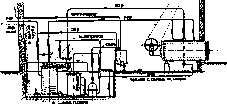
Figure 2. Utilization plant of Moscow city slaughterhouses.
Unlike ordinary rendering kettles, in which the carcass is boiled in open vats at a temperature not exceeding 100°, all carcasses, first of all infectious ones, must be sent to utilization plants, which will make it possible to destroy cattle burial grounds. The installation of a utilization plant is mandatory at any well-equipped slaughterhouse {Fig. 2}. In medium and small cities, utilization plants should be established that could serve not only the given populated area but also the district. Even the most advanced utilization plant should be considered as a harmful production and located outside the boundaries of the populated area (2 km from housing). When part of a meat-packing plant, the utilization plant should be set up on an isolated site and have separate access roads.
4b
1 10 1 00 0 90 0.80 «.60 0.40 O.S0 0.20 0.10 0.00 ) 1 1 1 1 г i б 5 T спорта чрезвычайное большое значение имеет проблема выносливости, т. e. обеспечение максимальной эффективности организма, хотя бы й ценой величайшего напряжения всех его функций. B условиях производственных такая задача не стоит, и те изменения в организме, к-рые вызываются работой, лишь в относительной мере могут итти в сравнение c изменениями функций при спорте.-Промышленное У. гмо-жет быть частично охарактеризовано кривой работоспособности. Если 'регистрировать производительность по часам работы, то оказывается, что она распределяется в соответствии co след. кривой (см. рисунок). Ha ходе этой кривой сказывается не только утомление, дающее снижение кривой в конце первой половины дня и к концу всего дня, но и такие факторы, как упражняе-мость, обусловливающая то, что максимум производительности достигается не c самого начала рабочего дня, a лишь постепенно. Аналогичную картину дает кривая производи-Кривая производительности тельности труда по труда по насам^работы. (По дшш над|н£* 0бе кривые часто характеризуются подъемом к концу, конечным порывом, который вызван ожиданием конца работы и свидетельствует об исключительном значении псих, фактора как определяющего работоспособность. Ход развития промышленного У. может быть охарактеризован и кривой распределения несчастных случаев по часам работы. Высота производительности труда определяется не только развитием утомления, но и упражняемостыо. Значение психики, в частности эмоций, в развитии усталости общеизвестно. Кто не знает, что маршировать под музыку легче, что во-время сказанное ободряющее слово облегчает работу, что мать может продежурить y больного ребенка несколько суток, не чувствуя усталости, и т. п. Наряду co снижающим У. действием эмоций отмечается и обратное их влияние, напр. сильнейшее У., часто сопровождающее чувство страха. Кроме влияния эмоций известны также случаи влияния на чувство усталости, a повиди-мому и на У., и процессов, протекающих в сфере сознания. Примеры этому можно найти в практике нашего строительства, где стимулирующим фактором является сознание взятого на себя обязательства. K числу наиболее интересных особенностей картины У. следует отнести резкое различие между У. при статической и динамической работой. Известно, что, несмотря на ничтожную по сравнению c динамической работой затрату энергии и часто неуловимые изменения в интенсивности газообмена, в электрических свойствах нервов и мышц и т. д., статическая работа является настолько утомительной, что например держать руку вытянутой в горизонтальном положении больше 3-4 минут оказывается почти невозможным. Многие авторы (Lindhard и др.) пытались объяснить быстро наступающее У. при статической работе тем, что при ней затрудняется отток крови из находящейся в статическом напряжении части тела, вследствие чего ухудшается снабжение ee кислородом и удаление вредных продуктов обмена. Пытались дело объяснить также натяжением сухожилий, надкостницы и т. д. Однако больные кататоники, люди, находящиеся в состоянии гипнотической каталепсии, без всякого У. могут проделывать такую же статическую работу в течение часа и дольше, не испытывая при этом никакого У. Естественно, что здесь должно быть найдено другое объяснение. Интересная особенность У. была обнаружена рядом авторов (Mocco, Ульман и др.): после того как при работе на эргометре достигалось полное У. и прекращение работы, оказывалось возможным электрическим раздражением 'двигательного нерва восстановить работоспособность мышц; после достижения У. от электрического раздражения способность мышцы к сокращению оказывалась восстановленной в порядке произвольной центральной иннервации. Эти опыты несомненно проливают свет на природу У.,т. к. они исключают обоснованность представления o локализации У. в мышцах или нервах. Говоря об У., мы естественно не можем отвлечься от тех изменений, к-рые имеют место в организме при работе. To обстоятельство, что по мере увеличения тяжести работы усиливается и У., заставляло c особой пристальностью изучать эти изменения и в них искать разгадку У. Немудрено, что такого рода исследованиям посвящено колоссальное количество работ. Мы здесь дадим весьма краткий очерк этих изменений. Co стороны сердечно-сосудистой системы отмечается усиление кровоснабжения работающих мышц до 6-9 раз. Это обеспечивается усилением работы сердца, выражающимся в увеличении объема систолы и учащении пульса. При этом y тренированных лиц преимущественно изменяется объем систолы, y нетренированных-частота сокращений. Частота пульса при тяжелой мышечной работе может возрасти в 21/a-3 раза. B отдельных случаях наблюдаются аритмии. Кровяное дав-[ ление (максимальное) во время работы воз* растает, a минимальное падает, так что пульсовое давление возрастает. При этом, чем тяжелее работа и чем меньше в ней тренирован работающий, тем больше возрастает максимальное давление. Продолжительность произвольной задержки дыхания уменьшается. Дыхание при тяжелой работе становится чаще и поверхностней. Частота дыхания достигает 35 и больше. Появляется одышка. Объем вентиляции может возрастать, достигая 60-70 л в минуту. При этом процент использования кислорода повышается. B соответствии c ростом тяжести физ. нагрузки, даваемой данной работой, возрастает и потребление кислорода организмом, его энергетический обмен. Однако потребление кислорода возрастает не только во время работы, но и в восстановительном после работы периоде потребление кислорода остается еще нек-poe время увеличенным в соответствии c величиной «кислородной задолженности». B изучении интенсивности газообмена во время работы и особенностей восстановительного периода пытались найти критерий для оценки У. Попытки эти однако не дали желательного результата, т. к. были основаны на неправильной концепции, что тя- 45S жесть и утомительность работы определяются характеризующими ee энергетическими тратами. Co стороны красной крови и НЬ при работе особых изменений не отмечается. B отношении лейкоцитов отмечаются значительные изменения, выражающиеся в нек-ром лейкоцитозе и значительном изменении морфол. картины. Наблюдаются при работе т.п. миогенные сдвиги, сводящиеся к относительной, a иногда и абсолютной лимфопении и эозинопении при значительном сдвиге влево в группе нейтрофиль-ной. Попытки связать различные типы изменения морфол. картины белой крови c различными .степенями утомления оказались однако недостаточно обоснованными. Резервная щелочность крови при тяжелой работе заметно падает вследствие вытеснения C02 из крови и связывания щелочных ионов молочной к-той. Концентрация в крови молочной к-ты, играющей существенную роль в химизме мышечной деятельности, возрастает во время работы. B последнее время однако имеются данные o ee уменьшении во время работы. Точно так же p концентрация caxapa в крови .оказывается величиной весьма изменчивой и не может быть связана c определенной степенью тяжести работы, обнаруживая во время работы как значительное повышение, так и резкое снижение. При тяжелой, утомительной работе, как' например при напряженных видах спорта, часто появляется белок в моче, гиалиновые и даже зернистые цилиндры. При тяжелой работе на фоне пониженного питания в моче обнаруживается ацетон. Относительно мышц известно, что в условиях сохраненного кровообращения они не обнаруживают существенных изменений при утомлении. To же можно сказать и o нервных проводниках. Они, как и мышцы, практически неутомимы. Нервные же центры значительно изменяются при утомлении. Бри сильных степенях его в них обнаруживаются даже морфологические изменения как в протоплазме, так и в клеточных ядрах. Однако почти все описанные выше изменения в различных органах, за исключением разве нервных центров, довольно быстро ликвидируются после прекращения работы, в то время как У. сохраняется значительно дольше. Это расхождение заставляет c чрезвычайной осторожностью относиться к оценке изменений функций различных органов как признаков У. Относительно сущности У. в физиологии накопилось значительное количество разнообразных теорий. Наиболее старая и наиболее элементарная из них теория Шиффа, объясняющая У. истощением органа и исчезновением вещества, являющегося источником энергии, в частности гликогена. Несомненно эта теория навеяна опытами c изолированной мышцей. K тому же и весь феномен утомления она связывает c отдельными органами. Она стоит однако в противоречии c фактами, свидетельствующими, что даже при Ум приводящем к смерти животного, в тканях его обнаруживаются вполне достаточные количества гликогена. To же касается и изолированной мышцы. Если утомленную мышцу промыть физиол. раствором, то она снова приобретает способность к сокращению. Что же касается целого организма, то эта теория игнорирует то обстоятельство, что процессы диссимиляции, являющиеся источником энергии при работе, неразрывно связаны c процессами ассимиля- ции.
Essentially, this theory is a priori, since it is not supported by factual data at all. Despite the fact that it does not explain the peculiarities of U. outlined above, this theory still has its supporters to this day. The second theory reduces U. to suffocation of organs due to lack of oxygen. The fact that during work, the blood supply to a muscle increases 5-6 times makes the possibility of such a mechanism of U. doubtful, since the influx of oxygen to the tissues significantly increases, which is also facilitated by the increase in pulse rate and systolic volume. This suffocation theory is related to Pfliiger's theory of clogging. This theory is consistent with the fact that for a number of processes, particularly enzymatic ones, it is known that the accumulation of reaction products inhibits the further course of the process. Indeed, under conditions of preserved circulation, this circumstance has a more limited significance. Given the enhancement of circulation in the working muscle, it is difficult to speak of products of metabolism being retained in this muscle to a greater extent than in other parts of the body. Rather, one could speak not of the clogging of muscles with products of metabolism, but of a change in the physicochemical state of the muscle. We cannot at present accept Pfliiger's theory, although we must recognize the possibility of using the propositions he put forward to explain certain phenomena in U. However, one cannot in any way agree with the concepts developed on the basis of this theory regarding the connection of U. with special 'fatigue substances.' U. is associated with the accumulation of various substances. In this regard, special attention has been paid to lactic and phosphoric acids as products of muscle intermediate metabolism. This type of theory, attributing the cause of U. to one substance or another, incorrectly illuminates the physiological role of these substances. Moreover, they lead to the necessity of either recognizing that every manifestation of the body's vital activity is accompanied by U., or, conversely, to separating U. in its essence from the processes underlying the vital activity of various organs and systems of the body. Both are incorrect. In the latter direction, Weichardt's toxic theory occupies an especially extreme position. He attributed U. to a special U.-kenotoxin, a substance that plays no role in the chemistry of normal muscle activity. This theory is incorrect both factually and in principle, since it considers U. as something independent of physiological changes in the body during work. A number of authors, such as Mosso, Lagrange, and Newman, connect U. with changes in the central nervous system. For all the theories mentioned above, except Weichardt's, it is characteristic that they consider U. as an isolated process in the muscles, in the brain, or in other organs, rather than as a change in the body as a whole. This is their main fundamental deficiency. By considering changes in organs in isolation from changes in the body, these theories are unable to correctly explain the essence of U. Levitsky's theory considers U. as a general process in the body, as a biological signal of danger of disorganization of functions of the working organ on the basis of deficiency of specific sources of energy. For him, U. is a general feeling of the same type as the feeling of hunger. The anatomical basis for this feeling is the autonomic system and subcortical centers. According to Levitsky, the autonomic nervous system has its own spontaneous rhythm, connected with the rhythms of fine molecular processes. These rhythms are independent of the activity of the consciously-voluntary sphere. The rhythms of the autonomic system predetermine the rhythm of our activity. If we impose different tempos of activity on the body, a collision will occur between consciousness and its rhythms and the rhythms of the autonomic system, a conflict leading to disorganization of the working function. The autonomic system signals the danger of this disorganization. This signal is U. Thus, according to Levitsky, U. is evidence of the mismatch between our activity and biological rhythms, our enslavement by these rhythms of the autonomic system and molecular processes (incidentally, Levitsky does not explain at all what these rhythms are). Considering U. as a general feeling, Levitsky believes that the objective changes in the body are already beyond U. 'The pathological changes, the cause of which is usually sought in U. and overwork, do not depend on U., but are, on the contrary, the result of ignoring U. as an indicator of danger of disorganization of functions; it is in them that this disorganization of functions is manifested.' Although individual elements in the views developed by Levitsky are undoubtedly of interest, the general concept suffers from a priori nature and is in essence idealistic. It transfers U. only to the sphere of the subjective, detaching it from the basis of objective changes in the body. Having examined the main theories of U., we see that none of them is satisfactory. All these theories do not provide any acceptable explanation for all the peculiarities that characterize the factual side of the phenomena of U., outlined above. We have seen that almost all of them are concerned with resolving the question of what exactly becomes fatigued in the body and what are the changes in organs that determine its U. Let us examine the first question. Usually, U. is associated with the organ that participates in the given work. But of course, the working organ cannot be isolated from the body as a whole. And if any work is performed, for example, by a group of arm muscles, then at the same time the central nervous system, the heart, the lungs, and all other organs and systems participate in the work. Of course, the degree of their participation in this is not the same. Therefore, when we say that U. is always U. of the body as a whole, this does not mean that in different cases it will be the same. Although in all these cases we will be dealing with U. of the whole organism, it will differ depending on the source of U., which will determine the entire picture, and its difference will be based on the different degree of involvement of different organs in the work. Therefore, in analyzing the picture of U., we must strive in each case to characterize the changes in the state of the body and the role of individual organs in this change. Examining the second question—the nature of the changes occurring in organs during U.—we must approach it from the point of view of clarifying the specificity of these changes for U. Can we say that in different cases of U. we have the same changes that lead to U.? The experimental material on this question is still completely insufficient. Such a question can only be posed if U. were associated with the most general processes underlying the activity of various organs and systems of the body, or if in all cases of U., despite all differences, there was participation of a certain organ, whose changes determine the U. of the body. A number of data on the physiology of the central nervous system gives reason to assume that it determines U. Indeed, with such a formulation of the question, the role of the other organs is reduced to a minimum, and the fatigue of the body is replaced by U. of the central nervous system. Its role is undoubtedly great, especially taking into account the latest data on the nervous regulation of functions in the body. A number of incompletely understood phenomena in the field of U. are significantly clarified if we consider them from the point of view of U. of the central nervous system. However, such a formulation of the question would be incorrect. We must necessarily take into account the changes in the other organs as the basis of U. But these changes are by no means specific to fatigue. From the point of view of understanding the essence of U., the essential question is in what relationship the changes characterizing U. stand with the changes that usually occur in the body during work. We must consider the matter in such a way that the changes in various organs and systems that arise in them during work, at a certain combination of them and a certain degree of these changes, create a qualitatively different state of the body, which determines both the change in its work capacity and its different reaction to repeated work load. Thus, every U. is in its nature connected with the changes that occur in the body during work, but not all these changes lead to U. It arises only at a certain combination and degree of these changes, as a result of which the body's reaction to the work load changes. The very picture of U. will differ depending on which changes in the functions of which organs and systems led to U. Of course, the above rejects the concept of specific changes of U. It is quite natural that the central nervous system occupies a central place in this picture.
The difference noted above between utilization after static and dynamic work can be quite satisfactorily explained by the fact that in static work there is prolonged excitation of the same group of nerve center cells that activate the given group of muscles, whereas in dynamic work various groups of nerve cells are excited, connected with different groups of muscles participating in the work. While one group of nerve cells is excited, another rests. This alternation of excitation of different cells is the reason why dynamic work is significantly less tiring than static work. That the central nervous system, and first of all apparently the cortex, is connected with utilization even in dynamic work is illustrated by the example of parkinsonism. It is characterized by continuous contraction of individual groups of muscles, with utilization not occurring despite the extreme duration of the condition. This can be explained by the fact that these movements occur without the participation of the cortex. Similarly, movements that acquire an automatic character are less tiring. The positive influence of emotions and psychological states can likewise be understood as a switching of processes in the central nervous system to other sensory areas, whereby the feeling of fatigue is reduced or even eliminated. Along with this, the sympathetic nervous and endocrine systems undoubtedly play a role here. The experiments of Orbeli-Ginezensky, conducted on the nerve-muscle preparation, revealed the important role of the sympathetic nervous system in this regard. Already from what has been stated, it is clear that, despite the exceptional importance of the central nervous system for the entire phenomenon of utilization, it cannot be connected only with the central nervous system. From the data on utilization presented above, the directions along which the choice of methods for its investigation proceeds also follow. It is completely natural that the methods of investigating utilization are tied to the concepts of its essence that have been developed in various theories. For example, attempts to characterize the degree of fatigue by the amount of lactic or phosphoric acid in the blood, by their content in the urine, or by lactic acid in sweat are undoubtedly connected with the theory of poisoning. On the other hand, the investigation of sugar in the blood is accepted as a path for evaluating utilization, undoubtedly proceeding from the theory of exhaustion. Along with this, concepts connecting utilization with changes in specific organs and systems have led to attempts to quantitatively characterize utilization by changes in pulse, blood pressure, blood composition, lung ventilation, gas exchange, changes in the composition and properties of urine, etc. In the very recent time, methods are being intensively developed that allow evaluation of the state of the nervous system, particularly the central one, such as the investigation of chronaxy, action currents, skin currents, or the psychogalvanic reflex, thresholds of sense organs, etc. It seems completely impossible even to list all the research methods that have already been applied or can be applied in the investigation of utilization. Taking into account that during work the functions of all systems and organs of the body change, in different types of labor various research methods can be used that allow detection of changes in the function of precisely those organs and systems that undergo the greatest changes in a given work. Therefore, the number of possible research methods is truly limitless. It is only important to correctly choose those that in a given specific case are most appropriate. The main task is to, in the investigation, discover changes in the state of the entire organism. This task can be resolved with the help of research methods for individual organs or systems, since each individual function is influenced by all other organs and in its manifestation these influences are revealed. It is only important to know in detail and comprehensively the method used in order to determine to what extent the discovered changes can be attributed to local influences and to what extent to general ones. In addition, one needs to know the people who serve as subjects, in order to be able to choose those research methods that in these individuals will to the greatest extent reveal changes in the general state of the organism. Thus, the choice of research methods will depend both on the type of labor in which utilization is being investigated and on the characteristics of those subjects being investigated. In all these investigations, it is important to capture the dynamics of changes. Therefore, the investigation must be conducted not only during work or immediately after it, but also throughout the entire recovery period. In this connection, it was discovered that recovery, investigated by individual indicators, often occurs very quickly, while utilization has not yet disappeared. This dissociation indicates that all those research methods that are supposed to investigate utilization, in essence investigate not it, but those changes in the organism that usually accompany work. Taking into account that utilization, as stated above, represents a combination of changed functions that cause a changed reaction of the organism to load, we must for the investigation of utilization apply an analysis of the organism's reactions to a certain standard load, i.e., various types of functional tests, which can detect the change in the state of the organism characteristic of utilization. One of the very fruitful paths to the investigation of utilization is the analysis of the quantity and quality of production at different stages of work. In this connection, it must be kept in mind that they are influenced not only by utilization but also by a number of other factors, up to such as attitude toward work, etc. Therefore, the use of labor productivity as a method for evaluating utilization must be carried out with careful consideration of all accompanying factors and with detailed knowledge of all the peculiarities of a given production, in order to correctly evaluate the causes of certain changes in the quality of work. Some methods have been developed specifically for the investigation of utilization. These include such as the dynamometer, ergograph. However, these methods have not justified the hopes placed in them, since they usually served to investigate such a function that was not used in the process of work, and therefore could not reveal the utilization that had occurred. In addition to those mentioned, methods of psychotechnical research (see Psychotechnology) can be used for evaluating utilization. Since utilization causes a decrease in work capacity and labor productivity, the development of measures to reduce utilization is extremely important. These measures can be of two kinds. First of all, this includes the development of a rational work regimen, introduction of periodic breaks in work and rationalization of the use of these breaks, improvement of working conditions, etc.—all that constitutes the content of work in the field of labor protection. The introduction of timely breaks for rest contributes significantly to the reduction of utilization and increase in labor productivity. An essential measure for combating utilization is the introduction of physical exercises in breaks, so-called physical culture pauses. Measures of another type are attempts to overcome already existing utilization and increase work capacity with the help of various substances, some of which contribute to a more intensive mobilization of the body's reserve forces and strengthening of its regulatory mechanisms, others to an increase in the body's tone or of individual organs, and finally still others to artificial excitation associated with suppression of the feeling of fatigue. To the first group can be attributed such measures as the administration of sodium phosphate as recommended by Embden, intended to improve the processes of resynthesis in the muscles. He has proposed for this a special preparation 'rezecral'. This should also include the introduction of rational drinking regimens with the addition of soda or sodium chloride. The latter has preferential significance in utilization associated with disturbance of thermoregulation and significant water losses. Many recommend the administration of sugar in work requiring significant physical exertion, and 100-150 g of sugar in a number of cases sharply increase work capacity. To the second group of substances belong such as caffeine, strychnine, and kola nuts. Regarding the latter, there are data that they have the property of significantly increasing work capacity, especially in work with significant nervous-psychic tension. These data, however, are not indisputable. Finally, to the third group belongs the administration of narcotics that suppress the feeling of fatigue due to their general exciting effect on the central nervous system at a certain stage of their action. Such means are primarily alcohol, ether, etc. In capitalist countries, the use of various 'doping' agents, i.e., exciting substances that cause an increase in work capacity and a decrease in the feeling of fatigue, is widely prevalent. The main disadvantage of their use is that it is carried out without consideration of their harmful effect on the organism in many cases, and that the administration of doping agents replaces the provision of normal rest for the worker and complete recovery of his strength. As a result, rapid wearing out of the organism occurs.
See also Labor, Physiology of labor.
Related articles
Mentioned in
Cite this page
“Utilization.” Soviet Medical Encyclopedia. English translation of Bolshaya Meditsinskaya Entsiklopediya, 1st ed. (Moscow, 1928–1936), ed. N. A. Semashko. https://sovietmedicalencyclopedia.pages.dev/article/utilization/