Kitasato, Shibasaburo
Historical document, translated for reference. It reflects medical knowledge of the 1920s–30s and is not medical advice.
Summary
This article provides a biographical overview of the prominent Japanese bacteriologist Shibasaburo Kitasato, detailing his significant contributions to the study of tetanus, diphtheria, and the plague. It highlights his collaboration with Emil von Behring, his role in establishing bacteriology in Japan, and his development of various laboratory techniques and apparatuses.
Encyclopedia article (1928–1936)
KITASATO, Shibasaburo (born in 1856), a famous Japanese bacteriologist; he studied in Germany, where from 1885 to 1891 he worked under Koch. In 1891, he was appointed an assistant at the Institute for Infectious Diseases, and in 1892 he received the title of professor in Germany. In 1893, Kitasato returned to Japan and was elected director of the Bacteriological Institute in Tokyo. The role of Kitasato in the development of medical sciences in Japan is enormous. The small laboratory of Kitasato, created by him upon his arrival in Japan, quickly grew into a large Institute for Infectious Diseases, which bears his name. Kitasato has served as the director of this institute from its founding to the present day. The scientific activity of Kitasato is connected with the study of the bacteriology of tetanus, diphtheria, and plague, as well as dysentery. Together with Behring, he studied methods for culturing anaerobic microbes and proposed a method for cultivating them in an atmosphere of hydrogen. Using his method, Kitasato was able to study the then newly discovered tetanus microbe, obtain a pure culture of it, and isolate tetanus toxin in pure form, with the help of which he reproduced the clinical picture of tetanus in animals.
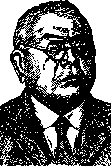
Work on obtaining tetanus toxin led Kitasato to the idea of obtaining diphtheria toxin in the same way. Together with Behring, he prepared the first diphtheria serum, obtained with the help of pure diphtheria toxin. In 1894, while working in Hong Kong, Kitasato, together with his colleague Aoyama, discovered the plague bacillus simultaneously with Yersin, but independently of him. In addition, Kitasato studied the cholera vibrio, proposing a special method for its culture on a medium with thymus gland extract. In 1898, he studied the causative agent of dysentery.
The works of Kitasato in the field of bacteriology are extremely diverse and concern almost all of its areas. Finally, Kitasato introduced a whole series of new laboratory research methods and invented a number of simple apparatuses that bear his name (filter, dishes for anaerobic culture, a method for examining and collecting tubercle bacilli, etc.). Kitasato rightfully belongs to the galaxy of major bacteriologists of the 1890s, along with Koch, Behring, and others. He is also the founder of bacteriology and the study of infectious diseases in Japan. The most important works of Kitasato: "Über den Tetanus-erreger" (Deutsche med. Wochenschr., 1889, No. 31; also in Zeitschr. f. Hyg., Band VII, 1889); together with E. Behring: "Über das Zustandekommen der Diphtherieimmunität und der Tetanusimmunität bei Tieren" (Therapeutische Monatshefte, 1890, Dec.); "Preliminary note on the bacillus of bubonic plague" (Hongkong, 1894). Since 1917, he has published the "Kitasato Archives of Experimental Medicine" (Tokyo).
Related articles
Cite this page
“Kitasato, Shibasaburo.” Soviet Medical Encyclopedia. English translation of Bolshaya Meditsinskaya Entsiklopediya, 1st ed. (Moscow, 1928–1936), ed. N. A. Semashko. https://sovietmedicalencyclopedia.pages.dev/article/kitasato-shibasaburo/