Nicotine
Historical document, translated for reference. It reflects medical knowledge of the 1920s–30s and is not medical advice.
Summary
Nicotine is a liquid, volatile, oxygen-free alkaloid found in the leaves and seeds of various tobacco species, primarily Nicotiana tabacum L. and Nicotiana rustica. It was first isolated from tobacco in 1809 by Vauquelin, who considered it the active principle.
Encyclopedia article (1928–1936)
NICOTINE (Nicotinum), a liquid, volatile, oxygen-free alkaloid, found in the leaves and seeds of various species of tobacco, mainly in Nicotiana tabacum L. and Nicotiana rustica (family Solanaceae), which grow wild in tropical America and are cultivated in other countries (see Tobacco). N. was first isolated from tobacco in 1809 by Vauquelin, who considered it the active principle. The first detailed description of the pure alkaloid was given by Posselt and Reimann (1823) and Pinner (1892-96). Chemically, N. is a compound of pyridine with a reduced pyrrole ring C10H14N2, namely: pyridyl-methyl-pyrrolidine with the following structural formula:
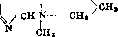
It easily forms salts, mostly amorphous; the oxalic and hydrochloric salts are pharmacologically less active than the free alkaloid. In tobacco, N. is mainly in the form of salts of organic acids (malonic, malic, citric, etc.). Freshly obtained absolutely pure N. is a colorless, almost odorless, sharply burning, pungent liquid, easily mobile, oily, strongly alkaline in reaction, with a specific gravity at 15° of 1.0147, boiling at 140-145°. It is easily soluble in water, alcohol, ether, amyl alcohol, chloroform, petroleum ether, and fatty oils. Nicotine salts are easily soluble in water. The free base rotates to the left: [a]D = -161.5°, the salts to the right. Synthetic N. rotates to the right and is approximately 2 times less active than natural. When stored in contact with air, N. easily changes (oxidation) and acquires a characteristic sharp tobacco odor and brown color, while its activity significantly decreases. In sealed tubes it can be preserved indefinitely. ^(The main method of obtaining N. Commercial tobacco extract (concentrated tobacco lye) is diluted with an equal volume of water, sodium hydroxide is added until strongly alkaline reaction, and then N. is extracted with ether. After removing the ether, the tobacco extract is separated from the aqueous liquid and N. is again extracted from it. The ether containing N. is treated with dilute sulfuric acid, which releases N. as its sulfate salt. Then the aqueous sulfate solutions of N. are made alkaline with sodium hydroxide until strongly alkaline and N. is again extracted with ether. The ether solutions of N. obtained in this way are dehydrated with solid caustic potash; after this, the ether is removed by distillation on a water bath and the remaining N. is purified in a stream of hydrogen (Hager). The effect of N. on the organism is more pronounced the more developed the animal's nervous system (Greenwood). The simplest organisms do not die immediately even in a 1% solution of Nicotini tartarici. Tobacco juice and its smoke act clearly as an antiseptic. N. is one of the most effective means against insects, produces structural changes in their nerve cells and kills them due to ascending paralysis of the central nervous system. In higher animals and humans, the effect of N. is particularly strong; although this effect is not used in medicine, it has great biological and toxicological interest. The local action of N. consists in irritation, which is attributed to the strong alkalinity of the alkaloid, but it may also depend on other properties of the alkaloid. From mucous membranes and especially from the lungs, N. is absorbed extremely rapidly; this occurs more slowly with subcutaneous injection and through intact skin. It is assumed that most of the N. absorbed from the stomach and intestines is destroyed in the liver, as it has repeatedly been possible to show that the toxic effect of N. becomes weaker or even disappears completely if it is mixed with an extract from the liver or adrenal glands. Clark, however, could not detect the destruction of N. by the frog's liver. N. is excreted rapidly, mainly by the kidneys, to a lesser extent by the lungs, salivary and sweat glands. Excretion by the mammary glands is considered unlikely (Troitsky). Noether indicates that in one case after a cigar, the excretion of N. by the kidneys ended after 8 hours and even after heavy smoking after 12 hours. The resorptive action of N. is based on its characteristic effect on the nerve cells of the central and autonomic nervous systems; it consists of initial brief excitation, followed by depression and paralysis. N. particularly clearly affects the nervous system, circulatory apparatus, and digestive canal. - The central nervous system. The effect occurs almost simultaneously with changes in the activity of internal organs. The disruption of central nervous system functions is explained by both the direct exciting and then paralyzing effect of N. on it, and by indirect influences of changes in cardiac and respiratory activity. On the higher centers of the brain, the exciting effect of N. apparently extends only to a very weak degree and is short-lived; it is followed by prolonged depression, accompanied with significant doses of N. by severe headache. It is possible that the exciting effect of N. should be partly attributed to the state of some excitation of brain activity and inhibition of inhibitory processes (sleep), which is observed when smoking cigarettes (see Tobacco). Determination of the threshold for painful electrical irritation (experiments by Mendenhall on humans; 1921 and 1925) showed that smoking tobacco brings to normal both excessive and insufficient excitability of the pain center, while with normal excitability it has no effect. In the same sense, a decrease in depression caused by analgesic or hypnotic agents, a decrease in the feeling of fatigue, thirst and hunger, the appearance of euphoria, a feeling of increased performance is noted (Hale and Grabfield; 1923). However, Wahl could not note any objective improvement in the latter after small doses of N. per os. Direct tests on humans give contradictory results, as the nature of N.'s action extremely depends on individual conditions, difficulty of the task, suggestion, etc. The centers of the medulla oblongata (respiratory, vasomotor, vagus, vomiting, etc.) react to N. much more clearly and strongly, which is manifested by their initial strong excitation, followed by depression and paralysis. Respiration initially noticeably quickens and becomes deeper; with small doses this is followed by a gradual return to normal, but with large doses, strong depression of respiratory activity is subsequently observed: inhalations become rarer and shallower, exhalations occur quickly and in jerks, respiration becomes dyspneic and finally completely stops due to paralysis of the respiratory center, which is the cause of death from N. The initial excitation of the vagus center and the vasomotor center plays some role in slowing cardiac activity and increasing blood pressure, although other aspects of N.'s action are the basis of these changes (see below); subsequently these centers are also paralyzed. Increased salivation and vomiting, so clearly manifested in moderate nicotine poisoning, are probably also due to excitation of the corresponding centers of the medulla oblongata. As a result of strong excitation of the motor cells of the spinal cord, a state of increased excitability, enhancement of reflex activity, and finally the appearance of clonic convulsions, involuntary discharge of feces and urine, etc. occur. However, convulsions cannot be attributed solely to excitation of the spinal cord; it is very likely that the medulla oblongata and the posterior part of the brain play a significant role in this, both due to the direct action of N. on them and due to phenomena of asphyxiation due to depression of the respiratory center. The clonic (and not tetanic) nature of the convulsions and their much weaker manifestation in case of transection of the spinal cord directly below the medulla oblongata speak in favor of this view. N. has no effect on the sensory cells of the spinal ganglia (posterior horns of the spinal cord), even with direct application of a 1% solution. Small doses of N. (smoking) may initially somewhat increase muscle performance, but due to subsequent fatigue, the overall efficiency is reduced. This action is of central origin. The peripheral nervous system. Simultaneously with changes in the activity of the central nervous system, N. has an extremely characteristic effect on the ganglia of both divisions of the autonomic nervous system (sympathetic and parasympathetic): after initial brief and not always sharply expressed excitation, their paralysis occurs (Langley; 1890). This action is clearly manifested both when N. is introduced into the blood and when it is directly applied to the ganglia. After paralysis of the ganglia, the endings of the corresponding autonomic nerves remain free from the action of N., since electrical stimulation of postganglionic fibers gives the usual physiological effect on the corresponding effector organ (motor, inhibitory, or secretory), while stimulation of preganglionic fibers has no effect on the organ. It is believed that the point of application of N.'s action is the place of connection (so-called synapses) of the terminal plexuses of preganglionic fibers with ganglion cells, and not the preganglionic endings themselves, since Langley showed that the same effect occurs after the degeneration of the latter. In addition to changes in the activity of the autonomic and central nervous systems, N. also has a significant influence on the function of organs through the change in the internal secretory activity of the adrenal medulla it causes. Cannon, Aub and Binger (1912), by studying the physiological properties of blood from the v. cava near the entrance of veins from the adrenal glands, showed that the injection of N. into an animal causes an increase in the secretion of adrenaline.
The data of the aforementioned authors were subsequently confirmed by many others and also established (by the school of N. P. Kravkov) for isolated adrenal glands of cattle and dogs. Secretion of adrenaline is sharply and rapidly increased even from very small doses of N.; with large doses, this is followed by a significant and prolonged decrease in adrenaline secretion. The amount of adrenaline in the gland apparently does not change (Stewart, Rogoff), consequently the decrease in adrenaline secretion must be attributed not to exhaustion of the adrenal gland, but to suppression of the function of its medulla. Thus, the action of N. on the adrenal gland is similar to its action on vegetative ganglia; some authors explain this by the fact that from embryological, histological and other points of view, the adrenal gland is a modified ganglion. By exerting its exciting action on the endings of sympathetic nerves not affected by nicotine, adrenaline significantly complicates the analysis of the latter's action. In chronic poisoning of rabbits with N., a significant increase in the weight of their adrenal glands was found, which is attributed to hypertrophy of the organs due to their increased activity. Cardiovascular system. Medium doses of N. first weaken and slow down the heart, up to its stop for several seconds in diastole (first stage of N. action); this effect is explained by excitation of the ganglia and the center of the vagus nerves; after this, the heart gradually returns to a normal or somewhat accelerated rhythm. With large doses of N., after the slowing down, a sudden sharp increase in cardiac activity occurs (second stage of N. action). The increase in rhythm cannot be explained only by paralysis of the ganglia of the vagus nerves, since it is also observed on the atropinized heart, where therefore the vagus nerves were turned off before the action of N. Since the increase in rhythm does not occur on the heart whose sympathetic ganglia are paralyzed by apocodeine, the cause of the acceleration of cardiac activity under the influence of N. must also be recognized as its exciting action on the ganglia of the sympathetic nerves (Dixon). It is possible that here we also have the effect of increased entry of adrenaline into the blood. Some authors also recognize the direct exciting action of N. on the cardiac muscle. The rhythm may become irregular, and often the electrocardiogram shows (in dogs) synchronous contraction of the atria and ventricles (the so-called nodal rhythm), interrupted by extrasystoles. Blood vessels in most areas are first constricted by N., and then dilated; the strongest constriction is observed in the area of the splanchnic vessels, vessels of the limbs constrict to a lesser degree, while the vessels of the lungs, brain, portal system, and coronary vessels are not subject to constriction and may even dilate due to increased blood flow to them from the abdominal cavity. Some authors assume that the cerebral vessels of humans constrict from N. The constriction of blood vessels depends on the excitation of ganglion cells on the path of vasoconstrictor (sympathetic) nerves, on the excitation of the vasomotor center, and also on the increased content of adrenaline in the blood under the influence of N. Some authors consider it possible to admit also the direct action of N. on the vascular wall, since constriction of blood vessels is also observed on isolated organs (Kravkov). The initial weakening and slowing of cardiac activity leads to a transient decrease in blood pressure, which is then sharply increased (constriction of blood vessels), reaching a significant height. The increase in blood pressure lasts for several minutes, then returning to normal or falling below it. With large doses, after the increase, a fall in blood pressure follows, due to dilation of the blood vessels as a result of paralysis of sympathetic ganglia. In humans, small doses of N. (smoking) cause a slight and slowly occurring increase in blood pressure. The redistribution of blood caused by N. resembles in this respect the action of adrenaline (see), where blood from the abdominal cavity also flows into the vessels of the heart, lungs, brain, and striated muscles. The similarity of action should be explained by the fact that both poisons excite the sympathetic innervation of blood vessels: adrenaline acting on its endings, and N. on the ganglia. A second injection of N. gives the same effect in relation to blood pressure if the first dose did not cause suppression of ganglia or adrenal glands; in the latter case, the effect is significantly less or completely absent; while an injection of adrenaline gives the usual pressor effect, thereby showing that paralysis of the endings of sympathetic nerves did not occur. Long-term (for months) administration of nicotine to rabbits causes changes in the aorta resembling atheromatosis in humans. Similar phenomena are also observed from other agents that increase blood pressure (adrenaline, compression of the abdominal aorta). Clinically, this fact is often regarded as an indicator of the significance of nicotine (see Tobacco) in the etiology of arteriosclerosis. Digestive tract. Even in small amounts, N. causes severe nausea and vomiting; in addition to direct excitation of the vomiting center (which is proven by vomiting after direct application of N. to the medulla oblongata), the cause of vomiting is also the strong contractions of the smooth muscles of the stomach caused by N. After this, energetic contractions of the entire intestine occur (especially the small intestine), as a result of which its contents penetrate into the large intestine with extraordinary speed and lead to repeated severe diarrhea. The enhancement of peristalsis, in addition to excitation of the centers of the vagus nerves, is also due to excitation of Auerbach's plexus, since it is also observed on the excised intestine. With large doses of N., the contractions of the intestine take on a tetanic character, so that the lumen of the intestine almost completely disappears, its wall becomes pale due to constriction of its vessels. After a short pause of rest, during which the vessels refill, prolonged peristalsis with new emptying of the intestine occurs. The described changes in the function of the intestine apparently underlie the phenomena of severe diarrhea and spastic constipation observed in people with chronic N. poisoning (see Tobacco). The uterus is less sensitive to N. than the intestine, but still reacts to its toxic doses. The action is different in various animals depending on whether motor or inhibitory nerves predominate in the regulation of the contractile activity of the uterus, since N. acts on the ganglia of both. The increased secretion of adrenaline also has an effect in this regard, since the sympathetic nerves excited by it (their endings) have different functional settings in different animals and depending on whether the latter are pregnant or not. On the uterus of a non-pregnant cat, under the influence of N., first there is slight relaxation and suppression of its spontaneous movements, after which strong contractions occur with increased tone; in a pregnant cat and in a rabbit (pregnant or not), where nerves that enhance contractions predominate, N. immediately causes enhanced contractions with increased tone and acceleration of their spontaneous rhythm; but if the enhancing nerves are previously paralyzed by ergotoxin, then N. causes only relaxation of the uterus. The human uterus under the influence of appropriate doses of N. contracts strongly, which in the presence of pregnancy can lead to abortion or premature labor. In the urinary bladder, N. causes strong tetanic contractions, which leads to very rapid urination; with large doses, relaxation of the bladder occurs. Bronchi. After temporary constriction (from excitation of the ganglia of the vagus nerves), N. causes relaxation of the bronchiolar muscle (from excitation of the ganglia of the sympathetic nerves and probably increased secretion of adrenaline). Eye. The action of N. on the pupil is different in various species of animals and depends on whether parasympathetic (upon excitation of ganglion ciliare the pupil constricts) or sympathetic innervation predominates in a given animal (upon excitation of gangl. cervicale sup. the pupil dilates); in addition, the significance of increased secretion of adrenaline, exciting the endings of sympathetic nerves, should be taken into account. Thus, in cats and dogs, both with local and internal use of N., there is a sharp but soon transient dilation of the pupil, while in a rabbit, incomplete but immediate constriction occurs. In humans in cases of acute poisoning, usually first constriction of the pupil occurs, and later dilation. Due to excitation of ganglion ciliare of the oculomotor nerve, the eye is set for near vision (spasm of accommodation). Intraocular pressure usually increases, but sometimes also decreases. Glands. Secretion of salivary, sweat, and mucous glands of the bronchi is enhanced by small doses of N., while large doses subsequently (or immediately) cause its sharp suppression. The action depends on the initial excitation and subsequent paralysis of the ganglia of secretory nerves; excitation of the sweating center in the spinal cord is also possible. Diuresis, secretion of bile, pancreatic juice, and milk under the influence of N. do not change, which some authors explain
they show less dependence of these secretory processes on nervous influences. N. prevents the appearance of glycosuria, which usually follows the introduction of caffeine, adrenaline, or after a sugar injection (piqure). - Striated muscles. In frogs and warm-blooded animals, large doses of N. cause fibrillary twitchings and slow, prolonged contractions of skeletal muscles. In frogs, these phenomena are of peripheral origin, while in warm-blooded animals they are central, as the phenomena cease after the corresponding nerves are cut. Very large amounts of nicotine cause paralysis of striated muscles. Sensitivity to N. varies considerably in different individuals and animals. Young animals and people are more sensitive than adults. Unaccustomed people, when 1-4 mg of N. is introduced into the stomach, show symptoms of acute poisoning. The lethal dose for humans is about 0.06 g. N. belongs to the most potent and fast-acting poisons; in terms of the speed of its action, it can be placed alongside hydrocyanic acid: in some cases where pure N. was used for suicide, death occurred within a few minutes. - Picture of acute poisoning: burning in the mouth, slowly extending along the esophagus to the stomach, scratching sensation in the pharynx, increased salivation, sensation of warmth spreading from the stomach area upward to the whole body; then symptoms of excitation of the brain, severe headache, dizziness, visual and auditory disturbances, photophobia, dryness in the mouth, coldness of the extremities, nausea, vomiting, diarrhea, severe muscular weakness; rapid and difficult breathing, often moist rales in the lungs, slowed and weakened, then sharply accelerated and irregular pulse, disturbance of coordination of movements, partial or complete unconsciousness, clonic convulsions with fibrillary twitchings of various muscles. In animals, sometimes the entire picture of poisoning ends in tetanic convulsions due to asphyxia from respiratory arrest. In other cases, convulsions are accompanied by collapse with complete relaxation of muscles, disappearance of reflexes, slowing, weakening, and cessation of breathing; the heart continues to contract for some time. Very large doses of N. can cause death within a few seconds from rapid paralysis of the central nervous system; convulsions are not observed in this case. In moderate degrees of poisoning in humans, slow recovery of functions was observed, with general depression lasting for about three days (experiments on students in v. Schroff's laboratory). - Treatment of acute poisoning. When N. is taken internally, stomach washing is recommended, followed by the administration of tannin (1-3% solution, a tablespoonful every 5 min.) or Tinctura Jodi (5-10 drops) or iodine in potassium iodide (Jodi puri 0.5, Kalii jodati 1.0 in 500.0 water, a tablespoonful after an hour), expecting the N. to precipitate as a poorly absorbable precipitate. For symptoms of depression of the central nervous system-stimulants: subcutaneous caffeine, camphor, as well as atropine; cold head douches, skin irritations, artificial respiration. In poisoning from N. during smoking-fresh air, stimulants. - Postmortem changes in animals after nicotine poisoning are not characteristic, although large doses cause anemia of the meninges and special structural changes in cortical nerve cells. N. is very stable against decay and was isolated from decomposed animal corpses 3 months after their death. Testing of N. after its isolation can be done by its characteristic odor or by means of chemical or biological tests. Of the chemical tests, the following can be mentioned: 1. Schindelmeiser's reaction: to N., or material containing it, add 1 drop of formaldehyde solution, free from formic acid, and leave for several hours, whereupon a dense precipitate forms, which turns red upon addition of 1 drop of concentrated nitric acid. 2. Melzer's reaction: heat 2-3 drops of epichlorohydrin with 1 drop of N., whereupon the mixture turns red. Biological test: inject material containing N. under the skin of a frog; after a brief (2-3 minutes) restlessness, very characteristic fibrillary twitchings of muscles and a characteristic posture appear: the front paws are crossed in front of the sternum and become rigid, the thighs are abducted at a right angle to the spine, the lower legs are convulsively bent and touch above the sacrum, but are not rigid. When the lower legs are moved away, they return to their original position. This test gives a positive result with as little as 0.5 mg of nicotine. Habituation to N. With repeated administration of small amounts of N., the body soon acquires a certain degree of tolerance to it, so that doses that usually cause severe poisoning do not cause any symptoms in these cases. A well-known example of such habituation can be observed in tobacco smokers (see). Wall (1920) found that in smokers, more than 8 mg of N. introduced internally is required to induce vomiting, whereas unaccustomed people react to it with only 1-2 mg of N. Habituation to N. develops at different rates and degrees in different individuals; in some individuals, habituation does not develop at all. Tolerance to N. is not absolute; it has certain limits, beyond which the smoker immediately experiences symptoms of poisoning; apparently, tolerance is higher in relation to sublethal than lethal doses. Habituation has also been demonstrated in experiments on isolated organs (the school of N. P. Kravkov). Experiments on animals and observations on humans show that habituation to N. does not exclude its harmful effects (symptoms of chronic poisoning). The mechanism of habituation to N., as to other poisons, is unclear. Dixon and Lee (1912) showed greater destruction of N. by the liver of animals accustomed to it, but Edmunds (1916) could not confirm this. Cushny believes that the weaker effect of repeated doses of N. on the ganglia is not due to the development of tolerance to it, but to the continuing depression of the ganglia, as a result of which the exciting effect of the next dose cannot manifest itself. Hatcher showed that the serum of animals accustomed to N. does not protect others from N. poisoning. Apparently, habituation develops to varying degrees in different organs; the nervous system is particularly prone to it. According to Dixon, in animals accustomed to N., alcohol and morphine are also destroyed to a greater degree than usual. Chronic poisoning is often observed in smokers and in workers in tobacco factories; in the latter case, in addition to inhaling tobacco dust, free N. that passes into the air during tobacco processing, even without heating it, is also inhaled (Burstein). Main symptoms: depressed mood, nervousness, increased reflexes, insomnia, headache, dizziness, gastrointestinal disorders (loss of appetite, diarrhea or constipation), palpitations, extrasystoles, irregular pulse, rarely attacks similar to angina pectoris, visual disturbances (improper color recognition, accommodation disorders, tobacco amblyopia, characterized by bilateral central scotoma due to optic neuritis, atrophy of the optic nerve), muscle tremor. Simultaneous abuse of alcohol intensifies these phenomena. The development of arteriosclerosis is also associated with chronic poisoning. Treatment of chronic poisoning is mostly purely symptomatic. For measures to stop smoking-see Tobacco. N. has no therapeutic value, since approximately simultaneously with its action on the glands and intestines, it also acts on the central nervous system. In veterinary practice, as an external remedy, tobacco or salicylic N. in the form of a 0.1% ointment is used for scabies and other parasitic skin diseases. Pure N. is not used for treatment due to its unpleasant odor and high toxicity. To destroy the leaf louse and other plant pests, they are sprayed with a 1.33% solution of Nicotini crudi. Preparations: 1) Nicotinum purum (for its physicochemical properties, see above). 2) Nicotinum crudum-crude N., contains 75-90% of the alkaloid; a brown liquid soluble in water, alcohol, ether, and chloroform. 3) Nicotinum hydrochloricum crystallisatum album-colorless, deliquescent crystalline needles, soluble in water and alcohol. 4) Nicotinum salicylicum crystallisatum album, seu Eudermol-a colorless crystalline powder, easily soluble in water and alcohol. 5) Nicotinum tartaricum crystallisatum album-colorless crystals, easily soluble in water.
Related articles
Mentioned in
Cite this page
“Nicotine.” Soviet Medical Encyclopedia. English translation of Bolshaya Meditsinskaya Entsiklopediya, 1st ed. (Moscow, 1928–1936), ed. N. A. Semashko. https://sovietmedicalencyclopedia.pages.dev/article/nicotine/