Langley
Historical document, translated for reference. It reflects medical knowledge of the 1920s–30s and is not medical advice.
Summary
John Newport Langley (1852-1925) was a prominent physiologist known for his work on the autonomic nervous system, salivary glands, and the development of the 'nicotine method' for studying nerve tissue. His research established the modern understanding of the autonomic nervous system and its relationship with other organ systems.
Encyclopedia article (1928–1936)
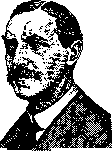
LANGLEY (John Newport Langley, 1852-1925), one of the most outstanding physiologists of recent times. In 1872, he began working in Foster's physiological laboratory while a student at Cambridge University. After completing his course, he was appointed as a lecturer in histology and physiology. After Foster's death, he was elected to his chair. All of Langley's scientific works group around three main themes and form an inseparable whole. The first theme concerns the physiology of the salivary glands. After a series of individual works, Langley produced a major work in the form of a chapter on the salivary glands in Schaefer's textbook of physiology. Almost all of Langley's subsequent life was devoted to the second theme, the question of the autonomic or vegetative nervous system. Langley is the creator of the modern doctrine of the autonomic nervous system. As a result of his work, remarkable for its thoroughness, systematic nature, and completeness, he provided a clear scheme of the general plan of organization of the autonomic nervous system and its relationships with other organ systems. He also developed the classic 'nicotine method' for the study of the autonomic nervous system. The third main theme of Langley's work is the development of the question of the precise localization of the action of individual poisons in tissues and the establishment of the doctrine of 'receptive' substances. In addition, one must mention Langley's works on the degeneration and regeneration of nerves, as well as histological studies on the brains of dogs operated on by the famous Goltz. Langley published 171 scientific works, not counting numerous studies carried out under his direction and published by his collaborators. The most important are: 'Salivary glands' (Textbook of physiology, ed. by E. Schaefer, Edinburgh-L., 1898); 'Das sympatische und das verwandte nervose System der Wirbeltiere' (Erg. der Physiologie, B. II, 1903); 'The autonomic nervous system' (Cambridge, 1921; Russian ed. - part 1, M.-L., 1925). Along with his scientific research, from 1894 Langley performed great work as editor of 'The Journal of physiology' (London).
Related articles
Mentioned in
Cite this page
“Langley.” Soviet Medical Encyclopedia. English translation of Bolshaya Meditsinskaya Entsiklopediya, 1st ed. (Moscow, 1928–1936), ed. N. A. Semashko. https://sovietmedicalencyclopedia.pages.dev/article/langley/