Shor
Historical document, translated for reference. It reflects medical knowledge of the 1920s–30s and is not medical advice.
Summary
This article profiles Georgy Vladimirovich Shor (1872-), a prominent pathologist and anatomist who contributed to the study of lung cancer, preservation techniques for anatomical specimens, and tanatology. It also describes the Spalteholz method for preparing transparent anatomical specimens.
Encyclopedia article (1928–1936)
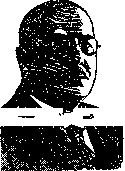
SHOR Georgy Vladimirovich (born 1872), prominent pathologist and anatomist. In 1895 he graduated from the Military Medical Academy; for 3 years he served in the naval department as a ship's doctor. From 1900 he began working as an extern in the pathology department of the Obukhovskaya Hospital, and from 1903 as a prosector in several hospitals in St. Petersburg. In 1908 he was elected privat-docent at the department of pathological anatomy of the Military Medical Academy, and in 1913 became professor of pathological anatomy at the State Institute of Medical Knowledge; from 1917 he moved to the position of professor of pathological anatomy at the Leningrad Medical Institute, which he holds to the present time. Shor has more than 60 scientific works. Among them the most important are: his dissertation for the degree of Doctor of Medicine "Primary cancer of the bronchi, lungs and pleura from a pathological-anatomical point of view" (St. Petersburg, 1903), which was the first Russian work devoted to this question; a series of works relating to the technique of processing and preserving museum specimens; in these works Shor indicated a new method of preserving organs in their natural state without liquid. III. also belongs to a special method of autopsy ("complete evisceration"). In several works Shor developed the question of the development of the palate and of malformations in its area. Furthermore, Shor is one of the founders of the so-called tanatology, having written a monograph "On human death, an introduction to tanatology" (Leningrad, 1925) and continuing to develop various questions relating to human death. In recent years Shor has given a number of valuable studies on oncology, particularly on experimental cancer. Shor is one of the founders of the Leningrad Society of Pathologists. In 1933 Shor was awarded the title of Honored Scientist.
SPALTEHOLZ METHOD (Spalteholz) for preparing transparent or translucent anatomical specimens is based on the laws of optics, according to which an opaque body under normal conditions becomes maximally transparent if it is surrounded and impregnated with a substance having the same refractive index as it. Spalteholz (works 1900-1914) with respect to anatomical specimens definitely clarified the nature of the physical phenomena occurring here, determined the refractive index of individual tissues and the so-called average index of entire organs and organisms, and accordingly it became possible to select liquids (essential oils) that gave a very high positive effect. Thus, according to Spalteholz, the refractive index of entire rats with internal organs is 1.549; of decalcified bone of an adult human-1.547; of heart of an adult human-1.551. As liquids Spalteholz recommends using the following essential oils, the refractive index of which is close to the refractive index of tissues and organs: artificial gaultheria oil (Wintergrunol), the refractive index of which is 1.534-1.538; Benzyl-benzoate (1.568-1.570); Isosafrol (1.577); Safrol (1.540-1.542). By mixing in certain proportions liquids with higher and lower refractive indices, the desired value in each case is obtained. Thus, for clearing decalcified bones of an adult, Wintergrunol-5 weight parts, Benzylbenzoate-3 weight parts, or Benzyl-benzoate-3 weight parts and Isosafrol-1 weight part, etc., are taken. The heart of an adult human is cleared with a mixture of 1 weight part Wintergrunol and 1 weight part Benzylbenzoate; one can also take Wintergrunol-9 weight parts and Isosafrol-5 weight parts. For human fetuses of the last months of pregnancy, Wintergrunol-2 weight parts and Benzylbenzoate-1 weight part are taken. For embryos of the first months of pregnancy: Wintergrunol-3 weight parts and Benzylbenzoate-1 weight part. For embryos of the earliest stages of development: Wintergrunol-5 parts and Benzylbenzoate-1 part.
The sequential procedure for preparing a translucent specimen according to Spalteholz is as follows: 1) preparation of the specimen (e.g., injection of blood vessels, staining of bone, cartilage, staining of nerves); 2) fixation: formalin 5-10%; 3) bleaching (in cases of artificial staining this is omitted) in 3-5% hydrogen peroxide with the addition of x/2-1% formalin; 4) washing in running water; 5) dehydration in alcohols of ascending strength (50-100%); 6) impregnation with benzene; 7) placement in the ready-made solution. For mounting specimens, since the clearing mixtures are volatile and dissolve cements, the following mixture is recommended: gum arabic 50 parts, sugar 50 parts, soluble glass 2 parts and formalin 1 part; the mixture is kneaded, like thick dough, with a minimum of water. Specimens prepared by the Spalteholz method (especially injected vessels of organs) are extremely valuable for studying a number of questions in both normal and pathological anatomy. See also Vasilev's method, Anatomical specimens.
Related articles
Cite this page
“Shor.” Soviet Medical Encyclopedia. English translation of Bolshaya Meditsinskaya Entsiklopediya, 1st ed. (Moscow, 1928–1936), ed. N. A. Semashko. https://sovietmedicalencyclopedia.pages.dev/article/shor/