Sumbul; Sun Yat-sen
Historical document, translated for reference. It reflects medical knowledge of the 1920s–30s and is not medical advice.
Summary
This entry describes Sumbul, a medicinal root used as a tonic and anticonvulsant, and provides a biographical sketch of the Chinese revolutionary and physician Sun Yat-sen, detailing his medical training and political career.
Encyclopedia article (1928–1936)
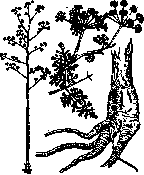
SUMBUL, sumbul root, musk root, obtained from the plant Euryangium sumbul Kauffmann (Ferula Sumbul Hooker Kil.), family Umbelliferae-Peucedaneae. Its homeland is the mountains and steppes of Turkmenistan, where it was discovered by Fedchenko in 1869. Large turnip-shaped wrinkled roots (see figure). In trade, it appears as transverse slices 3–5 cm thick and 8–12 cm wide. The root is light, spongy, porous, fibrous, dirty-yellowish inside, marked with a marble pattern, on which resinous droplets are visible through a magnifying glass. The taste is initially sweetish, then spicy and bitter. The odor is musky. It contains essential oil (up to 0.4%), resin, valeric, sumbulic (angelic), and methyl-crotonic acids, a bitter substance, fatty oil, sugar, and starch. Musk root has a tonic effect and is considered an anticonvulsant agent. It is used in doses from 0.5 to 1.0 in powders, decoctions, or tinctures for convulsions, diarrhea, and stomach pains; in the form of a liquid extract, 3 times a day, a teaspoon after meals. Sumbul is used more widely in perfumery than in medicine. It serves as an export item from the USSR. SUN YAT-SEN, otherwise Sun Zhongshan or Sun Wen (1867–1925), Chinese revolutionary, leader of the national liberation movement, organizer and leader of the Kuomintang party. Physician. Having received his primary education from missionaries, at 18, Sun was attached to the hospital of the Anglo-American Christian mission. Here, under the guidance of the surgeon Dr. Kerr, he received his first knowledge in the field of medicine. In October 1887, Sun entered the medical college for Chinese people newly opened in Hong Kong, from which he graduated in 1892 with the title of physician-surgeon. Upon graduation, Sun obtained a position as a physician at a Chinese hospital in the territory of the Portuguese concession in China—Macao. This was a hospital where they treated according to the methods of Chinese medicine,
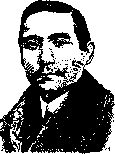
and Sun was the first Chinese person to receive a Western medical education who was permitted to treat Chinese people using new methods. Sun performed surgical operations of varying complexity, which took place in the presence of the entire hospital administration and surrounded by the relatives of the patient. Sun worked in this Chinese hospital for only about two years. Having connected in Macao with secret political organizations that aimed to overthrow the Manchu dynasty, in which they saw an obstacle to the free development of China, Sun soon began to play a prominent role in this movement. Wishing to get rid of Sun, the Portuguese authorities of Macao, under the pretext of Sun's lack of a Portuguese medical diploma authorizing medical practice in Macao, demanded that Sun cease his work at the Chinese hospital. Already captivated by the political struggle, Sun moved to Canton, where from 1891 he devoted himself entirely to political activity. In 1911–12, Sun led the revolution that resulted in the overthrow of the Manchu dynasty and was elected the first president of China. However, the inability and unwillingness of the Kuomintang party led by him (reorganized in 1912 from the Tongmenghui) to lead the masses led to the defeat of the revolution and the transfer of power into the hands of the monarchist Yuan Shikai. Only in 1920 did Sun, at the head of the Kuomintang party, manage to seize Canton. Here, in 1924, under the influence of the growing workers' and peasants' movement, Sun, in order to strengthen the anti-imperialist struggle, entered into a bloc with the Communist Party. Until his death, Sun oriented himself toward the USSR. Sun is the creator of 'Sunyatsenism,' the three principles of which are nationalism, democracy, and the people's livelihood. With the departure of the Chinese bourgeoisie and the Kuomintang (in 1927) from the revolution, Sun's doctrine was turned into a banner of the bourgeois-landlord counter-revolution in China.
Related articles
Cite this page
“Sumbul; Sun Yat-sen.” Soviet Medical Encyclopedia. English translation of Bolshaya Meditsinskaya Entsiklopediya, 1st ed. (Moscow, 1928–1936), ed. N. A. Semashko. https://sovietmedicalencyclopedia.pages.dev/article/sumbul-sun-yat-sen/