Water Fever
Historical document, translated for reference. It reflects medical knowledge of the 1920s–30s and is not medical advice.
Summary
Water Fever is a disease characterized by a sudden onset, high fever, and a distinctive temperature curve. It was first observed in Schleswig in 1891 and re-emerged in 1926 in Germany and Russia. The article details its clinical features, epidemiology, and the unresolved question of its etiology.
Encyclopedia article (1928–1936)
WATER FEVER (German Schlamm-fieber-ill mud fever, Sumpffieber-swamp fever, Erntefieber-harvest fever), was observed for the first time in Schleswig in 1891 (Fr. Muller), then, after a 35-year interruption, described in 1927 by Rimpau and Brill. An epidemic occurred in Schleswig and Southern Bavaria in the summer of 1926. In Russia and the USSR it was not known until the summer of 1927, when simultaneously in two districts of the Moscow province - Dmitrovsky and Sergievsky - doctors of district hospitals (Leonovich, Tsvetkova, Zakharov) noted mass diseases of an uncertain character, which were diagnosed as influenza (Sergievsky district) or as paratyphoid diseases (Dmitrovsky district). The disease was studied and described by Bashenin (Moscow Institute of Infectious Diseases named after I. I. Mechnikov), the material of the Dmitrovsky district was described by Leonovich, Novokhatny and Terksky (independently of the German authors, whose works were not known).
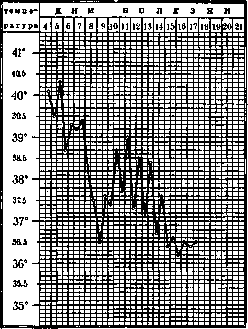
Figure 1. Type of temperature curve in water fever.
Clinically, the disease begins suddenly without prodromal phenomena, with severe headache, muscle pain, and a falling temperature; cardiac and muscular weakness. In most cases, on the 6th day of the disease, a polymorphic rash appears, more often fine-papular, sometimes scarlet-like, located on the trunk, especially on the lateral surfaces of the abdomen, on the limbs, sometimes on the hard palate; the rash lasts from several hours to 2 days. The tongue is coated, abdominal pain, more often constipation, sometimes diarrhea, gargouillement. The spleen is often enlarged, sometimes only on percussion; sometimes only tenderness on palpation is observed. The liver is not enlarged, jaundice is absent. In the urine, protein is often present. Regarding the heart, the tones are dull, sometimes the boundaries are increased; regarding the lungs, phenomena are rare. In many cases, there is a severe conjunctivitis. Nervous phenomena occupy a prominent place - insomnia, depressed state, delirium is rare, there was a case of psychosis after a fall in temperature. The temperature is especially characteristic (see Figure 1): holding on high figures for the first days, on the 7th day it falls critically, but in most cases after 1-2 days it rises again significantly, which lasts 4-5 days, after which a lysis occurs. Hematological observations are interesting: in most cases, degenerative changes in the protoplasm of neutrophils (vacuolization, Dohle inclusions) and a sharp left shift of the nucleus with an index reaching 2.5 (Muratova and D blockov) were observed. The duration of the disease is from 7 to 14 days. The course is benign; there was only one fatal case from heart paralysis.
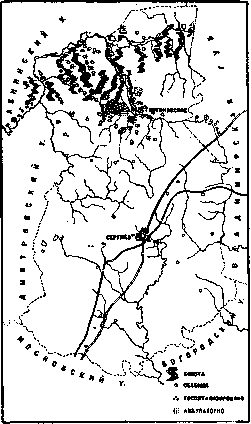
Figure 2. Incidence of W. l. in the Sergievsky district of the Moscow province in 1927.
Epidemiology. Diseases in the USSR and Germany were observed from July 15 to September 1; the total number of cases in the Moscow province in 1927 was 411, of which in the Dmitrovsky district - 233 and in the Sergievsky - 178; all the sick were peasants (in Germany also migrant rural workers), engaged in field work in areas with a high water level (for example, in the Dmitrovsky district - along the valley of the Yakhroma river, in the Sergievsky district - in the swamps in the valley of the Dubna river, see Figure 2). According to the patients, they worked "up to the waist in water". German authors also note that the diseases were exclusively in flooded areas. The affected areas of the two districts of the Moscow province are territorially far apart and do not touch each other; 233 sick in the Dmitrovsky district are scattered in 74 settlements, 178 in the Sergievsky district - in 54 settlements; family diseases are noted only in 2 families. On the basis of this, the disease can be considered non-contagious, which is also evidenced by German observations. The age of the sick is predominantly working - from 13 to 40 years; according to the materials of the Sergievsky district, youth from 16 to 20 years was most affected.
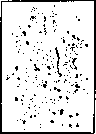
Bacteriology. In the blood of the sick, spiral-like formations (Prausnitz and Lubinski, Brill, Bashenin) were found, which withstand up to 5 transfers on distilled water with serum (see Figure 3 and 4). However, until a pure culture is obtained, they cannot be considered true spirilla, especially since in known cases similar formations are obtained during the disintegration of erythrocytes. In addition, when blood is sown on distilled water in the early periods of the disease and urine in the late periods, a culture of hemolytic streptococcus (Bashenin) was obtained, which is characterized by great stability (it lives on pure distilled water for up to 5 months); however, due to the small number of studies, there is insufficient data to recognize it as the primary causative agent of the disease. Thus, the etiology of W. l. remains unclear. Prevention of this new disease has not been developed. Treatment is symptomatic.
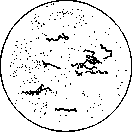
Figure 4. Figure of a smear from the culture of "spirilla" of W. l., "Hygiene and Epidemiology", 1928, No. 3; Leonovich E. M., Novokhatny I. V. and Terksy V. I., On a new epidemic disease in the Dmitrovsky district of the Moscow province, "Moscow Medical Journal", 1928, No. 3; Rimpau W., tber das Vorkommen von Schlamm-(Ernte)-Fieber in Sudbayern im Sommer 1926, Mtinchener medizinische Wochenschrift, 1927, No. 22; Brill, Zur Atiologie des Sehlammflebers, ibid., No. 36; Schilling-Torgau V., Arbeiten iiber die Erythrozyten, Folia haematologica, Archiv, B. XIV, 1912; Prausnitz C. u. Lubinski H., Untersuchungen uber das "Schlammfieber", Klinische Wochenschrift, 1926, No. 44.
V. Bashenin.
;
Related articles
Cite this page
“Water Fever.” Soviet Medical Encyclopedia. English translation of Bolshaya Meditsinskaya Entsiklopediya, 1st ed. (Moscow, 1928–1936), ed. N. A. Semashko. https://sovietmedicalencyclopedia.pages.dev/article/water-fever/