Typhus (TYPHUS)
Historical document, translated for reference. It reflects medical knowledge of the 1920s–30s and is not medical advice.
Summary
This article from the first edition of the Great Medical Encyclopedia (1928–1936) details the pathological anatomy and clinical complications of typhus. It covers neurological findings, skin manifestations, visceral changes, and common post-infectious complications such as gangrene and oleogranulomas.
Encyclopedia article (1928–1936)
TYPHUS
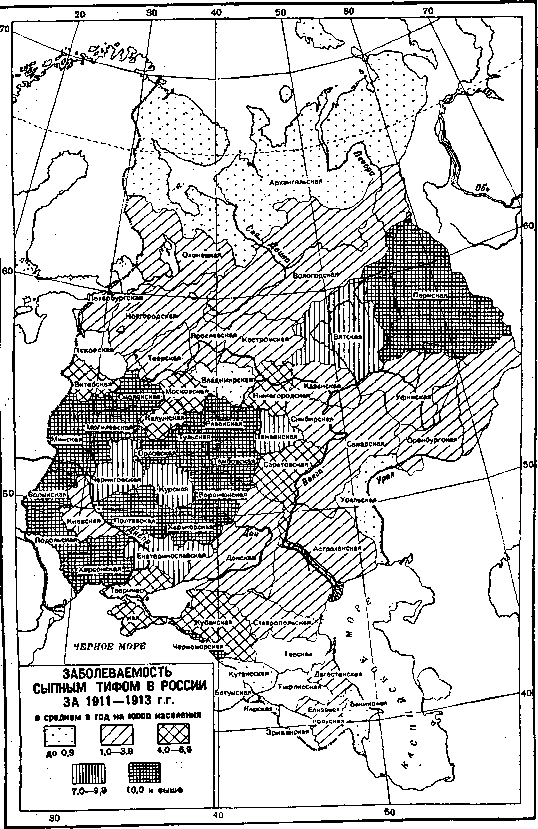


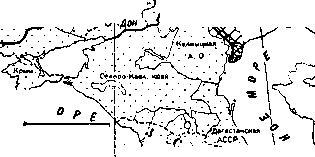
INCIDENCE OF TYPHUS IN THE USSR IN 1928, average per year per 10,000 population: up to 0.9
1.0–3.9
4.0–6.9
Figure 7. Focus of nuclear detritus. The mass of the focus consists of closely or loosely packed neuroglia elements, the nuclei of which take on the most intricate outlines. In other words, granulomas in the brain are gliogranulomas, as, incidentally, are the focal lesions in other forms of focal encephalitis. In the body musculature, one also discovers both branched infiltrates and focal granuloma lesions. Phenomena of coagulation necrosis are not uncommon, but in contrast to typhoid fever, they relatively rarely involve large areas. Figure 9. Brain infarcts (Davydovsky), in particular infarcts of the medulla oblongata. In approximately 50% of typhus cases, serous meningitis is detected. The ventricles of the brain are often dilated. Changes in the skin are concentrated mainly in the areas of exanthema and are expressed in the indicated vascular processes, especially in the subpapillary and reticular layers of the skin [see separate table (pp. 199–200), Fig. 4]. In the epidermis, pictures of diffuse coagulation necrosis are not uncommon. The adrenal cortex is poor in lipoids; hemorrhages, sometimes extensive, are not uncommon in it. In the neural lobe of the pituitary gland, changes characteristic of encephalitis are frequent, often associated with lesions of the sympathetic ganglia of the neck. It is highly probable that the frequency of complications with pneumonia is also related to disorders of intrapulmonary circulation (vagus), as well as to disorders of respiratory movements, which are so common in typhus (the significance of the lesion of the medulla oblongata). Acute catarrhal processes are also detected in the conjunctiva ("ferret eyes" in typhus); characteristic vascular processes are also found here (Chiari). The latter have also been detected in other membranes of the eye, in particular in the central artery of the retina. The digestive tract as a whole does not bear any special or characteristic changes. The punctate hemorrhages sometimes noted in the colon (enanthems) have nothing in common with petechial exanthema in the sense of typical vascular lesions. Degenerative changes (of the cloudy swelling type) are noted in the liver and kidneys. It is interesting that Proteus can be cultured from the gallbladder of typhus patients in approximately 1/3 to 1/4 of all cases (Davydovsky). In those who died in the first week of the disease, Proteus often has a vulgar character (Proteus vulgaris); subsequently, it acquires certain properties (Proteus X), which, however, do not allow it to be identified with the typical X19, which is nevertheless observed not infrequently in later stages of the disease. The spleen in typhus is always enlarged, with the exception of marantic and very old subjects. The enlargement, however, does not exceed 2–3 times the normal size. The capsule is usually somewhat tense, the pulp can be scraped off in significant quantities, abounding in plasma cells as well as myeloid elements (infectious myelosis). The lymph nodes of the neck and mediastinum are somewhat enlarged, but without characteristic findings. The bone marrow is congested with phenomena of hyperplasia of its elements. Being a severe infection, typhus often brings with it severe complications, especially after the 14th day of the disease. Dry gangrene is observed (of the tip of the nose, ear, extremities, penis, skin in areas of pressure, etc.), as well as phlegmonous processes, especially at the sites of injections (physiological saline, medicinal substances), and also in the region of the pharynx and larynx. Purulent parotitis, often bilateral, is very common, as are perichondritis of the larynx, especially in the 3rd–4th week of the disease. The basis of these complications lies in factors of both a morphological and functional order: local organic changes in the vascular system, general disturbances of blood circulation and lymph circulation, reduced secretion of glands (in particular, salivary glands), general disturbances of tissue metabolism, etc. In connection with having had typhus, oleogranulomas sometimes develop in the subcutaneous adipose tissue (see). This complication is expressed by the fact that painful, pea-sized, rounded formations appear in the subcutaneous tissue, mainly in the region of the shoulder and pelvic girdles, which over time harden and somewhat decrease in volume. Microscopy of these formations reveals pictures of giant-cell granulation tissue with an abundant number of round cavities filled with liquid free fat, usually with an admixture of fatty acids and soaps. The pathogenesis of this phenomenon is not entirely clear. Apparently, it is a matter of focal necrosis of adipose tissue with subsequent release and breakdown of free fat; the products of the breakdown cause an inflammatory reaction in the surrounding tissues. Oleogranulomas are observed as a rule in the late periods of convalescence, and sometimes only half a year to a year or more after the disease. They are not specific to typhus and can be observed, although much less frequently, after other infections. From such spontaneous oleogranulomas, one should distinguish formations of artificial origin that are similar in structure, for example, after numerous injections of oil preparations, after traumatic crushing of adipose tissue, etc. Sepsis is often observed as a final complication of typhus. Pathological-anatomical diagnosis of typhus can best be established by histological examination of the medulla oblongata. Examination of the skin is less reliable, especially since the exanthema on a corpse may be barely noticeable or disappear by the time of examination. Antemortem biopsy of the exanthema yields good results.
I. Davydovsky. Clinical aspects of typhus. Clinical picture. General picture of the disease. After an incubation period, determined on average to be 12-15 days, the disease usually begins suddenly, accompanied by chills or repeated shivering; the temperature in the very first days reaches high figures, remains at this height for about two weeks, after which it drops to normal. The patient's general well-being is significantly impaired from the very first days of the disease. The patient complains of general weakness, malaise, dizziness, headache, aching throughout the body, poor sleep, and sometimes insomnia. A catarrhal state of the throat appears, along with hyperemia of the face and injection of the scleral vessels, caused by damage to the cervical nodes of the sympathetic nerve. The pulse is rapid, and the spleen is enlarged. The tongue becomes dry and coated; bowel movements are delayed, and the amount of urine decreases. On the 3rd-5th day, a roseolous rash appears, which subsequently turns into a petechial one. Phenomena of cardiovascular weakness and damage to the central nervous system increase. Due to damage to the hypoglossal nerve, the patient has difficulty and cannot fully protrude the tongue (Godelier-Remlinger sign). The patient's agitated, restless state is replaced by a dulling of psychic emotions, and delirium appears, which may transition into a violent state or be replaced by a state of prostration. In favorably progressing cases, along with the drop in temperature, the symptoms of the disease subside, and the period of convalescence begins. In cases of an unfavorable outcome, pathological phenomena progress, and the patients perish with increasing cardiovascular weakness and symptoms of severe damage to the central nervous system. Analysis of individual symptoms. A characteristic sign of typhus is its stormy onset, usually occurring without prodromes. In individual cases, vague prodromal phenomena are noted in the form of depressed mood, rapid fatigue, headache, poor sleep, aching in the limbs, and sometimes subfebrile temperature (Rosenberg). At the beginning of the disease, the temperature rises rapidly to high figures in the very first 24 hours or in the first 2-3 days; in exceptional cases, a gradual, steplike rise is observed. There are cases where, in the first days, following a high rise in temperature, there is a one-day decrease and even a drop to normal, after which a period of fever of a constant type follows (Figure 10). Having risen to high limits, the temperature takes on a constant character with small remissions (Figure 11); around the tenth day, the range of fluctuations begins to increase, and the temperature drops to normal on average between the 14th-17th days (Flerov), more often by accelerated lysis (Figure 12), less often by prolonged crisis (Figure 13). During the febrile period, there is a loss of the patient's weight, reaching significant proportions: 0.6-0.8% of total body weight per day (Rosenberg).
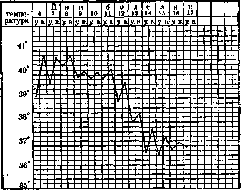
Figure 12.
The rash is the main clinical symptom, from which the disease received its name. The appearance of the rash is usually observed between the 3rd-5th days of the disease (Flerov) and may be delayed until the 9th (Pletnev). The typical place for the start of the eruption is considered to be the anterior surface of the chest (Flerov), the lateral surfaces near the false ribs, and the epigastric region (Dobreytser, Barykin), from where it spreads to the trunk and may involve the limbs, not sparing the palms and soles (Flerov); it appears relatively rarely on the face (Flerov). The rash can be abundant, moderate, sparse, or in some cases completely absent (typhus exanthematicus sine exanthemate). The color of the rash is usually pink, less often light red, roseolous in character (see separate table, Figure 5), ranging in size from a millet seed to a hemp seed, without sharply defined edges, directly transitioning into healthy skin. Around the tenth day, part of the roseola begins to undergo regression, and part, depending on the severity of the case, turns into petechiae (see separate table, Figure 6); in mild cases, there may be no petechiae at all. By the time the temperature drops, the petechiae begin to disappear, leaving behind short-lived pigmentation. In atypical cases, one can observe rashes of a different character: in the form of larger or very small spots, erythema, or miliaria. Herpes labialis is encountered occasionally. The skin is usually dry; sweating at the height of the disease is observed rarely, more often during the drop in temperature, and sometimes in the period of convalescence. The lips and gums are dry; in severe cases, they become covered with a coating. The pharynx and tonsils are hyperemic. On the mucosa of the uvula, at the base of its anterior surface, an enanthema can be detected, preceding the skin eruption, in the form of 3-4 delimited bluish-red or crimson-red spots, which disappear on the 6th-9th day of the disease or are obscured by the hyperemia of the throat (Vinokurov, Lendorf). Salivation is reduced, appetite is absent, and thirst is increased. In children, there is sometimes vomiting (Molodenkov). Constipation is usually observed in the intestines, and sometimes diarrhea in the second week. The spleen enlarges from the very first days of the disease. Enlargement of the liver is observed in more severe cases, depending on damage to it by the typhus toxin, or passively due to the weakening of cardiac activity. Sometimes jaundice is noted. The respiratory organs in typhus are affected to a greater or lesser degree. In addition to laryngopharyngitis, the catarrhal process can involve the trachea, bronchi, and spread to the lung tissue and pleura. The circulatory organs, just like the central nervous system, play a decisive role in the course and outcome of the disease. The pulse, sometimes slightly slowed at the very beginning of the disease, is usually rapid, corresponding to the height of the temperature curve. Bradycardia is observed rarely at the height of the disease, more often in the period of convalescence. The rhythm is initially regular, and subsequently...
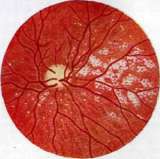
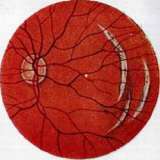
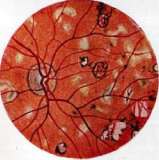
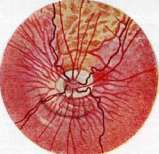
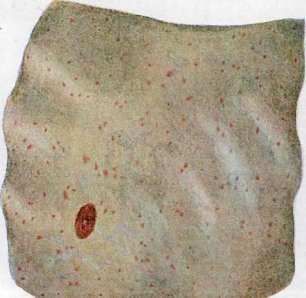
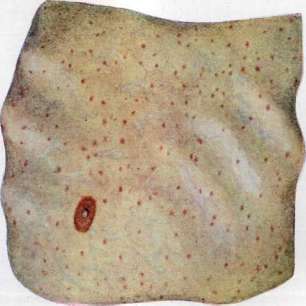
Figure 1. Vitreous body opacities of the choroid. Fig. 2. Choroid ruptures. Figure 3. Choroiditis; old and fresh foci. Fig. 4. Choroid atrophy. Fig. 5. Roseola rash in typhus. Fig. 6. Petechial rash in typhus. See Choroid, Typhus. Typhus may be disturbed, producing irregular waves and dropouts. Satisfactory in its filling, the pulse becomes softer and easily compressible at the end of the first and from the beginning of the second week. Blood pressure, lowered at the beginning of the disease (systolic to 100 mm, diastolic to 85 mm), continues to fall during the disease, dropping to 80-70 mm (Rosenberg), and reaches its normal level 1-1.5 weeks after the temperature drops. In connection with pathological-histological changes, the involvement of the peripheral vascular system acquires special significance. The clinical picture of the disease is also determined by the degree and prevalence of changes in this system and its regulatory apparatus. Vascular tone decreases due to the fact that the affected vessels, receiving insufficient nutrition, react more weakly to vasomotor stimuli, and regulation is disrupted depending on the damage to vasomotor centers. Changes in the vascular system develop not only at the height of the disease, but sometimes also at its end and even in the period of convalescence. The heart muscle is usually affected to a greater or lesser degree depending on the severity of the case. At the very beginning of the disease, the heart does not present objective clinical deviations from its norm; subsequently, its involvement begins to manifest. Initially, the muscle may be altered under the influence of intoxication, and then pathological-histological changes occur in the vessels of the heart, which disrupts its nutrition, and consequently, its normal functional activity. Damage to the nerve centers regulating heart activity and damage to the automatic nodes entail an even greater disruption of its functions. The fall in blood pressure and the disruption of peripheral vessel functions in connection with their damage exacerbate the disruption of cardiac activity; therefore, in typhus, the condition of the muscle acquires greater significance, and the prognosis for typhus patients with myocardial degeneration is less favorable than for individuals suffering from heart defects, because the hearts of the latter are accustomed to expending their reserve strength and coping with increased obstacles in their work. The blood in typhus undergoes significant changes. Its specific gravity is lowered (Kireyev), coagulation is slowed (Pletnev, Yegorov), the erythrocyte sedimentation rate is increased (Kost), and viscosity (Pletnev, Kutyrin) is increased. Acidosis is often noted, which is replaced upon improvement of the patient's condition by alkalosis or a normal figure for the alkaline reserve (Kost). Hemoglobin content and the number of erythrocytes fall, the number of blood platelets decreases (Pletnev, Bobrov). In severe cases, degenerative forms are observed: poikilocytosis and anisocytosis, and nucleated cells. Regarding white blood cells, in the first days of the disease, a short-term leukopenia is observed, which is replaced by hypoleukocytosis or moderate leukocytosis (neutrophilia); in individual cases, the number of leukocytes may remain within normal limits (Kireyev, Friese). A shift to the left according to Schilling-Arneth is noted. Eosinophils disappear (Kireyev, Tushinsky). Already in the first week, Türk irritation cells appear and usually persist throughout the entire disease. In the second week, endothelial cells may be encountered (Davydovsky). As for biochemical blood indicators, at the height of the disease, a drop in the amount of cholesterol and an increase in sugar, a slight decrease in phosphorus and chlorine, and a slight increase in residual nitrogen are noted; some increase in calcium or its normal content is observed, as well as some decrease or normal figures for potassium content (laboratory of the Moscow Botkin Hospital). Damage to the nervous system is so constant and dominant over other symptoms that in most cases it leaves its mark on the entire course of the disease and to a significant extent predetermines its outcome. Not only the central nervous system is affected, but also the peripheral and sympathetic systems. Usually, from the very beginning of the disease, a headache appears, most often felt in the forehead, temples, sometimes spreading to the whole head; it is often accompanied by painful sensations in the muscles, sacrum, lower back, intercostal nerves, etc. Often in the first days, insomnia is noted, which is subsequently replaced by poor, interrupted sleep with restless dreams. Speech, initially hurried and intermittent, slows down, becoming increasingly difficult and scanned, and becomes incoherent. In very severe forms, aphonia is observed. At the height of the disease, an increase in tendon reflexes, foot clonus, depression of skin reflexes, dilation or constriction of the pupils, sluggishness or absence of pupillary reaction, trembling of the hands and tongue, and convulsive contraction of individual muscles are noted. In general, phenomena of irritation predominate; paralytic phenomena are encountered significantly less frequently and predominantly at the end of the disease. Mental faculties undergo significant changes. Already from the first week, consciousness becomes inhibited, and by the second, the clouding becomes increasingly deep. The patient's somewhat agitated state in the first days quite quickly transitions into an apathetic one. Memory, reasoning, and volitional impulses are significantly weakened, and in severe cases, they disappear: the patient becomes drowsy, indifferent to everything around them, poorly oriented, and performs various movements with a certain delay. The clouding of consciousness, as it progresses, is accompanied by a delirious state. The character of the delirium is extremely diverse. In less severe cases, the period of delirium can be quite calm: the patient lies in a stupor, muttering something incoherent, and can sometimes be brought out of this state by a loud call. In more severe cases, with a deeper clouding of consciousness, the patient is in a comatose state, delirious loudly, moves their limbs chaotically, and sometimes tries to get out of bed. The delirium can take on a violent character: the patient hallucinates, screams, jumps out of bed, fights, tries to run away, jump out of a window, or make attempts at suicide. After a violent outburst, the patient, in complete exhaustion, falls back into their previous state until a new attack of violent delirium or into a deeper coma leading to death. The delirium itself is extremely diverse in its content; it often has a professional character. Characteristic of delusional ideas in typhus is the splitting of the personality and an abundant influx of them and their rapid change (whirlwind of ideas). The character of the nervous phenomena depends on the infection of a specific area of the central nervous system by the typhus virus. More often than other parts of the brain, the subcortical nodes and the medulla oblongata are affected. In the delirious period, convulsions and trembling of the muscles of the face, hands, and eye muscles, spasm of the swallowing muscles (swallowing disorder), spasm of the sphincters (urinary retention) are observed; sometimes widespread convulsions of the whole body or sharp tension (rigidity) of the muscles (damage to the striopallidal system) are noted. In other cases, paresis and paralysis of the sphincters develop—the patient urinates and defecates involuntarily. With damage to the medulla oblongata, the tongue symptom is observed, persistent hiccups, difficult swallowing, and Cheyne-Stokes or Biot's respiration occur. Brain damage is very often accompanied by damage to the meninges in the form of meningo-encephalitis disseminata. In these cases, an increase in pressure in the spinal canal is noted. The fluid, usually transparent, in some cases shows an increase in protein and contains a significant number of cellular elements—lymphocytes and polynuclear cells. The Nonne-Apelt and Weil-Kafka reactions are usually positive. Particularly unfavorable in terms of the outcome of the disease is the so-called coma vigil of Dusmenner, when the patient lies in a completely unconscious state, with a dropped jaw, with open eyes aimlessly staring into space. The skin is pale, cyanotic, covered with cold sweat, the pulse is frequent, arrhythmic with interruptions, the heart impulse is barely perceptible. Breathing is superficial, rapid, of the Cheyne-Stokes or Biot type. Regarding the sense organs, certain pathological changes are also noted. At the beginning of the disease, light, sound, taste, and olfactory perceptions are sharpened, subsequently giving way to their sharp weakening. The vessels of the sclera and conjunctiva are infected, the pupils are sometimes constricted, sometimes dilated, pupillary reflexes are lowered. In more severe cases, strabismus is observed. In connection with damage to the optic nerve, the choroid, and the nerves of the eye muscles, there is strabismus, diplopia, and a decrease in vision, reaching blindness. Hearing is almost always impaired. Initially, the patient is bothered by tinnitus, and then a decrease in hearing occurs, sometimes reaching complete deafness. The endocrine system is also involved in the typhus process.
Pathological changes are observed in the adrenal glands (Davydovsky, Puresev, Rosenberg), entailing a decrease in the secretion of adrenaline and the associated lowering of vascular tone. The genitourinary system is also affected. The amount of urine during the disease is reduced, the specific gravity is increased, and the color is saturated. Albuminuria and the presence of pathological formed elements, characteristic of the urine of patients with acute fever, are observed. Urobilin and urobilinogen often appear. The amount of urea, uric acid, and urates increases, while chlorides decrease. A positive diazo reaction is not uncommon. Dysuria is sometimes observed, and in more severe cases, oliguria, which can reach the state of anuria. Depending on the involvement of the nervous system, there may be spasm or paralysis of the bladder sphincter. Toward the end of the disease, the amount of urine increases rapidly and its qualitative composition is restored. In women, the regularity of the menstrual period is disrupted, and in pregnant women, pregnancy is often interrupted. Forms of the disease. According to the severity of its course, Typhus can be divided into mild, moderate, and severe cases. In mild forms (t. ex. levis, abortivus, ambulatorius), a shortened course is observed, lasting 3-7 days (Dobreytser, Barykin); the symptoms of the disease are not sharply expressed, some may be absent, and the temperature does not rise to high figures. The rash is moderate, usually not progressing to petechial. Phenomena on the part of the cardiovascular system do not present anything threatening, and on the part of the nervous system, they may be limited to headache, increased irritability, or some depression of mood. "Erased" cases and the majority of cases occurring without a rash belong to this form. The moderate form of Typhus is the most typical, with more or less clearly expressed symptoms of the disease, bearing a moderate character, with a febrile period usually not exceeding two weeks. The severe form is characterized by a very high temperature and sharp damage to the cardiovascular and nervous systems. The rash is usually abundant, rapidly progressing to petechial. This form includes 1) the so-called fulminant typhus (t. ex. siderans), in which death occurs within 3-5 days with rapidly increasing phenomena of damage to the organism by the typhus virus, 2) nervous typhus (t. ex. nervosus, ataxicus, ataxo-adynamicus) with dominant, sharply expressed damage to the nervous system, 3) hemorrhagic typhus, in which hyperpyretic temperature and a predominance of phenomena of hemorrhagic diathesis are observed—the rash takes on a sharply expressed hemorrhagic character, hemorrhages occur into the skin and mucous membranes, and nasal, pulmonary, gastric, intestinal, and renal bleeding, as well as hemorrhages into the brain, appear. In childhood, Typhus proceeds more easily than in adults (Filatov, Molodenkov); cases of an abortive, erased character and cases without a rash are encountered more often. In old age, the disease is endured more severely. Complications. Typhus, being an extremely severe infectious disease that highly disrupts the functions of the organism, creates a favorable ground for various kinds of complications, which often accompany this disease and are observed in the most diverse forms, in various organs. There is not a single organ that would be insured against involvement in the typhus process. In many cases, the lethal outcome is caused not by the disease itself, but by the accompanying complications. The conditions for the development of complications depend on the individual characteristics of the patient, the quality of care for him, and the properties of the virus itself. Therefore, the frequency of complications in different epidemics and according to different authors is not the same, fluctuating from 25% (Cherepnin) to 63% (Krinitsky). By their origin, complications can be of two kinds: 1) caused by pathological-histological changes of a given organ under the influence of the typhus virus and 2) caused by secondary infections, which gain the possibility of freer penetration into the organism due to the violation of the integrity of the vascular bed. On the part of the skin, furunculosis, abscesses, phlegmons, gangrenes, and bedsores are observed, usually developing in places subject to pressure. The cause of the origin of bedsores is mechanical pressure, insufficiently thorough care, damage to the vascular system, and disorder of innervation. The area of gangrene or bedsore, upon the entry of pyogenic bacteria, undergoes purulent decay and can cause general infection. Hair usually falls out. Nails become dry, brittle, and transverse grooves appear on them due to nutritional disturbance. On the part of the motor system, Zenker's degeneration of muscles is encountered very rarely, sometimes atrophy of the muscles of the upper extremities of the Aran-Duchenne type; somewhat more often, arthritis, chondritis, perichondritis, myositis, and dry and wet gangrene of the extremities are observed; bone lesions are very rare. The digestive organs can give a number of complications—stomatitis, parotitis, glossitis, gastritis, enteritis, colitis; vomiting with blood and intestinal hemorrhages are rarely observed. More often than other organs, the respiratory ones are affected: chondritis and perichondritis of the larynx, tracheitis, bronchitis, catarrhal pneumonia (25-35% of all complication cases according to Zavadovsky). These inflammations are caused by specific damage to the smallest pulmonary vessels with the formation of necrotic foci, or by congestive phenomena, or by the direct transition of the inflammatory process from the bronchi. Pleurisy is observed less frequently. On the part of the circulatory organs, besides the usually developing myocarditis, endocarditis and pericarditis are encountered relatively rarely. The vascular system is involved in the process significantly more often. At the end of the disease, phlebitis and periphlebitis, thrombosis, entailing embolism, and sinus thrombosis are often encountered. Hemorrhages into various organs are observed, sometimes after the temperature drops. Complications on the part of the nervous system acquire great importance both at the height of the disease and after the temperature drops. On the part of the peripheral nervous system, neuralgia and neuritis are noted. In neuritis, degenerative atrophy of the nerves sometimes develops, entailing paralysis. Changes in the brain and its membranes can manifest in the form of diffuse meningoencephalitis, and with simultaneous damage to the spinal cord, give a picture of encephalomyelitis, with all the consequences flowing from these lesions. On the part of the psychic sphere, long-term weakening of memory, unstable mood, and psychoses clearly expressed in the form of Korsakoff's symptom complex are observed, sometimes continuing after the temperature drops, and in other cases arising in the period of convalescence. Psychoses can proceed either in the form of depressions, or in an excited state, or in the form of amentia (see), and in essence do not represent anything specific to Typhus, being encountered also in other infectious diseases. In the majority of cases, with proper care, nutrition, and treatment, they end in full recovery. However, cases of long-term, sequential psychoses are encountered, especially in those cases where Typhus served only as a trigger for their development. On the part of the sense organs, inflammation of the ears is encountered, often progressing to purulent, sometimes involving the mastoid process in the process. With damage to the corresponding nervous system, disorders on the part of the organs of hearing, vision, and smell are observed, up to their complete loss. Complications on the part of the genitourinary system can manifest in the form of nephritis, nephrosis-nephritis, more rarely glomerulonephritis, and entail phenomena of uremia. Sometimes orchitis, gangrene of the penis, and of the labia majora in women are observed. Recognition of Typhus in the presence of clearly expressed symptoms, especially during an epidemic, does not present difficulty. Atypical, erased cases, however, can present great difficulties. When establishing a diagnosis, it is necessary to take into account the epidemiological history and clinical data concerning the onset of the disease. Clinical recognition in the first days of the disease before the appearance of the characteristic rash can be made only tentatively. Among the signs that can lead to the thought of Typhus disease in the very first days of the disease, the sudden onset, rapid rise in temperature, the peculiar psyche of the patient, and the "tongue symptom" deserve attention. As an early diagnostic sign, the "constriction symptom" has been proposed: the middle of the upper arm is constricted with a bandage for 10-15 minutes with the goal of inducing venous hyperemia; after removing the bandage, below the constriction, especially in the elbow bend, punctate hemorrhages appear, or the limb is constricted for 1/2-1 minute, inducing short-term hyperemia, after which a roseolous rash clearly appears below the constriction. For the same purpose of inducing extravasates, dry cups according to Bier are placed on the chest. The sharpness of these reactions is subject to significant individual fluctuations and also depends on the elasticity of the vessels of the given patient. Lipschütz performed skin scarification, noted redness of the scarified places after 24 hours, and considers this reaction characteristic of Typhus already in the first days of the disease.
Bauer describes the "eraser symptom" (Radir-gummiphenomen): if one lightly rubs the skin with a finger where there is no desquamation, the skin easily peels off in thin scales, leaving behind hyperemia and a mark as if from rubbing with an eraser. This symptom is observed only at the end of the disease or in the initial period of convalescence. A number of reactions proposed as diagnostic, which did not yield the expected results, have not come into common use and have only historical significance. These include the reaction to blood alkalinity (Kireyev), the precipitation reaction with the serum of typhus patients (Weltmann), and the color reaction with urine (Winer). The reaction for glycogen in the leukocytes of typhus patients (Voskresensky) can be applied for differential diagnosis from typhoid fever. The method of exanthema biopsy with the determination of pathological-histological changes in the skin vessels characteristic of typhus (Fraenkel-Davydovsky) is specific and highly valuable for recognition, but cannot have wide application due to the relative complexity of its technique for the broad medical masses, and only the agglutination reaction proposed by Weil and Felix (see 22, Weil-Felix reaction) has acquired the right of citizenship as an essential diagnostic method, especially valuable for clarifying atypical, doubtful, and retrospective cases, and in typical cases it is a method confirming the correctness of the established diagnosis (see above). Thus, for the recognition of typhus at its very beginning, we currently have neither strictly defined symptoms nor firmly established methods. A patient with a clearly expressed picture of a typhus-like disease, in the absence of foci of local lesions that could explain the given febrile state, in the absence of Obermeier's spirochetes and malaria plasmodia in the blood, and in the presence of leukopenia or hypoleukocytosis at the very beginning of the disease and a shift to the left of the leukocyte formula, can be treated as suspicious for typhus. The final diagnosis is established as the symptoms characterizing typhus develop. A positive Weil-Felix reaction confirms the diagnosis. In differential diagnosis, certain difficulties may be presented by the exclusion of typhoid fever and paratyphoid diseases, especially cases with an abundant rash. Typhoid fever and paratyphoids are characterized by a prodromal period, a slower, step-like rise in temperature, a later eruption of the rash, its appearance, the presence of leukopenia, detection in hemoculture, and in the second half of the disease, specific pathogens in the excreta and a positive Widal reaction. When recognizing measles, the presence of a prodromal period, catarrhal phenomena, Filatov-Koplik spots, and the eruption of a spotted rash starting from the face are taken into account. Scarlet fever gives fewer grounds for confusion; the presence of angina and a scarlet fever tongue excludes typhus. Smallpox is in some cases confused with typhus, especially in its prodromal period. The presence of vesicles on the mucous membrane of the throat speaks for smallpox, and in the papular period, the absence of high temperature excludes typhus. Relapsing fever, due to its sudden onset and high temperature, has a similarity to typhus, especially in cases accompanied by a rash. A faster and more significant enlargement of the spleen and the appearance of jaundice point to relapsing fever. The main sign establishing the final diagnosis is the detection of Obermeier's spirochetes in the peripheral blood. Malaria with a typhus-like course is diagnosed by the presence of plasmodia in the blood. Cerebrospinal meningitis, especially in cases proceeding with a rash, can give grounds for confusion with typhus. The presence of symptoms characteristic of meningitis and the examination of cerebrospinal fluid determine the disease. Difficulties for recognition may be presented by toxic erythemas, but in these diseases, lesions of the nervous system are usually not observed, and the course itself does not possess the cyclicity characteristic of typhus, and the hemogram and the absence of the Weil-Felix reaction contribute to the correct diagnosis. Septic endocarditis and septic diseases with a hidden source of infection can create difficulties for recognition, especially in cases with a hemorrhagic rash. More sharp fluctuations of the temperature curve, chills, sweats, and in some cases the eruption of a polymorphic rash clarify the nature of the disease. Auxiliary methods are blood culture, hemogram, and the absence of the Weil-Felix reaction. The eruption of syphilitic roseola, accompanied by high temperature, can give grounds for confusion with typhus. Anamnestic data, hemogram, absence of the Weil-Felix reaction, and the course of the disease clarify the diagnosis. Drug rashes are distinguished by anamnestic data, the general condition of the patient, and their course. Influenza infection at the beginning of the disease can present certain diagnostic difficulties. Catarrhal phenomena, and in the nervous form of influenza the absence of typhus symptoms and the course of the disease make it possible to establish the diagnosis. The prognosis for typhus is always serious and should be made with great caution. Until the complete end of the disease, a certain prognosis cannot be made. Not a single, even mild case guarantees against formidable, unexpectedly occurring phenomena that could entail a lethal outcome. In some cases, death occurs after the temperature falls due to damage to the nervous system and vascular-cardiac weakness. The presence of complications forces one to treat the prognosis even more cautiously. Death occurs most often on the 10th-13th day of the disease (Flerov) and is caused by damage to the nervous system, vascular-cardiac, endocrine, or as a result of combined influences (Pletnev), as well as from added complications. Recovery. After suffering a non-severe form of typhus, recovery occurs quite quickly, and 1.5-2 weeks after the temperature falls, the patient can get out of bed, and after 1.5-2 months, start working. More severe cases can leave behind a whole series of long and persistent disorders on the part of the nervous, vascular-cardiac systems, and the motor apparatus. In such cases, final recovery can drag on for several months. But the patient may also remain an invalid forever and even die as a result of an exacerbation of a previously completely quiet tuberculosis caused, for example, by typhus. In the presence of persistent anatomical changes in organs or systems, complete recovery does not occur, and a greater or lesser loss of working capacity or disability occurs. Recovery begins with a decrease in all painful phenomena. Disorders on the part of the nervous system and changes in the psyche, sometimes vascular-cardiac, persist the longest. Convalescents complain of general weakness, pain in the lower extremities, hyper-, ana-, and paresthesia in various peripheral nerves, more often along the tract of the lateral femoral cutaneous nerve in the form of "stripes" (Pletnev). Increased nervousness and easy excitability, loss of memory, weakening of the ability for logical thinking, an infantile attitude toward surroundings, and sometimes inhibition of thought processes remain for quite a long time. In some cases, symptoms of mental disorder in the form of "collapse delirium" are observed. On the part of speech, transcortical motor and sensory aphasia, and amnestic aphasia are noted. When writing, individual letters and even words may be omitted. On the part of the vascular-cardiac system, its prolonged weakness, arrhythmia, tachycardia, or more often bradycardia may be noted. The restoration of working capacity after recovery from typhus, depending on the pathological-histological changes characteristic of this disease, occurs slowly, especially the restoration of the functions of the nervous system. Clinical recovery significantly outstrips anatomical recovery. Complete recovery of the organism and restoration of its working capacity should be considered anatomical recovery. When determining the restoration of working capacity, it is necessary to take into account the severity of the disease suffered, complications, the course of the recovery period, the constitution of the patient, and the nature and conditions of his work. On average, a patient cannot be considered fully recovered from typhus earlier than 2-3 months after the temperature falls. Until this period expires, the convalescent requires rest, relief from studies, enhanced nutrition, and a correct regimen (Flerov). Therapy. The treatment of typhus is symptomatic. All specific measures applied to date, as well as the proposed chemotherapeutic substances, have not yielded definite positive results, and the task of the attending physician is to create rational care for the patient, the most careful observation of the course of the disease, and the alleviation of its severe seizures. Attention should be directed to maintaining the strength of the organism and strengthening its defensive means in the fight against infection (Flerov). Experience in treatment with the serum of convalescents does not give a definite assessment: there are indications of favorable results, but at the same time, experimental examinations (Nicolle, Conseil) and observations of a number of authors (Zlatogorov, Zabolotny, Ivashentsov, Martsinovsky, Liderson) note the insignificant value of this method. Sera of horses immunized with the organs of guinea pigs infected with the typhus virus.
(Nicolle, Blaizot), defibrinated blood of patients (Patsevich, Triodin), Proteus X19 bacillus gave indefinite results when used. Chemical preparations proposed with the aim of strengthening the adaptive reaction of the organism or exerting an abortive effect on the course of the disease also did not yield definite positive results, and the therapeutic effect observed by the authors themselves was usually not obtained during verification observations, sometimes giving a favorable impression in individual cases. Such agents include collargol, atoxyl, electrargol, 1.0:10,000 solution of AgNO3 intravenously, daily intravenous infusions of mercury cyanide solutions at 0.003-0.015, intramuscular administration of corrosive sublimate in NaCl solution at 0.01, treatment with internal doses of Tincturae Jodi, combined treatment with iodine (Solutio Kalii jodati) and injections of corrosive sublimate solutions, salvarsan infusion, intravenous administration of 1/2-1% sodium citrate, 0.2% hirudin, 1.0:10,000 atropine solution. Protein therapy (Lavrinovich, Skorodumov) was used in its various forms: infusion of milk, normal horse serum, various vaccines, auto- and hemotherapy; organotherapy: subcutaneous administration of lienin, cerebrin, hematin (Belov); use of lipocerebrin, hypophysolysates, Gravidan, irradiation with a quartz lamp (Moscow Botkin Hospital). Gravidan, obtained from Dr. Zamkov's Institute in Moscow, when administered intramuscularly at 1-3 g every other day, did not indicate a shortening of the process itself, causing a reduction of some painful symptoms, and in the recovery stage, it had a definite effect on the faster restoration of the body's strength and the biochemical composition of the blood. With the use of Gravidan, an increase in general tone is noted, a positive influence on the cardiovascular system and diuresis, and on metabolism in the sense of regulating the acid-base balance. The pulse becomes fuller, breathing more even, sleep, appetite, and general well-being improve. With daily irradiation of the cervical region with a quartz lamp or with general irradiation in therapeutic doses, a reduction or faster disappearance of headache, improvement of sleep and general well-being were observed, but no influence on the shortening of the disease process was noted. All these methods of therapeutic intervention, being attempts stemming from the desire to help the patient, remain attempts to this day, and none of the proposed measures can be considered a method that provides a positive therapeutic effect in the sense of shortening the disease process. Nevertheless, one should not be discouraged by the lack of significant positive results and, taking into account individual cases that gave a favorable impression from the use of one or another method, it is necessary to continue observations, modifying the proposed methods and introducing new agents with the aim of achieving positive results. Thus, the organism in the fight against typhus copes with the disease on its own, and the attending physician is an assistant in this struggle, supporting the body's strength and increasing its resistance; therefore, it is necessary in each individual case, through the most careful observations of the state of the patient's organism, to assist it with all available means, strictly selecting them, individualizing them, and in no way overloading it with an excess of them, so as not to cause harm instead of assistance. Symptomatic therapy should be directed at symptoms that cause concern or subjectively disturb the patient. The use of antipyretics is pointless. The state of the cardiovascular system requires exceptional attention and the rational use of appropriate medicinal preparations. In case of cardiac dysfunction, stimulating or regulating agents are used (camphor, cardiazol, caffeine, digitalis, digalen, strophanthin, etc.); in case of collapse, it is appropriate to administer 3-4 drops of Tincturae Strophanthi or Tincturae Strychni in saline solution intravenously. In case of vascular system damage—strychnine and adrenaline (1.0:1000.0). Adrenaline, by raising vascular tone, gives the best effect in cases of pressure drop caused by hypofunction of the chromaffin system; in cases of loss of tone depending on anatomical damage to vasomotor centers, the effect of the drug is significantly less. A beneficial effect on the course of the disease is provided by subcutaneous infusion or drip enemas of NaCl, Ringer's, Locke's solutions or 5-10% glucose solution at 250-300 g 1-2 times a day, appropriately with the addition of 10-20 drops of adrenaline. The administration of solutions should be started in the earlier period of the disease, without bringing the patient to a very severe state; their effectiveness lies in introducing fluid into the organism, increasing diuresis, diluting toxic substances, and influencing the increased removal of these substances and metabolic products from the organism. In cases of congestive phenomena, especially in the pulmonary circulation, distracting measures in the form of dry cupping, leeches, venepunctio and venesectio with simultaneous subcutaneous administration of solutions are appropriate. Symptoms of nervous system damage also require special attention. Headaches are relieved by an ice pack; in other cases, the use of painkillers (pyramidon, phenacetin, etc.) is appropriate. With the increase of symptoms indicating phenomena of increased pressure under the skull or in the spinal canal, in addition to the above-mentioned distracting measures, intralumbar puncture with removal of cerebrospinal fluid produces a good effect. For hiccups, subcutaneous administration of 1.0 atropine solution (1.0:1000.0) is appropriate. For agitation, the use of valerian preparations and bromides is indicated, as well as opium preparations—morphine, pantopon. For persistent insomnia—hypnotics (luminal, adalin, veronal, etc.). Hydrotherapy has a beneficial effect on the course of typhus. Rubbing, wrapping, baths (at 35°), in other cases with cooling to 30-28°, pouring water over the head from the back of the head to the crown with cooling of the water from 27° to 20°. Hydrotherapy causes an improvement in general well-being, reduces headache, clears consciousness; simultaneously with this, the pulse improves, breathing becomes deeper. General baths, in addition to the above-mentioned positive data, can lower the temperature, acting in a tonic way on peripheral vessels, improving blood circulation and respiration, exerting an influence on the vasomotor and respiratory centers. Lesions of individual organs and systems, as well as various complications in them, require the use of special appropriate measures. Careful observation of the activity of the intestines, bladder, and the hygienic state of the oral cavity and skin is necessary, especially in areas subject to pressure, to avoid the formation of bedsores. Care for the patient is one of the powerful therapeutic means and must be in the hands of skilled and experienced persons (Flerov). The food of typhus patients must be easily digestible and contain a sufficient amount of nutrients and calories. The diet should contain a predominant amount of carbohydrates and mucilaginous substances, in a smaller amount—proteins; fats and salts should not be absent. Fluid in the form of drink should be introduced in large quantities (Flerov). Vitamins in the form of fruit or vegetable juices should also be introduced in sufficient quantities.
M. Kireev. Control of typhus. The International Sanitary Convention of 1926 regarding typhus provides for the following measures (the most important of them are cited): 1) Immediate notification to the governments of other states and the International Office of Public Hygiene about the existence of a typhus epidemic and the provision of detailed information about the locality and time of the appearance of the disease, about the number of cases of illness and death, and about the measures taken; subsequent reports on the course of the epidemic (Art. 1-4). 2) Prevention of the boarding of ships by persons presenting symptoms of typhus, ensuring the disinsection of all suspicious persons before they board the ship (Art. 13). 3) In relation to goods and luggage—disinsection of used undergarments, rags, clothing, bedding, as well as rags not transported as wholesale goods (Art. 17). 4) In relation to ships arriving at ports and at sea borders that had a case of typhus on board during the voyage or at the moment of arrival, the following may be applied: a) medical examination; b) disembarkation of the sick, their isolation, and disinsection; c) disinsection and observation for no longer than 12 days of persons who can be considered carriers of lice or who have been exposed to the possibility of infection; d) disinsection of used bedding, undergarments, personal items, and other items that are recognized as infected; e) disinsection of parts of the ship where the sick lived (Art. 41). 5) At land borders, observation is not established. Only persons presenting symptoms of the disease may be detained at the borders. Persons who have been in contact with the sick may be subjected to disinsection (Art. 58). Travelers coming from districts affected by typhus may be subjected to observation for no longer than 12 days (Art. 61). Approximately the same measures are provided for in the official "Rules for the Sanitary Protection of the Borders of the USSR" (1932), issued in development of the decree of the Central Executive Committee and the Council of People's Commissars of the USSR "On the Sanitary Protection of the Borders of the USSR" (Collection of Laws of the USSR 1931, No. 55, Art. 355). At the basis of the fight against typhus lie measures for the destruction of lice (see Disinsection). The construction of a sufficient network of properly equipped baths, laundries, and barbershops, the provision of soap, the raising of sanitary culture, the introduction of rules of personal hygiene—these are the mass measures for the liquidation of lice and the prevention of typhus. Among individual objects, places of mass gathering of people are subject to special attention of sanitary supervision, such as: 1) dormitories for workers, students, and others, 2) children's institutions, in particular schools, 3) hotels, peasant houses, and other institutions serving for temporary residence, 4) night shelters, 5) places of detention, etc. General requirements for all these institutions are: provision of bath service and installations for the disinsection of clothing and sanitary processing (see) of all new arrivals. Especially thorough sanitary processing is subject to newly arriving parties of workers, both permanent (to large centers, to new construction sites) and seasonal (to peat extraction, fisheries, logging, etc.). In view of the exceptionally large role that transport can play in the spread of typhus under unfavorable conditions, it is subject to especially thorough sanitary supervision both at stations and piers, and during the movement of passengers (identification and isolation of louse-infested persons and those suspicious of infectious disease). In relation to organized moving groups of the population (resettlers and workers moving to other localities for work), the legislation of the RSFSR (decree of the Council of People's Commissars of the RSFSR of 11/III 1932) requires their mandatory sanitary processing before departure and the provision of their sanitary service on the way and at destination stations. Sanitary-checkpoint stations (see) serve for the sanitary processing of new arrivals. Upon the appearance of typhus cases, the following are mandatory: 1) emergency notification about the sick person, 2) maintenance by sanitary supervision of a strict record of all sick persons with their distribution by place of residence and place of work, 3) as early as possible hospitalization of the sick, 4) epidemiological examination of each case in order to establish the source of infection and prevent further illnesses, 5) sanitary processing of the focus (premises and persons living together with the sick), 6) establishment of medical observation over the focus. A patient, according to the isolation periods approved by the People's Commissariat of Health, is considered safe for those around him ten days after the fall of temperature, provided there is thorough personal disinsection. Those living with the sick in the same premises are allowed to work after separation from the sick and disinsection of the body and clothing, but medical observation is established for them for at least 12 days. In typhus wards and hospitals, the observance of a strict regime is required, having as its task the rendering of the patient harmless to those around him and the protection of the staff from infection. Upon admission, the patient is subjected to thorough sanitary processing, his clothing is disinsected, and in the future, it is necessary to strictly ensure that there are no lice on either the patient or the staff. Visitors to the patient are as a rule not allowed. Simultaneously with the implementation of the indicated measures, the strengthening of sanitary supervision over places of arrival of people (stations and hotels, etc.) is organized, as well as over new arrivals; supervision over places of mass gathering of people, over dormitories at enterprises, etc., is strengthened. This supervision has as its task the conduct of mass sanitary processing and the prevention of the development of lice. In those cases when typhus has a scattered character with the coverage of a large number of individual apartments, a total examination of apartments of individual parts or even the entire settlement is organized. Such an examination has as its task: 1) the identification of all sick persons remaining at home and their immediate hospitalization, 2) the establishment and registration of louse-infested apartments and those suspicious of louse infestation and the implementation of measures for their delousing. For the purpose of delousing premises and clothing, solvent (see) and chloropicrin (see) have been used with success recently. While carrying out measures to prevent the introduction of typhus and the rapid liquidation of its outbreaks, it is necessary at the same time to persistently carry out measures in a planned order for the complete liquidation of typhus in those settlements where it repeats over a number of years and where it has an endemic character (mainly in rural areas). By means of the careful compilation of annual maps of its spread, its endemic foci are identified, which are taken under special registration. By strengthening the medical-sanitary personnel, constant observation is established over these foci. All factors that may favor the constant development of typhus in a given locality are studied. As a result of the study, a concrete plan of measures for the liquidation of the focus in the given settlement is compiled and implemented. Basically, this plan again boils down to the destruction of lice (construction of baths, laundries, the fight against harmful everyday habits—sleeping on common bunks, etc., raising sanitary culture, etc.). For the sanitary processing of a number of villages, mobile bath-disinfection detachments are organized, equipped with mobile bath (shower) and disinsection installations. When carrying out all measures for the prevention and fight against typhus, it is necessary to involve the initiative of the working people as widely as possible. Infections similar to typhus. Systematic research of recent years has shown that the clinical picture of typhus is similar to the picture of a whole series of other infections. The genetic connections of these infections with typhus have not been fully clarified. Infections clinically similar to typhus include Mexican endemic typhus (tabardillo) and the identical Brill's disease of New York, Marseille or Mediterranean typhus fever (fievre exanthematique of French authors), Japanese river fever (tsutsugamushi), Rocky Mountain spotted fever of North America (spotted fever), tropical typhus, and Sao Paulo typhus. Of this entire group of infections, Mexican endemic typhus (tabardillo, or Brill's disease), which is undoubtedly related to the classic epidemic typhus but differs from the latter in that it gives only scattered sporadic illnesses in its foci, not reaching mass outbreaks, is of special interest and greatest significance to us. The relationship of the endemic typhus of the New World to the classic epidemic typhus of the Old World is expressed by a number of signs identical for both of these infectious forms. Thus, like epidemic typhus, rat typhus is caused by rickettsiae discovered by Mooser. This pathogen is cultivated on tissue explants (Zinsser, Batchelder, Pinkerton a. Hass, Hoshizaki). Barykin, Afanasyeva, and Starkhova obtained its culture in symbiosis with yeast. Clinically, endemic typhus proceeds as benign, mild forms of epidemic typhus, does not cause deep lesions of the central nervous system, and is accompanied by an abundant exanthema that spares neither the palms nor the soles. Mortality from it is insignificant. Recovery occurs quickly.
Pathohistologically, endemic typhus is similar to epidemic typhus and is expressed, like the latter, by universal granulomatosis of the small vessels, predominantly in the cortex of the brain and the medulla oblongata. Regarding its seasonality, despite the conventionality of this feature, endemic typhus is not associated with the cold season, unlike epidemic typhus. The primary and decisive distinguishing feature of these two infections is the different routes of their transmission, which impose a peculiar stamp on their epidemiology and make endemic typhus immeasurably less dangerous to the human collective compared to the epidemic form. Numerous works by Americans have established that endemic typhus is spread by rodents—rats and mice—and their ectoparasites. Hence the very name of this typhus, "rat" typhus. This disease should not be confused with red typhus, caused in rats by the Danysz bacterium, etc. Among rats, the infection is maintained by lice, mites, and fleas. Of the lice, a prominent role is played by Polyplax spinulosus, which is not capable of biting humans; among fleas, Xenopsylla cheopis, which occasionally transfers to humans, as well as Ceratophyllus fasciatus, Leptopsylla musculi, and others. The actual transmission of the infection from rodent to rodent is apparently connected not so much with the bites of infected insects as with the devouring of them by rodents and the infection of the latter through the intestine (Ch. Nicolle et al.). Taking into account such a method of spreading the infection, the lack of proof of its transmission by the bites of infected fleas (Xenopsylla cheopis), and the rarity of the latter transferring to humans, it is easy to understand the low danger of rat typhus to the human collective and the absence of epidemiological links between individual cases of the disease among people. Ch. Nicolle asserts that rat typhus is dangerous mainly not in the natural conditions of its spread, but during laboratory work with fleas infected with it. The flea Xenopsylla cheopis can contain in its body such quantities of rat typhus virus that even 1/1,000,000th of this flea is capable of infecting a guinea pig (Dyer and colleagues). In connection with the sharply expressed ability of the rat virus to parasitize among rodents, there is also the duration of its survival in the organism of the latter. Thus, according to data from Lepine, Ch. Nicolle, and others, the rat virus can be detected in the brain of an infected rat up to the 94th day, in the brain of a mouse up to the 64th day, whereas the epidemic virus in the brain, for example of rats, is preserved within only 18-20 days. Rat typhus is maintained by passages through fresh rats for an indefinitely long time, whereas the epidemic virus is exhausted already at its 12th-13th rat passage. All these experiments convince us that biologically the virus of rat typhus is clearly distinguished from the virus of louse-borne epidemic typhus. The differences between them also follow other lines. Thus, experimental infection with rat typhus of white and gray rats causes clear fever in them (Neill, Mooser, et al.), whereas the epidemic virus produces an asymptomatic, afebrile infection in these rodents (Ch. Nicolle and Lebailly). Furthermore, experimental infection of male rats with the endemic typhus virus is accompanied by inflammatory phenomena in the membranes of the testicles (scrotal reaction) with a huge accumulation of Rickettsia prowazekii here. This reaction is especially characteristic of the named virus when infecting guinea pigs; in rats, along with it, a fever curve is observed, similar to the curve during experimental infection of guinea pigs with the epidemic virus. Finally, in guinea pigs, the virus of rat typhus, unlike the epidemic one, which affects primarily the brain, produces only inconsistent and weak changes in the brain in the form of granulomas along the course of small vessels. However, all these differences have a conditional significance. Thus, Pinkerton, Barykin, and Kompaneets showed that the epidemic European typhus virus can also acquire in passages through guinea pigs the ability to periodically produce a scrotal reaction, and Lepine observed the disappearance of this reaction in the rat typhus virus. The greater or lesser degree of damage to the testicles or brain by the rat virus depends on the individuality of this virus. If we add to this that the rat typhus virus provides cross-immunity with the epidemic one, i.e., is immunologically indistinguishable from the latter, then the disagreements that have arisen among researchers on the question of the mutual relationship of these two infections become understandable. Some, like Pinkerton, argue that both these infections can easily pass into one another. R. Kraus and Lepine take an indefinite position on this question. Ch. Nicolle categorically asserts that endemic typhus can under no circumstances turn into epidemic typhus. However this question may be resolved in the future, it is necessary to note that as rat typhus is studied, its foci among the human collective are found to be spread far beyond the borders of Mexico. In Europe, it was first discovered by Plazy near Toulon among sailors of the French navy (1929). Later it was found among rats in Lyon, in Alexandria, in Athens, Piraeus, and Beirut, in Brest, in Paris, where a small outbreak was noted among people. Cases of rat typhus among the population in Manchuria have also been established, with its foci near Dairen; it is believed that it has a spread among people in Japan (Kyushu, Formosa, Shikoku, Sanin). A number of authors have discovered the infection of rats with the endemic typhus virus in Moscow and in Baku. It is obvious that no matter how insignificant a place this infection occupies in human pathology, it is necessary to treat it with full attention and caution, especially in the USSR, where the Party and the government have set the task of complete liquidation of typhus in the coming years, in whatever form it may threaten the workers of the Union. Among infections similar to typhus that have a spread in Europe, one must mention typhus-like fever (fièvre exanthématique). Under the name una speciale forma di febbre eruptiva, it was described by Carducci in Rome (1910-1920), later by Filippella and Cavaletti. In 1925, Olmer in Marseille, and then Pieri and Boinet, described it under the name fièvre éruptive à Marseille. In Tunisia and Algeria, it received the name fièvre boutonneuse (Conseil, Raynaud). Further research showed that under all these names, one infection is hidden, for which at the present time the general name "typhus-like fever" has been adopted. This infection, first discovered along the shores of the Mediterranean Sea, was soon confirmed far beyond the borders of the latter, namely in Portugal, in Spain, in Romania, in Greece, in Casablanca and Morocco, in the Malay States, in Indo-China, in Australia, in many regions of Africa, etc. Typhus-like fever, similar in its course to typhus, however, has a number of distinguishing features from it, both clinical and epidemiological. Clinical phenomena in this infection occur after 1-2 weeks of incubation. Already at the end of the febrile period, in two-thirds of cases, a punctate necrosis is discovered on the skin in the form of a dark spot ("tache noire"). It corresponds to the site of entry of the virus (Combiesco) and is accompanied by painful swelling of the regional lymph glands. The fever after incubation immediately reaches 39-40°, shows morning remissions, and after a week begins to fall, resolving by a long lysis. With the onset of fever, general symptoms appear: characteristic headaches, muscle and joint pains, and on the 3rd-4th day an abundant maculopapular exanthema, which spares neither the palms, nor the soles, nor the face. The central nervous system suffers little. A peculiar euphoria is often observed, occasionally slight prostration. The Weil-Felix reaction, according to the data of most authors, is usually weakly expressed or negative; according to the data of others, it is often positive. The disease is distinguished by an exceptionally benign course and as a rule does not cause mortality. Recovery occurs quickly. The favorite season for typhus-like fever is summer. Olmer calls it "summer typhus." The infection, according to literary data, is not associated with age and material well-being. It is not contagious to those around. In its epidemiology, lice play no role. The infection affects predominantly people who are in close contact with dogs. A decisive role in its spread to humans is played by dog ticks, which are especially frequent among village dogs. Of these ticks, the most frequently encountered are Ixodes ricinus and Rhipicephalus sanguineus. The presence of the virus in dog ticks, especially in Rhipicephalus sanguineus, was established by Conseil and Durand and confirmed by Brumpt, Combiesco and Zotta, and others. The infection among ticks is transmitted to the offspring and can be preserved for years. Dogs, carriers of infected ticks, undergo the infection in an asymptomatic form, thus being its hidden spreaders. Brumpt describes in infected Rhipicephalus sanguineus formations called by him Rickettsia conorii, which are also found in the testicles of experimentally infected guinea pigs.
Among laboratory animals susceptible to experimental typhus fever, one must mention: guinea pigs (typical fever and scrotal reaction), mice, rats, ground squirrels, and rabbits (prolonged asymptomatic infection), monkeys. Cross-immunity experiments show that having had typhus fever does not provide immunity in an animal to other viruses of the group under consideration [epidemic typhus, spotted fever] and vice versa. These experiments, along with other signs, clinical and epidemiological, indicate that typhus fever represents a special, independent infectious form. Some similarity to typhus fever is held by tsutsugamushi—Japanese river fever. It is an acute endemic infection, distributed predominantly along the banks of rivers in the northern part of Japan. Outside of Japan, it has been described in Sumatra under the name pseudotyphus in Dehli-Schüffner (Schüffner), in the Philippine Islands (Ashburn, Craig), in Saigon (Noc and others), Malaya, Formosa, etc. The main clinical symptoms of tsutsugamushi, which has an average incubation of 6-11 days, are considered to be: 1) cutaneous necrosis corresponding to the site of the bite of the mite Trombicula akamushi, the vector of the infection (Brumpt, Nagayo, Miyajima, Kawamura, 1916), 2) painful swelling of the lymph, regional glands, 3) leukopenia, 4) fever of a typhoid type, but with a shorter course, and 5) an exanthema of a maculopapular character, covering all skin surfaces and never accompanied by hemorrhages. Mortality ranges from 30-40% in Japan to 10% in Formosa (Hatori). The Widal reaction is negative, the Weil-Felix reaction with the Kingsbury strain is positive in 50% of cases (Wolff). Tsutsugamushi usually leaves behind a sufficiently lasting immunity, although in some cases it recurs, especially in endemic foci and with long intervals, counting from the first disease (ten years or more). An increase in morbidity is observed in the summer, reaching a maximum in July-August. By November, outbreaks subside until May of the following year. From the pathological-anatomical side, tsutsugamushi presents nothing characteristic with the exception of cutaneous necrosis. Granulomatosis of small vessels, characteristic of typhus, is not observed in it. Experimentally, tsutsugamushi can be reproduced in monkeys, especially in orangutans, which produce typical fever and leukopenia (Kitashima and Miyajima). Guinea pigs, field mice, white rats, and rabbits undergo the infection in an asymptomatic form. In nature, the spreader of the infection is predominantly field rats (Microtus montebelloi) as carriers of the mite Trombicula akamushi, which transmits the infection. Seasonal summer outbreaks of tsutsugamushi, associated with the bite of mite larvae, fully correspond to the greatest infestation of field rats with this mite. The etiology of the infection is not fully clarified. The most probable causative agent must be considered Rickettsia orientalis, described in 1924 by Nagayo with colleagues and obtained by him in tissue cultures (1933). This discovery is disputed by Tanaka (Tanaka, 1933). That tsutsugamushi represents a completely distinct disease is proven both by all clinical and epidemiological features of this infection, and by the absence in the tsutsugamushi virus of cross-immunity with other viruses of the typhus group (epidemic typhus, spotted fever, etc.). The main measure against tsutsugamushi is the systematic destruction of field rats by bacterial methods (Kitashima and Miyajima). Spotted fever, or Rocky Mountain spotted fever of North America, which was long identified with typhus, represents an acute endemic disease distributed in the eastern part of the named country (states of Montana, Idaho, etc.). Clinically, spotted fever is expressed by the following signs: incubation of 4-7 days, a two-week high fever of a constant type, muscle and joint pains, a universal profuse maculopapular confluent rash with hemorrhagic spotting, appearing on the 2nd-4th day of fever, persistent headache, deep lesion of the central nervous system, often ending in fatal coma. In prolonged severe cases, cutaneous hemorrhages are observed, which then pass into skin necrosis, especially often in the genital area. Spotted fever gives 50-100% mortality. In those who have recovered, a strong and lasting immunity is observed. The Weil-Felix reaction is not characteristic; it appears predominantly in the second half of the disease and is far from always well-defined. Experimentally, monkeys, guinea pigs, rabbits, white rats, and mice are susceptible to the infection. In guinea pigs, the infection has a great similarity to the human one, affecting the testicles and scrotum (inflammation, hemorrhages, and skin necrosis). Monkeys react analogously. In rabbits, the California squirrel, and the groundhog, the infection proceeds uncharacteristically; in mice and rats, it is asymptomatic. Therefore, to reveal its nature, one has to resort to infecting guinea pigs from the named animals. Spotted fever, according to experiments by Ricketts, Wilder, Breinl, Brumpt, and others, does not give cross-immunity with other infections of the typhus group, in particular with classical typhus, tsutsugamushi, and fièvre exanthématique. The causative agent of spotted fever in the form of minute lancet-shaped rods was discovered in 1907 by Ricketts in the blood and organs of infected humans, monkeys, guinea pigs, and ticks. This causative agent, thoroughly studied by Wolbach, received the name Dermacentroxenus rickettsi (1919) or Rickettsia rickettsi (Brumpt). Wolbach, Pinkerton, and Schlesinger, Pinkerton and Hass obtained its culture in tissue explants according to Carrel. Pathohistologically, spotted fever is characterized, like classical typhus, by granulomatosis of small vessels. The transmitter of spotted fever—the tick Dermacentor andersoni (s. venustus)—was epidemiologically established in 1902 by Wilson and Chowning. Its role in the spread of the infection was proven experimentally by King (1906-07), Ricketts, Spencer, Parker, and others. The virus is found not only in sexually mature ticks but also in their eggs, larvae, and nymphs, which is proven both by experiments of infection of laboratory animals from them and by the finding in them of Rickettsia rickettsi (especially in the musculature, in the Malpighian tubules, and in the salivary glands). The main carriers of ticks in nature are wild rodents: rabbits, rats, mice, ground squirrels, hedgehogs, etc. Among domestic animals, one must mention cattle, horses, and pigs. The development cycle of ticks lasts two and even three years. Winter larvae and nymphs reach the sexually mature stage of the tick in the nearest warm months. Outbreaks of spotted fever among people usually begin in the month of March and reach their greatest intensity in May and June, falling by August-September. These outbreaks by season correspond to the hatching of sexually mature ticks. The fight against spotted fever is concentrated on the destruction of ticks and their offspring, which puts forward a number of tasks: destruction of wild rodents, cultivation of neglected land plots, insecticidal baths for livestock, etc. Significant difficulties in attempts to establish distinctive signs are presented by diseases from the same typhus group, but not yet sufficiently characterized. These include Tick-bite fever, tropical typhus of the Wilson type and Kingsbury type, and Sao Paulo typhus. Tick-bite fever was described by Sant'Anna in Mozambique in 1911. It is caused by the bites of larvae of the tick Amblyomma hebraeum. At the site of the bite, a furuncle forms, accompanied by lymphangitis and painful swelling of regional lymph glands (buboes). On the 4th-5th day, a papular exanthema appears. The disease lasts about 2 months. The Weil-Felix reaction is usually negative. Tropical typhus, described in 1925-26 by Fletcher, Lesslar, and others in the Malay States, by Biggam in 1932 in India, has 2 varieties—urban and rural. The urban variety proceeds like Brill's disease or like Australian fever (Mausenkrankheit-Breinl). The probable transmitter is the mite Trombicula. The serum of patients agglutinates the culture of Proteus X19 of Weil-Felix, as well as B. agglutinabilis of Wilson, but does not agglutinate the indole-negative Kingsbury strain, which, according to research by Felix and Rhodes, is a variant of Proteus X19. The rural variety is met in jungles on palm oil plantations, where tsutsugamushi was previously brought by Europeans. The latter proceeds [similarly]. The serum of patients agglutinates the Kingsbury strain. Sao Paulo typhus in Brazil was described for the first time by Piza, it is transmitted by the tick Amblyomma cayennense, apparently through rats. The eggs of the ticks are also infectious. The Weil-Felix reaction in patients is doubtful, in infected rabbits it is positive, the reaction with the Kingsbury strain is negative. The causative agent of the infection is Rickettsia (Monteiro, 1931). According to the latest research by Dyer (1933), Sao Paulo typhus is in all respects identical to spotted fever.
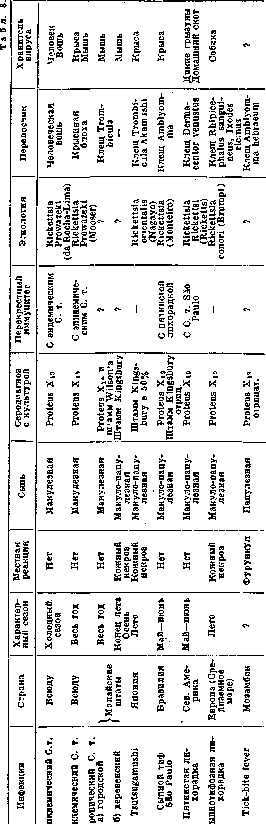
A number of authors who have attempted to understand the genetic connections of the classic epidemic typhus of the Old World with all the above-described infections similar to it, which are still insufficiently studied, have had to limit themselves to only certain hypothetical considerations. Thus, R. Kraus believes that the adaptation of the typhus virus to a new host in the form of one insect or rodent or another entails a number of changes in the biology of this virus with all the clinical, immunological, pathological-anatomical, and epidemiological consequences flowing from this. Ugo Reitano (1933) recently came to the same conclusion. The opinion of Ch. Nicolle, supported by some experiments of both the author himself and Mooser, can be contrasted with this view. While not denying the possible commonality in the distant past of the origin of various representatives of the group of typhus infections, Ch. Nicolle categorically insists on the irreversibility of this historical process of differentiation, which determines today the different and often incomparable epidemiological significance of each of the considered typhus infections. Obviously, the time for resolving the question of the genetic connections of the infections of the typhus group has not yet arrived. The task will be solved only when the cultures of the causative agents of all these infections are in the hands of researchers. At the present time, one can judge the connections between them only on the basis of some of their most important signs, presented in Table 8. As can be seen from the attached table, the greatest similarity is observed between epidemic and endemic typhus, to which is closely 283
TY
PHUS
P 284. The urban variety of tropical typhus adjoins, in the opinion of the majority of researchers, the latter. An undoubted closeness (if not identity) is established between spotted fever and Sao Paulo typhus. Many authors identify the rural variety of tropical typhus with tsutsugamushi. Thus, all the infections under consideration can at the present time be divided into the following three groups. The first group is epidemic typhus, endemic and the urban variety of tropical typhus. The second group is tsutsugamushi and the rural variety of tropical typhus. The third group is spotted fever and Sao Paulo typhus. An independent place is occupied by fièvre exanthématique and the still insufficiently characterized tick-bite fever.
V.
Barykin. Psychoses in typhus - see Infectious psychoses.
Related articles
Mentioned in
Cite this page
“Typhus (TYPHUS).” Soviet Medical Encyclopedia. English translation of Bolshaya Meditsinskaya Entsiklopediya, 1st ed. (Moscow, 1928–1936), ed. N. A. Semashko. https://sovietmedicalencyclopedia.pages.dev/article/typhus/