Alchemy
Historical document, translated for reference. It reflects medical knowledge of the 1920s–30s and is not medical advice.
Summary
This article from the 1928–1936 Soviet Great Medical Encyclopedia defines alchemy as the historical pursuit of transmuting base metals into noble ones. It traces the influence of alchemical theories on early chemistry and medicine, noting both the practical advancements in laboratory techniques and the detrimental rise of mystical, unscientific medical practices.
Encyclopedia article (1928–1936)
ALCHEMY (from the Arabic prefix "al" and the word chemistry), an Arabic designation for the word chemistry. With the development of scientific chemistry, alchemy came to mean exclusively the art of transmuting metals with the goal of obtaining "noble" metals (gold, silver) from "base" ones (iron, lead). Ideas about the transmutation of matter were based on the teachings of Aristotle and other Greek philosophers regarding the unity of matter and the origin of all things from four primary elements. Metals, according to the views of alchemists, represent complex bodies capable of losing and acquiring various properties during processing. On the other hand, sulfur and mercury played a decisive role in the constructs of the alchemists.
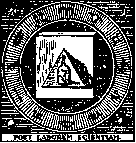
Image of the red elixir of alchemy under the patronage of the 12 signs of the zodiac.
Sulfur produced compounds with some metals known at the time, earth-like substances. Mercury absorbed all metals (amalgams), volatilizing upon heating, and alchemists believed that under the influence of the internal heat of the earth, all metals were born from the interaction of sulfur and mercury. The task of alchemy consisted in finding the secret of nature by which it transforms elements and contributes to the emergence of metals. In the language of alchemy, the mysterious substance that was supposed to facilitate transformations was called the "philosopher's stone," "stone of the sages," "great elixir," "red tincture," "red lion," "quintessence," etc. Failures and disappointments, which usually befell alchemists, forced them to turn to magic, mysticism, and cabalistic practices. Although alchemists did not achieve their main goal—the production of gold—nevertheless, their numerous and persistent searches contributed to the development of chemistry and enriched it with a whole series of new compounds, preparations, and working methods, such as, for example, distillation, sublimation, filtration, precipitation, crystallization, etc. Alchemists expanded previous views on the properties of bodies and contributed to the development of technology. The new chemical compounds obtained began to be tested for the treatment of diseases; thus, medicine was also enriched with a whole series of pharmaceutical agents. But, while having a positive significance for the development of chemistry, alchemical ideas exerted a very negative influence on the medical thought of the Middle Ages. The idea of the transmutation of matter was applied in medicine in the form of an attempt to turn the sick into the healthy and to restore youth to the old with the help of the philosopher's stone. A tincture of the philosopher's stone in alcohol constituted the so-called "elixir of life"; one of the alchemists of the 11th century, Artephius, claimed that, thanks to the elixir, he had lived to be 1,000 years old. Alchemist-physicians cloaked their work in special mystery and gave it the character of a sacred rite. On the basis of these views, all sorts of "elixirs of long life," "theriacs," and other universal remedies arose, which played a large role over the course of many centuries. Even in our time, one can still encounter all sorts of "remedies for all diseases," "powerful remedies," "tested," "miraculous," "sure-acting" nostrums of every kind, mostly of secret or disguised composition. A preparation under the name "elixir of long life" has even entered the pharmacopoeia of the Soviet edition and serves as a synonym for compound tincture of aloes.
Petrograd, 1917; "The Universe and Humanity," volume V, St. Petersburg; I. Levenshtein, Studies on the History of Pharmacy, Moscow, 1927.
Related articles
Mentioned in
Cite this page
“Alchemy.” Soviet Medical Encyclopedia. English translation of Bolshaya Meditsinskaya Entsiklopediya, 1st ed. (Moscow, 1928–1936), ed. N. A. Semashko. https://sovietmedicalencyclopedia.pages.dev/article/alchemy/