Alexander Petrov
Historical document, translated for reference. It reflects medical knowledge of the 1920s–30s and is not medical advice.
Summary
Alexander Vasilievich Petrov (1837–1885) was a professor of pathological anatomy at Kazan University and a pioneer of social medicine in Russia. He advocated for reforms in medical education, hygiene, and public health, and was a leading figure in the zemstvo movement.
Encyclopedia article (1928–1936)
PETROV ALEXANDER Vasilievich (1837–1885), professor of pathological anatomy at Kazan University, a pioneer of social medicine in Russia. Upon graduating from the university in 1859 and working for two years as a physician in the Olekminsky and Viluisky districts of the Yakutsk guberniya, he was retained at the Kazan University. After a trip abroad, where he worked with Virchow and other prominent German scientists, he was elected professor of pathological anatomy at Kazan University in 1865. His dissertation: "On the Doctrine of Uremia" was simultaneously published in Virchow's archive. At the university, P. actively worked on implementing the new university charter, in particular on revising the curricula, which he considered necessary for training a new type of rural district physician. P. was the first to raise the question of strengthening the hygienic training of the physician and assisted in the reform of hygiene teaching, insisting on the introduction of a course in medical geography and statistics, which he recommended be taught by Peskov, his student and comrade. P., a student and adherent of Chernyshevsky, fully joined the populist worldview and, in accordance with it, outlined the paths for the development of social medicine in Russia (the very term "social medicine" belongs to P.). In this regard, Petrov is essentially the ideologue and theorist of zemstvo medicine, its sanitary direction, and the head of the radical-democratic wing of zemstvo physicians. Under the direct guidance and influence of P., the first sanitary physicians began to work: Molleson, Peskov, Osipov, and a number of other students, such as Tezyakov, etc. P.'s activity as chairman of the Kazan Society of Physicians from 1870 is of particular interest. Instead of random meetings of the society with casuistical reports, Petrov put forward in his program speech the planned task of systematic study of the Kazan region in a sanitary aspect, clarifying the conditions and nature of diseases of the working and peasant population, and developing measures for the health improvement of the region. Several works were conducted by P. together with Shcherbakov; the conclusions of his reports spoke of the necessity of reorganizing the organization of medical affairs both in Kazan and in the guberniya. P. also took steps to organize Kazan Society branches in Perm, Saratov, and Samara. He also developed the program for the "Journal of Social Medicine," of which he was slated to be the responsible editor, but the Ministry of Internal Affairs did not permit the publication of this journal. A group of young, energetic public physicians organized around P., but as this group moved from examinations and descriptions to persistent practical proposals, it met with sharp opposition from the true masters of the situation—the elected members of the duma and the zemstvo administration. In the Kazan Society of Physicians, P.'s group of petty-bourgeois democrats found no support from the rest of the mass of liberal and conservative physicians, directly or indirectly connected with the merchants and landowners of Kazan. The society was pointed out on the undesirability of its direction; it was transferred to the university, where a cohesive, reactionary group of professors weakened the supporters of P., part of whom had to leave the university, for example Peskov. After this, P. worked with less activity than before, to which was added the fatal illness—tuberculosis of the lungs, which early brought him to his grave. P.'s speeches and reports in the Kazan Society and the university represent extremely important material for the study of the populist wing of zemstvo medicine, since P. was the founder and leader standing on a petty-bourgeois position—the "non-class" intelligentsia, including the medical, with its "historical mission" of guiding the people. From P.'s works, the most important are: "On the Direction and Tasks of the Kazan Society of Physicians" (Kazan University Journal, Kazan, 1873, 1874, 1880, 1881); "On the Necessity of Measures for the Protection of the Health of the Urban Population in Kazan" (together with N. Sokolovsky, ibid., 1873); "On the Necessity of a New Organization of Urban Medicine in Kazan" (ibid., 1883).
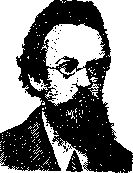
PETROV ALEXANDER Vasilievich (1837–1885), professor of pathological anatomy at Kazan University, a pioneer of social medicine in Russia. Upon graduating from the university in 1859 and working for two years as a physician in the Olekminsky and Viluisky districts of the Yakutsk guberniya, he was retained at the Kazan University. After a trip abroad, where he worked with Virchow and other prominent German scientists, he was elected professor of pathological anatomy at Kazan University in 1865. His dissertation: "On the Doctrine of Uremia" was simultaneously published in Virchow's archive. At the university, P. actively worked on implementing the new university charter, in particular on revising the curricula, which he considered necessary for training a new type of rural district physician. P. was the first to raise the question of strengthening the hygienic training of the physician and assisted in the reform of hygiene teaching, insisting on the introduction of a course in medical geography and statistics, which he recommended be taught by Peskov, his student and comrade. P., a student and adherent of Chernyshevsky, fully joined the populist worldview and, in accordance with it, outlined the paths for the development of social medicine in Russia (the very term "social medicine" belongs to P.). In this regard, Petrov is essentially the ideologue and theorist of zemstvo medicine, its sanitary direction, and the head of the radical-democratic wing of zemstvo physicians. Under the direct guidance and influence of P., the first sanitary physicians began to work: Molleson, Peskov, Osipov, and a number of other students, such as Tezyakov, etc. P.'s activity as chairman of the Kazan Society of Physicians from 1870 is of particular interest. Instead of random meetings of the society with casuistical reports, Petrov put forward in his program speech the planned task of systematic study of the Kazan region in a sanitary aspect, clarifying the conditions and nature of diseases of the working and peasant population, and developing measures for the health improvement of the region. Several works were conducted by P. together with Shcherbakov; the conclusions of his reports spoke of the necessity of reorganizing the organization of medical affairs both in Kazan and in the guberniya. P. also took steps to organize Kazan Society branches in Perm, Saratov, and Samara. He also developed the program for the "Journal of Social Medicine," of which he was slated to be the responsible editor, but the Ministry of Internal Affairs did not permit the publication of this journal. A group of young, energetic public physicians organized around P., but as this group moved from examinations and descriptions to persistent practical proposals, it met with sharp opposition from the true masters of the situation—the elected members of the duma and the zemstvo administration. In the Kazan Society of Physicians, P.'s group of petty-bourgeois democrats found no support from the rest of the mass of liberal and conservative physicians, directly or indirectly connected with the merchants and landowners of Kazan. The society was pointed out on the undesirability of its direction; it was transferred to the university, where a cohesive, reactionary group of professors weakened the supporters of P., part of whom had to leave the university, for example Peskov. After this, P. worked with less activity than before, to which was added the fatal illness—tuberculosis of the lungs, which early brought him to his grave. P.'s speeches and reports in the Kazan Society and the university represent extremely important material for the study of the populist wing of zemstvo medicine, since P. was the founder and leader standing on a petty-bourgeois position—the "non-class" intelligentsia, including the medical, with its "historical mission" of guiding the people. From P.'s works, the most important are: "On the Direction and Tasks of the Kazan Society of Physicians" (Kazan University Journal, Kazan, 1873, 1874, 1880, 1881); "On the Necessity of Measures for the Protection of the Health of the Urban Population in Kazan" (together with N. Sokolovsky, ibid., 1873); "On the Necessity of a New Organization of Urban Medicine in Kazan" (ibid., 1883).
PETROV ALEXANDER Vasilievich (1837–1885), professor of pathological anatomy at Kazan University, a pioneer of social medicine in Russia. Upon graduating from the university in 1859 and working for two years as a physician in the Olekminsky and Viluisky districts of the Yakutsk guberniya, he was retained at the Kazan University. After a trip abroad, where he worked with Virchow and other prominent German scientists, he was elected professor of pathological anatomy at Kazan University in 1865. His dissertation: "On the Doctrine of Uremia" was simultaneously published in Virchow's archive. At the university, P. actively worked on implementing the new university charter, in particular on revising the curricula, which he considered necessary for training a new type of rural district physician. P. was the first to raise the question of strengthening the hygienic training of the physician and assisted in the reform of hygiene teaching, insisting on the introduction of a course in medical geography and statistics, which he recommended be taught by Peskov, his student and comrade. P., a student and adherent of Chernyshevsky, fully joined the populist worldview and, in accordance with it, outlined the paths for the development of social medicine in Russia (the very term "social medicine" belongs to P.). In this regard, Petrov is essentially the ideologue and theorist of zemstvo medicine, its sanitary direction, and the head of the radical-democratic wing of zemstvo physicians. Under the direct guidance and influence of P., the first sanitary physicians began to work: Molleson, Peskov, Osipov, and a number of other students, such as Tezyakov, etc. P.'s activity as chairman of the Kazan Society of Physicians from 1870 is of particular interest. Instead of random meetings of the society with casuistical reports, Petrov put forward in his program speech the planned task of systematic study of the Kazan region in a sanitary aspect, clarifying the conditions and nature of diseases of the working and peasant population, and developing measures for the health improvement of the region. Several works were conducted by P. together with Shcherbakov; the conclusions of his reports spoke of the necessity of reorganizing the organization of medical affairs both in Kazan and in the guberniya. P. also took steps to organize Kazan Society branches in Perm, Saratov, and Samara. He also developed the program for the "Journal of Social Medicine," of which he was slated to be the responsible editor, but the Ministry of Internal Affairs did not permit the publication of this journal. A group of young, energetic public physicians organized around P., but as this group moved from examinations and descriptions to persistent practical proposals, it met with sharp opposition from the true masters of the situation—the elected members of the duma and the zemstvo administration. In the Kazan Society of Physicians, P.'s group of petty-bourgeois democrats found no support from the rest of the mass of liberal and conservative physicians, directly or indirectly connected with the merchants and landowners of Kazan. The society was pointed out on the undesirability of its direction; it was transferred to the university, where a cohesive, reactionary group of professors weakened the supporters of P., part of whom had to leave the university, for example Peskov. After this, P. worked with less activity than before, to which was added the fatal illness—tuberculosis of the lungs, which early brought him to his grave. P.'s speeches and reports in the Kazan Society and the university represent extremely important material for the study of the populist wing of zemstvo medicine, since P. was the founder and leader standing on a petty-bourgeois position—the "non-class" intelligentsia, including the medical, with its "historical mission" of guiding the people. From P.'s works, the most important are: "On the Direction and Tasks of the Kazan Society of Physicians" (Kazan University Journal, Kazan, 1873, 1874, 1880, 1881); "On the Necessity of Measures for the Protection of the Health of the Urban Population in Kazan" (together with N. Sokolovsky, ibid., 1873); "On the Necessity of a New Organization of Urban Medicine in Kazan" (ibid., 1883).
Related articles
Cite this page
“Alexander Petrov.” Soviet Medical Encyclopedia. English translation of Bolshaya Meditsinskaya Entsiklopediya, 1st ed. (Moscow, 1928–1936), ed. N. A. Semashko. https://sovietmedicalencyclopedia.pages.dev/article/alexander-petrov/