International Office Of Public Health
Historical document, translated for reference. It reflects medical knowledge of the 1920s–30s and is not medical advice.
Summary
The International Office of Public Health was established in 1907 following the International Sanitary Conference in Rome to coordinate international efforts against epidemic diseases. It served as a permanent body for updating sanitary conventions and sharing epidemic information, with 49 participating countries by the 1920s.
Encyclopedia article (1928–1936)
INTERNATIONAL OFFICE OF PUBLIC HEALTH (French: «Office International d'Hygiene publique»), established as a result of an agreement at the International Sanitary Conference in Rome in 1907. The creation of this Bureau was a result of the work of a series of previous sanitary conferences, convened since 1859, on the international protection of borders against the importation of particularly dangerous epidemics (plague, cholera, yellow fever). San.
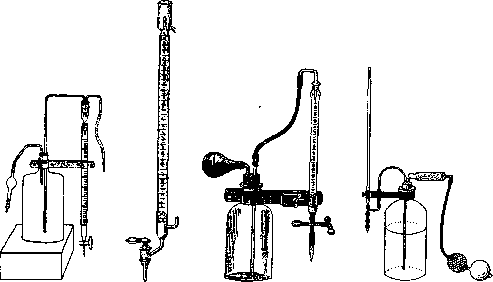
Figure 3.
Figure 4.
Figure 5.
Figure 6.
The conferences developed a number of separate regulations, which were then consolidated into a single international sanitary convention in 1903 (Paris), revised in 1912. As science developed and international relations intensified, new problems in the fight against infectious diseases emerged, so it was decided at the conference in Rome in 1907 to establish a permanent body that would carry out preparatory work for reviewing and supplementing existing international sanitary conventions and would undertake certain informational tasks so important for the rapid notification of emerging epidemics. Initially, European countries joined the Bureau of Public Health, and later other countries as well. Currently, 49 states participate in it; its headquarters was established in Paris, where the working apparatus of the Bureau is still located. The activities of the Bureau did not cease even during the imperialist war. Russia participated in the 1907 conference and simultaneously joined this organization. After the war, by a government decree of October 27, 1925 (published in Collection of Laws of the USSR No. 69 of November 2, 1926), the USSR acceded to this agreement. Unlike another international sanitary organization—the Hygiene Section of the League of Nations, which emerged much later (1919-21) and does not have representatives from the U.S.A., USSR, Turkey, and Brazil—the Bureau of Public Health includes representatives from all these countries, but Germany, Austria, and Hungary do not participate. According to the Bureau's statute, ratified by the respective decrees of the governments of the countries that now belong to this international organization, which thus has an entirely official character, the Bureau consists of a working apparatus, headed by a director, and a governing body in the form of a "Permanent Committee" attached to the Bureau. This committee includes one representative from each country (by authorization of the respective government). The committee meets twice a year for sessions (in Paris), where both reporting materials and various scientific-practical questions of international hygiene and legislation are considered. Russia's representative in the Committee from its inception until the revolution was Dr. N. G. Freiberg, and since 1925, the USSR's representative has been Prof. A. N. Sisin. Governments make annual monetary contributions to the Bureau's maintenance. The Bureau collects all materials related to international sanitary legislation, has a large library, and publishes a monthly journal («Office International d'Hygiene publique»), which contains both extensive material on the sanitary legislation of all countries (this material is printed in full and textually) and an extensive bibliography on all questions of public sanitation and the fight against epidemic, social, and generally mass diseases. After the war, the Bureau prepared a revision of the 1912 sanitary convention and convened a new sanitary conference in Paris in 1926, which significantly expanded and modified the 1912 convention (see Conventions). At the 1926 conference, representatives from 77 states participated, including a number of colonies. The USSR was represented by a delegation of 8 people, headed by the People's Commissar of Health of the RSFSR, N. A. Semashko. The conference took into account a number of new epidemiological factors that had emerged after the war, as well as scientific advances, and subjected the 1912 convention to significant revision, introducing, in addition to cholera, plague, and yellow fever, also smallpox and typhus as diseases also subject to international sanitary measures. The USSR delegation at the conference made a declarative statement on the need for closer work in the fight against epidemics, based on scientific principles and with the least possible restrictions for the population and trade. The delegation actively supported such measures, adopted for the first time in the convention, as mandatory vaccinations against cholera and smallpox, pointing to the extensive experience of Soviet health authorities in this regard in recent years. The delegation firmly opposed the special sanitary regime for countries of the Near and Far East that existed under previous conventions. In the 1926 convention, such division for different countries was no longer introduced. This new convention, now known as the "Paris Convention of 1926," to come into force must be ratified by ten countries, and from 1928, it will probably gradually replace the 1912 convention. It imposes new functions on the Bureau of Public Health, mainly in terms of the technique of receiving and transmitting from various countries notifications of cases of infectious diseases subject to international measures of control. In connection with this, the Bureau of Public Health entered into an agreement with the Hygiene Section of the League of Nations, using its printed bulletins and its regional sanitary office in Singapore for these informational purposes (see below). The Bureau of Public Health also entered into the same direct relationship with other international sanitary organizations of this type, such as the Pan American Sanitary Bureau (see below). The Bureau of Public Health also had organizational ties with those sanitary organs of an international character that had been created at previous sanitary conferences to serve and provide sanitary control over particularly dangerous sea routes. Such an organization was the Constantinople Sanitary Council, which, on the basis of a special statute and under international supervision, carried out sanitary supervision over ships passing through the Dardanelles. Now, after the 1914-18 war, by the Treaty of Lausanne, the functions of this council have been transferred directly to Turkey. Another organ of similar importance is the Egyptian Sanitary Council, which still exists today for supervision of the Suez Canal. At present, this sanitary council in Egypt is also given the functions of a regional Bureau for sanitary information of neighboring countries. The former sanitary council in Tangier has now been abolished. The director of the Bureau of Public Health since its creation was Dr. de Cazotte, who died in 1926; since 1926, the director has been Dr. Pottevin (died in 1928). The Permanent Committee includes leading epidemiologists and hygienists from the respective countries. The chairman of the committee is now the Belgian delegate, Dr. Velghe. The stenographic reports of the committee's annual sessions are printed twice a year. The permanent address of the Bureau is 195, Boulevard Saint Germain, Paris. Pan American Sanitary Bureau—a sanitary organ of an international character, now uniting all states of America (North, Central, and South). In 1902-12, a series of conferences of American states on sanitary border protection was held in America. In 1907, a sanitary bureau was created in Washington in connection with this, which after the war in 1920 was reorganized into the Pan American Sanitary Bureau. At the Pan American Sanitary Conference in Havana in 1925, a special sanitary code was adopted, ratified by American states for mutual application. In 1927, the Pan American Sanitary Bureau entered into a contractual agreement with the Bureau of Public Health in Paris. Sanitary Bureau in Singapore (Singapore Sanitary Bureau) was created as a special type of international sanitary organization to serve, for the purpose of sanitary information about infectious diseases, the ports of the Pacific Ocean and adjacent countries. This organization is under the supervision of the Hygiene Section of the League of Nations, has existed since 1925, and publishes a weekly bulletin; its notifications of cases of infectious diseases provided for by international convention are transmitted by radio to Geneva and published in the Hygiene Section's weekly journal («Releve hebdomadaire des rapports sur la frequence de certaines maladies epidemiques, regus par la Section d'Hygiene de la Societe des Nations»). Since 1927, it has been in contractual relations with the Bureau of Public Health. The Singapore Sanitary Bureau includes Japan, China, British, French, and Dutch colonies, Siam, and other countries of the Pacific coast. The USSR is not a member of this organization.
Related articles
Cite this page
“International Office Of Public Health.” Soviet Medical Encyclopedia. English translation of Bolshaya Meditsinskaya Entsiklopediya, 1st ed. (Moscow, 1928–1936), ed. N. A. Semashko. https://sovietmedicalencyclopedia.pages.dev/article/international-office-of-public-health/