SEMASHKO
Historical document, translated for reference. It reflects medical knowledge of the 1920s–30s and is not medical advice.
Summary
Semashko was a revolutionary, physician, and the first People's Commissar for Health in Soviet Russia, serving as the founder and leader of Soviet healthcare for 12 years. He played a pivotal role in establishing the Soviet medical system, creating new organizational forms, and developing public health initiatives.
Encyclopedia article (1928–1936)
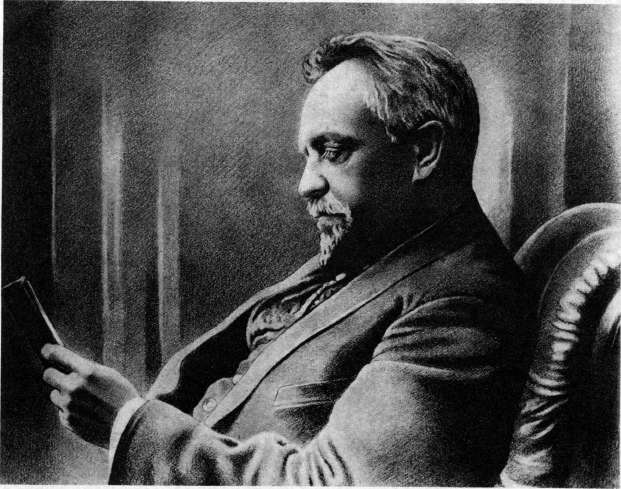
SEMASHKO Nikolai Aleksandrovich (born in 1874 in Oryol Province), revolutionary, old Bolshevik [member of the VKP(b) since 1893], physician, first People's Commissar for Health, founder of Soviet medicine. After graduating from the Yelets Gymnasium, from which he was nearly expelled for organizing a gymnasium circle, he entered Moscow University, where he immediately connected with Marxist circles working among workers. In 1895, S. was arrested for the first time and after 3 months of imprisonment was exiled to his homeland under police surveillance. There he continued propaganda work. After the expiration of his exile, he entered Kazan University. In 1899-1900, he organized Social Democratic circles in Kazan together with A. I. Rykov. In 1901, for organizing a student demonstration, he was arrested again, and then expelled from Kazan. He managed to complete the university in 1901, taking exams semi-legally. After graduating from the university, S., without interrupting revolutionary work, wandered for a long time, as governors did not approve him for zemstvo service. In 1904, he settled in Nizhny Novgorod, where he became one of the leaders of the local Social Democratic organization (Bolsheviks). At the end of 1905, Semashko again ended up in prison. Released after 9 months of imprisonment on bail, he emigrated abroad. In Geneva, he met Plekhanov, his mother's brother, but despite S.'s great reverence for Plekhanov, political disagreements separated them. After a successful attempt by Swiss authorities to extradite him to the tsarist government, he moved to Paris, where he became close to Lenin and secretary of the foreign bureau of the Central Committee of the Bolshevik Party. Since then, his close connection with V. I. Lenin did not break. S. participated in the 1907 Stuttgart Congress, in 1912 in the Prague Conference. In 1913 he moved to the Balkans, where he was interned at the beginning of the war. Only in September 1917, after great difficulties, he managed to return to Russia. Here S. immediately went into party work, was elected chairman of the Pyatnitsky District Administration, and after the October Revolution was appointed head of the Medical-sanitary Department of the Moscow Soviet. In 1918, he developed a bill on the organization of the People's Commissariat of Health and was appointed the first People's Commissar of Health. Since then, for 12 years he headed the NKZdrav. S. is the organizer, leader, and ideologue of Soviet health care during this period of its formation and establishment. At the I Congress of medical-sanitary departments, he delivered a report on the "Foundations of Soviet Medicine and Self-Activity." In the first, most difficult period of epidemics and famine, S. launched enormous work to combat epidemics, organized the self-activity of the masses and achieved a gradual reduction in infections. Having received a heavy legacy in the form of departmental medical departments (Ministry of Internal Affairs, Ministry of National Education, Ministry of Military and Naval Affairs, etc.), S. brought together the building of a unified Soviet medicine, creating completely new organizational forms in place of departmental medical-sanitary organizations; created new, Soviet types of health care - protection of motherhood and infancy, protection of children's health, struggle with social diseases. Under the direct leadership of S., a powerful network of scientific institutes was created. Much attention was paid by Semashko to the creation of resort affairs for the first time as a state enterprise. The close connection with the working masses, wide circles of medical specialists, detailed knowledge of the periphery, and extreme simplicity and accessibility made the name S. extremely popular both among the broad masses of the USSR and among European medical societies, where the "Soviet-German Medical Week" organized on the initiative and with the participation of S. in 1927 greatly contributed to our cultural rapprochement with Germany at that stage. A brilliant popularizer and exceptional propagandist, S. systematically spoke at workers' meetings, in the pages of newspapers; in the first years of Soviet power, he wrote brochures "Foundations of Soviet Medicine", "Tuberculosis - a proletarian disease", "Foundations of Social Hygiene" and a number of others. During these years, S. was chairman of the Supreme Council of Physical Culture, representative of the USSR at the international sanitary conference, reporter at All-Russian Congresses of Soviets, etc. The first department of social hygiene in the USSR, created at 1st Moscow State University, was headed by S. His work at the department has continued uninterrupted to this day. Upon leaving the post of People's Commissar of Health in 1930, he was sent for responsible work to the Presidium of the All-Russian Central Executive Committee. Currently, S. is chairman of the children's commission of the All-Russian Central Executive Committee, member of the Presidium of the All-Russian Central Executive Committee, etc. In the order of public work, S. is a member of the Presidium of Ossoaviakhim, chairman of the Society for the Assistance to the Literary Museum at the Lenin Library, member of the Central Council and Bureau of VARNITSO and participant in other cultural initiatives. Great work was done by Semashko in the struggle against child homelessness, in the "For a Healthy Way of Life" Society (formerly the "Society for the Struggle Against Alcoholism"). A large number of literary works belong to his pen. Semashko is the creator and editor-in-chief of the Great Medical Encyclopedia.
"
"
Related articles
Mentioned in
Cite this page
“SEMASHKO.” Soviet Medical Encyclopedia. English translation of Bolshaya Meditsinskaya Entsiklopediya, 1st ed. (Moscow, 1928–1936), ed. N. A. Semashko. https://sovietmedicalencyclopedia.pages.dev/article/semashko/