Sciatica
Historical document, translated for reference. It reflects medical knowledge of the 1920s–30s and is not medical advice.
Summary
This article from the 1928–1936 Soviet Great Medical Encyclopedia defines sciatica as a clinical syndrome characterized by pain along the sciatic nerve. It discusses the etiology, including spinal diseases and infections, and describes the clinical presentation, including sensory disturbances and pain points.
Encyclopedia article (1928–1936)
SCIATICA (ischias, ischialgia, neuralgia n. ischiadici, neuritis n. ischiadici), neuralgia of the sciatic nerve, a definite clinical symptom complex, the essence of which boils down mainly to pain along the course of the sciatic nerve. The first detailed description of this syndrome belongs to the Italian physician Cotugno (1764), after whom the disease also bears the name malum Cotunnii. Disease of the sciatic nerve belongs to the number of the most frequent nervous diseases, as evidenced by the following figures: according to data from the Babukhin Hospital in Moscow, it constitutes 12% of all nervous diseases and 62.5% of lesions of the peripheral nervous system (Shamburov); among outpatients, the percentage of 'sciatica patients' is even higher (according to Tarasevich, 30%); in the inpatient expert department of the Semashko Hospital in Moscow, sciatica patients constitute 20% of all patients. Sciatica is usually encountered in mature age (30–40 years), but it does not spare the elderly; it is very rarely encountered in children (a case by Bruns—a 5-year-old boy). Men undoubtedly fall ill more often than women (5:1 according to Bernhardt; 2.5:1 according to Shamburov). Heavy physical labor contributes to the development of the disease (70% of all cases of sciatica according to Tarasevich); coal miners, carters, loaders, foundry workers, and peasants are especially susceptible to it. According to observations by Kozhevnikov (Moscow), individuals working in dampness or water (tanners, excavators, plumbers) fall ill especially often. In cold, damp weather, the number of visits by sciatica patients is especially high, but even in hot summer weather, one has to see quite a few of them. In cold countries, sciatica is apparently more widespread than in warm ones. In view of the fact that the prognosis for life in sciatica is favorable, the pathological anatomy of this widespread disease has been studied very little. The macroscopic state of the nerve is better known due to the fact that surgical intervention is among the therapeutic measures for sciatica. Thanks to this, a number of authors have managed to note the following changes in the nerve: redness, edema, and thickening of the nerve trunk, as well as proliferation of connective tissue, adhesions between nerve bundles, and between the nerve and the sheaths. On autopsy material, thickening of the nerve trunk and its adhesions with surrounding tissues, dilation of vessels, and thickening of their walls were also found. Sicard microscopically found a gelatinous mass in the nerve, dilation of the peri- and endoneural spaces, and dilation of vessels. Histological changes in the nerve elements themselves have not been noted by anyone to this day. There are apparently no pathological-anatomical studies of radicular sciatica. Based on clinical data and theoretical reasoning, some authors are inclined to localize the pathological process in radicular sciatica to the intrameningeal part of the roots (Dejerine, Dobrokhotov), while others, led by Sicard, to the extrameningeal part. Shamburov also joins this opinion, mainly on the basis of examination of the cerebrospinal fluid (in the case of intrameningeal localization, pleocytosis would occur in the fluid, but in reality, in sciatica, it is almost never encountered). - In the clinical picture of sciatica, a disorder in the sensory sphere comes to the fore, mainly in the form of irritation of the sensory conductors of the nerve—spontaneous pain and pain upon pressure on the nerve and upon its stretching; motor functions suffer relatively little in this disease. This circumstance gave Stoffel reason to believe that in sciatica, only sensory fibers suffer, which run isolated from motor fibers throughout the entire length of the nerve. This point of view can hardly be considered correct in relation to all cases, since often in sciatica there are clear signs of impairment of motor and trophic functions of the nerve (cramps, fascicular twitching, extinction of reflexes, atrophy, etc.), although along with this, a purely sensory form is also encountered (bearing the name neuralgia of the sciatic nerve or idiopathic neuralgia). Idiopathic neuralgia, in the opinion of Alexander, Lapinsky, and others, is a functional disease. This point of view can hardly be considered correct. It is much more correct to consider neuralgia as a mild degree of neuritis (Darkshevich) and to consider sciatica as neuritis of the sciatic nerve. The etiology of sciatica is different and quite diverse; sciatica can develop acutely and chronically, and can be primary and secondary. Secondary sciatica is in most cases caused by disease of the spine. These diseases can be congenital and acquired. Among congenital anomalies of the spine, splitting of the lumbar or sacral vertebrae, sacralization, and lumbalization are the most frequent causes of secondary ischialgias. Secondary ischialgias are caused not only by congenital defects of the spine but also by its acquired diseases: infectious and tuberculous spondylitis, spondyloarthritis, deforming arthritis, spondylosis, spondylolisthesis, neoplasms of the spine, and its traumatic injuries can also be a source of the development of ischialgia. Primary sciatica can be caused by acute and chronic infections, intoxications, both endogenous and acute and chronic exogenous, cooling, injuries, compression, and other causes. Among acute infections, the most frequent cause of sciatica is typhoid and typhus, especially the latter, as well as influenza, malaria, septic processes, etc. Among chronic infections, one must mention tuberculosis, syphilis, rheumatism, etc. Rheumatic infection is the most frequent cause of diseases of the sciatic nerve and is sometimes the primary cause, in other cases—secondary, causing rheumatic changes in the articular surfaces of the vertebrae, which in turn lead to compression of the roots (Sicard). Among endogenous intoxications, the most frequent cause of sciatica is diabetes, uric acid diathesis, nephritis, puerperal intoxication, and so on. Among exogenous intoxications that can cause diseases of the sciatic nerve in acute poisoning, one must point to arsenic, illuminating gas, and carbon monoxide, and among chronic ones—poisoning with alcohol, lead, and other heavy metals. Acute injuries—contusion, wound, tear, hemorrhage into the nerve or into surrounding tissues can also be a cause of sciatica. Repeated, multiple injuries to the nerve, chronic injuries associated with heavy physical labor, especially in a cold or damp room, are a frequent cause of sciatica. Various pathological processes, especially neoplasms in the vertebrae, in the cauda equina, in the small pelvis, or along the course of the sciatic nerve, as well as varicose veins of the nerve trunk itself, are often a cause of secondary sciatica. Cooling of the nerve can undoubtedly be an etiological factor in the development of sciatica: sitting on cold stone or on ice, on damp ground, staying in cold water are sometimes the sole cause of sciatica; in most cases, however, this cooling provokes the development of the disease in predisposed subjects (chronic infections, diseases of the spine, etc.). Unsuccessfully performed injections into the gluteal region can be the cause of direct damage to the nerve (mercury, bioquinol). In the symptomatology of sciatica, disorders of sensitivity come to the fore, mainly subjective, in the form of pain of varying intensity and paresthesia. The distribution of pain is different depending on the localization of the pathological process. Sicard distinguishes three forms of sciatica: upper—radicular, middle—in case of lesion of the nerve in the gluteal region at its exit from the small pelvis and along the course of the thigh, lower—in case of localization of the process in the region of the lower leg; Raymond distinguishes trunk sciatica, plexitis, funiculitis, and radiculitis; Shamburov—radicular and trunk sciatica. Kozhevnikov considers it most correct to distinguish the following three forms: radicular sciatica, lumbosacral plexitis, and trunk sciatica. Pain is an indispensable companion of both primary and secondary sciatica. The development of pain is gradual: at first, it is inconstant, not particularly intense, then it becomes more and more intense, sometimes unbearable, and constant; this pain deprives patients of the ability not only to walk but sometimes even to sit. The character of the pain is different: sometimes aching, dull pain, sometimes sharp, tearing, cutting, boring, and even shooting. In acute cases and in injuries (contusion, compression, tear, or stretching of the nerve), pain occurs suddenly. Pain is a sign of nerve irritation, and this irritation can be established objectively by applying pressure to the nerve; tenderness upon pressure is especially intense in those places where, according to anatomical conditions, it is easiest to press the nerve against the bone. In various forms, the most painful points are localized in different places. In the radicular form, pressure in the lumbar region, to the side of the spinous processes of the vertebrae, is especially painful; in the trunk form, the entire nerve is usually painful, but most of all at the place of its exit from the small pelvis, then in the middle of the thigh and calf, and in the popliteal fossa. Upon pressure on the nerve, the patient usually experiences sharp pain at the site of pressure, sometimes radiating down the leg to the heel. Besides tenderness of the nerve, one can often note tenderness of the gluteal muscles, muscles of the thigh and lower leg, and the Achilles tendon. Sometimes the skin is also painful. Pain points in some cases of sciatica may be absent.
The result of the pain is a number of symptoms, among which the Lasègue sign is of particularly important diagnostic value: if one lifts the patient's leg, straightened at the knee, the patient begins to experience pain in the lumbar and gluteal regions and in the popliteal fossa at one level or another. The appearance of pain is caused by the tension of the nerve, and it disappears if, upon its appearance, the leg is bent at the knee joint. The Lasègue sign, according to Reichmann, is encountered in 91.5% of all cases of sciatica. In the crossed Lasègue sign, pain appears when lifting not the affected, but the healthy leg. A number of other symptoms are related to the Lasègue sign, such as: the Bonnet sign—the appearance of pain when abducting the thigh with the leg bent at the hip and knee joints; Sicard's sign—the appearance of pain during strong plantar flexion of the foot; Neri and Lindner's sign—forced passive bending of the head toward the chest causes pain in the lower back and sometimes in the leg; the Feierstein sign, Wassermann sign, etc.; Gara's signs are encountered in radicular sciatica. Due to the fact that stretching the nerve is accompanied by pain, sciatica patients usually lie on their healthy side, the affected leg is bent at the hip and knee joints, and the foot is extended; this position achieves maximum relaxation of the nerve. In rare cases, when the pain is particularly severe, patients can only either squat or stand on all fours. Often with sciatica, one has to note changes in the spine in the form of scoliosis with a convexity either toward the affected or the healthy side. The first type is called homologous (Fig. 1), the second—heterologous scoliosis (Fig. 2). Homologous scoliosis is encountered in radicular sciatica and tends to widen the articular foramina of the vertebrae during joint lesions and thereby reduce pressure on the nerve roots. In heterologous scoliosis, the nerve and plexus are relaxed; this form of scoliosis is encountered in trunk sciatica. Besides pain, in sciatica there are sometimes paresthesias in the form of a feeling of cold, numbness, crawling sensations, etc. With stronger phenomena of sciatic nerve neuritis, objective sensory disturbances are also encountered, sometimes in the form of hyperesthesia—a phenomenon of irritation, in other cases in the form of hypo- or anesthesia—a phenomenon of deficit. In these cases, the character of the anesthesia is different, depending on the form of sciatica—it has either a radicular or a peripheral type. In neuralgic forms, sensitivity is objectively always normal. In the motor sphere, as in the sensory, there can be both phenomena of irritation—involuntary movements, and depression, in the form of weakening of muscle strength and mild pareses, predominantly in the distal sections. Of the disorders
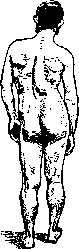

of reflexes, one must first of all point to the frequently encountered weakening of the Achilles reflex and its rapid fatigability or even, in some cases, the complete extinction of the reflex (15%); in rare cases, it is increased. The knee reflex usually does not suffer, although sometimes it is absent (plexitis) or is increased (Darkevich). Skin reflexes are usually normal. The Villaret sign should be attributed to the disturbance of reflexes. Muscle tone is often lowered. Of the trophic disorders, one must point to atrophy of the muscles (up to 40% of all cases of sciatica) of the buttock, thigh, lower leg, and small muscles of the foot (Figs. 1 and 2) to one degree or another, sometimes with a decrease in electrical excitability. Of other disorders, hair loss or abundant hair growth, perforating ulcer of the foot, herpes zoster along the course of the nerve, etc., are observed. Vasomotors often suffer as well, which is expressed most often in the cooling of the limb, in its pallor, and sometimes in cyanosis of the foot. Regarding the cerebrospinal fluid, various authors have noted an increase in its pressure, an increase in the amount of albumin (up to 0.75%) and globulins. Lymphocytosis has not been noted by anyone. In the presence of lymphocytosis, one must always think about the specific nature of the disease. Sciatica is usually unilateral: according to Shamburov's data, left-sided localization is more common, while according to Kozhevnikov's data, on the contrary—right-sided. Bilateral sciatica, according to Kozhevnikov's observations, constitutes 20% of the total number; in the majority of cases, it is secondary. Differential diagnosis. Probably no diagnosis is made as often as the diagnosis of sciatica, but this diagnosis is far from always correct. One must firmly remember that not every pain in the leg is sciatica; therefore, one must be extremely cautious in making a diagnosis and, before doing so, one must comprehensively examine the patient. With serious suspicions of sciatica, one must take an X-ray of the lumbosacral part of the spine, and if necessary, of the hip joint as well, examine the feet (flat feet); analyses of urine, blood according to Wassermann, and cerebrospinal fluid are necessary, as well as an examination of the pelvic organs—in women, the uterus and its appendages, in men, the prostate gland, the state of the rectum, etc. Only through a comprehensive examination can one establish the presence of sciatica and clarify whether it is primary or secondary, which is extremely important for a correct prognosis and treatment. If all examinations yield a negative result, then one can think about primary idiopathic sciatica, but to make a final conclusion, one must first of all exclude myalgias, especially lumbago. Lumbago often entails secondary sciatica, and with sciatica, the pain in the lower back is often very intense (lumbo-ischialgia), so that sometimes there is no sharp boundary between these diseases. It is very important to pay special attention to the state of the iliopsoas muscle, which, due to its anatomical position, can easily involve both the roots, the lumbosacral plexus, and the sciatic nerve itself in suffering during a pathological process within it. The differential diagnosis of these two diseases is significantly facilitated by the ingenious technique proposed by Minor—the transition of the patient from a lying position on the back to a standing one. During this test, patients make a number of unnecessary movements and assume unnecessary postures: the sciatica patient, striving to avoid tension of the nerve, and the patient with lumbago—with the goal of
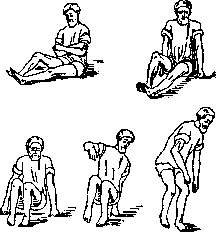
Figure 3. The patient standing up with sciatica.
sparing the lumbar muscles (Figs. 3 and 4). The differential diagnosis with tabes, coxitis, intermittent claudication, and Roth's disease usually does not present difficulties. The situation is much more difficult with aggravation and simulation, especially in the neuralgic form of the disease. In cases of simulation, the Lasègue sign and Minor's technique provide valuable service. Development, course, and prognosis. The development of sciatica can be acute and chronic, depending on the etiology. Acutely developed sciatica often turns into chronic. The course of sciatica and the prognosis for it depend mainly on its etiology. The duration of primary sciatica can be from several days to many months. Secondary sciatica can drag on for years, often
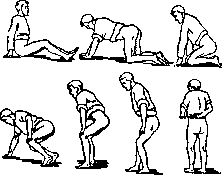
Figure 4. The patient standing up from the floor with lumbago.
[to] recur if the primary cause cannot be eliminated. In neuralgic cases, the prognosis is better than in neuritic ones. The earlier treatment is started, the greater the chances of success. There is no fatal outcome directly from sciatica. Prevention. The diversity of etiological factors makes prevention extremely diverse as well. In relation to infections, both acute and chronic, standard sanitary-preventive measures must be applied. The same must be done in relation to occupational intoxications. Cultural and sanitary-educational work must be conducted against alcohol and other narcotics. The mechanization of industry and agriculture, which significantly facilitates the physical labor of workers, the improvement of housing conditions, etc., will also play a not insignificant role in the prevention of sciatica. In cases of occupational recurrent sciatica, patients sometimes have to change their profession. Treatment. There is not a single nervous disease for which the arsenal of proposed therapeutic measures is greater than for sciatica. This is explained mainly by the diversity and multiplicity of etiological factors and the persistence of the disease. In secondary sciatica, as well as in primary infectious and toxic diseases, treatment must be directed toward the elimination of the primary source. But even here, due to severe pain, it is usually impossible to limit oneself to general measures alone, and one must, in addition, resort to a whole series of various therapeutic procedures. In cases of severe pain, the patient must first of all be put to bed. Treatment is divided into medicinal, physiotherapeutic, including spa treatment, and sometimes surgical treatment. Treatment is applied regardless of whether the sciatica is primary or secondary, acute, subacute, or chronic. Medicinal treatment is divided into internal agents, external agents, and injections. Various internal agents are used depending on the etiology: for malaria—quinine, for gout—atophan and an appropriate diet, for syphilis—salvarsan, bioquinol, etc. In rheumatic and idiopathic cases, as well as in some secondary ischialgias, aspirin and other salicylates (1.5-2.0 per day) give a particularly good effect. Sometimes strychnine in the form of injections acts beneficially. In infectious sciatica, intravenous infusions of urotropine (5 cm3 40%) are indicated; in rheumatic [sciatica]—infusions of sodium salicylate (5-10 cm3 20%). In cases of unbearable pain, one has to resort to injections of morphine, pantopon, and other narcotics. Some authors widely use protein-vaccine therapy, using vaccineurin or other vaccines (streptococcal, staphylococcal, etc.). In more persistent cases, perineural injections of physiological saline in cases of truncal sciatica (up to 100 cm3 at one time) and epidural injections through the lower opening of the sacral canal in cases of radicular sciatica sometimes give a good result. Usually, cocaine, novocaine, or other derivatives of cocaine are added to the physiological saline. Among external agents, cantharides plasters (size 6 x 12 cm) act well; they are applied alternately with intervals of 4-5 days to the most painful points: to the roots, to the place where the nerve exits the small pelvis, to the middle of the thigh, above the popliteal fossa, and to the calf (the plaster should be kept on for 12-18 hours). Sometimes cauterization with a Paquelin [cautery] in the region of the roots and along the course of the nerve acts beneficially. Among liniments, the following mixture gives good results: Chloroformii, Ol. Hyoscyami aa 25.0, Mentholi 2.5. Among physiotherapeutic measures, heat has a particularly good effect, especially in acute cases: heating pads, blue light, a spotlight, Sol-lux, spectrosol, etc. Sometimes mountain sun helps, in other cases—X-ray therapy. Electrization in the form of galvanization and ionization (iodine, sodium salicylate, lithium, quinine, etc., depending on the etiology), two-chamber baths, and diathermy often brings great benefit, especially in subacute and chronic cases. In acute cases with severe pain and skin hyperesthesia, electrotherapy is contraindicated. When the pain subsides, it is sometimes useful to prescribe massage (especially if atrophy is present) and bloodless repeated nerve stretching (lifting the patient's extended leg by the heel while simultaneously pressing with the other hand on the knee joint from above); with this technique, it is possible to break adhesions of the nerves with surrounding tissues; among hydrotherapeutic procedures, hot baths and steam showers along the course of the nerve from the roots to the heel are useful. In particularly persistent cases, one sometimes has to resort to surgical intervention: bloody nerve stretching, neurolysis, injections into the nerve, etc. In persistent chronic cases, it is advisable to send patients to health resorts: sunny and warm sea baths in the south (Odessa, Yevpatoriya), limans (Odessa, Maynaki, Saki, as well as Slavyansk, Staraya Russa), mud [baths] (Odessa, Saki, Yevpatoriya, Maynaki), sulfur springs (Matsesta, Pyatigorsk, Sernovodsk). In cases of ischialgia with a specific etiology, patients are sent to specific health resorts: for gout—to Yessentuki, where, in parallel with the treatment of the underlying condition, mud treatment is conducted; for syphilis—to Pyatigorsk (treatment with mud and sulfur baths).
Related articles
Mentioned in
Cite this page
“Sciatica.” Soviet Medical Encyclopedia. English translation of Bolshaya Meditsinskaya Entsiklopediya, 1st ed. (Moscow, 1928–1936), ed. N. A. Semashko. https://sovietmedicalencyclopedia.pages.dev/article/sciatica/