Tarasevich
Historical document, translated for reference. It reflects medical knowledge of the 1920s–30s and is not medical advice.
Summary
Lev Aleksandrovich Tarasevich (1868-1927) was a prominent microbiologist, public health organizer, and social activist who made significant contributions to immunology and epidemiology in Russia.
Encyclopedia article (1928–1936)
Tarasevich Lev Aleksandrovich (1868-1927), outstanding microbiologist, organizer of healthcare and public figure. After graduating in 1891 from the natural sciences division of the physics-mathematics faculty in Odessa, Tarasevich after 1½ years in the Military Medical Academy moves to Paris, where in 1897 he completes his medical education; his dissertation "Contagiosite syphilitique tardive. Contagiosite tertiaire" (P., 1897) has not lost its significance even to the present day. Having received in 1899 the title of physician in Russia, T. begins to work in Kiev at the department of general pathology (Prof. Podyvysotsky), and in 1900 moves again to Paris and remains there almost 3 years. In Paris he works at the Pasteur Institute in Metchnikoff's laboratory; the result of this work is his doctoral dissertation on hemolysins, representing a major scientific contribution to immunology.
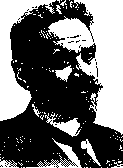
In 1902, upon returning from Paris, T. settles in Odessa, where he works as a prosector at the department of general pathology, while also reading a privat-docent course. In Odessa, T.'s extensive public activity unfolds; during the 1905 revolution he unites the left elements of the faculty around himself, plays a prominent role in the events of this turbulent time, and appears as a candidate for the State Duma. His role as a permanent participant and chairman of the Pirogov congresses was particularly great. These congresses undoubtedly had revolutionary significance, and every speech by T. at them became an event. Such an event was, for example, T.'s speech on famine, which had great influence at that time. The reaction forced T. to leave Odessa (1907); he moves to Moscow; overcoming the resistance of reactionaries with difficulty, he becomes a privat-docent at Moscow University (1907-1911), and from 1908 to 1924 he heads the department of medical microbiology at the Moscow Higher Women's Courses (later the Second Moscow University). As a teacher, T. was distinguished by exceptional merits. His lectures were brilliant in form and rich in content; he read a course on immunology; he organized practical exercises, deeply original in plan and execution. During the imperialist war, T. appears in a new role - organizer of healthcare. He clearly sees that to prevent the emergence of epidemics of typhus and cholera it is necessary to vaccinate the million-strong armies against these infections, and he uses all his energy, all his authority to overcome bureaucratic conservatism and achieve widespread vaccination of the army; he achieved this goal.
The October Revolution begins a new stage in the life and activity of T.; after some hesitation, with his usual sincerity, he sides with the proletarian revolution; he works in the People's Commissariat of Health from its first days; in August 1918 he founds a control station, soon transformed into the Institute of Serum and Vaccine Control (now the L. A. Tarasevich Control Institute), remaining director of this institute until his death; he founds and becomes director of the State Scientific Institute of Public Health and chairman of the Scientific Medical Council of the People's Commissariat of Health. In these years, T. unites microbiologists and epidemiologists around him; he takes the closest part in the organization and is the permanent chairman of all-Russian (and later all-union) congresses of bacteriologists, epidemiologists, and sanitary physicians, heads vaccine-serum conferences, founds and edits the "Journal of Microbiology, Pathology and Infectious Diseases", and chairs the Microbiological Society. In his scientific work, T.'s dissertation on hemolysins occupies first place; in it he concludes that antibodies come from organs rich in macrophages - the spleen, lymph glands, omentum. Thus being a forerunner of the modern doctrine of the role of the reticulo-endothelial system in immunity, T. in this same book anticipates the doctrine of anaphylaxis. In addition to theoretical questions of immunity, he worked on vaccination against intestinal infections, on mixed vaccination, on BCG vaccination, etc. A special place is occupied by his works on epidemiology; together with Metchnikoff and Burnet he made an expedition to the Kalmyk steppes, and the result was a valuable study on the epidemiology of tuberculosis among the Kalmyks. To the last years of Tarasevich's life belongs his major work on epidemics in Russia since 1914. As an academic figure, T. did not limit himself to teaching work; to his pen belongs the well-known, repeatedly reprinted guide to general pathology; at his initiative, under his editorship and with his participation as author, the first major collective guide to medical microbiology in the Russian language was created, which has not lost its significance to this day. T. went through the school of the Pasteur Institute, making him a "Pasteurian" in the best sense of the word; a close friendship connected him with the leading representatives of French science - Rou, Calmette, Duclaux, Martin, Besredka, Weinberg, etc. The ideas of Pasteur and Rou became T.'s ideas, and with tireless energy he fought for their implementation. As a person, T. was distinguished by rare spiritual beauty; he was respected and loved by all who knew him. The most important works of L. A. Tarasevich: "To the doctrine of hemolysins" (Odessa, 1902); "On starvation" (speech at the X Pirogov Congress, Kiev, 1907); "Course of general pathology" (4th ed., M.-P., 1923); "Medical Microbiology", with a preface by I. I. Metchnikoff, edited by L. A. Tarasevich (v. I-III, P.-Kiev, 1912-15); chapters on the phagocytic properties of leukocytes, on immunity, on the toxicity of blood, on the bactericidal and cytotoxic properties of serum in the classic French guide to hematology "Traite du sang", sous la dir. de A. Gilbert et M. Weinberg (v. I-II, P., 1913-21); "Les epidemies en Russie depuis 1914" (report to the Hygiene Committee of the League of Nations, Geneva, 1922).
Related articles
Mentioned in
Cite this page
“Tarasevich.” Soviet Medical Encyclopedia. English translation of Bolshaya Meditsinskaya Entsiklopediya, 1st ed. (Moscow, 1928–1936), ed. N. A. Semashko. https://sovietmedicalencyclopedia.pages.dev/article/tarasevich/