Pasteur
Historical document, translated for reference. It reflects medical knowledge of the 1920s–30s and is not medical advice.
Summary
Louis Pasteur (1822-1895) was a great scientist, founder of modern microbiology and immunobiology. This article details his education, academic career, major achievements, and the founding of the Pasteur Institute.
Encyclopedia article (1928–1936)
PASTEUR Louis (Louis Pasteur, 1822-1895), great scientist, founder of modern microbiology and immunobiology; born in the town of Dole in the family of a tanner; received higher education at the Higher Normal School in Paris, where he was then enrolled as a laboratory assistant at the chemistry department of Balar. To this period belong two dissertations by P.: on arsenic compounds of potassium, sodium and ammonium, and research on phenomena related to the rotational ability of liquids. The Revolution of 1848 temporarily interrupted P.'s laboratory work, who joined the National Guard. His attitude toward the revolution is expressed in the following excerpt from a letter to his parents: "What is happening before our eyes is full of great and sublime instruction, and if it were necessary, I would courageously fight for the sacred cause of the republic." In the same year, P. moves to Dijon as a physics teacher in a lyceum, soon moves from there to Strasbourg, where he becomes professor of chemistry at the university; in 1854 he is appointed to Lille as professor and dean. In 1857 he moves to Paris as vice-director of the Normal School. In 1868 P. suffered a stroke, from which he recovered relatively quickly; however, the consequences of the stroke remained for the rest of his life. The Franco-Prussian war forced P. to temporarily leave Paris. Returning after the end of the war, P. continued to work in Paris at the Normal School. In 1873 he was elected a member of the Medical Academy; at the end of 1882 he became a member of the French Academy. In 1888 the Pasteur Institute (Institut Pasteur) was solemnly opened in Paris with P. at its head as director; the institute was built with funds collected through international subscription; on 22/XII 1892 a solemn celebration of P. took place on the occasion of his seventieth birthday. On 28 IX 1895 P. died. His ashes rest in the Pasteur Institute.
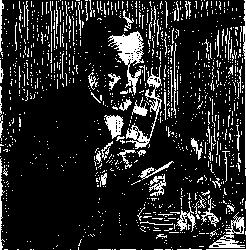
Pasteur's scientific activity was extremely multifaceted. His early works were devoted to chemistry, in particular to the study of racemic acid, tartaric acid, and the phenomenon of optical isomerism. Later, he turned to the study of fermentation, proving that it is caused by microorganisms. He developed the method of pasteurization, which is still used today. Pasteur also created vaccines against anthrax, chicken cholera, and rabies. He introduced the concept of germ theory of disease and developed the principle of vaccination. Pasteur's work laid the foundation for microbiology, immunology, and preventive medicine.
Politically, Pasteur stood on the right flank of French society; he welcomed the revolution of 1848, but very quickly reconciled himself with the regime of Napoleon III and then with the Third Republic. An extremely bright characteristic of Pasteur was his patriotism, bordering on chauvinism—and after the defeat of 1871—on German-hatred. During the war, Pasteur returned the doctor's diploma he had received from the University of Bonn, shortly before his death he refused to accept the 'Pour le Merite' order from the German government. According to Metchnikov, when Pasteur was brought a German book or pamphlet by mail, 'he would take it with two fingers and hand it to Metchnikov or throw it away with a feeling of great disgust.' According to Valery-Radou (Pasteur's son-in-law and his biographer), Pasteur believed in an afterlife; according to Metchnikov, it is hardly possible to consider him a believer in the ordinary sense of the word; however, this assertion is contradicted by the fact that until his death Pasteur performed the rites and rules of the Catholic Church. As a man, Pasteur was distinguished by exceptional kindness and a caring attitude toward people. As a scientist, Pasteur stood out for his observational skills, capacity for work, ability to choose the right experimental paths to clarify the questions raised, the logic of his judgments, and his ability to draw conclusions from his observations. In his scientific work, Pasteur was initially a chemist and crystallographer. Of the works from his first—short—period, his research on the salts of tartaric acid is of very great importance: the salts of ordinary tartaric acid rotate the plane of polarization to the right, while the salts of its isomer—grape acid—are optically inactive. In studying the causes of this phenomenon, Pasteur established a fact that could easily have escaped the attention of another, less observant researcher: during the crystallization of the double ammonium-sodium salt of grape acid, two kinds of crystals are separated, differing from each other in that in one kind the small hemihedral faces are on the right side, in the other—on the left. By mechanically separating these and those crystals, Pasteur found that a solution of the first crystals rotates the plane of polarization to the right, and the second—to the left. This discovery caused a great sensation. In this way, for the first time in the history of chemistry, an optically active substance was artificially obtained from an inactive starting material, whereas until then it was believed that the formation of optically active substances could only take place in living organisms. Further developing his three classical methods for artificially splitting racemic compounds into their optically active components (see Asymmetric synthesis, splitting), Pasteur resorted to the aid of molds, which served as an impetus for his subsequent work on microbes. Thus, a small, purely theoretical crystallographic work by Pasteur on the salts of tartaric and grape acids subsequently led to the creation of one of the most important sciences from a practical point of view—microbiology. The cycle of Pasteur's works that made him a great microbiologist begins with his famous research on the question of fermentation. When Pasteur began these works, the theory of Liebig, which taught that fermentation (and putrefaction) is based on oxidation caused by the action of fer6bments and represents a chemical phenomenon caused in the most diverse bodies by decomposing protein substances; living beings—microorganisms—do not participate in this process, held undisputed sway in science. In opposition to this view, Pasteur proved that the cause of fermentation is microorganisms—lactic acid yeasts (which turned out to be lactic acid bacteria in fact) in the case of lactic acid fermentation, anaerobic butyric acid rods—in the case of butyric acid fermentation, and aerobic acetic acid bacilli—in the case of acetic acid fermentation. Pasteur thus established that fermentation, as well as putrefaction, represent a process conditioned by microbes; this process has a specific character. With regard to alcoholic fermentation, the historical dispute between Pasteur and Liebig was, many years later, decided in favor of Liebig by Buchner. If with regard to the various types of fermentation, enzymes have been identified that cause the individual chemical reactions underlying one or another type of fermentation, nevertheless the position formulated by Pasteur remains fully valid: the cause of the development of fermentation and putrefaction processes is microorganisms that produce various enzymes. If in the question of the cause of fermentation Pasteur met with fierce criticism from Liebig and partly from Claude Bernard, his experiments on the so-called spontaneous generation found stubborn opponents in the person of Pouchet and his collaborators. Pasteur came to the categorical assertion that spontaneous generation does not exist. In defending this position, he had to fight not only with Pouchet, but also with another strong opponent—the English scientist Bastian, who confirmed Pasteur's experiments with urine remaining sterile after prolonged boiling, but at the same time showed that the addition of a small amount of alkali to such urine causes the development of bacteria in it. Repeating Bastian's experiments—and acknowledging their truth—Pasteur, however, gave them a different interpretation: in boiled urine and in boiled hay infusion there are very resistant bacterial spores that do not perish even as a result of prolonged boiling. In urine of weakly alkaline reaction (Bastian's experiments), microbes develop from these spores, which were absent until the urine retains its normal acidic reaction. From the dispute with Liebig, Pouchet, Bastian, and others, Pasteur emerged victorious, and his basic position, according to which putrefaction and fermentation develop as a result of the vital activity of microbes, remains unshakable. This victory of Pasteur, however, cannot be considered either complete or final. Pasteur's experiments did not solve the question of the origin of life on earth. Contrary to Pasteur, it can be considered indisputable that the source of life on earth is primary generation in the sense that living organized matter arose from dead matter during geological periods. It is characteristic of the passion with which Pasteur fought against spontaneous generation. The reason for this attitude was Pasteur's religiosity; he could not remain indifferent to the idea of spontaneous generation, as he saw in it an encroachment on God's right. The processes of putrefaction and fermentation bear a great resemblance to the phenomena that occur in infectious diseases. Liebig transferred his ideas about fermentation to infectious diseases; convinced that the basis of fermentation and putrefaction is the vital activity of microorganisms, Pasteur here, in opposition to Liebig, had to come to the idea that infectious diseases are caused by the introduction of microbes into the organism. Pasteur did not discover bacteria: they had been seen and known before him. He went his own way; setting himself the task of finding a general principle for fighting infectious diseases, Pasteur discovered the method of immunization against them by using cultures of microbes—their causative agents—weakened in their infectious properties. This great discovery was made by chance. A culture of chicken cholera bacteria, left for the summer in a thermostat, lost its virulence. Taking advantage of this, Pasteur vaccinated chickens with this weakened culture and convinced himself that it gave chickens a durable immunity against chicken cholera. The path was found and, following this path, Pasteur developed the method of vaccination against anthrax, against swine erysipelas and finally gave humanity the genius method of fighting rabies by vaccinating people bitten by rabid animals. Research on vaccination against infectious diseases belongs to the last years of Pasteur's life; before that, he studied the diseases of silkworms, as well as the diseases of wine. Pasteur established the cause of pébrine—a contagious disease devastating silkworms—and gave a method for fighting this disease in the form of destroying eggs containing the infectious principle of pébrine. As for wine, Pasteur saw in heating a way to combat the spoilage of wine under the influence of abnormal fermentation processes. According to him, the spoilage of wine and beer is nothing other than the diseases of these beverages, caused by abnormal enzymes. After the Franco-Prussian war, seeking to improve beer production in France and free French industrialists from German competition, Pasteur again conducted experiments with alcoholic fermentation, developed methods for obtaining pure yeast cultures and established that to protect beer from spoilage it is necessary to prevent the penetration of harmful bacteria into the wort. The choice of scientific problems that Pasteur set for himself was not accidental. Devoting his strength and knowledge to the service of French industry, working in the field of winemaking and the diseases of silkworms, Pasteur fulfilled the social order of the class to which he belonged, representing a bright example of the class nature of science. The significance of Pasteur in science is very great. His works on fermentation and putrefaction, proving the ability of bacteria to destroy organic matter, served as the foundation on which the building of antiseptics and asepsics was erected; without Pasteur there would have been no Lister. Research in the field of vaccination against infectious diseases with the help of weakened cultures served as the basis for the practical application of mass preventive vaccination and gave humanity a powerful weapon for fighting infectious diseases.
Finally, the work on infectious diseases of silkworms and wine rendered invaluable services to sericulture and winemaking. P. is great also because he was 'a genius or embodiment of the experimental method' (the words of K. A. Timiryazev); with this method he enriched microbiology and immunobiology. Here is one of his precepts to his students: 'Do not state anything that you cannot prove simply and undoubtedly. Bow before the spirit of criticism. In itself it does not reveal new ideas and does not prompt great deeds. But without it nothing is firm'. Founder of a new branch of knowledge and founder of a new preventive direction in the fight against infectious diseases, P. passed on his ideas to numerous students and followers in various countries. First place among them belongs to Dr. Roux, who immortalized his name with the discovery of the therapeutic effect of diphtheria antitoxin serum. The Pasteur Institute in Paris, of which P. was the first director, became a research center continuing the work of P. and serves as a model for similar institutions in other countries. The complete collection of P.'s works was published under the editorship of Pasteur Vallery-Radot ('Oeuvres de Pasteur', v. I-VII, P., 1923-31). 'Selected passages from the main works of P.' was published in Russian under the editorship of A. Sadow (appendix to the journal 'Vestnik Znaniya', L., 1931).
Related articles
Mentioned in
Cite this page
“Pasteur.” Soviet Medical Encyclopedia. English translation of Bolshaya Meditsinskaya Entsiklopediya, 1st ed. (Moscow, 1928–1936), ed. N. A. Semashko. https://sovietmedicalencyclopedia.pages.dev/article/pasteur/