Charles Nicolle
Historical document, translated for reference. It reflects medical knowledge of the 1920s–30s and is not medical advice.
Summary
A biography of the French bacteriologist Charles Nicolle (1866–1936), best known for his discovery that the body louse transmits typhus. The article details his work at the Pasteur Institute in Tunis, his research on latent infections, and his contributions to the study of various infectious diseases.
Encyclopedia article (1928–1936)
CHARLES NICOLLE (born 1866), a major French bacteriologist. He graduated from the medical faculty in Paris in 1893; from 1893 to 1902, he was a professor at the Rouen Medical School. Since 1903 and to the present time, he has served as the director of the Pasteur Institute in Tunis, which was created primarily by him. In 1928, he received the Nobel Prize. The main scientific works of Nicolle relate to the study of typhus and relapsing fever, and so-called latent infections. In 1909, Nicolle was the first to be able to inoculate a chimpanzee with typhus and to establish, together with his colleagues Comte and Conseil (Compte, E. Conseil), that the transmitter of this disease from a sick person to a healthy one is the body louse. The establishment of the role of the louse in the spread of typhus provided a scientific basis for the prevention of this disease. Furthermore, Nicolle
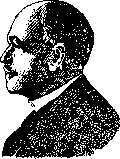
proved the possibility of experimental reproduction of typhus in monkeys and guinea pigs (see Typhus), as well as the asymptomatic course of experimental typhus in some animals ('infection inapparente'). The discovery of the asymptomatic form of infection introduced important corrections into the epidemiology of various contagious forms and contributed to the clarification of the ways of maintaining and storing viruses during non-epidemic periods. Besides these main works, Nicolle studied febrile diseases transmitted by ticks, which are very common in Tunis, various spirochetoses, and trachoma. He also proposed in 1919 the treatment of measles with convalescent serum. During the influenza epidemic of 1917–1918, Nicolle proved that the influenza virus passes through a porcelain filter. It is also necessary to note the vaccine proposed by Nicolle for the treatment of soft chancre and gonorrhea, and his work on invisible viruses, helminths, and mycoses. Most recently, Nicolle proposed a new method of vaccination against pneumonic plague by blowing plague vaccine directly into the lungs. The activity of Nicolle as the organizer and director of the Tunis Pasteur Institute is also widely known. Nicolle is also known as a writer of fiction, having published a number of novels. In 1930, Nicolle published a major work, 'Naissance, vie et mort des maladies infectieuses' (P., 1930). Most of the works of Nicolle and his colleagues were published in 'Annales de l'Institut Pasteur', in 'Comptes rendus de l'Académie des sciences', and in the journal 'Archives de l'Institut Pasteur de Tunis' founded by Nicolle in 1906 (since 1921 under the name 'Archives des Instituts Pasteur de l'Afrique du Nord').
Related articles
Cite this page
“Charles Nicolle.” Soviet Medical Encyclopedia. English translation of Bolshaya Meditsinskaya Entsiklopediya, 1st ed. (Moscow, 1928–1936), ed. N. A. Semashko. https://sovietmedicalencyclopedia.pages.dev/article/charles-nicolle/