Sergei Vinogradsky
Historical document, translated for reference. It reflects medical knowledge of the 1920s–30s and is not medical advice.
Summary
A biographical overview of Sergei Nikolaevich Vinogradsky, the eminent Russian microbiologist known for his pioneering work on sulfur bacteria, nitrification, nitrogen fixation, and the development of elective culture methods.
Encyclopedia article (1928–1936)
VINOGRADSKY, Sergei Nikolaevich, an eminent microbiologist (born in 1856 in Kiev). In 1873 he entered the Faculty of Law, and later the Faculty of Natural Sciences of the University of Kiev and then the University of St. Petersburg, where he worked in Menshutkin's laboratory and attended lectures by Mendeleev, Famintzin, Butlerov, Inostrantsev, Beketov, Kessler, Wagner, and others. Upon graduating from the university in 1881, he was retained to prepare for a professorial title and engaged in microbiology under the guidance of Famintzin.
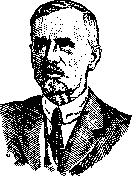
Taking a keen interest in the works of de Bary, Voronin, Brefeld, Cohn, and W., he was also captivated by the works of Pasteur, whose writings inspired his first scientific paper on Mycoderma vini, presented at the Society of Naturalists in 1883. In 1884 W. passed his master's examination in botany. He spent the years 1885-88 abroad in Strasbourg, beginning work in de Bary's laboratory on the pleomorphism of sulfur bacteria, the first study of which appeared in 1887 and subsequently as a separate edition; in 1888 W. managed to demonstrate with striking clarity the oxidative role of sulfur bacteria, and later of iron bacteria, which was of great importance in the history of microbiology. Based on a detailed study of sulfur bacteria, W. established several new species that were previously considered by Zopf and Mechnikov to be variable forms of the same species. Later, after a trip to Russia, W. moved for scientific work to Zurich and worked in the agronomic and hygienic laboratories, choosing as the topic for his classical works the question of nitrification. In studying this field, W. introduced the method of elective cultures into science. The work on nitrification brought W. worldwide scientific fame. In these works, W. proved that the process of nitrification consists in the successive oxidation of ammonium salts to HNO2 salts and then to HNO3 salts. In 1891 W. took the position of head of the Microbiological Department of the Institute of Experimental Medicine in St. Petersburg. Here he obtained for the first time pure cultures of nitrifying microbes: Nitrosomonas and Nitrobacter on silica gel media. In 1892 W. was elected Doctor of Botany honoris causa, and in 1894 a corresponding member of the Russian Academy of Sciences. W.'s subsequent work concerns the fixation of atmospheric nitrogen by means of the anaerobic microbe Clostridium Pasteurianum, which also serves as the causative agent of butyric acid fermentation. At the same time, he discovered the aerobic, nitrogen-assimilating species Azotobacter. In 1902 W. assumed the post of director of the Institute of Experimental Medicine. In 1903 W. participated in the founding of the Microbiological Society, where he served as the first president and of which he is currently an honorary member. Leaving his service at the institute shortly before the imperialist war, W. was invited for a second time in 1922 to the Pasteur Institute to head the Department of Agronomic and Soil Bacteriology. This laboratory is a branch of the Pasteur Institute, 30 kilometers from Paris, in Brie-Comte-Robert. Here W. continues his brilliant research,
applying the "direct method" to study microbial processes occurring directly in the soil and to observe changes in the soil microflora. W.'s recent works were received with the keenest interest at international congresses in America, Italy, and France. Among speeches of general biological interest, attention should be drawn to his reports: "On the Nitrogen Cycle in Nature" (IX Congress of Russian Naturalists and Physicians, supplement to the "Diary", M., 1894), "On the Role of Microbes in the General Cycle of Life" (St. Petersburg, 1897), and others. In recent years W. has been elected an honorary member of the All-Union Academy of Sciences and honorary president of the International Microbiological Society. W.'s works have had a tremendous influence on the development of microbiology, especially in Russia. The brilliantly developed method of elective culture made it possible to place biochemical research on a strictly scientific path and rapidly achieve positive results in solving the most difficult and tangled questions of microbiology (V. L. Omeliansky). Among W.'s numerous works, the following must be named here: "On the Assimilation of Free Atmospheric Nitrogen by Microbes" ("Arkhiv Biologicheskikh Nauk", vol. III, 1895); "Die Nitrifikation" (Handbuch d. technischen Mycologie, hrsg. v. F. Lafar, B. III, Jena, 1904-06); "Sur la microflore autochtone de la terre arable" (Comptes Rendus des séances de l'Académie des Sciences, v. CLXXVIII, 1924); "La méthode directe dans l'étude microbiologique du sol" (Chimie et Industrie, v. XI, № 2, 1924).
Related articles
Cite this page
“Sergei Vinogradsky.” Soviet Medical Encyclopedia. English translation of Bolshaya Meditsinskaya Entsiklopediya, 1st ed. (Moscow, 1928–1936), ed. N. A. Semashko. https://sovietmedicalencyclopedia.pages.dev/article/vinogradsky/