NITRIFICATION
Historical document, translated for reference. It reflects medical knowledge of the 1920s–30s and is not medical advice.
Summary
Nitrification is the biochemical process of oxidizing ammonia to nitric acid, carried out by nitrifying bacteria. This article describes the two-phase process, the specific bacteria involved, their physiological characteristics, and the significance of nitrification in nature and sanitation.
Encyclopedia article (1928–1936)
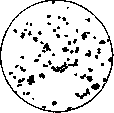
NITRIFICATION, biochemical process of oxidation of ammonia to nitric acid, the causative agents of which are nitrifying bacteria. Pure cultures of these bacteria were first obtained in 1889 by Winogradsky, and his further research laid a solid foundation for the modern understanding of this phenomenon. Experiments with pure cultures of the causative agents of the process of N. showed that it proceeds in two phases and is conditioned by the vital activity of two groups of nitrifying bacteria. In the first phase, nitrite bacteria (Nitrosomonas and Nitrosococcus) oxidize ammonia to nitrous acid; the second phase of N., oxidation of nitrous acid to nitric acid, is the result of the vital activity of nitrate bacteria (Nitrobacter). As they form, nitrous and nitric acids are usually bound by bases present in the environment and form salts of these acids—nitrites and nitrates. Winogradsky described several species of nitrite bacteria. Representatives of Nitrosomonas are found exclusively in the soils of the Old World. These are oval rods (figs. 1 and 2) 0.8-1.2×1.8 μ, aerobes, staining by Gram's method and well stained by ordinary aniline dyes. In liquid media, the microorganism grows the first days as zoogloea, which, as ammonia is consumed, breaks down into individual motile cells equipped with one flagellum (monad stage). In this stage, Nitrosomonas quickly completes the oxidation of ammonia, then the motile cells settle and cover the bottom of the flask with a dense zoogloea. Varieties of Nitrosococcus are found mainly in the soils of America and Australia. They are characterized by a spherical shape (cocci). The size of cells of various varieties varies from 0.6 μ to 2 μ in diameter. They stain by Gram's method and are easily stained by ordinary aniline dyes; they are immotile. In liquid media, they grow as individual cells. Most varieties do not form zoogloea.
Figure 1. Nitrosomonas. Monad stage.
Nitrate bacteria, isolated from different places, proved to be completely identical. Only one species, Nitrobacter, has been described (1891), representing a small immotile aerobic rod 0.3-0.4×1 μ (fig. 3); it is poorly stained; it is stained only when heated with carbolfuchsin. For obtaining cultures of nitrifying bacteria and for studying N. under laboratory conditions, Winogradsky proposed selective mineral media. For experiments with nitrite bacteria, a piece of earth or a drop of sewage fluid is used to inoculate a mineral solution containing some ammonium salt. The course of nitrification is judged by the appearance of nitrous acid (Gries's reagent) and by the decrease in ammonia (Nessler's reagent). For isolating individual colonies of nitrite bacteria, solid mineral media are convenient: silica gel and magnesium-gypsum plates. A selective medium for nitrate bacteria is a mineral solution containing some salt of nitrous acid. It is inoculated with a piece of earth or a drop of sewage fluid. As nitrate bacteria develop, nitrite disappears (Gries's reagent), oxidizing to nitrate (test with diphenylamine). A solid medium for isolating individual colonies of Nitrobacter serves as nitrite-agar. The growth of nitrifying bacteria on media not containing organic compounds indicates their physiological peculiarities: they are typical autotrophic organisms. For their development, they do not need ready-made organic substances, since they synthesize it from CO₂ at the expense of the thermal energy released during oxidation reactions. Thus, in the oxidation of ammonia to nitrous acid and the latter to nitric acid, the following amount of calories is released: in the 1st phase (2NH₃+3O₂=2HNO₂+2H₂O) 158 calories are released; in the 2nd phase (2HNO₂+O₂=2HNO₃) 43.2 calories are released. In accordance with the thermochemical effect of oxidation reactions, the ratio of oxidized nitrogen to assimilated carbon for nitrite and nitrate bacteria is far from the same. Experiments by Winogradsky established that cultures of Bacillus nitrosomonas assimilate 1 atom of carbon at the expense of oxidation on average of 35 molecules of ammonium nitrogen: Oxidized N... 722.0, 506.1, 928.3, 15.2, 26.4, 33.3, 35.2, 36.4. Similar experiments by Meyerhof showed that cultures of Nitrobacter assimilate 1 atom of carbon at the expense of oxidation on average of 135 molecules of nitrite nitrogen: Oxidized N... 475, 3.55, 2.63, 2.95. N:C ratio 135, 128. The figures given show that nitrifying bacteria obtain the required amount of carbon at the cost of great oxidative work, which explains the extremely slow growth characteristic of their cultures.
nitrobacter experiments with nitrite Fig 3 Nit robacter bacteria, a piece of earth or a drop of sewage fluid is used to inoculate a mineral solution containing some ammonium salt. The course of nitrification is judged by the appearance of nitrous acid (Gries's reagent) and by the decrease in ammonia (Nessler's reagent). For isolating individual colonies of nitrite bacteria, solid mineral media are convenient: silica gel and magnesium-gypsum plates. A selective medium for nitrate bacteria is a mineral solution containing some salt of nitrous acid. It is inoculated with a piece of earth or a drop of sewage fluid. As nitrate bacteria develop, nitrite disappears (Gries's reagent), oxidizing to nitrate (test with diphenylamine). A solid medium for isolating individual colonies of Nitrobacter serves as nitrite-agar. The growth of nitrifying bacteria on media not containing organic compounds indicates their physiological peculiarities: they are typical autotrophic organisms. For their development, they do not need ready-made organic substances, since they synthesize it from CO₂ at the expense of the thermal energy released during oxidation reactions. Thus, in the oxidation of ammonia to nitrous acid and the latter to nitric acid, the following amount of calories is released: in the 1st phase (2NH₃+3O₂=2HNO₂+2H₂O) 158 calories are released; in the 2nd phase (2HNO₂+O₂=2HNO₃) 43.2 calories are released. In accordance with the thermochemical effect of oxidation reactions, the ratio of oxidized nitrogen to assimilated carbon for nitrite and nitrate bacteria is far from the same. Experiments by Winogradsky established that cultures of Bacillus nitrosomonas assimilate 1 atom of carbon at the expense of oxidation on average of 35 molecules of ammonium nitrogen: Oxidized N... 722.0, 506.1, 928.3, 15.2, 26.4, 33.3, 35.2, 36.4. Similar experiments by Meyerhof showed that cultures of Nitrobacter assimilate 1 atom of carbon at the expense of oxidation on average of 135 molecules of nitrite nitrogen: Oxidized N... 475, 3.55, 2.63, 2.95. N:C ratio 135, 128. The figures given show that nitrifying bacteria obtain the required amount of carbon at the cost of great oxidative work, which explains the extremely slow growth characteristic of their cultures.
Figure 2. Nitrosomonas. Zoogloea stage.
A second physiological peculiarity of nitrifying bacteria is their negative attitude toward organic compounds. The introduction of glucose, peptone, and other substances into the nutrient solution sharply suppresses the development and oxidative activity of nitrifying bacteria. It should be noted that nitrate bacteria are less sensitive to organic matter than nitrite bacteria. The good development of nitrate bacteria on nitrite-agar already indicates this property. The following table shows the doses of organic substances (in %) that delay and stop the development of nitrifying bacteria. But being more resistant to organic matter, nitrate bacteria react sharply to the presence of ammonia. The content of 0.0005% ammonia in the nutrient solution suppresses the development of Nitrobacter. Bacterium species Glucose Peptone Asparagine Nitrite bacteria: Delays development . . Stops development . 1 0.0,25 0.05 0.025 0.2 0.025 0.3 Nitrate bacteria: Delays development . . Stops development . 1 0.05 0.2 6.8 1.25 0.05 0.5
Under natural conditions, both groups of nitrifying bacteria are always found together, forming an obligatory symbiosis. Nitrite bacteria, by oxidizing ammonia, free nitrate bacteria from such a harmful compound for them, turning it into an energy material necessary for their development—nitrite. Nitrate bacteria, in turn, by oxidizing nitrous acid to nitric acid, free nitrite bacteria from the waste products of their vital activity. Both phases of N. proceed simultaneously, and the intermediate product—nitrites—in most cases cannot be taken into account. It is also necessary to note that under natural conditions N. proceeds in the presence of organic matter. In nature, nitrifying bacteria are distributed extremely widely. The primitiveness of their metabolism allows them to settle where there is not yet life; they are found on bare rocks, in bodies of water, and in the upper layers of the earth's crust; soil is their main habitat. In cultivated soils, N. proceeds especially intensively, since the cultivation of the arable layer increases the access of oxygen necessary for oxidation reactions. The significance of N. in nature fully corresponds to the wide distribution of its causative agents. The ammonium salts formed during the decomposition of proteins and urea are converted into nitrates by the activity of nitrifying bacteria, which are the best source of nitrogen for plants. Thus, N. closes the cycle of nitrogen in nature. The power of the N. process can be judged by the fact that the known deposits of nitrate salts (saltpeter) in Chile were formed by the activity of nitrifying bacteria. With proper treatment of fallow podzolic soil under black fallow, as a result of the work of nitrifying bacteria, up to 800-1120 kg of nitrate salts can accumulate per 1 hectare during the summer months (S. P. Kravkov). In chernozems, under the same conditions, even more nitrates are formed. The significance of nitrifying bacteria is no less great in sanitary engineering. In the purification of wastewater in treatment plants of all types, whether it be irrigation fields, filtration fields, settling ponds, or various installations of biological oxidizers (see Biological method of wastewater purification), N. begins everywhere after the partial oxidation of organic matter. The presence of nitrates in purified water increases their relative stability (ensures non-putrefaction) due to the oxygen bound in nitrates (see Denitrification). Therefore, one of the main tasks of wastewater purification is to create the best conditions for N. The high rate of mineralization of organic matter in wastewater purification by aeration with activated sludge is due to the fact that by introducing activated sludge, the wastewater is enriched with nitrifying bacteria along with microbes that oxidize organic matter, and the artificial introduction of air gives the oxygen necessary for their oxidative activity. The temperature of the medium and the reaction also have a great influence on the rate of N. According to observations by Baziyakina, at 9-26° the rate of N. is the same, but at 6° the process sharply slows down and at 0° it does not proceed at all. According to Meyerhof, the optimal reaction of the medium for nitrite bacteria lies between pH = 8.4-8.8. For nitrate bacteria, the optimal reaction lies between pH = 8.3-9.3.

Related articles
Mentioned in
Cite this page
“NITRIFICATION.” Soviet Medical Encyclopedia. English translation of Bolshaya Meditsinskaya Entsiklopediya, 1st ed. (Moscow, 1928–1936), ed. N. A. Semashko. https://sovietmedicalencyclopedia.pages.dev/article/nitrification/