Soil
Historical document, translated for reference. It reflects medical knowledge of the 1920s–30s and is not medical advice.
Summary
This article discusses soil as a complex of organic and mineral compounds, its importance in hygiene and epidemiology, and the historical development of soil science. It covers soil properties, their relationship to disease transmission, and methods for soil analysis.
Encyclopedia article (1928–1936)
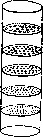
SOIL, a complex of organic and mineral compounds that has arisen on the earth's surface as a result of physico-chemical and biological processes. The study of soil is of interest to the hygienist, sanitary physician, and epidemiologist, since soil plays a huge role in questions of sanitary living conditions: contamination and infection of soil and thereby of soil waters leads to the development of epidemics. Knowledge of the properties of soil is essentially necessary when erecting buildings, organizing camps, laying water supply and sewerage networks, when organizing cemeteries, irrigation fields, etc. In addition, the close relationships between soil and the climate of a given area, between soil and vegetation further increase the importance that the study of soil has for the hygiene of populated places, particularly in questions of the construction of cities, settlements, etc. At the end of the 19th century, the study of soil, to a large extent thanks to the work of Russian scientists (Dokuchaev, Sibirtsev, Vinogradsky, Omelyansky, etc.), acquired the character of an independent scientific discipline ('soil science,' or 'pedology'), the development of which is closely connected with the successes of geology, microbiology, and chemistry. Soil-forming processes consist mainly of two moments: 1) weathering of rocks, in which both mechanical and chemical factors participate, and 2) formation of the organic component of soils, in which the animal world inhabiting the soil (rodents, reptiles, worms, insects, etc.), the plant world, which provides material for the transformation of organic matter, and the world of microbes, which processes this material into peat, humus, and mulch (or mull) participate. Information about the chemistry of various types of soil is essential both in the question of the life of microbes in soil and for understanding the complex biochemical processes occurring in it, and finally in the question of developing criteria for its sanitary evaluation. The first question, since it concerns pathogenic bacteria, has enormous importance in epidemiology; it received particular development in the so-called soil, or localist theory of Pettenkofer, who considered certain types of soil as a medium especially favorable for the multiplication of pathogenic bacteria (for example, the typhoid bacillus, cholera vibrio, etc.). Some soils, such as clay and peat, on the contrary, he considered 'immune.' Pettenkofer's student and follower Emmerich explains the absence of 'predisposition' in clay and peat soils by their ability to adsorb organic substances and thereby cause impoverishment of the nutritive material of water permeating the soil. The same role, in Pettenkofer's opinion, is played by the level of soil waters, which is why his theory is sometimes called the 'theory of soil waters'; when this level drops, the soil layers, drying out, become unsuitable for bacterial life; when the level rises, the dilution of organic substances in water reduces the nutritive value of the solution, as a result of which multiplication slows down; therefore, the period immediately following a drop in the level of soil waters is most favorable for bacterial life. The large statistical-epidemiological material collected by Pettenkofer indicated a coincidence in time of cholera and typhoid epidemics and periods of lowering of soil waters. According to Emmerich, the reaction of the soil also plays a significant role in the question of multiplication in soil of pathogenic bacteria. In soils with an acid reaction, multiplication does not take place, just as in soils rich in silicic acid, alumina, and iron, since the colloidal solutions of these substances act bactericidally. At present, Pettenkofer's soil theory, despite its apparent coherence and the abundance of statistical material with which the Munich school tried to substantiate it, is accepted in its original form by only a few. On the one hand, the epidemiological material on which it is mainly based can easily be explained from the point of view of contact and water theories. On the other hand, its weak point is the lack of direct experimental evidence of the ability of pathogenic bacteria to multiply in soil. Indeed, a drop in the level of soil waters, as Kruze correctly notes, leads to the exhaustion of drinking ground waters, usually cleaner, and thereby to the mass consumption by the population of contaminated surface waters. Likewise, the lack of sanitary protection of soil and its infection with pathogenic microbes increases the possibility of indirect contact infection. As for the ability of pathogenic bacteria to multiply in soil, this fact cannot be established directly; these groups of bacteria, in terms of nutritional conditions and temperature, find themselves in soil in less favorable conditions than saprophytic species, represented by millions of individuals in 1 g of soil, and are usually more or less quickly suppressed by the latter. The same is true of the conditionally pathogenic species B. coli. Thus, in a non-sterilized soil extract sown with this species, a sharp drop in the coli titer can be observed within two weeks, while in a sterilized extract the coli titer remained unchanged over the same period. The viability of individual pathogenic bacteria in soil can be very significant; not to mention spore-formers such as anthrax bacilli and various anaerobic agents of wound infections, whose spores are preserved in soil for years, there are data in the literature on the preservation of the viability of typhoid bacilli in moist soil for up to 6 months (Grancher, Deschamps). But if in modern epidemiology the soil theory has not retained the importance that was formerly attributed to it, nevertheless the role of infected soil in the spread of epidemics is indisputable, and from a sanitary point of view, the examination of soil for contamination with animal excreta has important significance. Already the ordinary sanitary inspection of populated places to a certain extent reveals the picture of soil contamination at a given moment. The presence or absence of proper sewerage, one or another arrangement and maintenance of cesspools and garbage pits, the systems used for removal and disposal of waste allow one to form a general idea of the degree of soil contamination. For a more accurate judgment of the degree of contamination of soil, in which for centuries processes of contamination and self-purification are taking place, an in-depth chemical-bacteriological investigation is also necessary. A complete analysis of soil for sanitary purposes usually includes a characterization of its mechanical structure and physical properties. The mechanical structure of soil is characterized by the ratio between the amount of large soil particles, which form, in Knoop's expression, the 'skeleton of soil,' and small soil particles ('body of soil'), as well as their mutual arrangement. For sorting soil particles, the soil being investigated, dried at room temperature (so-called 'air-dry'), is sifted through a set of Knoop sieves (Fig. 1). The first of them, located at the top, has holes with a diameter of 7 mm and retains only coarse gravel, the second-4 mm-medium gravel, the third-2 mm-fine gravel, the fourth-1 mm-coarse sand, the fifth-0.3 mm-medium sand; finally, in the lower compartment of the Knoop apparatus, fine sand or dust with particles smaller than 0.3 mm is collected. For sorting soil particles by their specific weight, one of the methods of decanting proposed by Nebel, Schene, Wagner, Orth, Sobyany, etc., is used. Nebel's apparatus (Fig. 2) consists of four pear-shaped vessels of thick glass, the volumes of which are related to each other as the cubes of the first four digits, i.e., as 1:8:27:64, the total volume being 4 l; the vessels, connected to each other by tubes, are fixed in a stand, with the smallest vessel I connected to a bottle above containing 9 l of water, and the outlet tube of the largest vessel extends into a 5-liter beaker. 30 g of the investigated air-dry soil, sifted through a sieve with 3 mm holes in order to separate the finest particles, is boiled in water for several hours, and the cloudy sediment is poured into the second vessel from the bottle, while the soil itself is transferred to the first and then a current of water from the bottle is passed for 20 minutes, after which the particles settled in each vessel are collected on weighed filters, dried at 25° and weighed in the same way as the evaporated residue from the beaker; the figures obtained are converted to percentages.
Between the particles of soil there are free spaces, or pores, the total volume of which depends on the arrangement, shape, and size of the soil particles and amounts for various soils from 29% to 84% of the apparent volume of soil, with the largest figures referring to fine-grained soils such as clay or peat with organic impurities. To determine the total volume of pores in soil, the method of Renk is usually used, which consists in that a measured amount of water A is poured into a measured amount of soil B; due to water penetrating into the pores of soil, the resulting volume C in the cylinder will be less than the sum of A + B; from this the volume of pores in volume B of soil is calculated = A + B - C; when expressed as a percentage it equals (A+B-C) × 100 / (A+B).
Fig.
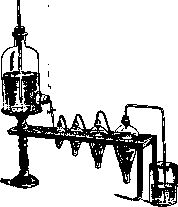
Nebel's apparatus for decanting soil. The same value can be obtained by determining the true volume of the soil, i.e., the volume of the soil particles themselves; subtracting this figure from the apparent volume gives the total volume of pores. The true volume of the soil is determined by dividing the weight of the soil by its specific gravity. The specific gravity of the soil usually ranges from 2.5 to 2.8 and is determined with the help of a pycnometer. If the weight of the pycnometer with water is P, the weight of the pycnometer with a suspension of A grams of soil (previously boiled to remove air and dried at 100°) is Ph, then the weight of water displaced by A grams of soil is (P + A)-Ph, and the ratio (P + A)-^ will express the specific gravity of the soil. Related to the porosity of the soil is its air permeability. To detect this property and study the conditions affecting it, the apparatus of Renk is usually used, which consists of several tall cylindrical tubes communicating at their lower ends with a horizontal tube. The soil under investigation is poured into the vertical tubes up to a certain level, while the horizontal tube, closed at one end, communicates at the other with a source of illuminating gas, which passes through the columns of soil. By igniting the gas at the upper end of the vertical tubes, one can judge the permeability of one soil or another for gas by the speed of appearance of the flame and its height; at the same time, it is easy to verify that it depends mainly on the size of the soil particles and increases with their size, while the total volume of pores has no effect on it. According to Renk's data, if the volume of air passing in unit time through fine sand (with a particle diameter of 0.3 mm) is taken as unity, then for medium sand S29 (0.3-1 mm in diameter) under the same other conditions, 84 is obtained, for coarse sand (1-2 mm)-961, for fine gravel (2-4 mm)-5,195, for coarse gravel (4-7 mm)-11,684; while the total volume of pores in the last three cases hardly changes. Another factor affecting the passage of air through the soil is pressure, and at low speeds the amount of air passing through a given soil is proportional to the pressure and inversely proportional to the thickness of the soil layer.-Thanks to the air permeability of the soil, its pores are always filled with air, which differs significantly in composition from atmospheric air, since on the one hand it gives up its O2 for the oxidation of organic substances in the soil, and on the other hand it is enriched with various gaseous impurities arising from the decomposition of these organic substances.' Research by Fodor in Budapest and Fleck in Dresden showed that as one goes deeper into the soil, the content of O2 in the soil air decreases (18.8-21.3% at a depth of 1 m; 16.33-19.4% at a depth of 2 m; 15.7-16.8% at a depth of 4 m; 14.2-14.95% at a depth of 6 m), while the content of CO2 increases (0.9-1.04% at a depth of 1 m; 2.9-3% at a depth of 2 m; 4.1-5.6 at a depth of 4 m; 4.2-7.96% at a depth of 6 m). In soils rich in organic substances, sharp changes in composition compared to atmospheric air are already observed at a shallow depth: thus, Boussingault and Levy, investigating the soil air taken from the soil of a cultivated field at a depth of 0.3-0.4 m, found in it 10.35% O, 9.74% CO2 and 7-9.91% N. As gaseous impurities in the soil air, NH3, H2S, volatile hydrocarbons, and sometimes CO (e.g., in case of leakage of illuminating gas from the gas pipeline network) can be detected; usually the soil air is saturated with water vapor. The question of the composition of soil air is by no means indifferent from a sanitary point of view, since there is a constant exchange between the soil air on the one hand, and the atmospheric air and the air of living quarters on the other. Thus, cases of poisoning with illuminating gas are known (in Breslau, Budapest, Moscow, Kharkov, etc.), and the houses where the victims lived were located 4, 7 and even 27 m from the places of damage to the gas pipeline network. In connection with these facts, the question of soil ventilation has significant sanitary importance. Soil ventilation occurs continuously under the influence of various factors, such as fluctuations in atmospheric pressure (emergence of soil air to the outside at reduced pressure, penetration of atmospheric air into the soil at increased pressure), fluctuations in the level of groundwater (displacement of soil air during rise, suction of atmospheric air during descent), draft caused by the difference in temperature between soil and atmospheric air, etc. Coarse-grained dry soils are ventilated most intensively; in fine-grained moist soils, air exchange is negligible. No less important from a sanitary point of view is the attitude of the soil to water (hygroscopicity, capillarity, water-holding capacity, water permeability), since it affects both the climate, conditions and the regime of groundwater and underground structures. A hygroscopic soil, attracting water vapor from the air and condensing it, easily becomes damp in the surface layers. Capillarity, which, like hygroscopicity, is more significant in fine-grained soils, causes the rise of groundwater into the overlying layers of soil. In the soil in general, one can distinguish, going from top to bottom, three zones (Hofmann): 1) the evaporation zone, 2) the water filtration zone, 3) the capillary rise zone. Below these zones lie impermeable layers of soil, on which the groundwater is located. The latter fill the pores of the overlying loose layers, such as alluvial, and sometimes form underground ponds, streams, and rivers.-Hygroscopicity of the soil is measured by the amount of water in it, determined by drying the soil at 105° for 5 hours.-To determine the capillarity of the soil, it is poured to a certain level in glass tubes 1-1.5 m high and 1.5-2 cm in diameter with a bottom of gauze or mesh; the tubes are immersed to the same depth in water and the height of water rise is measured after a certain period of time in different soils, and conversely, the time required for water to rise to the same height in different soils.-Under water-holding capacity is understood the ability of the soil, after wetting it and free drainage of water, to retain a certain amount of water in its pores. To determine water-holding capacity by Renk's method, soil is poured into a cylinder with a mesh bottom, which is then immersed in water; after water appears above the level of the soil and subsequent free drainage (after raising the cylinder above the water in a dish), the cylinder is wiped on the outside and weighed. The difference in weight after and before wetting indicates the so-called maximum or full water-holding capacity. By determining the volume of pores remaining unfilled with water ^ya-^. (or the total volume of pores of dry soil), ^иНнк one can calculate what percentage |!1|1|||Ш of the total volume of pores constitutes the maximum 1 ННшВб! water-holding capacity.-Measurement of «ЗБяНШ the level of groundwater and ^щИУ^|Ь, its fluctuations is produced in co
In wells or boreholes using the so-called Pettenkofer tape with 10 cups on the lower metal rod (Fig. 3). When lowering, it is noted at what depth the uppermost cup, which scoops up water, is located.-Among other physical properties of S., one should also consider its relation to heat; in particular, questions about the freezing of surface layers of S., the permafrost zone, etc., have important practical significance when developing water supply and sewerage projects in connection with the question of the required depth of laying these pipes. Pettenkofer. To measure the temperature of S. at various depths, special thermometers in a metal casing are used, which are buried in the ground at the desired depth, while the scale remains above the ground surface. The question of the chemical-bacteriological characteristics of S. is of even greater importance for sanitary purposes, as it allows one to judge the degree of contamination and self-purification of the latter, i.e., to give it a sanitary assessment. S. of populated centers, continuously contaminated, in the absence of proper sanitary protection, is also the arena of a continuous and complex process of self-purification, which consists of physicochemical processes, such as the adsorption of suspended and dissolved substances, especially colloidal ones, and gases, and biochemical processes in which the most diverse microorganisms participate. The cycle of nitrogen-containing organic substances has been studied most fully; they are decomposed in S. by the activity of numerous proteolytic and peptolytic bacteria into amino acids with their subsequent deamination. The resulting ammonium salts then pass under the influence of nitrifying bacteria (see Nitrification) into nitrites and finally into nitrates. Another group of bacteria ferments carbohydrates, a third - lipolytic species - breaks down fats. Special species carry out such specific functions as the decomposition of cellulose, pectin substances, urea, etc. Mineral substances, like organic ones, undergo various changes in S.; thus, nitrates can be converted back into nitrites by the activity of an extensive group of denitrifying bacteria; sulfates can be reduced to sulfites, hyposulfites, and even to H2S, and this function can be performed, in addition to the special species described by Beijerinck, by representatives of the subtilis group (Horowitz-Vlasova). In recent years, bacteria of S. that reduce phosphates have also been described (Rudakov, Horowitz-Vlasova). With the question of self-Propetrovsk proposed an approximate scheme for assessing the degree of contamination of S. depending on the above chemical indicators, as well as the total number of bacteria and coli-titer (Table 1). Table 1. Composition and properties Total N (in 100 g of soil)......... Organic NH3 (in 100 g of soil)..... Organic C (in 100 g of soil)...... P2O5 (in 100 g of soil) Number of bacteria in 1 g Coli-titer ...... Heavily contaminated > 200 mg > 50 » > 500 » > 60 » millions 1-2 mg Moderately contaminated > 100 mg > 25 » > 300 » > 50 » hundreds of thousands > 50 mg Relatively clean < 100 mg < 25 » ; <
300 » I < 50 » | < 10 000 I > 1 000 mg\ The absolute values of the main chemical indicators can be judged from the following summary data on the soil of various studied cities, compared with data on the soil of rivers (Table 2). The figures express milligrams per 100 g of soil. Table 2. Chemical composition of soil. Location and author of research Soil Moscow (Lyalin, 1895) Warsaw (Savchenko) Budapest (Fidor, 1893) ........ Dnepropetrovsk (Gorovits-Vlasova, 1925)........ Bottom sediment Neva (Zalessky, 1912)........ Dnieper (Gorovits-Vlasova, 1925) ..... Total N Mineral NH3 average max. min. average Organic C average 1 895.0 117.0 241.0 338.0 247.0 141.9 32.0 trace 239 I 72,! DI 85.31 3.4 113.0 758.7 59.7 20.0 98.0 88.0 121.4 9.9 7.5 traces 2.3 1.1 1.0 1.7 6.8 2.9 3.3 5.1 4.25 4.6 3 465.6 2 091.0** 1 630.9 185.1 93.0* 760.9 1740.4 '727.0* 1 195.9 Loss on ignition in % average 82.87 3.26 9.5 5.7* 10.5 0.22 1.12 3.6 0.58** 2.0 7.11 2.5 7.3 1.7** 6.2 P2O5 1 626.0 203.3 392.0 100.0 average 18.0 33.0 71.0 491.0 122.6 91.0 85.6 Total C. In dry residue, not in air-dry soil. The question of the purification of soil is closely connected with the fate of pathogenic microorganisms in soil. Contrary to the views of Pettenkofer and his student Emmrich, who considered soil the most favorable medium for the multiplication of a number of pathogenic species, it can now be considered established, as mentioned above, that pathogenic bacteria in soil more or less quickly die off in the struggle with the saprophytes of soil, which are better adapted to the environment. To judge the degree of contamination and self-purification of soil, besides domestic data on its contamination, data from chemical-bacteriological research are necessary. Among the various chemical indicators, the figures for total N, NH3, C, and phosphorus anhydride are most valuable for sanitary assessment. From the analyses of urban soils available in the literature—for Moscow, Dnepropetrovsk, Warsaw, Budapest—it is seen that the average figures for N range from 85 to 339 mg per 100 g; average figures for organic C—from 185 to 3,500; P2O5—from 18 to 1,600, etc.—Gorovits-Vlasova, on the basis of detailed chemical-bacteriological study of the soil of various districts of the city of Dne- The fluctuations of these figures in different districts of the same city depending on domestic contamination are shown by the following figures in the soil of an old garbage dump in Dnepropetrovsk. The content of total N ranges from 297.6 to 378 mg per 100 g of soil, organic NH3—about 115 mg, organic C—from 2,545.4 to 3,712.0 mg, P2O3—from 54.1 to 243.0 mg. For courtyard soils the corresponding series of figures: 35.7-526.4; 18.97-167.5; 695.4-1,641.0; 44.4-367.7. In other words, courtyard soils may be more contaminated with nitrogen-containing organic substances than the soil of an old garbage dump. At a depth of 1 m (on the city square) we have for total N—91.0-96.7 mg; organic NH3--43.6-56.1; organic C—1,540 mg, i.e., figures lower than on the surface. Soil outside the city gives: 59.7 mg for total N, 24.37 mg for organic NH3, 185.4 mg for organic C, i.e., figures significantly lower than anywhere within the city limits. Even bottom sediment, with systematic contamination of our rivers, turns out to be less contaminated than urban soils. The in 33 fi34 indicated indicators, especially the first three, i.e., total N, organic NH3 and organic C, are very valuable criteria in controlling the self-purification process on sewerage fields, irrigation fields, etc. Thus, on a small experimental sewerage installation in Dnepropetrovsk (Gorovits-Vlasova) the following series of figures for total N was obtained: before loading 204 mg, after loading January 12—425 mg, February 14—328 mg, March 26—154 mg, April 18—140 mg, June 26—112 mg. For organic NH3 the corresponding series of figures—34.85; 76.84; 62.56; 48.96; 48.28. For organic C—1,585.6; 2,820.0; 1,161.4; 764.7; 700; in June 267.3. In other words, the soil in six months not only processed all the introduced impurities, but by the end of this period the effect of self-purification was greater than at the beginning of the experiment. Other chemical data (e.g., the amount of mineral NH3 and mineral C, the amount of Cl, oxidizability of soil extracts, etc.) do not reveal any definite patterns with systematic study of urban soils and are therefore little suitable as criteria for sanitary assessment of soil. In controlling the processes of humification of plant residues, e.g., on garbage dumps, useful indications can be expected from determinations of cellulose, pentosan, pentoses and humic substances. A successful attempt of this kind was made by Drachev and Skopintsev in studying the soil of garbage dumps in Moscow, but there is little data on this question so far. Bacteriological examination of soil consists of 5 different moments: 1) searching for pathogenic bacteria in soil, 2) quantitative research, 3) determination of the titer of indicators of contamination with animal wastes, 4) complete qualitative analysis of species growing on ordinary media both under aerobic and anaerobic conditions, 5) research on bacteria with special functions playing a role in the cycle of substances. Among path. species that have been found in soil, first place is occupied by spore-forming anaerobes, such as B. perfringens Veillon and Zuber, Vibrion septique Pasteur, B. anthracis symptomatici Chauvoei, B. tetani Nicolaier, B. botulinus van Ermengem, and their distribution in urban soils to a certain extent coincides with the distribution of B. coli and suggests that they also get into soil with human and animal excretions; the difference is apparently only that B. coli indicates relatively recent contamination, while spore-forming anaerobic species, persisting in soil for months, may serve as indicators of older contamination. Minkevich comes to similar conclusions (based on research on soil of chernozem fields in the vicinity of Pyatigorsk, where anaerobes were detected in 100% of samples, while B. coli was absent). In the bacteriological examination of soil of the Donskoy Cemetery in Moscow at a depth of 180-300 cm, the number of anaerobic bacteria was thousands of times greater than the number of B. coli, which again speaks in favor of the importance of anaerobes as indicators of old contamination. Vibrion septique, or the bacillus of malignant edema, is also a frequent inhabitant of soil. According to Mas (Masё), it is found in almost 80% of samples of street and garden soil. Lortet, Arloing, Roux found it in bottom sediment. B. anthracis symptomatici and B. enteritidis sporogenes Klein have also been found in soil. To this list of pathogenic anaerobes found in soil, B. histolyticus can be added. In 1919 its presence in soil was proven by the work of the British Medical Commission; in 1923 Zeissler and Rassfeld and in 1925 Chiari found this species in samples of soil taken from various sections of the military front; in 1923 Peterson and Hall found it in soil of California fields. However, it is hardly possible to consider it universally distributed in soil. The tetanus bacillus has also been found in street and garden soil, especially in surface layers. Rou found it in the silt of the Rhone River; Cort in the Dead Sea; Hall and Peterson found this species in cultivated soil of California (1924). However, it is hardly possible to consider it universally distributed in soil. B. putrificus coli has also been repeatedly found in street and courtyard soil. B. botulinus is apparently very widespread in soil, as shown by the latest research in Belgium and America, where it was found in 60-90% of samples.-Of aerobic pathogenic species, anthrax bacilli, typhoid, plague, cholera vibrios have been found in soil. Anthrax bacilli were found by Pasteur in the so-called 'accursed fields' soil (see Anthrax), and he was able to show the role of earthworms in carrying the infectious agent from deeper layers of soil, where the bodies of animals that died from anthrax were buried, to the surface. Diatropov managed to detect the presence of this species in the silt of a well on a farm where there was an epizootic of anthrax. Cholera vibrios have been found in soil of cities during an epidemic; thus, in St. Petersburg in 1909-1910 they were found in 3 samples out of 61 taken near sewer pipes, as well as in 14 out of 110 samples of river silt. Typhoid bacilli have been found in cultivated soil, in lake silt. Occasionally in the upper layers of soil, more precisely in its dried and dust particles, tubercle bacilli, pus-forming cocci, B. septicus agrigemis Nicolaier, very close to the chicken cholera bacillus, B. pyocyaneus, B. pneumoniae, plague bacilli have been found.-In the bacteriological examination of soil, one of the useful criteria for sanitary assessment is its prevalence of B. coli. This species was often found in street, road, field, meadow, forest soil, and in river silt. It has already been pointed out above that the degree of its prevalence in soil is connected with the degree of its contamination and that the coli-titer of soil deserves to be introduced into the practice of sanitary-bacteriological examination of soil, as has long been done in the case of water.
The coli-titer of the soil to a certain degree coincides with the anaerobic titer, at least in cases of fresh contamination, since due to the competition of the large amount of soil saprophytes, B. coli, as already indicated above, quickly dies in the soil. For quantitative determinations of bacteria in S. (as well as for qualitative bacteriological studies of deeper layers of S.), the latter is taken at the desired depth with the help of the Frankel earth auger, consisting of a hollow cylinder with a pointed end, adapted for drilling. In the wall of the cylinder there is a window, closed by a door, which when the auger is turned to the left automatically opens, allowing the S. to penetrate into the cavity of the cylinder (fig. 4). In quantitative bacteriological studies of S. it must be borne in mind that on ordinary meat-peptone media and moreover under aerobic conditions only a small percentage of the bacterial population of S. grows. In connection with this, Vinogradsky in recent years has raised the question of the so-called 'microbial landscape,' i.e., of the picture of the soil extract directly observable under the microscope (fixed on a glass slide by Viooo agar and stained with 1% eosin or erythrosin): the number of bacteria counted in this case is hundreds and thousands of times greater than the number of colonies growing on meat-peptone
on agar. The cultures are made from a water extract (approximately 30-40 mg of soil in 5 cm3 of sterile water), obtained by 10-minute shaking with glass beads, under which conditions up to 97% of all bacteria capable of growing in the above-mentioned culture conditions pass into the extract (Gorovits-Vlasova). The surface layers of urban soils give hundreds of thousands, millions, and tens of millions of colonies per 1 g; in deeper layers their number gradually decreases, and at a depth of 3-4 m the soil proves to be very poor in microbes or even sterile. The following figures of Reimers and Kramer give an idea of the distribution of microbes in various layers of soil (Table 3). Table 3. Number of colonies Number of colonies Reimers' data in 1 g Kramer's data in 1 g Soil on the surface of a field . . 2,564,800 Soil on depth of 2 m (clay) 23,100 mixed with humus: 20 cm depth 650,000 Soil on depth of 60 cm (gravel) 500,000 70 cm depth 276,000 Soil on depth of 1 m 36,000 4.5 m (sand) 1.2 m depth 5,600 Soil on depth of 1.4 m 1.65 m depth individual colonies Similar results have been obtained by a number of authors. Among the microbes that do not grow on ordinary media and deserve attention both for the peculiarities of their biochemical functions and because of their practical importance in the processes of the cycle of substances, and therefore have significance for microbiology, agronomy, and sanitation, one can name nitrogen-fixing, nitrifying, and cellulose-decomposing species. Some nitrogen-fixing and cellulose-decomposing species can develop on ordinary media. As for other groups of bacteria participating in the cycle of substances, such as putrefactive species, species decomposing carbohydrates and alcohols, fats, urea, denitrifying, reducing sulfates, sulfites, phosphates, etc., many of these species grow on ordinary meat-peptone media. For the study of soil for nitrogen-fixing species, the methodology developed in 1893 by Vinogradsky is used, based on the use of nitrogen-free liquid and solid media. The anaerobic nitrogen fixer described by Vinogradsky under the name Clostridium pasteurianum is apparently very close to the ordinary Clostridium butyricum, which grows well on ordinary media and is widely distributed in urban soils. The anaerobic titer in urban soil is usually 1-2 g of soil. The aerobic nitrogen fixer, Azotobacter chroococcum, according to some authors, is extremely widespread in various soils; according to others, it is found mainly in uncontaminated soils. Nitrifying bacteria, Nitrosomonas and Nitrobacter of Vinogradsky, are detected by sowing soil into appropriate media devoid of organic substances with ammonium salts as the source of N for the first species and nitrite salts for the second. These species are extremely widespread in soil and are found even when extracts of the corresponding soils do not contain nitrites and nitrates, for example, when there is an abundance of organic substances, at low t° and other conditions that inhibit the vital activity of these species. Species decomposing cellulose are discovered in soil by Omelyansky's method, i.e., by sowing soil into a mineral liquid medium containing filter paper as the only source of C. Besides B. cellulosae methanicus and B. cellulosae hydrogenicus, discovered by Omelyansky, at present a whole series of aerobic species decomposing cellulose are known. These species are apparently not universally distributed in soil and are found mainly in soils rich in plant residues. In view of the great importance of these three groups of bacteria, especially the last two, in the processes of self-purification of soil, it is useful when studying soils of dumps, septic fields, irrigation fields, biological filters, etc., to systematically determine the corresponding titers; such attempts were made earlier by Remy, Giltay and Stermer and others. To judge the richness of soil in species capable of causing decomposition and mineralization of proteins, one can also determine their 'titer', i.e., the smallest amount of soil which, when sown into meat-peptone broth or peptone water, causes the appearance of putrefactive decomposition products, such as NH3, H2S, indole, skatole, mercaptan, etc. This group includes the most diverse species, both aerobic (Proteus, B. cloacae, etc.) and anaerobic, which have already been mentioned above, namely: B. putrificuscoli, B. cadaveris sporogenes, B. perfringens, then the extensive group of aerobic spore-formers, numbering many dozens of species, such as B. subtilis, B. mesentericus vulgatus, B. megatherium, B. ramosus liquefaciens, B. cereus Frankland, B. loxosus Burchard, B. hyalinus Jordan, B. pseudoanthracis Burri, B. corrugatus Flugge, B. vitreus Lembke, B. mycoides Flugge, B. implexus Zimmermann, B. anthracis simulans Wahrlich, B. casei Adametz, B. subsetosus Henrici, B. filamentosus Burchard, B. flexilis Burchard, B. aerophilus Liborius, B. tomentosus Henrici, B. filiformis Tils, etc. For the study of soil for ureobacteria, i.e., species decomposing urea, soil in descending quantities is sown into liquid media [broth or Sohn-gen's mineral medium] with the addition of urea, followed by sowing onto Sohn-gen's or Beijerinck's solid media. Various species of this group are not uncommon in soil, such as Micrococcus ureae Miquel, Sarcina ureae, Urobacillus Leube, Urobacillus Pasteur, etc. For the study of soil for denitrifying species, one can use broth or various mineral media, for example, Giltay's medium with the addition of 0.1-0.2% KNO3; the appearance of nitrites in them serves as proof of the presence of bacteria capable of causing phase I of denitrification; to detect agents of phase II or so-called true denitrification, the appearance of bubbles of gaseous nitrogen serves as a criterion, and for greater clarity it is useful to increase the KNO3 content to 0.5-1%. One can also successfully replace it with a nitrite salt by introducing 0.5-1% NaNO2 into the medium. By sowing descending amounts of the soil under investigation into these media, one can determine the corresponding denitrifying titers. The number of denitrifying bacterial species in soil is very great. Phase I of denitrification is caused by representatives of the groups Proteus, B. coli, B. fluorescens, numerous cocci, such as Micrococcus albus and M. flavus liquefaciens, M. aquatilis, M. concentricus, etc.; among agents of true denitrification one must name B. pyocyaneus, B. fluorescens liquefaciens, B. denitrificans agilis; some races of B. coli also possess this property. For the study of soil for desulfurizing species, it is sown into Beijerinck and van Delden's protein-free medium with 0.1% MgSO4; on the corresponding solid media with the addition of iron salts, colonies of species reducing sulfates to hydrogen sulfide are colored black due to the formation of FeS; by replacing sulfate salts with sulfite or thiosulfate salts in the medium, one can detect species reducing these salts; among the last two groups there are also species that do not reduce sulfates. Wilson and Blair proposed for the detection of desulfurizing species an agar with 1% glucose, 0.08% FeCl3, 0.06% NaOH and 0.2% Na2S2O3 (the last salt can also be replaced here, if desired, with Na2SO3 or Na2SO4); to prevent rapid oxidation of the H2S formed, agar is layered over the cultures, under which colonies of desulfurizing bacteria retain their intensely black color for several days. Among species with these functions are numerous, often occurring in soil species. They include the already mentioned anaerobes, such as B. perfringens, B. Chauvaei, B. sporogenes, B. botulinus, also pathogenic ones, such as B. typhi, B. Gartneri, then putrefactive ones, such as Proteus vulgaris, finally species from the extensive group of aerobic spore-formers, such as B. subtilis, B. mesentericus, B. corrugatus, B. loxosus, B. terminalis, etc. In soils where putrefactive processes occur, and in the bottom silt of rivers, ponds, etc., sulfur bacteria may also be present, for the detection of which soil is sown into media poor in organic substances and containing about 0.3% sulfur salts. In recent years, the doctrine of the transformation of substances in soil has been supplemented by a new chapter regarding the transformations of phosphates. Rudakov in 1927 observed the reduction in soil of phosphates to phosphites, hypophosphites and even phosphine under the action of one bacterial species of the paracolonic type. Gorovits-Vlasova, having noted the decrease in phosphates in the soil of an experimental septic installation, isolated from it 2 species-Clostridium butyricum aerobicum and B. glycogenicum, which in pure culture caused in media containing phosphates the reduction of the latter.
As for the species that decompose carbohydrates, they are very numerous in soil; for example, polysaccharides of the starch and dextrin type are decomposed by most of the aforementioned anaerobic and aerobic spore-forming, mono- and di-saccharides are decomposed by lactic acid, butyric acid, group B. coli, yeast, molds, etc. Pentoses are decomposed by the activity of certain Clostridia, B. solaniperda, and others. The decomposition of cellulose was discussed above. The banal microflora of soil, growing on meat-peptone media, is represented by many dozens of species, also found in water and in the air; some of them, such as B. mycoides, B. violaceus, Actinomyces, due to the frequency of their finding specifically in soil, attract special attention as typical 'soil species'. Regarding the halophilic flora of soil, there are no data in the literature, although such flora undoubtedly exists in solonchak soils. Rubenchik found halophilic, i.e., salt-loving species, and even halobes, i.e., those that cannot grow on ordinary media without the addition of salt, in the silt of Kuyalnitsky Liman. It is highly probable that this long list of bacterial species with various biochemical functions by no means exhausts the diversity of soil flora as an active factor in the cycle of substances, and will be increased over time; however, the data available at the present moment are sufficient to characterize the sanitary-epidemiological significance of soil, as well as the enormous role of its microflora in the processes of self-purification of soil, which underlies a whole range of sanitary-technical installations. In view of the great importance of soil purity in the issues of sanitation of populated areas, its sanitary protection is a matter of paramount importance for the improvement of all populated areas. The basic prerequisite for the sanitary protection of soil in populated areas is the radical removal of sewage and refuse. With the presence of proper sewerage and garbage incineration systems, systematic pollution of soil is largely eliminated. Cremation of corpses eliminates the introduction of putrefying material into soil. Paving city squares and tar-coating roads are also highly appropriate ways to protect soil from pollution and infection. In special cases, the question of disinfection of soil during epidemics of cholera, typhoid fever (e.g., around cesspools) may arise; in these cases, lime milk, bleaching powder, etc. are usually resorted to. Gas warfare has recently raised a new question about the decontamination of soil when using mustard gas and other poisonous substances (see Decontamination). The question of the role of soil in human health poses to the sanitary physician the task of sanitary assessment of soil both in populated areas and in areas intended for settlement. The most favorable for settlement are dry sandy soils, excluding the possibility of marsh formation and allowing good ventilation, as well as filtration of atmospheric waters. To assess the degree of soil pollution, it is first necessary, as in the sanitary assessment of bodies of water, to take into account the living conditions, i.e., its previous use (old garbage dumps, etc., presence or absence of vegetation cover, methods used for removal of sewage and refuse, etc.). The most reliable criterion here, as in the sanitary assessment of water, is the chemical-bacteriological investigation. From what has been said above and from the sanitary assessment given in Table 1, it is clear that among the chemical indicators, the most reliable in this matter are total N, organic C and P2O5; among the bacteriological ones - the total number of bacteria growing on meat-peptone media, coli-titer and anaerobic titer. These indicators allow both to assess the degree of soil pollution at any given moment and to monitor the process of its self-purification on dumps and sewerage fields; in the latter case, the figures of nitrites and nitrates also give valuable indications, allowing to monitor the intensity of the nitrification process.
L. Gorovits-Vlasova. Soil as a source of human infection with parasites plays a very important role. Its significance in this respect is twofold: 1) Soil is a substrate in which part of the parasite's life cycle takes place and the infective forms of the latter develop; 2) Soil serves as an indirect, accidental source of infection with parasites that are in the infective state in other habitats. In some cases, parasites, being in soil, develop all the time under the shell of the egg, in others - larvae come out, which live in soil for some time and then penetrate the host's body. When assessing the significance of soil in the epidemiology of parasitic diseases, it is necessary to take into account the physical and chemical properties of soil, its qualities from the point of view of soil science, humidity, its structure, the state of groundwater, the presence of soil derivatives in the form of vegetation cover, the presence of various animal inhabitants in soil, etc. In addition to these general data, it is absolutely necessary to study this or that territory of soil against the background of the geographical landscape and as a station of the economy, subject to the powerful influence of man. In light of these viewpoints, one can approach the establishment of the parasitological significance of soil as a real segment of territory with all its natural and artificial features. In particular, the study of the microclimate, i.e., climatic factors of the immediate surroundings of the parasite, when it is on the surface of soil or in its thickness, is of exceptionally important significance. Thus, the value of insolation will be different depending on whether the parasites are in direct sunlight or are on the same soil in the shade of vegetation. The temperature effects on parasites in terms of the amplitude of temperature fluctuations by hours of the day and by seasons of the year decrease depending on the depth of the parasites' occurrence in soil. Similarly, the degree of humidity in the capillary spaces between soil particles as an element of microclimate will differ from the fluctuations in humidity recorded at the same geographical point by a meteorological station. Many parasites inhabit burrows of various animals; the structure of these burrows, their depth, the nature of the bedding and supplies collected by the burrow owners, and the species position with the biological features of the burrow builders - all this affects the fauna of parasites. Soil can serve as a permanent or temporary shelter for ectoparasites. In relation to endoparasites, it naturally plays a role as a stage in their life cycle. Endoparasites enter soil from their hosts through contamination of soil with feces and excretory products. If in relation to animal hosts of parasites such contamination is typical for each species of host, then the analogous role of man in this respect varies greatly depending on his cultural development and the level of sanitary-hygienic state of labor and living conditions (sanitary skills, types of toilets, etc.). In relation to parasitic protozoa, soil plays the role of a source of infection with various intestinal parasites, such as: dysentery amoeba, intestinal amoeba, various flagellates, etc. Infection occurs through garden greens contaminated with cysts of protozoa when soil is contaminated with feces as fertilizer. A significant role is played by contamination of soil waters and the transfer of cysts by them to other areas of soil. Some folk remedies, such as applying raw earth to the genitals of women, can lead to the entry of some organisms as false parasites into the genital tract. Many of the parasitic worms need soil as a temporary habitat. Such are the human ascaris and whipworm, whose eggs require a certain time for the development of the worm-like embryo in them. Here the properties of the soil into which the eggs of these parasites have fallen, its humidity, shading, etc., are manifested. In relation to hookworms - Ankylostoma duodenale and Necator americanus - the significance of soil as a substrate for development increases even more, because the hatching of larvae from eggs occurs in soil; here the further life of the larvae takes place, leading to the development of infective forms; an extremely important moment is the fact that infection of a person with hookworms occurs through direct contact of the human body with infected soil, from which the infective larvae of hookworms actively burrow into the human's coverings. Similar routes of infection are also noted for Strongyloides stercoralis, whose life cycle is even more complex than that of hookworms. On the other hand, such worms as pinworm, dwarf tapeworm, armed and unarmed tapeworm, give eggs with an already developed embryo; in connection with this, soil for the aforementioned worms has a limiting significance, mainly in relation to the conditions determining the duration of preservation of egg vitality (resp. infectivity for the host). For external parasites, soil is important as a habitat for the larvae of fleas, mosquitoes (Phlebotomus), some horseflies and flies. In addition, on this same substrate, the pupation of larvae of botflies (family Tachinidae, previously separated into family Oestridae) and parasitic flies (Wohlfart's fly, etc.) occurs. Finally, in soil live the larvae of beetles that are intermediate hosts of various parasitic worms.
Related articles
Mentioned in
Cite this page
“Soil.” Soviet Medical Encyclopedia. English translation of Bolshaya Meditsinskaya Entsiklopediya, 1st ed. (Moscow, 1928–1936), ed. N. A. Semashko. https://sovietmedicalencyclopedia.pages.dev/article/soil/